Wine clubs rarely buy beanies as generic merchandise. The piece has to do several jobs at once: carry the club mark, feel good enough to wear beyond the tasting room, and hold up as a gift that implies care rather than leftovers from a broader promo run. That is why a wine club Woven Label Beanies material sample guide matters. A sample can look polished in a photo and still fail in the hand if the yarn is scratchy, the cuff collapses, or the label is stitched too rigidly into a soft knit.
The gap between appearance and performance is where most problems start. A buyer may approve a clean-looking mockup, only to discover later that the actual beanie reads flat under indoor light, the crown has more slouch than intended, or the woven label curls after the first stretch. Those details do not sound dramatic until they hit a member box or a retail shelf. Then they become returns, complaints, and markdowns.
For wine clubs, the stakes are slightly unusual. The beanie may be a renewal gift, a winter add-on, a premium-tier perk, or a small retail item used to signal that the club has a more thoughtful point of view than the average souvenir program. The sample should answer a practical question: does this product feel like part of the club experience, or merely printed with the logo?
Wine Club Woven Label Beanies Material Sample Guide Basics
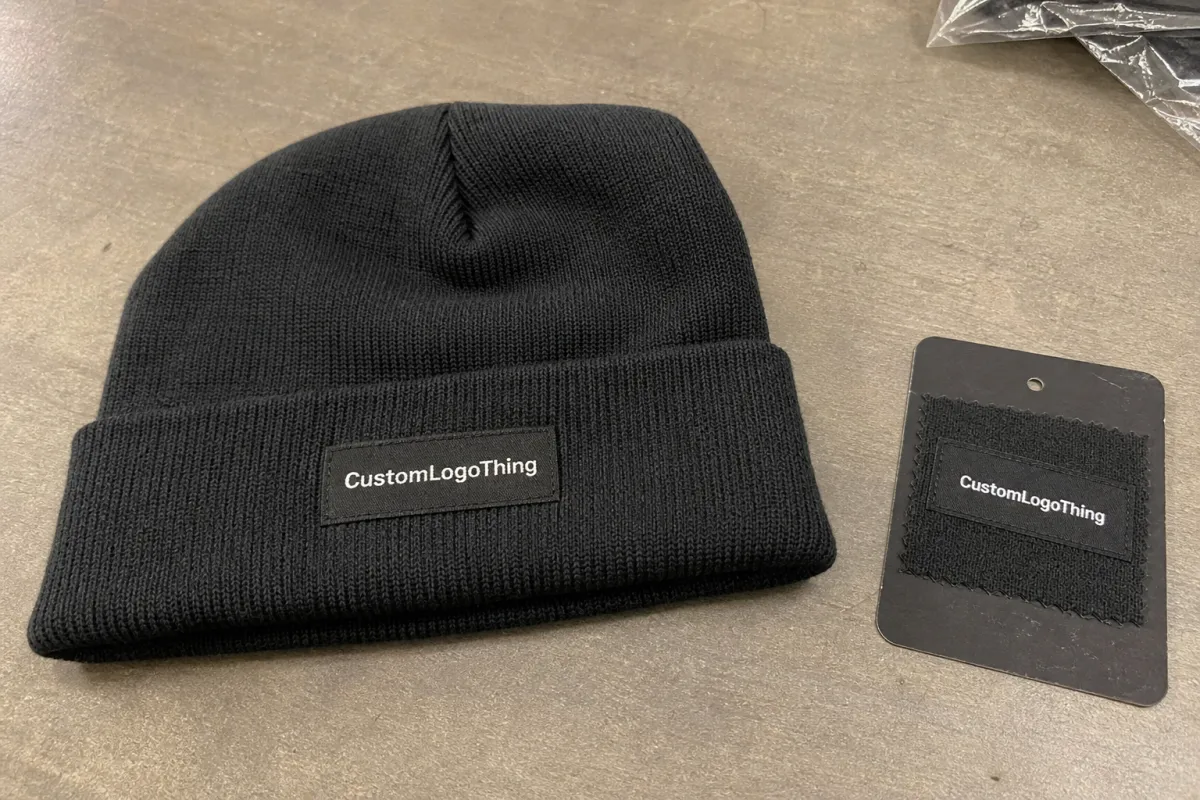
A useful sample is a preproduction reference, not a decorative token. It should show how the fabric behaves, how the knit drapes, how the cuff rebounds after stretching, and whether the woven label still reads cleanly once it is sewn into an elastic structure. Photos can hide too much. A sample exposes the actual mechanics.
For wine clubs, that matters because perceived quality sits in small physical cues. Yarn twist affects softness. Stitch density affects shape retention. Label backing affects comfort against skin. A beanie can be technically well made and still feel wrong if one of those variables is off by a little. In knit accessories, a small miss can change the whole impression.
Buyers often ask for a sample because they want to confirm the look. They should also use it to test the production logic. Was the sample built using the same yarn count? Was the woven label made on the same loom setup? Is the crown closure identical to what bulk sewing will use? If the answer is no, the sample is informative but not fully reliable. That difference should be explicit before approval.
A sample is not a prize. It is a check on the real order.
A practical wine club Woven Label Beanies material sample guide should compare the sample against the use case, not against an idealized mockup. A beanie meant for broad winter wear needs different structure than one meant for a premium club box. A handout for a tasting event can tolerate a simpler build. A resale item cannot. That distinction influences fabric choice, label type, and even packaging.
If your program also includes neck labels, hang tags, or insert cards, review the supporting trim system early. A coordinated label set helps the whole piece feel intentional rather than assembled from separate purchases. For that part of the package, see Custom Labels & Tags.
What a Sample Kit Should Include for Accurate Comparison
One swatch is not enough. A serious sample kit should let you compare construction, color, and finish under the same conditions. At minimum, ask for yarn or knit swatches, woven label strike-offs, color chips, and if possible, one sewn sample or blank beanie. The sewn sample is the most useful item in the group because it shows how the label sits on a curved, stretchable surface rather than on a flat table.
Label size and edge treatment deserve attention. A woven label with beautiful detail can still perform badly if the border is too stiff or the contrast thread is too aggressive. Edge choices matter: folded edges feel softer, heat-cut edges can be cleaner, and woven selvage may hold up differently depending on placement. On a cuff, the wrong choice can scratch, curl, or disappear into the knit after a few wears.
Ask for written specs with the sample. A cloth piece by itself leaves too much unsaid: fiber content, yarn weight, gauge, stitch count, label dimensions, placement tolerance, packaging style, and whether the piece came from the intended production line. If the supplier cannot describe those details, you are looking at a suggestion rather than a production reference.
Packaging belongs in the evaluation too. A sample shipped in a kraft paper sleeve or recycled corrugated box tells you something different from one tossed into a loose mailer. Good packaging does not have to be expensive, but it should protect the knit from moisture, crushing, and snagging. That matters more than most buyers expect because a beanie that arrives flattened can be unfairly judged before it is ever worn.
It helps to compare the sample under three light sources:
- Daylight to see the true yarn color and label contrast.
- Warm indoor light to catch yellowing or softness in the color.
- Retail or cellar light to judge how it will read where members will actually see it.
If shipping is part of your approval risk, ask how the supplier tests outer cartons. Some vendors reference ISTA-style transit standards; others do not. You do not need a dissertation, just enough confidence that the sample was not protected by luck alone. The International Safe Transit Association is a useful benchmark for packaging performance language: ista.org.
How Fabric, Stitch Density, and Label Construction Change Perception
Fabric choice changes the reading of the whole product. Acrylic remains common because it is warm, dependable, and comparatively easy to knit consistently. Recycled polyester has gained ground with clubs that want recycled content without introducing too much variability. Cotton blends can feel softer and less static-prone, though they often trade away some warmth and structure. Fleece-lined builds push comfort higher, but they add bulk and cost. None of these is inherently superior. The right choice depends on the use case.
For a member gift, the beanie usually needs to feel soft enough for regular wear while still keeping its shape after repeated use. For a retail item, visual consistency matters more because the product has to hold up across multiple buyers and settings. For a premium box, the touch test becomes more important than the per-unit savings. The sample should help you separate those priorities instead of forcing one generic answer.
Stitch density deserves more attention than it gets. A tighter knit tends to sharpen the beanie’s outline and makes a woven label look cleaner. A looser knit can feel more relaxed, but it also lets the logo drift visually, which may be fine for a casual club and wrong for a more polished one. Buyers sometimes focus on color first because it is easiest to compare. That is backwards. Gauge and recovery are what keep the item looking intentional after shipping and wear.
Label construction is just as consequential. A woven label with strong contrast can look crisp, but if the backing is too rigid it may irritate skin or force the cuff to sit awkwardly. A softer backing improves comfort yet can collapse into the knit if the placement is too shallow. This is one of those details that only shows up in use. Stretch the cuff, re-fold it, wear it briefly, then check whether the label still sits flat and legible.
In practice, buyers often sort beanie material choices into four buckets:
- Acrylic: dependable warmth, consistent knitting, usually the most cost-controlled option.
- Recycled polyester: a good fit when the club wants recycled content and repeatable output.
- Cotton blend: softer hand, lighter warmth, more casual feel.
- Fleece-lined: the most comfortable for colder climates, but bulkier and usually higher priced.
The packaging story should match the fabric story. A club that uses FSC-certified cartons, kraft paper wraps, or recycled inserts should not pair them with a sample that feels flimsy or unconsidered. FSC chain-of-custody language is useful here because it keeps sustainability claims tied to traceable sourcing rather than broad marketing language: fsc.org.
If the beanie is part of a larger merchandise system, keep the label and tag language aligned. That kind of consistency is more visible than many teams realize. Members may not analyze stitch density consciously, but they do notice when one piece feels premium and its supporting materials feel like afterthoughts. For that reason, many buyers review the trim package alongside the beanie body itself with Custom Labels & Tags.
Cost, Pricing, MOQ, and Unit Economics to Check Early
Price is a stack of decisions, not a single number. Sample fees can be separate from label setup, which can be separate from bulk unit pricing. Shipping, rush timing, custom packaging, and color matching also move the total. If a supplier offers sample credit toward the final order, confirm exactly when that credit applies and whether it expires. Buyers lose money on fine print more often than they lose it on the sample itself.
MOQ matters as much as the quote. A lower per-unit price is not a win if the minimum order is larger than the club can realistically move before the season changes. That is especially true for clubs that test limited merchandise drops or want different items for different membership tiers. In those cases, a slightly higher unit cost on a smaller run can be the cleaner decision because it lowers inventory risk.
Typical price ranges vary by region and supplier, but these numbers are useful for framing conversations:
| Option | Typical Sample Cost | Typical Bulk Unit Cost | Best For |
|---|---|---|---|
| Basic acrylic beanie with standard woven label | $25-$60 | $2.40-$4.25 | Member gifts, broad distribution |
| Recycled content beanie with custom label color matching | $40-$90 | $3.10-$5.50 | Sustainability-led club merch |
| Fleece-lined or premium knit with detailed woven label | $60-$120 | $4.75-$7.50 | Higher-margin retail or premium club boxes |
Those figures are directional, not universal. They are still useful because they force the right question: what is driving the cost? It may be the fiber, the label complexity, special yarn dyeing, a stricter color tolerance, or the packaging format. Suppliers sometimes quote an appealing sample fee and recover margin in production. Others do the reverse. Compare the full structure, not the headline number.
Packaging can change the math too. Corrugated mailers, kraft sleeves, and biodegradable inserts each add a little cost. A few cents looks harmless until it is multiplied across thousands of units. That said, if the club’s brand promise depends on presentation and a cleaner materials story, the added spend may be justified. The key is to make that trade-off consciously.
A good rule: compare the sample cost against the cost of a bad bulk run. A $75 sample that prevents a $4,000 mistake is cheap insurance. That simple comparison often brings the purchase back into focus. If your order includes label work or accessory add-ons, review the full trim stack before locking in the quote through Custom Labels & Tags.
Process and Timeline: From Sample Request to Final Approval
The best sampling process is disciplined but not complicated. Start with a spec sheet that names the target fabric, label size, color references, cuff preference, packaging expectations, and quantity range. Then confirm what the supplier can actually source. After that, review the sample or strike-off, mark changes clearly, revise if needed, and approve a preproduction version before bulk sewing begins. Extra rounds usually come from vague feedback, not from the factory itself.
Lead times tend to slip in three places: label weaving, color matching, and artwork approval. Woven labels are slower than many teams expect because thread colors have to be translated into loom-ready instructions. That process does not always behave like digital proofing. A burgundy label on charcoal knit may look obvious on screen and much flatter in thread. Sampling is the place to catch that mismatch.
Typical timing often looks something like this:
- Sample production: 7-15 business days if materials are already available.
- Revision cycle: 3-10 business days per round, depending on how specific the feedback is.
- Bulk production: 12-25 business days after approval, longer if custom packaging is included.
Do not compress the schedule into one vague date. Ask for separate estimates for sample build, revisions, bulk production, and shipping. That keeps merchandising, membership, and operations looking at the same calendar. If the beanie will ship with printed inserts, tags, or other club items, the slowest component usually sets the pace.
A small review group helps. One person can judge brand fit, another can test comfort, another can check operational practicality. That split is useful because the person who loves the look may not be the person who notices the label scratch or the awkward fold in packaging. In apparel and merch, the objections are often distributed. So should the review be.
Shipping condition also deserves attention during this stage. Samples that arrive in tight corrugated cartons with kraft cushioning are easier to evaluate honestly than samples crushed into a loose mailer. That seems small until the first retail shipment has to survive a warehouse and a delivery route.
Common Mistakes That Make Samples Look Better Than Bulk Production
The first mistake is evaluating under flattering light. Warm bulbs can make yarn look richer and labels softer than they really are. If the beanies will live in a tasting room, stockroom, or retail shelf with cooler light, judge them there. Otherwise, you are approving a stage version of the product.
The second mistake is treating one sample as a promise of identical bulk output. Knit goods always have some variation. The better question is whether the sample is representative and what tolerance the supplier allows for color, fit, and label placement. Ask early. It is much easier than arguing later over a batch that is technically within spec but visually off.
Durability checks are easy to skip, and that is where surprises hide. Stretch the cuff several times. Re-fold it. Wear the sample for an hour. If the care instructions allow it, wash it once. A woven label that stays flat and readable after those checks is worth more than one that only photographs well. If the supplier can reference standard tests for colorfastness or pilling, that language is more useful than general promises about quality.
Vague feedback creates another kind of failure. “Feels off” is not actionable. Better feedback names the issue: the label edge scratches, the cuff is too loose, the knit reads greener than the approved chip, or the crown has too much slouch for the intended look. Specific comments shorten revisions and prevent the next sample from solving one problem while creating two more.
Packaging is the final blind spot. A beanie that arrives in plain plastic but will be sold in FSC-certified kraft packaging needs to be reviewed in both states. The presentation around the product is part of the product. For wine clubs, where gifting and brand perception overlap, that layer carries more weight than many teams admit.
Expert Next Steps for Buying and Approving the Right Sample
Use a scorecard. Keep it simple: hand feel, label clarity, fit, color match, and durability. Score each item on the same scale and have every stakeholder use the same sheet. That cuts down on subjective language and keeps the conversation anchored to the actual sample instead of to general preference.
Document revisions in plain language. If the label is too wide, say how wide it should be. If the cuff needs more structure, specify what changed: tighter rebound, less slouch, or better hold after folding. If the hand needs to feel softer, say whether the yarn should change or whether the knit should be adjusted. Specifics save time. They also reduce the risk of a revision that improves one variable while damaging another.
It helps to involve a small group of testers, usually three to five people. That is enough to catch useful differences without turning the decision into committee drift. One person will care about itchiness, another about silhouette, another about whether the logo can be read from a few feet away. Those are the observations that matter because membership buyers are rarely judging the piece from one angle.
If sustainability is part of the club story, make sure the sample, packaging, and final spec all point in the same direction. Ask whether the beanie body includes recycled materials, whether any inserts are made from post-consumer waste, and whether the outer shipper can be FSC-certified. None of that guarantees a better product on its own, but it does keep the brand message coherent. In premium merch, coherence is not a small thing.
Once the sample is approved, lock the spec sheet to the final quote. Do not let label placement, packaging, or material substitutions drift after signoff. The strongest wine club woven label Beanies Material Sample guide is not the one with the most language. It is the one that helps a club spot weak points before they become inventory and turn a promising mockup into a finished product that actually matches the promise.
What should be included in a wine club woven label beanie material sample?
Ask for knit or yarn swatches, woven label strike-offs, color chips, and at least one sewn sample if available. Request written specs for fabric content, stitch density, label dimensions, and packaging so the sample can be judged against the final production target.
How do I compare woven label beanie samples for a wine club order?
Compare them under the same light, then test stretch, softness, label clarity, and cuff recovery side by side. A simple scorecard helps keep merchandising and operations aligned before you approve the final spec.
Does a sample accurately reflect final woven label quality?
It usually reflects hand feel and label construction well, but you still need to confirm whether it is a true production sample or a strike-off. Ask the vendor what variation to expect in bulk so you can judge color, weave, and fit with realistic tolerance.
What affects the cost of custom woven label beanies most?
Fabric choice, label complexity, MOQ, and setup charges usually move the price more than the sample itself. Rush timing, special yarns, and individual packaging can also raise the final unit cost quickly.
How long does the sample and approval process usually take?
Timing depends on label weaving, material availability, and revision rounds, so ask for separate sample and bulk lead times. A clear review cycle with specific feedback is faster than an open-ended approval process.
A good sample is a stress test for the entire program. It shows whether the fabric, label, packaging, and schedule work together or pull in different directions. That is the practical value of a wine club woven label Beanies Material Sample guide: it helps a buyer catch the mismatch before it reaches members, shelves, or boxes that have already been paid for.


