For buyers who need decorated headwear that lands correctly on the first run, a soap embroidered baseball caps Digital Proof Checklist is one of the few tools that can save both time and money before thread ever hits the machine. Cap embroidery fails less because the art is bad and more because the art was built for a flat screen, not for a curved crown with seams, panels, and stitch limits.
A digital proof is the pre-production map: it shows placement, dimensions, thread colors, and the decoration method before production is released. That matters on baseball caps because the front panel, visor angle, and crown height all change how a logo reads once it is stitched. A mark that looks balanced in vector form can feel too small, too high, or too dense once it is translated into embroidery.
Buyers usually feel those problems in the form of missed deadlines, avoidable redraws, or a shipment that looks slightly off even though the artwork file was technically correct. The proof stage is where those issues surface while they are still cheap to fix.
Why digital proofs catch cap mistakes before stitching starts
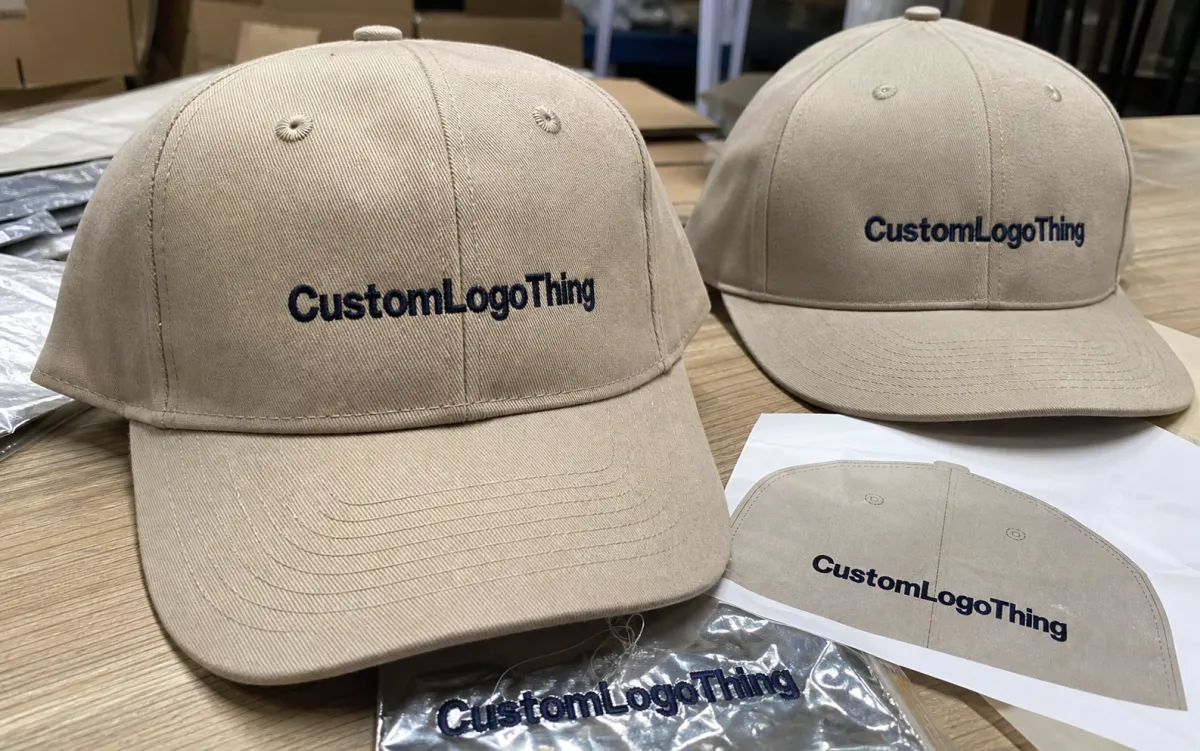
A proof does more than repeat the logo back to the buyer. It shows whether that logo can survive the realities of cap construction. A six-panel structured cap gives the embroidery team a very different surface than a soft five-panel cap. A taller crown can carry a larger emblem; a lower-profile cap can make the same emblem look crowded. Even a clean design can become awkward if it crosses a seam or sits too close to the visor curve.
That is why proofing is not a formality. It is the first production test. The proof reveals whether the artwork is stitchable, whether the placement leaves enough room for the design to breathe, and whether the chosen cap style supports the brand mark without distortion. If the supplier is asked to guess, the quote may still look fine, but the finished cap often does not.
“If the proof looks perfect on a phone, it can still fail on a cap. The screen is flat. The crown is not.”
That gap between flat art and curved product is where a good proof earns its place. It gives the buyer a chance to catch spacing errors, stitch-density problems, and seam conflicts before the order becomes expensive to correct.
soap embroidered baseball caps digital proof checklist: what to verify
The strongest soap embroidered baseball caps Digital Proof Checklist starts with placement. Confirm the center point, the distance from the visor, the height above the front seam, and whether the logo sits fully inside the embroiderable zone. On caps, a shift of a few millimeters can change the way the whole front panel reads.
After that, check stitchability, not just artwork appearance. Thin strokes can fill in. Small text can collapse. Tight counters in letters like A, O, P, and R can close up. Heavy fills can make the front panel stiff or overly dense. A logo that looks crisp in Illustrator may need simplification before digitizing, and the cleaner the simplification, the less likely the final embroidery is to lose character.
Cap construction needs the same scrutiny. A structured front holds shape better than an unstructured crown. Panel count changes where seams land. Visor shape affects sightlines. Closure style matters too, because a snapback, strapback, hook-and-loop back, or fitted cap changes the build and sometimes the fit expectation for the order. If the blank changes, the proof should change with it.
Color is another point where buyers get caught out. Screen colors, Pantone references, and thread charts are related, but they are not interchangeable. A proof should show the approved color system clearly so no one has to guess whether the reference is for print, screen, or thread. For color-critical orders, ask for the thread code and, if possible, a physical thread reference.
Special decoration notes need their own line. That includes left-side or back placement, personalization, 3D puff embroidery, woven or merrowed patches, and any secondary mark added to the cap. If there is more than one decoration area, each one should be labeled separately. The production floor works faster when the instructions are hard to misread.
- Placement: center point, seam clearance, visor distance, and crown height
- Stitchability: small text, thin strokes, tight counters, and dense fills
- Cap spec: structured or unstructured, panel count, visor shape, closure
- Color: thread chart, Pantone reference, and approved digital match
- Extras: side hits, back hits, personalization, or patch finishing
Proof process and timeline: from file to approval
The proof process usually follows the same path: art intake, digitizing, digital proof creation, buyer review, revisions, final sign-off, and release to production. If any step is vague, the schedule starts to wobble. The best workflows are repetitive in a useful way. They document each decision and leave little room for interpretation later.
Timing depends on complexity. A simple front logo on a standard structured cap may move quickly. A dense mark with multiple colors, small lettering, or seam-sensitive placement will take longer because the digitizer has to resolve more production issues before the file is ready. Missing artwork, low-resolution logos, or a brief that only exists in scattered emails can add a full day before the first proof is even useful.
Revision cycles are where many orders lose momentum. Change the size and the stitch count may change. Change the thread color and the proof needs another pass. Move the logo closer to the visor and the crown may need a different placement review. None of that is dramatic, but every revision costs time.
For cap programs tied to a launch date, ask the supplier how the proof deadline affects the production slot. Once the proof is approved, it becomes the reference point. Any later edit is no longer a small adjustment; it is a new instruction set. If the shipment date matters, the approval deadline should be set inside your own team, not left to chance.
One practical checkpoint: if the caps are part of a broader fulfillment order, separate the decoration proof from the shipping-carton decision. Those are different risks. Decorative accuracy and carton performance do not fail in the same way, and they should not be managed as the same problem.
Cost, pricing, MOQ, and unit quote drivers
Pricing for embroidered caps is shaped by a short list of variables, and each one shows up in a different place. Stitch count is a major driver because more stitches mean more machine time. Thread color count matters too, since every additional color adds handling and may increase digitizing complexity. Logo size also affects cost because larger marks need more stitches to stay legible.
The cap blank itself changes the quote. A standard structured six-panel cap is usually simpler to decorate than a premium blank with a deep crown, unusual paneling, or fabric that does not hold embroidery cleanly. If artwork needs cleanup or a fresh digitizing file, that can add setup cost. Buyers often think of proofing as a courtesy, but the work behind the proof is still labor.
| Quote Factor | Typical Effect on Price | What to Ask |
|---|---|---|
| Simple front embroidery | Usually the lowest unit cost, especially at higher quantities | Is digitizing included, and how many proof rounds are covered? |
| Multiple thread colors | Often adds modest setup and production time | Are thread changes priced separately or bundled? |
| Large or dense logo | Raises stitch count and can increase the per-unit rate | Can the artwork be simplified without changing brand recognition? |
| Side or back placement | Usually adds decoration labor and proof complexity | Does each placement need its own approval? |
| Rush proof request | May add a surcharge or reduce revision flexibility | What is the fastest acceptable approval window? |
MOQ matters because setup time has to be spread across the order. A lower-volume run usually costs more per cap than a larger one, even if the decoration is identical. That is not a penalty; it is arithmetic. The same digitizing, proofing, and machine setup work has to be paid for somehow.
As a rough planning range, embroidered cap quotes often land around $3.25 to $6.50 per unit at 100 to 500 pieces, with better pricing at higher quantities and higher pricing for specialty blanks, complex decoration, or premium threads. Digitizing and setup may be included, or they may appear as separate line items. Ask before approving the quote. The cheapest number is not always the cheapest finished order.
If the supplier needs information quickly, send the artwork, quantity, cap style, placement notes, and deadline in one message. That usually gets a cleaner quote than a chain built from fragments. It also reduces the odds of a proof arriving with assumptions baked in.
Step-by-step approval workflow for clean production
Start with a complete brief. Send the logo files, cap style, quantity, placement notes, color references, deadline, and any brand rules that cannot change. If the team is still choosing between cap models, say that upfront. A supplier can work with uncertainty. Hidden uncertainty is what slows the proof.
Review the proof on a large screen instead of a phone. Zoom in on the smallest text, the seam crossings, and the edges that look too tight. A cap proof should be judged the way production will judge it: does the logo fit the crown, or does it only fit the file? That one question catches more mistakes than most markup tools.
- Confirm spelling and punctuation.
- Confirm placement against the seam and visor.
- Confirm dimensions and stitch style.
- Confirm thread colors against the approved reference.
- Confirm that the proof matches the original order notes.
Send edits in one organized round. Scattered replies create version drift, especially when different people are commenting from different angles. A good proof thread is easy to read: one owner, one current version, one decision path. That keeps the production team from missing a note buried in a separate email.
Approvals should happen only after the final version matches the order intent and the person responsible for brand accuracy has signed off. If the cap is customer-facing, that may be marketing. If it is a uniform program, that may be operations or procurement. The title matters less than the authority.
Practical rule: if the proof creates a new question, do not approve it yet. Resolve the question first. Clean approvals are the ones that survive production.
Common mistakes that slow proof approval and raise rework
The most common mistake is approving based on the logo alone. Embroidery changes spacing, compresses fine detail, and can alter how the mark feels on a curved surface. A logo that looks balanced in vector form may end up too heavy near the top of the cap or too sparse once it is stitched. That is not a supplier flaw. It is a medium mismatch.
Color assumptions create another round of preventable friction. Screen color, printed samples, and thread shades are different systems. A buyer may think “close enough” and then discover that the thread reads differently under shop lighting. If the brand color matters, ask for the thread chart or a physical reference before signing off.
Placement errors are easy to miss on a mockup. A centered logo can still sit too high above the brim or too close to a seam. On the finished hat, those differences change how the cap reads from six feet away. That is usually the distance where mistakes first get noticed by customers.
Rushed approvals are another trigger for rework. Missed measurements, overlooked spelling, and vague feedback force the vendor to interpret instead of execute. In production, interpretation is expensive. Specific notes reduce the chance of a second proof round, a delayed run, or a remake.
Ordering errors can be just as costly. Buyers sometimes approve a cap style that does not fit the intended use, or they miss the MOQ and then have to revise the budget. That is one reason the soap embroidered baseball caps Digital Proof Checklist should sit beside the order form, not somewhere separate and easy to ignore.
Expert tips and next steps before you approve
Use a three-part review routine. First, check art accuracy. Second, check production fit. Third, check whether the chosen cap style supports the logo without distortion. That order matters because a design can be correct and still be a poor embroidery candidate. A smart buyer watches for both.
Ask for a placement reference image if the design is sensitive to location. Side-by-side context beats guesswork. It also helps non-production stakeholders understand why a seam shift of a few millimeters matters. If you have ever had to explain why the logo needs to move 0.2 inch, you already know how much faster that discussion goes with a visual reference.
Keep a version log, even if it is simple. It only needs to show which proof is current, which notes were resolved, and which notes remain open. That record cuts duplicate feedback and protects the buyer if there is any disagreement later in the production cycle.
Set your own internal approval deadline before the supplier’s deadline arrives. Otherwise, the proof waits while people get pulled into other work, and then the order turns into a rush. The better schedules have a little slack built in. The worst ones assume someone will always be free to approve at the last minute.
After approval, save the final file and the approval email in the same folder. If the cap order is likely to repeat, that file becomes the reference for logo size, placement, and thread color. That is where discipline pays off: the next run starts with fewer questions because the first run was documented properly.
A soap embroidered baseball Caps Digital Proof Checklist is not just a prepress form. It is a control point. Used well, it keeps the order moving and makes the next reorder easier to manage.
What should a soap embroidered baseball caps proof checklist confirm?
It should confirm logo placement, stitch size, thread colors, and the exact cap style being produced. It should also check seam alignment, front-panel space, and any personalization or secondary decoration. The goal is to catch problems before digitizing or embroidery setup locks in the order.
How long does the cap proof process usually take?
Simple digital proofs are often turned around quickly, but complex logos or multiple revisions take longer. Missing artwork, unclear notes, or late changes can add another review cycle. If timing is tight, ask the supplier when the proof must be approved to keep production on schedule.
What affects pricing for embroidered baseball caps with proof approval?
Stitch count, color count, cap style, and order quantity are the biggest pricing drivers. Digitizing, setup, specialty thread, and rush revisions can also raise the quote. A fair comparison should include whether proofing, revisions, and file prep are included.
Can a digital proof show the exact thread color on the finished cap?
A proof can show the chosen thread code or a close digital match, but screen color is not the same as thread color. For critical brand colors, ask for thread charts or physical swatches before approval. The proof is best used to confirm intent and placement, not to replace a real thread sample.
What should I do after I approve the proof?
Save the final proof and the approval email so the production team has one clear reference. Confirm the ship date, quantity, and decoration notes one last time before release. If the order may repeat, keep the approved file for the next run.