Vitamin trucker caps Digital Proof Checklist reviews save more orders than most buyers realize. A cap can look polished as a flat mockup and still fail once the front panel curves, the mesh changes the color read, and the bill pulls the logo lower than expected. For vitamin brands, that risk rises fast because bright greens, oranges, reds, and blues are less forgiving in thread, patch twill, and print than they are on a screen.
The proof is the last low-cost checkpoint before production starts. It is the moment to catch artwork errors, placement drift, material mismatches, and assumptions that only work on a monitor. A good proof does more than show a picture. It pins down what the shop is actually building.
Why a Digital Proof Catches Cap Problems Early
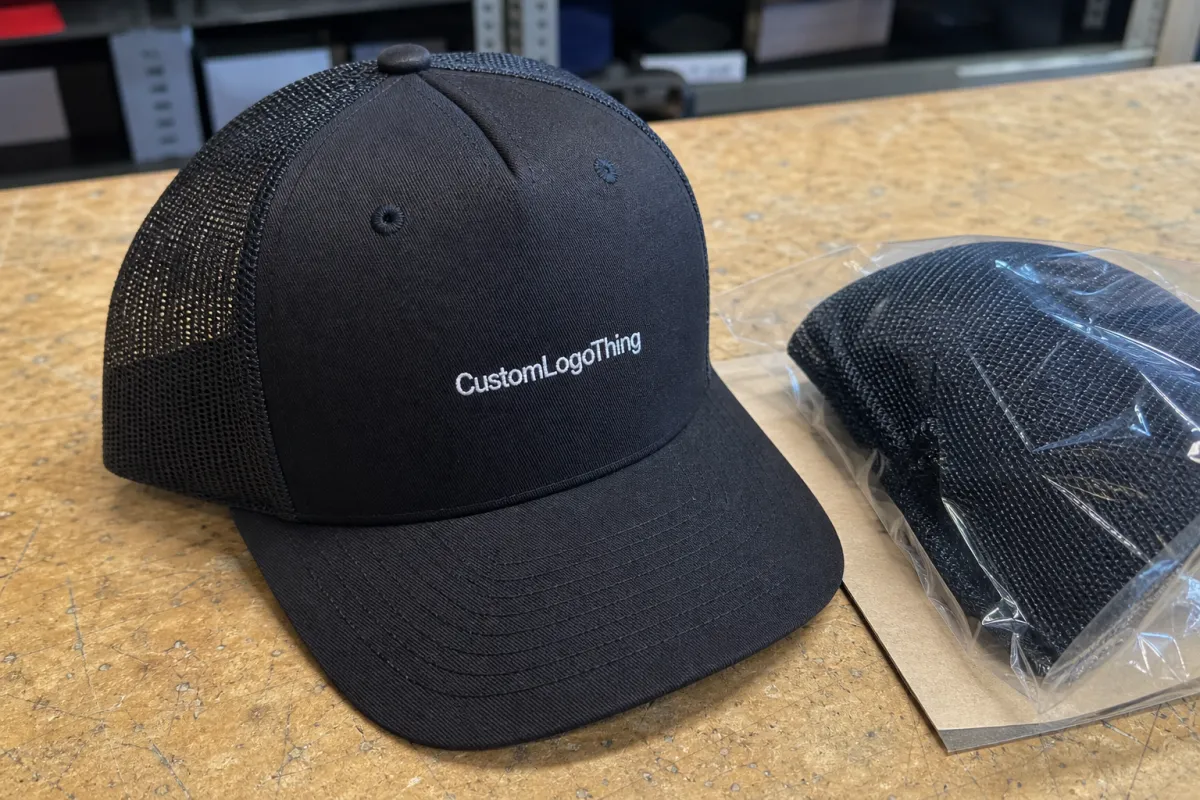
The digital proof is the bridge between the art file and the finished cap. It shows how the logo will sit on a curved crown, how much space the seam consumes, and whether the decoration method can handle the level of detail in the artwork. On a trucker cap, those details matter because the front panel is rarely a flat canvas. It is shaped, stitched, and often paired with mesh that changes both structure and color perception.
That is why a proof is more than an approval formality. Buyers in packaged goods already understand the value of pre-production review: a carton proof, label proof, or insert proof exists for the same reason. Once material is cut or decoration starts, small mistakes become expensive. The same logic applies to caps, especially when the order is tied to a product launch, distributor program, or retail reset.
Color is usually the first place expectations slip. A bright vitamin green may look crisp on a backlit screen and then come back slightly deeper in embroidery thread, or more muted on a woven patch. Mesh color also matters more than people expect. A cap described as black can still carry a charcoal mesh, a true black bill, and a slightly different sweatband tone. That is not automatically a defect, but it should be visible in the proof so nobody has to guess.
A proof is a short agreement about artwork, placement, materials, and the standard the order will be measured against.
Production teams also use proofs to check practical constraints. Dense embroidery needs enough front-panel support. Printed patches need enough resolution. Woven labels need enough space for text to remain readable. If the cap style cannot support the artwork without compromise, the proof should say so before the order moves forward. Buyers who work across categories can benefit from reviewing the supplier’s Manufacturing Capabilities first, so the proof is judged against what the shop actually does rather than what a flat mockup suggests.
For buyers who manage both packaging and apparel, the quality mindset is the same. The Institute of Packaging Professionals has useful references on pre-production review at packaging.org. Different product, same principle: verify the details early, while the cost of correction is still low.
What the vitamin trucker caps digital proof checklist should verify
The strongest vitamin trucker Caps Digital Proof Checklist checks the proof line by line instead of relying on a quick visual reaction. That sounds exacting because it is. Most problems on decorated headwear are not dramatic; they are small deviations that stack up. A logo that is 4 mm off center, a thread color that runs warmer than expected, or a seam that clips a letterform can be enough to make a run feel off.
- Artwork version: confirm the exact logo lockup, tagline, and any copy that can be misspelled or swapped. If the brand has multiple versions of the same mark, only one should be approved.
- Placement: verify front-panel center, side hit, and back placement if the cap uses multiple decoration areas. On a trucker cap, a few millimeters can change the visual balance once the crown is sewn.
- Color callouts: check crown, mesh, bill, thread, patch border, and underbill colors separately. A cap may be “black” overall while still using slightly different blacks across components.
- Construction details: confirm foam front or fabric front, structured or semi-structured build, profile height, closure style, and label position. Those choices affect both appearance and how much decoration the cap can carry.
- Decoration method: make sure the proof matches embroidery, patch, woven label, or print. Each method changes edge sharpness, texture, and the amount of detail that survives production.
For vitamin brands, the color read deserves extra attention. Bright brand palettes often behave differently across media. Orange thread may look warmer than the digital artwork. Green patch borders can shift toward olive under warehouse lighting. Blue can deepen once it moves from screen to stitched material. None of that is unusual, but the proof should identify those limits clearly instead of hiding behind a generic “approved as shown.”
The proof should also connect directly to the spec sheet. If the quote assumes direct embroidery, the proof should not quietly switch to a patch. If the order uses custom patchwork, the proof needs to show the border style, backing, and approximate edge treatment. If the logo contains fine text, the buyer should be told whether that text will be simplified or reduced to keep the mark legible. A clean proof leaves fewer places for interpretation.
How the process and timeline usually work from proof to production
Most proof workflows follow the same sequence. The buyer sends artwork and order details. The supplier cleans the file, checks the decoration limits, and builds a digital mockup. The buyer reviews the proof, marks changes, and sends approval or revision notes. Once the final version is signed off, the order moves into digitizing, patch production, stitching, printing, packing, and shipping.
For a standard run, first proof turnaround often lands in the 24 to 48 hour range. If the artwork is organized and the instructions are complete, a revision round can move quickly after that. Production after approval commonly takes 10 to 15 business days for ordinary decorated caps. That range changes with quantity, blank availability, decoration complexity, and whether the order needs special thread colors, custom labels, or imported cap bodies.
The fastest proof is not always the fastest shipment. A supplier can return a mockup quickly and still be stuck behind earlier jobs in the production queue. Buyers should ask two separate questions: how soon the proof will arrive, and what ship date is realistic after approval. Those numbers are related, but they are not the same.
If the order includes retail packaging, inserts, or kitting, ask how the supplier handles transit protection. Cap orders do not need the same test stack as fragile cartons, but bent bills, crushed crowns, and scuffed patches are still costly receiving issues. If packaging and handling are part of the program, alignment with ISTA test methods can help prevent avoidable damage during transit.
The proof timeline also depends on how quickly internal stakeholders respond. That delay often has less to do with the art department than with the buyer side. If marketing, procurement, and compliance all want a look before approval, consolidated feedback usually saves more time than asking for separate replies.
Cost, pricing, MOQ, and quote factors that change the final number
Pricing on Custom Trucker Caps usually comes down to a handful of variables. Decoration method is the biggest one. After that, stitch count, patch shape, print complexity, blank selection, and order quantity shape the final number. The unit price almost always drops as quantity rises because setup costs get spread across more pieces.
| Decoration option | Typical add-on at 100 pcs | Typical add-on at 500 pcs | Best fit | Watch-out |
|---|---|---|---|---|
| Direct embroidery | $1.50-$3.25 per cap | $0.95-$2.10 per cap | Simple logos, clean type, short runs | Tiny text and gradients can disappear |
| Embroidered patch | $2.00-$4.25 per cap | $1.35-$2.75 per cap | Bold branding, textured finish, more visual lift | Patch shape, border, and die setup can raise MOQ |
| Woven or printed patch | $1.75-$3.75 per cap | $1.20-$2.55 per cap | Small copy, fine detail, flatter graphic looks | Color accuracy depends heavily on file prep |
Those numbers cover decoration only. The blank cap still has its own cost. A stock trucker blank commonly lands around $2.25 to $4.50 depending on profile, mesh quality, closure style, and brand level. That means a finished cap can sit in the mid-single digits or climb into the upper single digits before freight, custom labeling, or rush fees. Specialty closures, private-label tags, and imported bodies push the figure higher.
MOQ deserves early attention because it changes the economics of the run. Some stock programs can start at 24 or 50 pieces. Custom patch programs often need 100 or more to cover setup, and die-cut patch work can push that higher. If the order requires custom thread matching, a new embroidery file, or a nonstandard blank color, the minimum may move again. Buyers trying to protect budget usually get farther by simplifying the build than by negotiating every line item. Fewer thread changes, fewer specialty details, and a standard blank often produce a better-looking cap as well as a lower quote.
A step-by-step proof approval workflow for cleaner orders
A disciplined proof review works best when it starts before the mockup appears. The buyer should already know the approved artwork file, quantity, due date, cap style, and decoration method. If the purchase order and the proof are built from different assumptions, the review gets noisy fast.
- Check the art file name, logo version, and spellings before anything else.
- Review the proof on at least two devices if possible, since contrast and saturation can shift between screens.
- Compare the proof against the purchase order line by line: cap color, mesh color, thread color, closure style, patch type, and placement.
- Mark corrections clearly. “Move logo 4 mm higher and keep it centered to the seam” is more useful than “move logo up.”
- Save the approval email or portal confirmation so the final decision is documented.
That last step matters more than many teams expect. If someone later says the logo feels too low or the cap looks darker than expected, the approval record becomes the reference point. It protects both sides from arguments about memory. A single comment thread is easier to manage than five separate replies scattered across email chains and chat messages.
The review should also match the decoration method. Embroidery needs vector art whenever possible, usually in AI, EPS, or SVG format. Printed patches can handle more detail, but they still need clean resolution and realistic color boundaries. If one order uses both embroidery and patch work, each version should be checked on its own rather than assumed to translate from one style to the next.
If the proof is unclear, ask for a revision. A small delay here is usually cheaper than a correction after production starts.
That is also the point to confirm who owns the final sign-off. If the supplier can embroider, patch, and package in-house, the proof process is usually tighter. If those steps sit with different vendors, the timeline is more fragile and the approval chain becomes harder to manage.
Common proof mistakes that lead to reprints or delays
Weak artwork is the most common source of trouble. A low-resolution logo can look fine on a screen and still break apart in embroidery. Fine edges blur. Small letters collapse. Gradients rarely survive in a stitched format. If the artwork is going into embroidery, vector files are the safer choice because the stitch path needs clean lines rather than pixel guesses.
Color expectations create the next layer of friction. Digital proofing can show intent, but it cannot fully simulate thread sheen, dyed fabric, or the way a patch border changes under different light. A navy mesh back often reads darker than the crown fabric. A bright vitamin green can look slightly deeper once it is built into thread or woven into a patch. Buyers who need a close visual match should surface that requirement before approval, not after boxes arrive.
Placement mistakes cause a surprising number of complaints. A logo centered on a flat mockup can sit low once the front panel curves. A design that clears the seam in the art file can touch it on the sewn cap. The safe area on a trucker cap is not generous, so even a small shift can change the look. That is why the proof should show seam lines, panel width, and crown shape clearly.
The notes matter too. The fine print often explains which elements are approximate, which colors are reference-only, and which items were resized to fit the cap. Those lines are part of the approval. Skipping them usually causes more trouble than the main graphic itself.
One simple habit prevents most of the avoidable problems: keep the focus on artwork quality, color expectations, and placement. If those three items are correct, the rest of the order usually behaves.
Next steps before you approve the final proof
Before final approval, read the proof slowly and compare it against the purchase order. Check artwork, quantity, cap style, decoration method, thread colors, and delivery window. Then verify the ship-to address, receiving contact, and any dock appointment requirements. A correct product can still arrive late if the destination details are wrong.
A simple internal checklist helps keep the review tight:
- Artwork version matches the brand file
- Placement is centered and seam-safe
- Cap profile, mesh color, and closure style are correct
- Decoration method matches the quote
- Quantity, shipping method, and delivery date are confirmed
If one detail still feels uncertain, ask for a revised mockup. There is no upside to approving a cap program too early. A correction at proof stage usually takes minutes or hours. A remake after production can take days and may add another freight charge. That is a poor trade for a fix that was still easy to make.
Used well, the vitamin trucker caps Digital Proof Checklist protects color, placement, timeline, and budget in one pass. It is not paperwork. It is the part of the process that keeps a good design from turning into an expensive lesson.
What should a vitamin trucker caps proof include before approval?
It should show the exact logo version, placement, cap color, mesh color, closure style, and decoration method. Any approximation should be called out, especially where screen color may differ from the final cap. If the order includes labels, inserts, or special packaging, those details should appear in the proof notes or the spec sheet.
How long does the proof review process usually take for trucker caps?
First proofs often come back in 24 to 48 hours when the artwork and order details are clean. Revision time depends more on buyer feedback than on mockup prep. If several departments need to sign off, the timeline usually stretches between replies rather than inside the art department.
Why does the quote change after I ask for a cap proof?
The quote can shift when the proof reveals a more complex decoration method, a different blank, or extra setup work that was not obvious at inquiry stage. Revision rounds, rush handling, and freight changes can also move the total. The safest comparison is the final proof plus the final purchase order, not the first estimate alone.
What mistakes cause the most delays on custom trucker cap orders?
Missing artwork files, unclear color references, and slow approval cycles are the biggest culprits. A second common issue is changing quantity or decoration method after the proof has already been prepared. Even a clean production plan can slow down if the approval chain is split across too many people.
How can I reduce unit cost on a custom trucker cap run?
Order more pieces if the program allows it, since setup costs spread out faster at higher volume. Keep the decoration simple, avoid unnecessary thread changes, and choose a standard blank whenever possible. Lock the artwork early so you do not pay for extra revisions or rush fees later.
Use the vitamin trucker caps Digital Proof Checklist one last time before you approve the file. If the artwork, placement, colors, and timeline all match, the order is ready to move. If one item is still off, hold the proof and correct it before production starts.


