If you are placing a Soft Touch Poly Mailers bulk order for apparel, beauty kits, or a subscription drop, the real decision is not whether the finish looks premium. It is whether the spec, unit cost, and lead time fit the way you ship. A mailer can look beautiful in a mockup and still fail the basics: it arrives late, crushes in transit, or costs too much once freight and setup are added back in.
Soft-touch mailers earn attention because they add a velvety feel without the weight or assembly burden of a rigid mailer or folding carton. That matters when every gram affects freight, and it matters even more when the outer pack is the first thing a customer handles. For teams comparing options, the broader Custom Poly Mailers range is a good starting point before narrowing by finish, thickness, and print coverage.
The strongest buys usually come from buyers who think like operators, not just marketers. They measure folded product dimensions, ask how the cartons will be received, and want to know how quickly the supplier can turn a revised proof. Those details sound small. They are often what separate a smooth replenishment from a scramble.
Soft Touch Poly Mailers for Premium Shipping at Scale
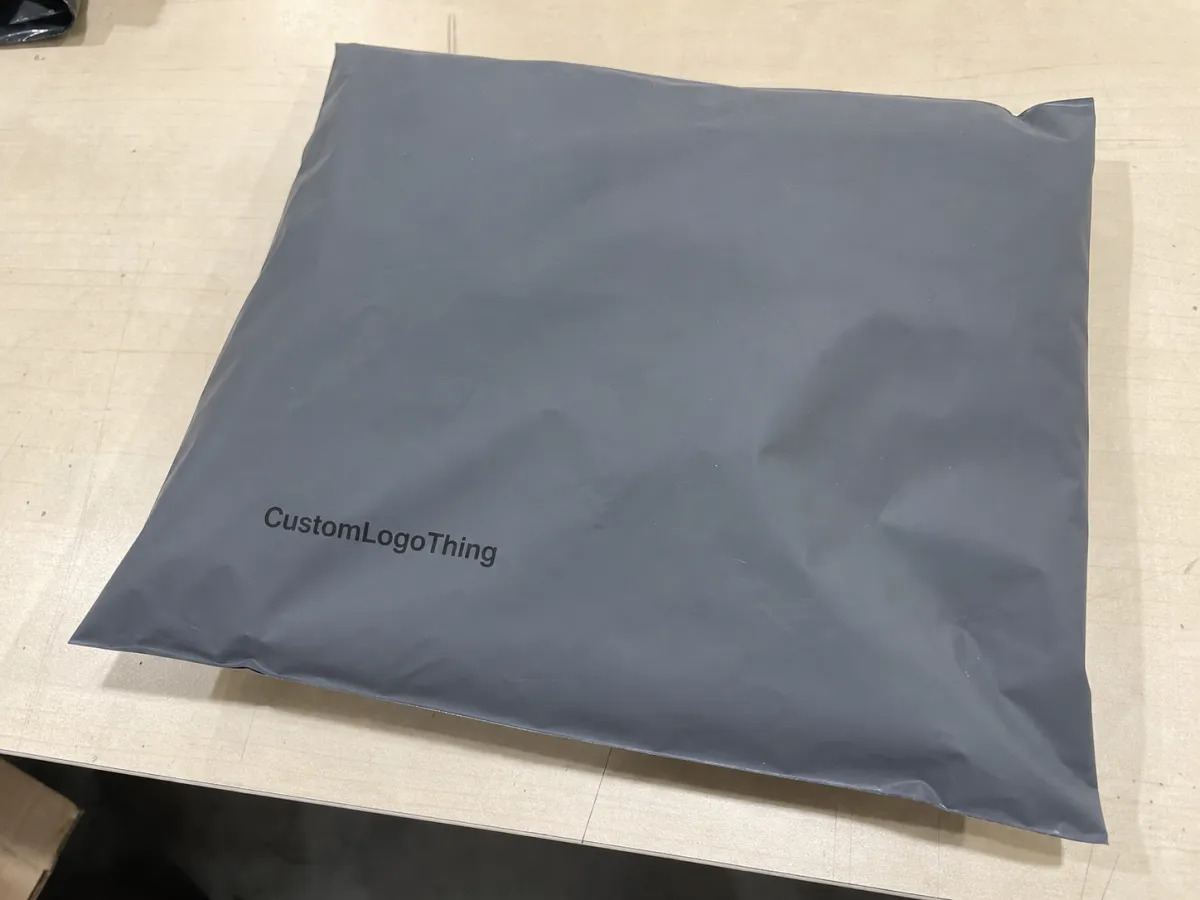
Soft-touch poly mailers sit in a useful middle ground. They feel more refined than a standard glossy mailer, but they do not bring the weight, breakage risk, or assembly time of a rigid mailer or box. That balance is why they show up in so many apparel, beauty, and accessory programs. They make the parcel feel deliberate without pushing the packaging budget into gift-box territory.
For a soft touch Poly Mailers Bulk order, the main appeal is consistency. The same film, the same closure, and the same print appearance can be repeated across thousands of units with less labor than a multi-part pack. That matters for fulfillment teams that already live under timing pressure. A mailer that feeds the line cleanly is worth more than one that looks slightly better but slows packing.
These mailers are especially common for lightweight garments, activewear, socks, small beauty items, and subscription kits. The tactile finish gives the package a more finished presence, and the customer notices it as soon as the bag is in hand. That first impression is subtle, but it carries weight. Shipping bags are handled differently from cartons; people squeeze them, rotate them, and judge the brand before they open the item.
Most procurement teams are trying to solve four problems at once:
- Keep the product protected through sorting, stacking, and transit.
- Control the per-unit cost at the volume they actually buy.
- Match the look to the brand without overengineering the pack.
- Get inventory in before the launch or replenishment window closes.
That fourth point is the one that often gets underweighted. Production can be on schedule and still miss the shipping date if transit time was not built into the plan. For recurring volume, the real conversation is not just about one order. It is about how the next order will be repeated, stored, and received. If you are comparing buying paths, the Wholesale Programs page is useful for thinking through repeat volume and replenishment timing.
There is also a practical branding advantage that is easy to overlook: soft-touch film tends to make restrained design look more expensive. Clean typography, a carefully placed logo, and one strong color can do more than a crowded layout with too much ink. Packaging buyers notice this quickly. So do customers.
Film, Finish, and Print Choices That Shape the Look and Feel
The finish changes the entire impression of the mailer. Standard poly can feel bright and utilitarian. Soft touch reads quieter and more premium, with a matte feel that lowers visual glare and gives color a more subdued depth. On camera, it usually photographs better than high-shine film. In hand, the difference is even more obvious.
Print coverage is the next big decision. One-sided print is usually the leaner route, especially if the reverse side is left plain for logistics marks or internal labeling. Full-coverage printing creates a stronger visual block, but it increases ink use and can require tighter color control. Large dark areas can look especially rich on soft-touch film, though they may also show scuffing differently than glossy stock. That is not a defect; it is a characteristic of the finish.
Design should respect the material. Fine copy needs enough contrast to stay legible at a glance. Logos should stay away from seals and edges. Heavy ink coverage should be used intentionally rather than simply because there is space to fill. The best layouts often feel restrained. They give the customer a clear brand cue without turning the shipping bag into a billboard.
Color approval deserves a real proofing step. Soft-touch film can shift how neutrals, blacks, and metallics appear compared with paperboard or coated labels. A muted tone may read darker than expected, while a bright brand color may need a little more contrast to hold its presence on the film. For that reason, a digital mockup is not enough on its own. A physical sample or production-aligned proof is worth the time.
For buyers who need a baseline on shipping durability, ISTA packaging testing standards are useful for thinking about transit exposure, even if the final product is a mailer rather than a carton system. For sourcing language around materials and waste, the EPA's packaging and sustainable materials guidance gives teams a reference point without forcing a marketing spin.
One more practical note: soft-touch and matte are not always the same thing. A matte mailer can be flat in appearance, while a soft-touch finish adds a more tactile, almost velvety handfeel. Buyers often lump the terms together. Suppliers should not. If the brand wants a specific feel, ask for samples that show the difference clearly.
Sizes, Thickness, and Seal Specs Buyers Should Compare
Size is where many buyers either save money or create waste they did not plan for. A mailer should fit the folded product plus any insert or return card, but not leave so much extra room that the contents slide around. Loose fit can make the package look underspecified and can also increase movement during handling. For apparel, it usually means measuring the item at its thickest folded point rather than guessing from garment size alone.
Thickness matters just as much. A film that is too light can wrinkle badly or puncture when a zipper, snap, or sharp seam presses against it. A heavier gauge adds puncture resistance and gives the package more body, but it also adds cost and can affect how neatly the mailers stack in storage. In commercial ordering, buyers often compare options around 2.5 mil to 4.0 mil, with the right choice depending on product weight, route length, and how rough the parcel handling is likely to be.
The closure deserves inspection too. Standard peel-and-seal is fine for most e-commerce use, but the adhesive width and flap length should still be checked. Wider adhesive can help when the contents are bulkier or when a stronger closure is preferred. Some brands also want a tamper-aware seal so the package shows obvious disturbance if reopened in transit. That is not about luxury. It is about reducing friction when parcels move through multiple hands.
Carton pack counts can influence the buying decision more than expected. If a warehouse receives 500 or 1,000 mailers at a time, the carton size, stack weight, and pallet build affect labor and storage space. Smaller cartons are easier to carry and count, but they raise shipping cost per unit. Larger cartons improve freight efficiency, though they can be awkward at receiving if the boxes are too heavy or poorly marked. If inventory is held for months, the carton configuration should be reviewed with the same care as the print file.
| Option | Typical Use | Approx. MOQ | Common Unit Range | Notes |
|---|---|---|---|---|
| Standard soft-touch, one-sided print | Apparel basics, inserts, lightweight soft goods | 2,500-5,000 pcs | $0.18-$0.30 | Good for simple branding and repeat replenishment |
| Soft-touch, full-coverage print | Premium e-commerce drops, beauty, subscription kits | 5,000-10,000 pcs | $0.24-$0.40 | Higher ink coverage and more proofing control needed |
| Thicker gauge, premium closure | Heavier apparel or longer shipping lanes | 5,000+ pcs | $0.28-$0.45 | Better structure and puncture resistance, higher freight weight |
The numbers above are planning ranges, not universal pricing. Artwork complexity, freight mode, seasonality, and exact pack count can move the quote quickly. A buyer ordering 5,000 pieces for a simple one-color layout may see a very different number from a buyer asking for a nonstandard size, multiple ink passes, and tighter carton requirements.
Pricing, MOQ, and Unit Cost Breakpoints
Pricing for a Soft Touch Poly Mailers bulk order usually turns on five levers: size, film gauge, print coverage, number of colors, and packing format. Change one of those and the quote can move more than buyers expect. A slightly larger bag or heavier spec may add only a few cents per unit, but at several thousand pieces that becomes a meaningful line item.
MOQ is rarely arbitrary. It tends to reflect film runs, print setup, and how efficiently the supplier can convert raw material into finished cartons. Standard structures with simple branding can usually be produced at lower thresholds than mailers with custom sizing and full-coverage artwork. If the design is complex, the supplier may need a larger run to make setup sensible.
Lower unit price is not always the better deal. A mailer that saves a few cents but creates more damage claims, more rework, or more warehouse complaints can cost more by the time the order is done. Teams that ship on repeat often value consistency more than the lowest headline price. That is especially true when the packaging is customer-facing and tied to a campaign cadence.
Ask for tiered pricing whenever possible. A useful quote shows a smaller run, an intermediate run, and the best break point so you can see how the savings curve behaves. Also ask whether proofing, plate or setup charges, and freight are included. Quotes that look low on the first screen can become less attractive once those pieces are added back in. Procurement teams should compare landed cost, not just unit cost.
Replenishment timing matters too. An order of 5,000 units today and 5,000 again in six weeks may not price the same as 10,000 shipped once. Storage space, cash flow, and seasonal demand all affect the best approach. A good order size is the one that keeps production manageable without tying up too much inventory in the wrong week.
Buyers sometimes ask for sustainability language at this stage, and they should. But the answer has to be precise. A mailer can be lightweight and efficient without being automatically recyclable everywhere. Local collection systems, film composition, and print coverage all matter. Claims should be checked against the actual material spec, not just a sales sheet.
Production Steps and Lead Time From Proof to Shipment
A clean production process starts with spec confirmation. Size, finish, thickness, artwork placement, print colors, and carton pack details should all be approved before the job moves into proofing. Once artwork is received, the supplier prepares a digital proof for review. After that proof is approved, production begins, followed by inspection, packing, and shipment. That sounds straightforward. It still breaks down when the brief is incomplete.
The most common delays are avoidable. Low-resolution files need cleanup. Color changes trigger another proof cycle. Late revisions to layout or size can push the order back into the queue. If the design is still changing while operations is trying to secure inventory, the schedule becomes harder to trust. A clean brief saves more time than a rushed follow-up ever will.
For many orders, a practical production window is around 12-18 business days after final proof approval. Complex printing, higher volumes, or busy seasons can extend that timeline. Transit time sits on top of production, and the shipping method matters. Air, express, and ocean freight each have different effects on the in-hand date. Buyers should ask for both the production lead time and the delivery estimate before setting a launch date.
Working backward from the customer-facing date is the safest way to plan. If the drop is fixed, there should be room for proof review, one round of edits if needed, and transit padding. That is especially true for teams launching seasonal product or promo packaging, where missing the date can make the order less useful even if the product itself is correct.
There is another practical constraint worth stating plainly: some finishes and print builds are easier to repeat than others. A simple one-color layout on a standard size will generally be easier to rerun than a full-coverage design on a custom dimension. That does not make complex jobs impossible. It just means the buyer should treat them as projects, not routine replenishment.
Quality Checks, Carton Packing, and Transit Protection
Before shipment leaves the facility, a few checks should be non-negotiable. Seal alignment needs to be straight. Print registration should keep logos and copy where the artwork placed them. The soft-touch surface should feel even across the batch, without oily patches, streaks, or obvious film inconsistency. Edge strength also matters. A mailer that looks premium but tears at the seal fails the job quickly.
Carton packing affects what happens after delivery. Clear count markings help receiving teams verify the order without opening every box. If the cartons are packed too tightly, the mailers can crease. If they are too loose, they can slide and scuff. Neither problem is dramatic in isolation, but both create appearance issues that show up once the order reaches the warehouse or the fulfillment center.
For larger shipments, palletization is worth the extra care. Stable pallets, stretch wrap, and corner support reduce crush risk and help the cartons arrive in usable condition. That is not overkill. It is what keeps the order from turning into extra receiving work. Teams that accept freight every week usually notice this immediately. So do the people counting stock at the dock.
Pre-shipment photos or a sample pack can be smart insurance when the artwork is tight or the color has to match a strict brand palette. They also help when the mailer is being launched for the first time and the team has not yet seen how the product fits in the bag. A small inspection step can catch a wrong carton count, a print shift, or a closure issue before the goods are in transit.
Quality control is not only about defect prevention. It also protects schedule confidence. If the first shipment arrives cleanly and counts correctly, the next reorder becomes easier to approve. That matters in procurement, where trust in the repeat run is often as valuable as the first purchase price.
What to Send for an Accurate Quote and Faster Approval
The best quote requests answer practical questions up front. Send the size, quantity, number of print colors, finish type, shipping ZIP or port, and target in-hand date. If the order needs split shipment or staged delivery, say that early. Those details let the supplier quote the job accurately instead of guessing and revising later.
Artwork files matter just as much. Include dielines if you have them, logo files in vector format, product dimensions, and a brief note on what the mailer will carry. A mailer for folded tees is not the same as a mailer for boxed accessories or beauty tools. The more specific the use case, the easier it is to recommend the right size and film gauge.
A clear brief also shortens proofing. That reduces revision loops, and revision loops are what quietly push shipping dates out. If you need to compare options, ask for two versions: one optimized for the lowest unit cost and one optimized for the strongest premium presentation. That gives the team a fair read on the tradeoff before the order is placed.
For brands that reorder regularly, it helps to keep one master spec sheet. Record the approved size, finish, print count, carton pack, and any shipping notes in one place. That way the next run starts from the same baseline instead of rebuilding the order from memory. Procurement teams do better when the spec lives longer than the campaign.
If you are still mapping the broader packaging set, the Custom Packaging Products page can help frame related decisions, while the FAQ page is useful for common ordering questions. For recurring volume, the simplest system is usually the best one: one approved spec, one clear artwork file, and one repeatable receiving plan.
What size soft-touch poly mailer should I choose for apparel?
Measure the folded garment at its thickest point, then add room for any insert card or return note. If you ship several apparel types, test the most common item first and confirm the fit with a sample before placing a larger run.
Can pricing change with print coverage?
Yes. More print coverage usually increases cost because it uses more ink and may require tighter color control. A simpler layout often lowers unit cost while still delivering a premium look through finish, spacing, and strong brand contrast.
What is a typical MOQ for these mailers?
MOQ depends on size, print complexity, and whether the order uses a standard structure or a custom specification. Buyers should ask for tiered quantities so they can compare the smallest workable run against the best unit-cost break point.
How long does production take after artwork approval?
A practical planning range is often 12-18 business days after final proof approval, though complex jobs and busy seasons can take longer. Transit time is separate, so ask for both production and delivery estimates before locking the in-hand date.
Are soft-touch poly mailers strong enough for e-commerce shipping?
They are suitable for many apparel and accessory shipments when thickness, seal strength, and carton packing are specified correctly. For heavier or sharper contents, buyers should review gauge, closure width, and package fit to reduce puncture risk in transit.
For a Soft Touch Poly Mailers bulk order, the best results come from matching finish, size, and print coverage to the way the fulfillment team actually packs orders. Keep the spec tight, ask for tiered pricing, and build the lead time around proof approval plus transit rather than production alone. That is usually the difference between a mailer that looks good in a deck and one that arrives on schedule, within budget, and ready to reorder.