If you have ever picked up a mailer and thought it felt more expensive than it looked, you already understand the value of a soft-touch finish. That reaction happens fast. The eye sees a package; the hand makes the judgment.
The Soft Touch Poly Mailers material guide is not just about surface feel. It is about structure, print behavior, seam strength, and how all of those choices hold up after the bag moves through fulfillment, sorting, and delivery. A premium-looking mailer that tears easily or prints poorly is not premium for long.
For apparel, subscription kits, and small consumer goods, the finish can support the brand story before the box or bag is even opened. For rougher shipments, the same finish may add value without changing the actual shipping risk much. That is the real decision: presentation, or presentation plus practical performance.
If your packaging program includes more than one format, it helps to compare the mailer with other outer-packaging options, including Custom Packaging Products and, for shipping bags specifically, Custom Poly Mailers.
Soft Touch Poly Mailers Material Guide: What the Finish Really Is
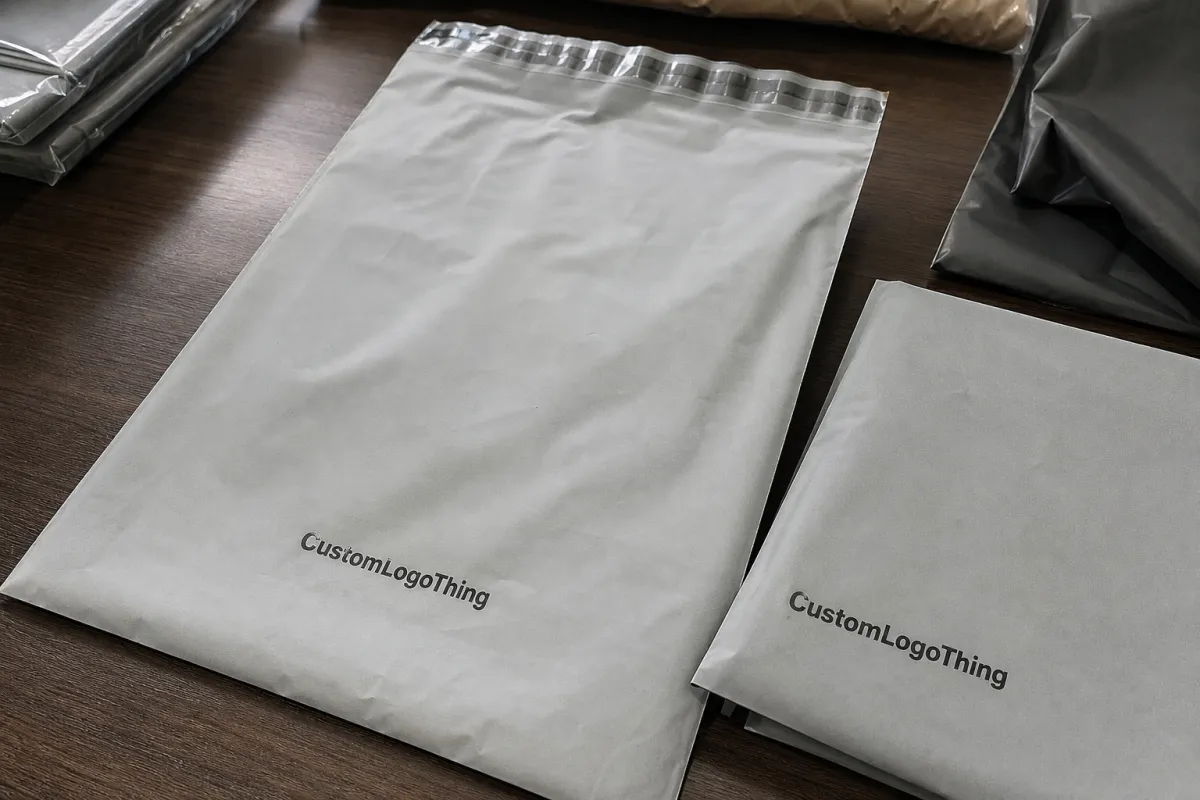
Soft-touch does not mean one exact construction. In most cases, the base is polyethylene, often LDPE, LLDPE, or a co-extruded blend, with a surface treatment that cuts gloss and changes the way the film feels in hand. Some suppliers use a matte coating or varnish. Others use a laminated layer. Some build the tactile effect directly into the film. Those options can look similar on a screen and feel very different in real use.
That difference matters because the finish affects more than touch. It changes glare under warehouse lighting, how fingerprints show up, how a printed logo reads from arm's length, and whether a scuff is obvious after sorting. A buyer who compares only mockups may miss those details completely.
Material specs should start with the actual use case. If the order is light, flexible, and fairly flat, a soft-touch mailer can lift the presentation without much downside. If the product has sharp corners, rigid edges, or extra weight, the finish is secondary to thickness and seam quality. A good-looking bag that splits at the side seal is still a failure.
The finish shapes the first impression. The structure decides whether that impression survives transit.
Buyers who care about sustainability should separate material claims from marketing language. A plastic mailer and a paper mailer solve different problems. If the goal is recycled content, ask for the exact percentage, whether it is pre-consumer or post-consumer, and whether the finish changes the recyclability story. If a supplier uses terms like biodegradable or eco-friendly, ask for the document behind the claim, not the phrase itself.
That is especially important when the mailer is being compared with kraft paper or corrugated alternatives. Paper-based systems can be a better fit for some brands, particularly where the packaging must feel natural or rigid. But if the shipment needs moisture resistance, stretch, or a lower shipping weight, a PE mailer still has practical advantages. The right choice depends on the product, the channel, and the damage profile you expect.
How the Soft-Touch Layer Changes Feel, Grip, and Protection
The soft-touch layer changes the sensory experience immediately. Glossy film reflects light and often feels slick. A soft-touch surface lowers the glare and adds a faint drag that makes the package feel more controlled in the hand. That is why the finish tends to read as premium even before the logo is noticed.
There is also a handling benefit. Lower-gloss surfaces usually hide fingerprints, light rub marks, and warehouse scuffing better than shiny film. That does not make the bag immune to wear, but it can help the package look cleaner when it reaches the customer. In categories where unboxing is part of the product story, that can matter as much as the print itself.
Protection is where buyers sometimes overread the finish. Soft-touch does not automatically improve puncture resistance or tear strength. Those qualities come mostly from gauge, film blend, seal width, and how the mailer is made. A soft surface can make a package look protected; it cannot compensate for a weak film.
A useful comparison is this: glossy poly mailer, soft-touch poly mailer, and kraft envelope all solve different problems. Glossy bags are usually the least expensive and the most utilitarian. Kraft envelopes bring a paper feel and often work well for lighter, flatter goods. Soft-touch mailers sit between the two, adding a more refined hand feel while keeping the weight and moisture resistance of plastic.
For brands shipping apparel or subscription goods, that middle ground is often enough. For hard goods, the conversation shifts quickly toward structural fit, internal cushioning, and seam performance. A premium finish cannot rescue an underspecified package.
Testing should reflect that reality. Many packaging teams use a simple handling check: load the real product, seal the mailer, stack it, slide it across a table, drop it from a normal handling height, and inspect the print and surface afterward. Resources from ISTA are useful because they push the test back into transit behavior instead of staying at the sample stage.
Film Structure, Thickness, and Seal Specs That Matter
The surface finish gets attention, but the film structure carries the load. Most Custom Poly Mailers fall around 2.5 to 4.0 mil, or roughly 63 to 102 microns, depending on the product and the customer’s damage tolerance. Heavier builds can go beyond that. Thicker film usually improves puncture resistance, though it can also make the bag stiffer and less easy to fold or store.
That tradeoff is common. A brand wants a premium feel, but fulfillment teams want a bag that loads quickly, seals cleanly, and packs flat. A thicker mailer can protect better, but if it slows the line or feels bulky in the customer’s hand, it may not fit the program.
Seal design matters just as much. Peel-and-seal flaps are standard for shipping bags, but adhesive performance can shift with temperature, dust, and how long the flap sits before shipping. A weak seal opens too easily. An overaggressive one slows the pack line and can wrinkle the bag if workers need to reposition it. If the order will move through different warehouse conditions, the adhesive should be tested there, not just in a clean sample room.
Tear behavior is another detail worth checking. Some bags open with a clean tear, which can improve the customer experience. Others split too easily and create a failure point during sorting. That risk rises with boxed accessories, products with sharp edges, or anything that creates pressure against the inner face of the film. The mailer has to absorb that stress without turning brittle or over-stretched.
Print compatibility should be reviewed with the same care. Soft-touch surfaces can hold graphics very well, but not every finish handles every ink system the same way. Fine type, small QR codes, deep blacks, and white underprint all deserve proof review. A design that looks crisp on a glossy bag can soften on a matte or tactile film if the ink density, curing, or adhesion is off.
At quote stage, buyers should ask for the exact film build, thickness tolerance, seal width, and print process. Flexographic printing, gravure, and digital all behave differently on a tactile surface. The same art file can produce different results depending on the line setup. That is why a mockup is not enough.
| Option | Typical Unit Cost at 5,000 pcs | Best Use | Tradeoff |
|---|---|---|---|
| Standard glossy poly mailer | $0.14-$0.22 | Basic apparel, low-touch fulfillment | More reflective, less tactile |
| Soft-touch poly mailer | $0.18-$0.30 | Premium branding, subscription orders | Higher cost, finish needs tighter spec control |
| Heavy-gauge soft-touch mailer | $0.24-$0.38 | Denser or more fragile shipments | Stiffer feel, more material cost |
Those ranges are directional, not fixed. Freight, pouch format, print coverage, color count, and MOQ can move landed cost more than the unit price does. A simple design in a larger run may beat a smaller, heavily printed order even when the headline price looks worse at first glance.
Process and Turnaround: From Spec Sheet to Finished Mailers
Production starts with the spec sheet, not the artwork. A good sheet lists size, film thickness, finish type, adhesive type, print colors, and pack format. Without that, the project drifts. Most delays happen because one of those details was assumed instead of confirmed.
After the specs come proofs and samples. This is where buyers should check more than color. The proof should show logo placement, safe zones, seams, flap position, and any text that could sit near a fold or edge. With a soft-touch finish, the sample should also show whether the final look has the right amount of sheen reduction and whether the surface still reads cleanly under bright light.
Lead time depends on how custom the order really is. Simple runs with standard sizing and modest print coverage often move in about 10 to 15 business days after approval. More complex projects take longer because of extra proofing, film sourcing, drying, or multi-step finishing. Multiple SKUs can add time as well. So can low-volume orders that still need full setup.
That timeline should be broken into stages. Proofing, production, and freight are not the same thing, and they do not move at the same speed. If the vendor gives only one vague date, buyers lose the chance to plan receiving, inventory, and launch timing.
It also helps to align the mailer schedule with any carton or insert work. If other packaging elements use FSC certified paper or corrugated cardboard, the ship dates should be planned together. One late component can hold up the whole order, even if the mailers are finished first.
A practical production habit is to keep a pre-production sample on file. If the brand later reorders, the team can compare the new run against the approved sample instead of rebuilding the spec from memory. That avoids drift in film feel, print density, and seal behavior.
Cost, Pricing, MOQ, and Quote Drivers You Should Compare
Price only makes sense when the buyer knows what is driving it. In soft-touch mailers, the major cost factors are film grade, thickness, finish method, print coverage, number of colors, quantity, and packaging format. A minimal design on a standard gauge can look inexpensive until the quote adds a premium tactile layer and a low MOQ.
MOQ is a real decision point. A brand testing a new design may prefer a slightly higher per-unit cost if the order size is manageable. A lower unit price tied to a large minimum can create inventory pressure, especially for seasonal launches or short campaigns. Cheap inventory that sits too long is still expensive inventory.
Setup fees matter too. Plate charges, color matching, tooling, and carton packing can sit outside the unit price. Freight can change the final number even more, particularly if the order ships in multiple cartons or from a farther fulfillment point. A quote that looks good on paper can move sharply once those items are added.
The better comparison is landed cost per mailed unit. That puts the focus on the actual expense of getting the package out the door. Then the next question is brand value. If the finish improves first impressions, supports higher perceived quality, or fits a premium line, the added cost can be justified. If the packaging role is purely utilitarian, a simpler bag may be the stronger business decision.
One caution: a lower quote can hide weaker material or looser tolerances. That shows up later as more damage, more reorders, or inconsistent color across runs. For a shipping bag, the cheapest number is rarely the cleanest total cost.
Compare the landed cost, not just the quote, and measure the finish against handling reality rather than a mockup.
If sustainability enters the brief, keep the questions specific. Ask whether the film contains recycled content, whether that content is post-consumer or pre-consumer, and whether the finish changes the claim. If the package is meant to be presented as lower-impact, the vendor should be able to point to the exact material composition. Vague language is not enough.
Size, Closure, and Print Decisions That Match the Shipment
Size should be determined by the packed product, not by what seems standard. A folded tee, a knit item with extra air, and a boxed accessory all occupy different space once they are inside the bag. The right mailer fits with a small amount of room to spare. Too much space wastes material and can make the package look underfilled. Too little strains the flap and makes the bag harder to close.
Closure style should follow the shipping route. Most Custom Poly Mailers use a peel-and-seal flap, but adhesive length and flap width can be adjusted. If the package will move through more handling points, a stronger adhesive strip may be worth the extra cost. If customers need an easy opening experience, a tear notch or controlled opening path can help. For returns-heavy programs, a reseal option can make sense, though it adds complexity.
Print should work with the surface instead of fighting it. Soft-touch mailers tend to favor strong contrast, clean logos, and limited palettes. Heavy graphics can flatten the tactile effect and make the bag feel busy. Fine detail is possible, but it needs enough contrast and enough quiet space around it to stay legible.
The channel matters as well. A direct-to-consumer order can justify a more expressive layout because the package is part of the brand experience. A wholesale shipment or back-of-house movement usually benefits from simpler art and faster pack-out. If one mailer has to do both jobs, the art should stay restrained and the spec should stay consistent.
Many brands pair the mailer with a cleaner supporting system: a simple insert, a kraft paper wrap, or an FSC certified corrugated carton for split shipments. That approach keeps the presentation clear without forcing every part of the package to carry the same visual weight.
Common Mistakes That Lead to Scratches, Slips, or Reorders
The first mistake is assuming every soft-touch surface behaves the same way. It does not. One bag may resist scuffs well, while another shows rub marks after a short run through a conveyor or stack. One print setup may hold color perfectly, while another needs tighter control. Buyers who approve from a single untouched sample often find out too late that warehouse handling changes the result.
The second mistake is underspecifying thickness. A thin bag may work for a light garment, then fail the moment the product has a box insert, a corner, or an uneven shape. In those cases, a slightly heavier gauge can solve the problem without changing the brand feel much at all.
Artwork errors are another easy source of waste. Logos too close to a fold, small text on low-contrast fields, and barcodes set in the wrong location all create avoidable issues. Good proofing means checking the dieline, the safe zones, and the way the print will sit after the bag is folded and sealed.
Operational drift is just as common. If the first order was approved six months ago and nobody kept the exact finish, thickness, adhesive, and print setup, the next run may come back slightly different. That difference can be enough for the brand team to notice, even if production sees it as normal variation.
Another missed check is system fit. A soft-touch mailer may look excellent by itself and still clash with a glossy label, a rough insert, or a plain corrugated box. Packaging is a system. If one layer feels premium and the next feels generic, the mismatch becomes obvious very quickly.
Finally, do not confuse surface feel with shipping strength. The finish improves perception and can reduce visible wear. It does not fix a weak seam, poor adhesive, or a bad size choice. That is where most avoidable reorders begin.
Next Steps: Sample, Test, and Lock the Order
The best buying process is direct. Start with a physical sample that matches the exact finish and gauge you plan to order. Put your real product in it. Check the seal. Check the print. Check how the surface looks after it has been handled more than once.
If possible, run a short transit test or a warehouse simulation. Pack the item, seal the flap, drop the mailer from a normal handling height, and inspect the result. Look for scuffs, corner stress, adhesive lift, and print wear. A polished sample that fails after one short test is a warning, not a disappointment.
Before the final purchase order, build a one-page spec record. Include size, thickness, finish, print colors, closure style, MOQ, pack count, and delivery timing. It is not glamorous. It is the document that keeps the second order from drifting away from the first.
For brands that want a tactile upgrade without making the supply chain more complicated, the strongest approach is usually simple: keep the structure clear, keep the artwork disciplined, and let the finish do what it does best. Used well, the soft-touch layer adds value without pretending to replace engineering.
The most useful takeaway from any Soft Touch Poly Mailers material guide is plain enough. Sample first. Compare landed costs, not just quotes. Test in real handling conditions. Then approve the run only after the finish, the film, and the seal have all done their job.
What are soft touch poly mailers made of?
They usually use a polyethylene base with a surface treatment or added layer that lowers gloss and creates a softer hand feel. The exact build can be a coating, lamination, or a film blend with tactile additives. That difference affects print quality, durability, and how the bag feels after handling.
Do soft touch poly mailers protect products better than standard mailers?
They can improve appearance and help hide light scuffs, but protection comes mostly from thickness, seam quality, and the fit of the product inside the bag. If the item has sharp corners or extra weight, the gauge matters more than the finish.
How does finish choice affect soft touch poly mailers pricing?
Premium finishes add material and conversion cost. Print coverage, number of colors, film thickness, and order volume can move the price further. Ask for quotes at several quantities so you can compare MOQ impact as well as unit cost.
What lead time should I expect for custom soft touch poly mailers?
Simple runs may finish in about 10 to 15 business days after approval. More customized orders take longer because of proofing, sourcing, setup, and print complexity. Freight should be timed separately so receiving does not slip.
What should I test before placing a soft touch poly mailers order?
Test the mailer with the actual product, not a placeholder. Check seal strength, print clarity, surface wear, and how the package feels after handling. A short drop or transit simulation can reveal problems that a desk sample will miss.


