Gift Set Soft Touch Poly Mailers Lead Time: What Actually Moves the Calendar
For a retail launch, corporate gifting program, or seasonal kit, gift set Soft Touch Poly Mailers lead time can decide whether the project lands cleanly or turns into a week of apologies and expediting fees. Buyers usually look at the factory promise and assume the clock starts there. It does not. The real schedule begins earlier, with artwork, approvals, film availability, and the amount of time it takes multiple teams to agree on one version.
Gift sets make the timeline less forgiving. A plain shipping mailer can often move quickly if the size is standard and the print is simple. A premium gift presentation asks for more: a softer finish, cleaner color, tighter fit around the contents, and packaging that looks deliberate the moment it is pulled from the carton. Each of those details adds decision points. Decision points add time.
The most common reason buyers are surprised is that they treat lead time as one number instead of a chain. Proof approval, material sourcing, print setup, drying or curing, inspection, and freight each claim a piece of the schedule. If one stage slips, the next stage waits. That is how a quote that looks fast on paper still misses the launch window in practice.
There is also a subtle trap in the phrase itself. People hear "poly mailer" and think commodity. Then the word "soft touch" appears, followed by "gift set," and the project stops behaving like a standard packing item. The bag is no longer just a shipping layer; it is part of the presentation. That changes expectations for finish consistency, print quality, and even the tolerance for small defects.
Gift set soft touch poly mailers lead time: why buyers get surprised
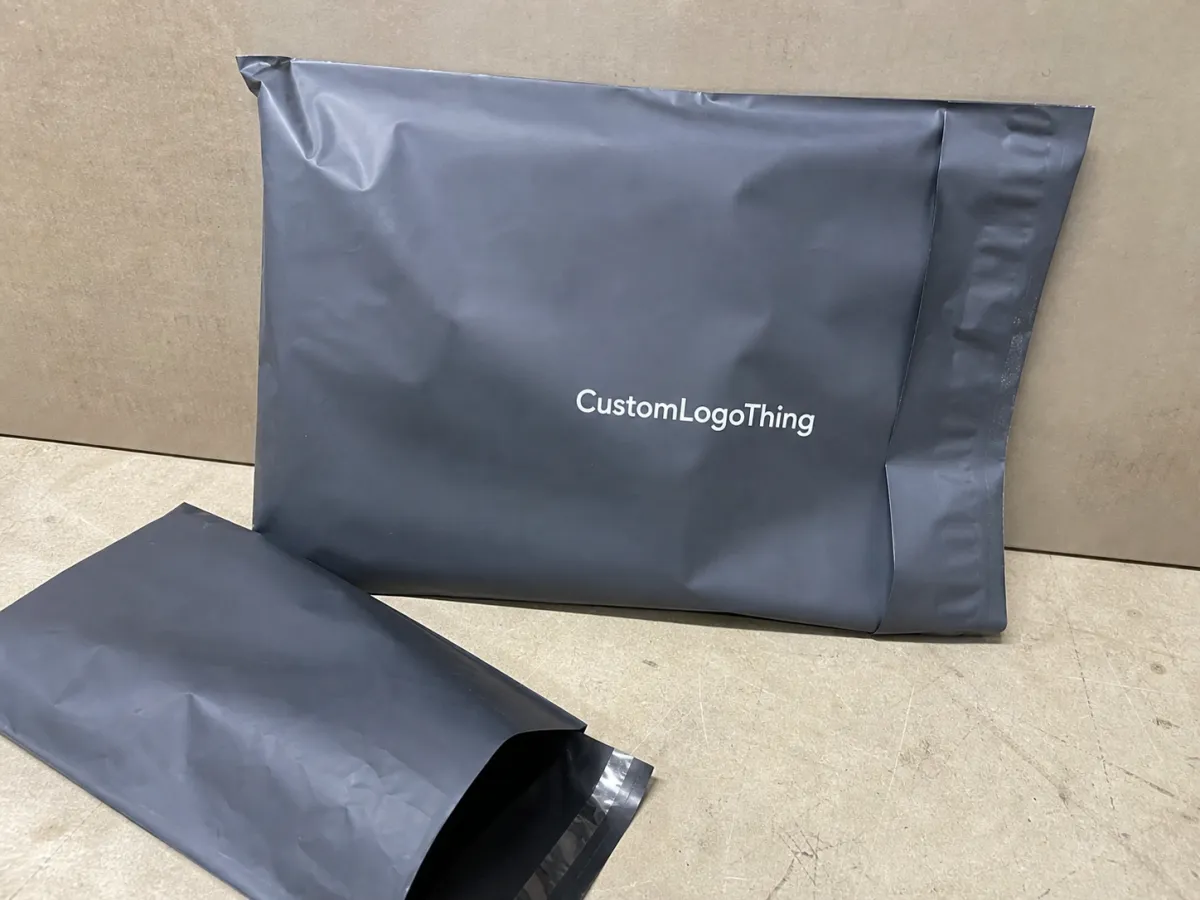
Lead time surprises usually come from trying to compress too many variables into one approval cycle. A buyer may ask for a custom size, full-bleed print, premium matte feel, and a tight delivery date, then expect the order to move like stock inventory. That is not how most packaging lines behave. The more custom the spec, the more likely a supplier has to coordinate film, ink, tooling, and scheduling in sequence rather than in parallel.
Soft-touch mailers are especially sensitive to approvals because the finish changes how color reads. Dark tones often look deeper on a matte surface. Light colors can flatten. Fine type can lose clarity if the print build is not dialed in. A proof on a screen or a simple PDF cannot fully show those effects, which is why teams that skip physical confirmation tend to revisit the art after production has already started. That is the kind of rework that stretches a delivery date by several business days without anyone touching the press.
Another reason buyers get caught off guard: gift sets tend to have more internal stakeholders than ordinary shipping programs. Marketing wants the design to look elevated. Operations wants the bag to fit the contents without extra packing labor. Procurement wants a price that makes sense across SKUs. Sales may want a quicker drop because the launch date is already public. If the final decision-maker is not clear, the proof cycle becomes a relay race with no finish line.
A useful way to think about the timeline is this: the printing stage is often visible, but the waiting around it is what hurts. A job can sit a day or two waiting on art sign-off, then another day waiting for the right film roll, then another for freight booking. By the time the bags are in cartons, the production run may have taken less time than the approvals around it.
For teams trying to align terminology before requesting samples or releasing a PO, the Institute of Packaging Professionals is a useful reference point. It will not replace a supplier quote, but it helps buyers ask better questions about film type, closure style, and production constraints.
What soft-touch poly mailers are and where gift sets fit
Soft-Touch Poly Mailers are flexible mailers made from polyethylene film or a similar plastic structure with a matte, smooth-feeling exterior. The soft-touch effect can come from a specialty surface treatment, a laminated film construction, or a matte top layer that changes the hand feel and reduces glare. The exact build varies by supplier, but the goal is consistent: a mailer that feels more premium than a glossy standard shipping bag.
That premium feel matters in gift programs because the outer pack is part of the unboxing sequence. A customer may first see the mailer before reaching the contents, and that first touch sets the tone. A matte surface signals care. A crisp seal tells the recipient the bag was packed with intention. A clean print impression makes the item feel designed rather than improvised. None of that changes the basic shipping function, but it changes how the brand is perceived before the contents are even opened.
Gift sets fit this format well when the packaging needs to be light, branded, and quick to assemble. Apparel kits, accessory bundles, cosmetics samples, promotional sets, and seasonal inserts all work well in poly mailers if the sizing is correct. If the contents are rigid, fragile, or unusually thick, the buyer may need a different build altogether. That is one of the first practical checks: does the item need a mailer, or does it need a more structured pack?
Stock versions can work for straightforward programs that only need a label or a simple logo. Custom versions become more useful when the size, seal width, or print coverage has to match the gift set itself. A slim two-piece bundle does not need the same dimensions as a gift box with inserts. A winter promotion may need more depth. A luxury sample kit may need a deeper matte tone and tighter registration. Small differences like these quickly affect both cost and schedule.
If you are comparing packaging formats, it helps to review Custom Poly Mailers alongside broader Custom Packaging Products. The mailer often looks simple on its own, but the budget and timing make more sense when it is evaluated beside the rest of the kit.
Production steps that shape the timeline
Most of the lead time lives in the handoffs. A good supplier can move quickly once the job is locked, but the lock itself takes work. The sequence usually includes spec confirmation, artwork proofing, material sourcing, printing, finishing, quality control, and freight booking. Each stage has a different way to slow things down.
- Spec confirmation: size, film thickness, closure type, print area, and finish are defined.
- Proofing: the buyer checks layout, logo placement, color references, and copy accuracy.
- Material sourcing: the supplier secures the right film, adhesive, and finish components.
- Printing: the artwork is applied, usually after setup and press calibration.
- Finishing: the mailers are cut, sealed, or prepared for packing based on construction.
- Quality control: seal integrity, color consistency, registration, and dimensions are checked.
- Freight: the order moves by parcel, LTL, air, or ocean depending on urgency and quantity.
Some parts of the process can overlap. Freight estimates can be started while artwork is still being reviewed. Material sourcing can begin after the quote is accepted. But production cannot begin until the art is approved, and shipping cannot be scheduled cleanly if the carton count is still changing. That is why the timeline is less about one long production block and more about how well the buyer and supplier coordinate the blocks around it.
Soft-touch finishes often add a little more handling time than a basic mailer. Some materials need extra drying or curing before they can be stacked or packed. That matters less in a small sample run and more in a larger order where one process delay affects the whole batch. A late-stage QC issue is especially expensive because it interrupts the calendar and can force a second approval loop. Many teams focus on the press time and overlook the queue time. Queue time is where the schedule quietly disappears.
Shipping also deserves attention before the bags are finished. International freight, customs checks, and port congestion can add more variance than the production line itself. Domestic dispatch tends to be simpler, but even then the receiving dock, unloading hours, and carton labeling can push back the effective delivery date if the destination is not ready.
For programs that need to survive parcel handling, the testing framework from ISTA is a useful benchmark. It is not a guarantee, but it helps teams think about compression, stacking, vibration, and mixed freight before they commit to a production spec.
Cost, pricing, and MOQ drivers buyers should compare
Pricing for soft-touch gift set mailers is shaped by more than the bag size. Material grade, film thickness, print coverage, finish type, and quantity all matter. A larger bag uses more resin. A heavier gauge film costs more and may require more careful handling. Full-bleed artwork takes more setup and press time than a small logo in one corner. Even the closure style can shift the economics if it changes the production sequence.
MOQ is just as important. Smaller runs spread setup cost across fewer units, which pushes the unit price up. Larger runs usually lower the per-bag cost, but they also increase cash tied up in inventory and storage. Gift set programs often use more than one SKU, so the order can become a matrix of sizes, colors, and seasonal variants. One style for the base kit, one for the deluxe tier, another for a holiday version: each variation adds another line to the schedule and to the quote.
| Option | Typical use | Indicative unit price at 5,000 pcs | Usual setup cost | Typical lead time after approval |
|---|---|---|---|---|
| Stock soft-touch mailer with label | Fast-moving gift programs with limited branding | $0.18-$0.28 | $0-$50 | 5-8 business days |
| Printed custom mailer | Standard branded gift sets | $0.26-$0.48 | $80-$250 | 12-18 business days |
| Fully custom size and finish | Premium gift set launches with tight presentation standards | $0.38-$0.75 | $150-$400 | 15-25 business days |
Those numbers are directional, not fixed. Film market swings, print method, destination freight, packaging configuration, and holiday backlog can all move the quote. A low unit price is not always the cheaper order. Setup fees, tooling, freight, and rush charges can hide the real cost. Smaller programs feel this most sharply because the non-material charges make up a larger share of the total.
These details are worth checking before approval:
- Exact size, tolerance, and film thickness
- Print colors, coverage, and whether the design is one-side or two-side
- How the soft-touch finish is achieved and whether it affects print sharpness
- MOQ by SKU, not just total program quantity
- Freight method, packaging count, and whether shipping is included in the quote
If the order also includes inserts, cards, or branded outer cartons, the mailer may not be the main cost driver at all. Buyers often compare the bag price alone and forget that the gift set is a system. A cheap mailer attached to an expensive insert stack does not create a cheap program.
Step-by-step ordering plan that protects the schedule
A good ordering process cuts risk more effectively than any rush fee. Start with the use case. A retail gift set, a subscriber insert, a corporate giveaway, and a seasonal bundle each create different requirements for size, appearance, and shipping durability. If that use case is unclear, the rest of the spec usually wanders.
Next, lock the dimensions and closure style. Then lock the artwork. A logo placed too high, a missing disclaimer, or a last-minute color adjustment can trigger a new proof round. That may sound minor, but a fresh proof can push the job behind other queued orders. Once the proof is clean, confirm quantity, carton count, ship-to address, and the week the launch actually needs the goods.
Internal buffer time matters more than most procurement calendars admit. Marketing needs time to review. Operations needs time to test the packing line. Procurement needs time to issue the PO after the final sign-off. If the vendor is waiting on the buyer, the schedule is already thinner than it appears.
A practical pre-order checklist:
- Final dimensions and acceptable tolerance
- Film thickness and finish preference
- Approved artwork file and color reference
- Quantity by SKU and any backup quantity for demand spikes
- Ship-to location, receiving hours, and unloading method
- Required delivery week, not a loose target month
The phrase Gift Set Soft Touch Poly mailers lead time sounds like a vendor question, but it is really a scheduling question. The closer the launch date gets, the less room there is for loose language in the spec. If the paperwork says "sometime next month," the production plan will usually behave like it.
One useful discipline is to ask for milestone dates instead of a single delivery promise. Proof approval date, material arrival date, production window, inspection date, and freight booking date all reveal where the order can slip. A single ship date hides too much. Milestones make the risk visible while there is still time to do something about it.
One extra day spent on approval can be cheaper than one wrong production run, but only if that day is built into the schedule on purpose.
Common mistakes that stretch delivery dates
Vague specs are the first trap. "Medium size" and "premium finish" are not production instructions. They force the supplier to guess, and guessing is a bad way to order packaging. A clean spec sheet saves more time than most buyers expect because it reduces the back-and-forth that usually clogs email threads.
Late artwork swaps are the second trap. A team notices a tagline change after the proof has already moved into approval. That means another proof, another review cycle, and another delay. The problem is not the change itself; it is the timing of the change.
Another mistake is assuming one size works for every version of a gift set. A mailer that fits a tee and a note card may fail once the kit includes a bottle, a rigid insert, or a heavier component. Test packs expose those problems quickly. Waiting until final freight packing is a slower way to discover them.
Color approval can also create hidden delays. Screen images are useful, but they are not proof. A matte soft-touch surface changes how inks appear, especially with dark tones and subtle gradients. Buyers who approve from a monitor alone often discover a mismatch only after the first production sample arrives. Physical references reduce that risk, and so do clearly written expectations about acceptable variation.
Freight is the last common weak point. Customs clearance, missed pickups, rework, or a scheduling issue at the receiving end can undo a good production run. If the order is international or the launch date is fixed, build in more slack than feels comfortable. Comfort is not the objective. On-time receipt is.
Expert checks for tighter forecasting and cleaner approvals
One final approver helps more than most teams expect. Multiple reviewers are fine for governance, but the supplier should know exactly who can give the final yes. Otherwise the proof behaves like a document everyone sees and nobody owns. That is how a small packaging project turns into a long chain of forwarded emails.
Written tolerances matter too. If the buyer can accept a slight shade variation or a narrow size range, that should be stated before production begins. Clear tolerances protect both sides. They also reduce disputes over acceptable variation, which matters more on launch-sensitive programs where no one wants a debate after the goods are already in transit.
For orders tied to a firm date, ask for a schedule that shows the checkpoints, not just the finish line. A useful quote includes proof approval timing, material availability, production window, inspection date, and freight booking date. Those details expose the bottleneck before it becomes expensive. A single ship promise hides too much risk.
It also helps to think about the packaging as part of the transport plan, not just the design plan. The ISTA framework can help teams evaluate handling stress before cartons leave the building. If the gift set includes paper inserts or printed components, a paper sourcing note such as FSC certification may matter for the larger sustainability story, even if the mailer itself is film-based. That kind of distinction keeps the packaging brief honest instead of overly tidy.
One more practical point: a backup spec is often cheaper than a delayed launch. A second size, a simpler finish, or a reserve supplier gives procurement a path forward if the first material source gets tight. Most buyers never need the backup. They need the option to avoid panic if the original plan starts slipping.
Next steps: lock specs, confirm dates, and place the order
By the time the order is ready, the critical details should be simple to state: dimensions, quantity, artwork, finish, ship-to location, and required delivery week. If any of those are still fuzzy, the lead time is probably fuzzier than the quote suggests. That is true whether the order is a small holiday run or a larger retail program.
Compare the quote against the actual packaging need, not just the lowest per-bag number. A low unit price can be misleading if it comes with a high setup fee, a long approval loop, or freight that adds more than expected. The cheapest visible line item is not always the cheapest order.
Most missed dates do not happen because the factory moved slowly. They happen because the spec was loose, the proof came back late, or the freight assumption was too optimistic. Once those three variables are controlled, gift set Soft Touch Poly Mailers lead time becomes much easier to manage. The production run still has to happen, but the job stops being a guessing game.
How long is the gift set soft touch poly mailers lead time for a custom order?
It depends on whether the order is stock, printed, or fully custom. A simple stock mailer with a label may move in 5-8 business days after approval, while printed custom mailers often need 12-18 business days. Fully custom sizes and finishes usually take longer, especially if freight is international or the artwork needs another revision.
What pricing factors affect custom gift set soft-touch poly mailers the most?
Size, film thickness, print coverage, finish type, and quantity usually drive the biggest swings. Setup fees and freight can matter as much as the unit price on smaller programs. If one gift set line includes several SKUs, the total spend can rise faster than expected because each variation carries its own setup burden.
Can I shorten soft-touch poly mailer turnaround without changing the design?
Yes, if the artwork is approved quickly and the spec does not change after quoting. Choosing a stock size or a simpler print setup can cut queue time and reduce back-and-forth. Rush service only helps if the material, proof, and production slot are already available.
What MOQ is typical for gift set poly mailers with a soft-touch finish?
MOQ varies by supplier, print method, and whether the order has one SKU or several. Smaller quantities usually raise the unit price because setup and press time are spread across fewer bags. If the launch is time-sensitive, ask whether the supplier can quote a pilot run and a replenishment run separately.
How do I keep a gift set soft touch poly mailers lead time from slipping?
Lock the size, artwork, quantity, and ship date before production starts. Use one approval owner and confirm revisions in writing. Build buffer for proofing, freight, and rework so the launch date does not depend on a perfect run.


