The first touch matters. A Gift Set Soft Touch Poly mailers material guide should help a buyer choose a mailer that feels premium, protects the contents, prints cleanly, and stays within budget. For gift sets, the outer bag is part of the product experience, so the decision is about more than appearance.
Why soft-touch mailers feel premium without adding much bulk
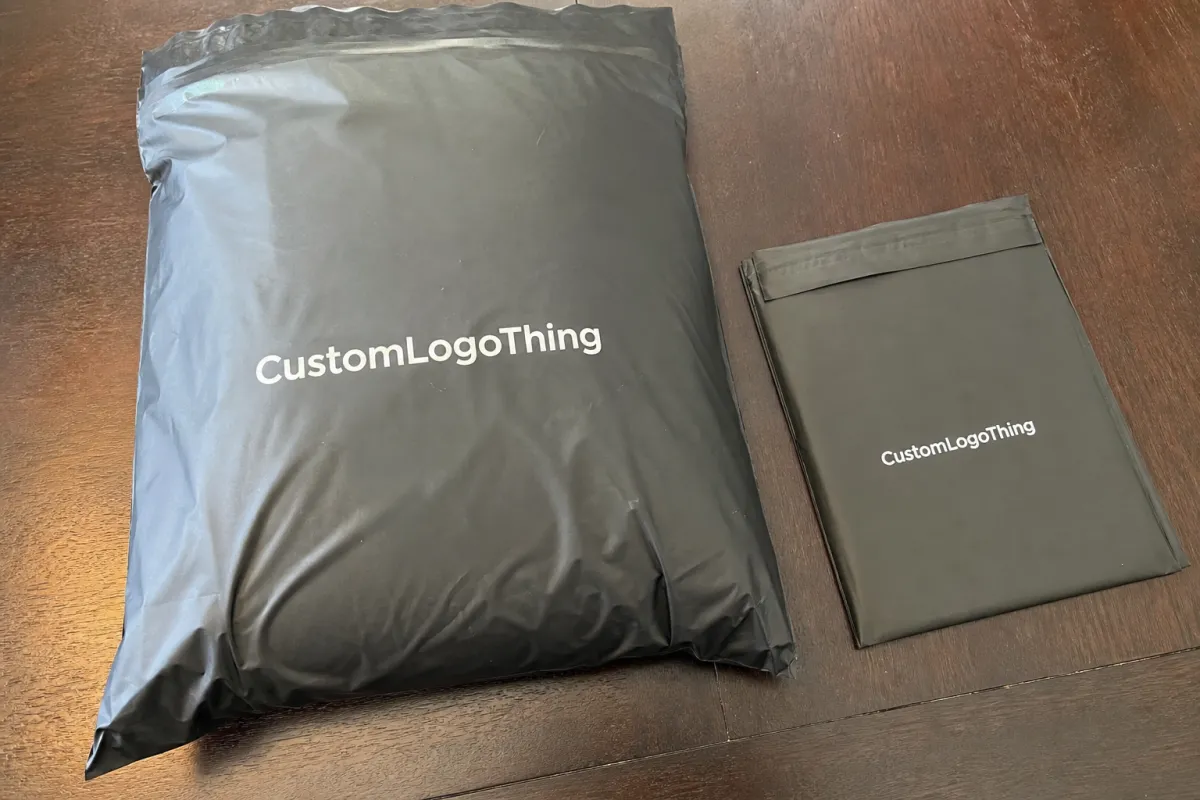
Gift set mailers have to protect the contents and set the tone before the package is opened. Soft-touch finishes matter because the customer touches the mailer first, and that first impression carries a lot of weight.
The premium feel usually comes from the surface treatment, not from a much thicker bag. A 3 mil matte soft-touch mailer can feel more upscale than a gloss bag of similar thickness because it reduces glare and gives the surface a calmer, more controlled hand-feel.
For gift sets, that tactile quality matters more than it does for a standard shipping bag. The outer mailer is part of the unboxing system, so the finish, print, and structure should work together instead of competing.
A premium-feel mailer that scuffs, splits, or prints muddy is just an expensive way to disappoint people.
A useful gift set Soft Touch Poly Mailers material guide compares feel, protection, print performance, and cost together. Judge only by touch and you may miss seal issues. Judge only by thickness and you may miss finish problems. The real answer is in the balance.
What the material is made of and how the soft-touch finish works
Most custom soft-Touch Poly Mailers use a PE-based film, usually LDPE, LLDPE, or a blend of both. LDPE gives flexibility and a softer drape. LLDPE improves tear resistance and puncture performance. Many suppliers blend them to keep the mailer flexible without making it feel flimsy at the seam or corners.
The soft-touch look usually comes from a matte surface treatment, a laminate layer, or a co-extruded outer film that cuts glare and changes the hand-feel. That is why two mailers with the same thickness can feel very different. One may feel slick and shiny, while the other feels muted and more refined.
This term can cover several constructions, so buyers should ask how the finish is built. Some suppliers use a matte additive in the outer layer. Others use a coated film or a co-extruded face layer. The construction affects print adhesion, scuff resistance, and how the bag behaves in transit.
The surface choice affects more than comfort. It changes how the logo reads, how white ink pops, and how much abrasion shows after sortation. A mailer can still be moisture resistant, opaque, and tough enough for parcel handling while feeling soft to the touch, but the exact structure needs to be specified.
Do not assume that "premium" means better in every direction. A more complex finish can raise the quote, complicate recyclability claims, or make print adhesion more sensitive if the supplier uses the wrong ink system. If sustainability matters, keep claims tied to the actual component. For broader shipping and sourcing context, standards from ISTA help frame transit testing, and FSC remains useful for paper-based components.
Film thickness, seal strength, and printability
Thickness matters only when it matches the contents and the shipping route. Lightweight apparel kits and rigid sets with glass or hard corners do not need the same film. For many branded gift mailers, useful specs sit in the 2.5 to 4 mil range. Heavier or sharper-edged sets may need 4 to 6 mil if puncture risk is real.
The seam and closure matter just as much as the film. A bag often fails at the seal area, not in the center panel. Ask about adhesive width, seal consistency, and edge strength. A wider adhesive band can be more valuable than another half mil of film when the package is heavy or shifts during transit.
Printability deserves close attention too. Dark backgrounds, matte surfaces, and some coatings change logo sharpness and color accuracy. Fine text can look muddy if the print method is wrong, and white ink may need a stronger underbase on dark films.
The best test is not a flat swatch on a table. Pack the actual gift set, including inserts, tissue, cards, and any rigid product component, then check the bag under real handling. Box corners behave differently than soft goods, and glass behaves differently than folded apparel.
Ask the supplier for the details that usually get skipped in sales sheets:
- What is the actual film structure, not just the marketing name?
- Is the finish laminated, coated, or co-extruded?
- What seal strength or tear data can they provide?
- How does the print method behave on matte film?
- Can they run a packed sample before full production?
Also check scuff visibility. Soft-touch surfaces can look excellent on day one and still show rub marks if the parcel travels through an abrasive route or shifts against a rigid insert. That does not make the material unsuitable, but it does mean the bag should be tested in the same packing configuration it will face in production.
Cost, pricing, MOQ, and unit cost
A gift set soft touch Poly Mailers Material guide only helps if it supports pricing decisions. The main cost drivers are resin grade, size, thickness, finish type, print coverage, color count, adhesive upgrades, and whether the order is stock-based or fully custom. The more variables you add, the faster the price rises.
MOQ changes the math more than most teams expect. Many custom programs start around 3,000 to 5,000 units, although simpler overprints or stock-based runs can sometimes go lower. Small runs absorb setup cost poorly, so a 1,000-unit order can carry a much higher unit cost than a 5,000-unit order even if the material spec is similar.
Indicative pricing helps teams frame the decision, but it should not be mistaken for a final quote. Size, freight, artwork complexity, and adhesive upgrades can move the numbers quickly.
| Option | Typical spec | Typical MOQ | Indicative unit cost | Best fit |
|---|---|---|---|---|
| Plain stock PE mailer | 2.5-3 mil, no custom print | 500-1,000 | $0.09-$0.16 | Internal shipping, low-brand use |
| Standard custom printed mailer | 3-4 mil, gloss or matte | 3,000-5,000 | $0.14-$0.28 | Basic branded gift sets |
| Soft-touch custom mailer | 3-5 mil, matte soft-touch finish | 3,000-5,000 | $0.18-$0.38 | Premium DTC kits and launches |
Those figures move with size, print coverage, and freight, so use them as buying ranges, not promises. A full-bleed print, a custom color, or a stronger adhesive can add cost quickly. Late artwork changes can do the same.
Ask for a line-item quote, not just a total. You want base bag cost, print cost, tooling or plate cost, sample charges, and freight separated out. That is the fastest way to compare a soft-touch option against a standard matte bag or a simpler stock alternative from Custom Poly Mailers. The cheapest unit price is not always the lowest landed cost if the bag fails inspection or needs rework.
Production steps, lead time, and turnaround from file to shipment
Production is usually straightforward if approvals move on time. The standard sequence is spec confirmation, artwork review, proof approval, material sourcing, production, inspection, packing, and freight booking. Miss one decision early and the schedule slips.
For a typical custom run, a reasonable manufacturing window is often 12 to 18 business days after proof approval. More complex jobs can run longer, especially if they need a custom color, unusual finish, or extra quality control on print registration. Rush production may be possible, but only if the artwork is already locked.
Samples save money later, but they cost time now. If the package has to feel premium in person, a physical prototype is worth considering. If the launch date is tight and the structure is simple, a digital proof may be enough to keep the job moving.
Separate production time from transit time. A five-day freight leg can still derail a launch if the order needs to land before a seasonal push. If the set is tied to an event or campaign, build in a cushion. Two days is not a cushion.
A decent QC process usually includes film gauge verification, seal inspection, print alignment, color matching against approved artwork, and a quick stress check on the finished bag. Some suppliers also inspect for pinholes, uneven matte coverage, or weak adhesive placement. For rough handling routes, ask whether the packed mailer can be tested against a realistic transit scenario. Standards from groups like ISTA keep that discussion tied to transit behavior instead of assumptions.
How to choose the right size, closure, and finish for gift sets
Size the mailer to the actual packed set, not the empty insert. Add the inserts, tissue, sample cards, and any extra thickness from a rigid carton or tray. A mailer that looks roomy on paper can still crush a corner once the set is fully packed.
Closure style changes both the user experience and the failure mode. Standard peel-and-seal closures work well for many DTC kits. Tamper-evident closures make more sense for higher-value sets or anything that needs a clearer opened signal. Wider adhesive bands help when contents are heavier or the mailer faces more stress during sorting.
Finish choice is a branding decision. A matte soft-touch mailer usually reads more luxury and more intentional. Gloss can look brighter and more promotional. If the artwork is bold and color-heavy, test both, because the wrong finish can flatten the design.
Match the bag to the use case:
- DTC gift boxes need strong seals and a clean print face.
- Influencer kits benefit from a finish that photographs well in hand.
- Sample sets often need lighter weight and lower freight cost.
- Subscription packs need repeatable sizing and reliable adhesive performance.
- Retail re-ships may need stronger puncture resistance and tamper control.
If you are building the full packaging system, not just the outer mailer, keep the rest of the materials aligned. A premium mailer next to a cheap insert or mismatched paper component looks unfinished. A broader product range such as Custom Packaging Products helps the outer and inner components stay visually consistent.
Soft-touch finishes are best judged under the lighting your customer actually sees. Studio light flatters almost everything. Warehouse lighting does not. If the mailer will be photographed for social content, check how the finish behaves on camera and in daylight, not just on a sample table.
Common mistakes that wreck the unboxing feel
The first mistake is choosing a premium-feel material and then covering it with too much graphics. If the point of the soft-touch surface is tactile restraint, a busy layout destroys the effect. Leave room for the finish to do its job.
The second mistake is ignoring abrasion. Soft-touch surfaces can show rub marks faster than a basic glossy film if the contents shift too much. If the box or product has sharp edges, add internal protection. Structural planning beats a lot of apology emails.
The third mistake is under-testing the packed shape and weight. A set that looks light on the spec sheet can still stress seams once it includes a rigid insert, a glass jar, or a chunky product box. Test with the actual load, not just the empty format.
The fourth mistake is sloppy brand alignment. Weak contrast, mismatched white levels, and awkward finish pairings all chip away at the premium feel. If sustainability is part of the pitch, be precise about claims. Do not call a standard PE film biodegradable unless the structure and claim can actually be documented.
Another trap is vague recycled-content language. Ask for the exact percentage and where it applies. A film can contain post-consumer content and still have a non-recycled adhesive or mixed-layer structure that affects end-of-life options. The wording should match the component, not the marketing deck.
Next steps: build a spec sheet and request a quote
If you want clean pricing and fewer revisions, build a spec sheet before asking for quotes. That one step usually saves time and cuts the quote ping-pong that eats up a week for no good reason.
- Measure the packed gift set, not the empty insert.
- Note the finished thickness and any rigid corners.
- Choose the finish: matte soft-touch, standard matte, or gloss.
- List the print areas and color count.
- State the quantity, target MOQ, and launch date.
- Ask for a sample or proof before approval.
Then compare at least two material options side by side. One should be the target soft-touch spec. The other should be a simpler alternative so the team can compare hand-feel, opacity, and scuff resistance with real samples instead of guessing from a catalog image.
If the order is tied to a launch, give yourself breathing room. Twelve business days is fine if everything is approved on time. It is not fine if the art file keeps changing. Production and transit are separate line items for a reason.
That is the practical version of a gift set soft touch Poly Mailers Material guide: define the feel, check the structure, ask for line-item pricing, and test the packed mailer before you commit. Do that, and future reorders get faster, cleaner, and usually cheaper.
Frequently Asked Questions
What is the best material for gift set soft touch poly mailers?
Look for a PE-based film with a soft-touch matte surface if you want a premium feel without making the bag bulky. If the gift set has rigid boxes, glass, or sharp corners, move up to a thicker structure so the mailer does not punish the contents. Ask for a sample and test feel, seal strength, and print quality together.
How thick should soft-touch gift set mailers be?
There is no single right number. Lightweight sets may work in the 2.5 to 3 mil range, while heavier or awkwardly shaped kits often need 4 mil or more. Match thickness to puncture risk and seam stress, not just appearance. A packed transit test is the best way to confirm the spec.
Do soft-touch poly mailers affect print quality?
Yes. Matte and soft-touch surfaces can change how color reads, especially on dark backgrounds or full-coverage artwork. Fine text and thin lines need extra care. Ask for a proof that shows logo placement, contrast, and small type clearly before you approve the run.
What drives the price of custom soft-touch mailers?
The biggest drivers are size, thickness, finish type, print coverage, and order quantity. MOQ matters because setup cost gets spread over fewer units on smaller runs, which pushes unit price up. Extra adhesive strength, custom colors, and late artwork changes can also move the quote fast.
What is a normal lead time for custom gift set poly mailers?
Lead time depends on proof approval, material sourcing, and production load, so always ask for both manufacturing time and transit time. A typical run may take 12 to 18 business days after approval, but rush orders, revised artwork, and sample requests can add time. If the launch date is fixed, build in a buffer.


