If you need a stationery refill Plastic Bags Carton quote worksheet, the first issue is rarely price. It is fit. Refills for notebooks, planners, sticky notes, pen sleeves, and accessory kits look simple until the bag slides inside the carton, corners rub, and the pack starts to look tired before it reaches a shelf.
That is why a stationery refill Plastic Bags Carton quote worksheet matters. It pulls the variables into one place: bag size, film, thickness, closure, carton inner dimensions, pack count, and whether the refill must sit tight or can move a little. Leave those out and the quote usually comes back vague, the sample arrives wrong, and the second round costs more than the first.
Why stationery refills need tighter bag specs than “standard” poly bags
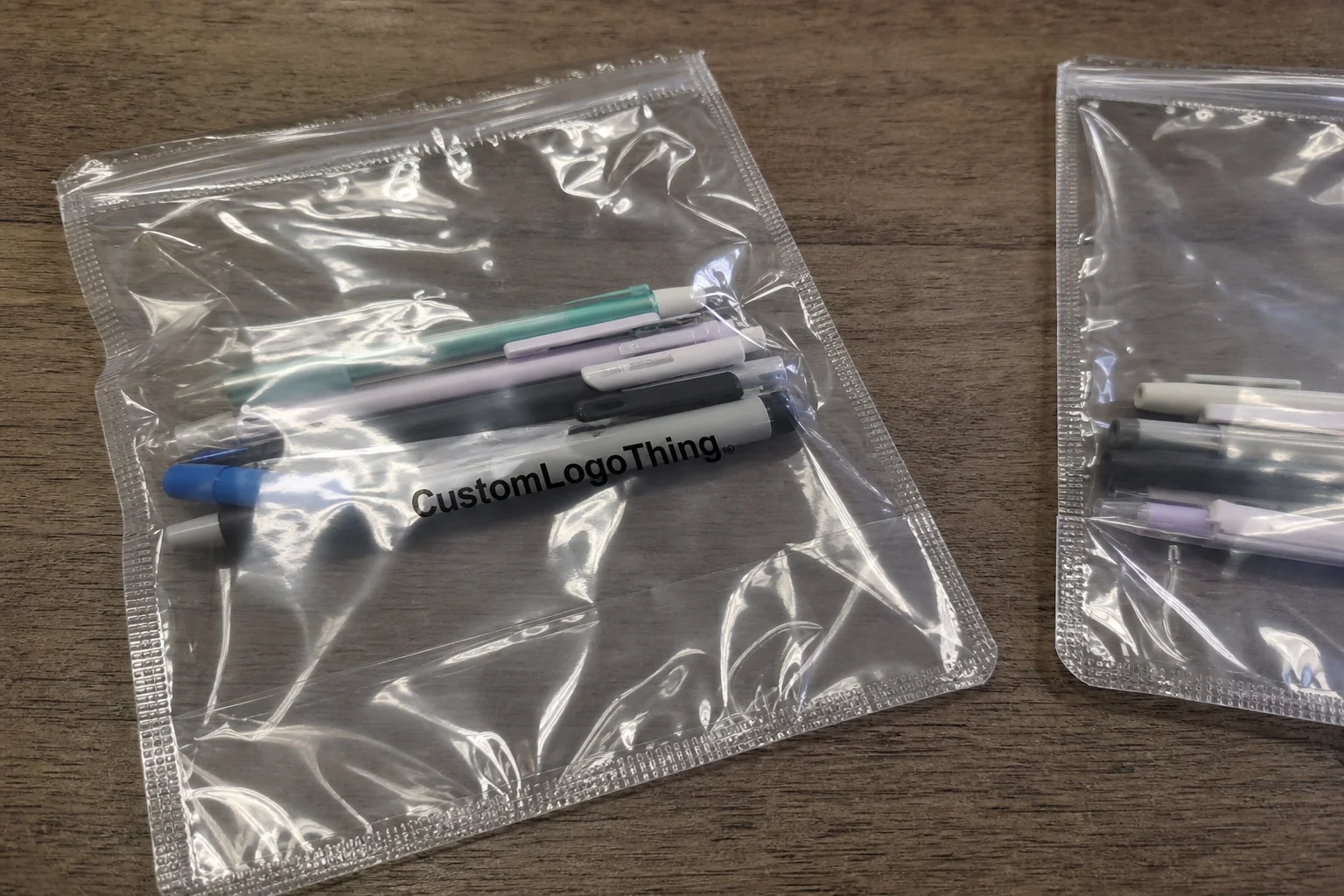
A bulk shipping poly bag can be loose, cloudy, or plain and still do its job. A stationery refill pack has a different burden. Buyers see it through a carton window, on a peg hook, or in the first clear opening of the package. If the presentation looks cheap, the product gets blamed even when the paper inside is fine.
Refills also shift more than people expect. Notebook inserts, planner pages, and mixed stationery kits are flat, but they are not rigid. In transit, that small amount of movement creates corner crush, edge scuffing, and box wear. A bag that is too large lets the contents wander. A bag that is too thin tears during packing. A film that is too cloudy makes the whole pack look dull.
The right inner bag has to protect the product, fit the carton efficiently, and keep packing labor under control. If the spec is sloppy, the outer box often needs extra filler or a stronger insert just to survive distribution. That is hidden cost, and it shows up fast on repeat orders.
For stationery brands, packaging is part of the product. A clean, snug refill bag suggests control. A loose one suggests the opposite.
Bag styles, film options, and closure details that actually matter
Not every refill needs the same structure. The right choice depends on handling, retail display, and how often the end user opens the pack. For a stationery Refill Plastic Bags Carton quote worksheet, separate the features that matter from the features that only add cost.
- Flat poly bags for simple insert packs and low-cost refills
- Gusseted bags for thicker refill sets or mixed kits
- Resealable zipper bags for products opened repeatedly
- Euro-hole bags for hook display or hanging retail cartons
LDPE is the most forgiving option. It is soft, flexible, and easy to pack. CPP is clearer and a bit stiffer, which helps presentation. Recycled-content film can work, but clarity and haze need to be checked carefully. Recycled material is not automatically a compromise; it is just less predictable from one run to the next.
Closure changes both price and packing speed. Heat seal is usually the lowest-cost choice. Zippers add convenience, but they slow filling and raise unit cost. Adhesive strips can work for light kits, though they are more sensitive to storage conditions. Open-top bags are fastest to pack, but they rely on the carton for most of the protection.
Print should stay restrained unless branding really needs more coverage. A one-color logo, SKU code, recycling mark, and basic warning text usually cover the need. Heavy print areas cost more and can make a clean product look busier than it should.
| Bag option | Typical use | Cost effect | Best point | Tradeoff |
|---|---|---|---|---|
| Flat LDPE bag | Standard refills, insert packs | Lowest | Simple and economical | Less premium appearance |
| CPP clear bag | Retail-facing refills | Low to medium | Better clarity | Less forgiving than LDPE |
| Gusseted bag | Thicker kits, mixed packs | Medium | More room, less crushing | Uses more film |
| Zipper bag | Reopenable consumer packs | Medium to higher | Reusable | Higher unit cost |
| Euro-hole bag | Hook display cartons | Medium | Retail display ready | Requires tighter sizing |
One detail buyers miss often is anti-scratch behavior. Paper edges can mark soft film, especially if the refill moves inside the pack. A slightly stiffer clear film can keep the presentation cleaner than a very soft one, even if the softer material looks attractive on a sample sheet.
Specification checklist for carton-friendly refill packaging
If the request is vague, the quote will be vague too. That is not a supplier problem. It is a data problem. A useful stationery refill Plastic Bags Carton quote worksheet should include the measurements and decisions that affect fit, packing speed, and carton use.
- Bag width and length in millimeters or inches
- Thickness in microns or mils
- Carton inner dimensions, not just the outside size
- Pack count per carton and inner pack count if relevant
- Closure type: heat seal, zipper, adhesive strip, or open top
- Artwork format: AI, PDF, or editable vector file
- Print target: Pantone, grayscale, or no print
- Required tolerances for fit, seal width, and overhang
Thickness is one of the easiest things to misread. Too thin, and the bag stretches or tears during filling. Too thick, and it costs more, loads less neatly, and can make the pack look overly rigid. For many stationery refills, a useful working range sits around 30 to 80 microns, depending on product weight, clarity requirements, and whether the carton does most of the protecting.
Dimensions need tolerance, not just a nominal size. Paper stacks shift a few millimeters during packing and transit. That is normal. Good quotes ask whether the product can float slightly inside the bag or must fit tightly against the carton wall.
Before finalizing the spec, confirm a few finishing details:
- Rounded corners to reduce snagging
- Perforation if easy opening matters
- Vent holes if trapped air affects sealing
- Seal width so the closure does not cut into usable space
- Barcode and recycling marks where required
Compliance should be practical, not dramatic. If your carton system uses FSC-linked paper components, say so. If your market expects recycling labeling on the pack, include that in the worksheet. For general packaging context, the Packaging and Processing Technologies Association is a useful reference, and the EPA recycling guidance helps when material marking is part of the decision.
Cost, pricing, MOQ, and quote factors for refill bags
Pricing usually comes down to film, size, print, and volume. If the stationery refill plastic bags carton quote worksheet only says “need quote for refill bag,” the result will be slow and hard to compare. Specifics sharpen the price fast.
The biggest cost drivers are predictable:
- Film type: LDPE is often cheaper than high-clarity specialty film
- Thickness: more material means higher cost
- Bag size: larger dimensions use more film
- Print colors: more colors mean more setup and higher unit cost
- Closure style: heat seal is usually cheapest; zipper and adhesive cost more
- Order volume: larger runs usually reduce unit price
For practical buying, plain stock-style bags generally have lower minimums, while custom-size or printed bags need higher MOQs. A common range for custom stationery refill packaging is around 5,000 to 20,000 units, though the real number shifts with size, print coverage, and closure type. A small unprinted bag is easier than a tall printed euro-hole bag with zipper hardware. That part is not subtle.
One useful way to think about landed cost is to separate what is fixed from what moves with volume.
| Cost item | Usually avoidable? | Notes |
|---|---|---|
| Artwork setup | Sometimes | Lower if print is simple or reused |
| Printing plates or cylinders | No | Depends on print method and color count |
| Sampling | Not really | Cheaper than a bad production run |
| Freight | Sometimes | Moves with carton size, weight, and route |
| Special packing | Sometimes | Inner bags, master cartons, pallets, labels |
If you want better unit pricing, simplify the spec in the right places. Standard sizes, fewer print colors, and a closure that matches how the product is actually used all help. Aligning carton quantities with production runs can also cut handling cost. Buyers often focus on the unit price and ignore the packing line. That is where a clean spec pays for itself.
For sustainability-related purchasing, the carton and insert system matters more than the inner bag alone. A recycled claim on one component does not fix a mismatched outer structure. The whole pack needs to make sense.
Process and lead time from worksheet to approved sample
A good worksheet shortens the process. The path should be simple: submit specs, confirm structure, receive estimate, approve the sample, then move to production. If any step is unclear, delays follow. Usually not dramatic delays, just enough to disturb scheduling.
The most common quote slowdowns are easy to spot:
- Missing carton inner dimensions
- Unclear closure type
- No artwork file or a low-resolution logo
- Unconfirmed thickness
- No sample of the current package for comparison
Lead time depends on complexity. Plain custom-sized bags are faster. Printed bags take longer because proofing and setup add steps. As a working range, simple plain bag quotes can come back quickly, and approved production often runs about 10 to 15 business days after sample sign-off. Printed custom orders usually need more time, especially if the first sample needs revision. If the material has to be sourced specially, add a buffer.
Sampling usually has two stages. First is a digital proof to check size, layout, and print placement. Then, if needed, a physical sample. That second step catches the issues that matter in production: seal width, opening behavior, gloss level, and how the bag loads into the carton.
Production itself is straightforward, but each step affects quality:
- Material sourcing and incoming check
- Film extrusion or conversion
- Printing and drying
- Sealing, cutting, and hole punching if needed
- Inspection for size, appearance, and seal strength
- Carton packing and master carton labeling
If the refill pack will travel through a tougher distribution channel, transit testing for the outer carton is worth discussing. The inner bag does not replace ship testing. If the carton gets crushed, nice film will not rescue the pack. See ISTA for packaging test standards used in shipping workflows.
How to keep stationery refill orders consistent across cartons and reorders
Repeatability is where packaging either protects margin or quietly erodes it. Fancy language does not help if the second order looks different from the first. For refill packaging, consistency in thickness, seal strength, and print placement matters more than promotional copy ever will.
Quality control should cover three basics:
- Dimensional checks so bags fit the same way every run
- Seal testing so closures hold through handling
- Print registration so logos and warnings stay in place
Carton load testing matters as well. A bag can look fine on its own and still fail once 24 or 48 units are packed into a master carton. The real questions are whether the inner packs shift, whether the corners rub, and whether the outer carton bulges under weight. Small defects become expensive when they show up by the pallet.
Once the worksheet is locked, reorders get easier. The specs are already known, so the factory does not need to interpret old emails or guess whether “same as last time” means 40 microns or 50. That reduces error risk and usually improves lead time consistency.
Shipping discipline matters too. Sensible inner packing, stable master carton sizing, and pallet-friendly stacking reduce damage in transit and complaints at receiving. If the packaging arrives beat up, the customer blames the brand. Fair or not, that is how the market reads it.
Next steps to request a quote and lock your carton spec
If you want a useful quote, send the basics in one batch. A strong stationery refill plastic bags carton quote worksheet should include bag size, material preference, thickness, closure style, print needs, carton size, and annual volume. If you are replacing an existing pack, add photos and a sample bag if you have one. Concrete references reduce guesswork on both sides.
It also helps to ask for two options: an economy spec and an upgraded spec. That makes the tradeoff visible. You can see where clarity, closure type, or print coverage changes the price instead of trying to decode two unrelated quotes later.
Before production, confirm sample approval criteria. Be specific about fit, clarity, seal appearance, and print placement. If the bag has to sit flush inside the carton, say so. If a little movement is acceptable, say that too. Otherwise people will interpret the requirement for you, which usually means they guessed.
- Gather product measurements and carton inner size
- Choose film, thickness, and closure style
- Prepare artwork or confirm no-print requirements
- Request two pricing options for comparison
- Approve a sample before mass production
- Confirm lead time, packing method, and freight plan
A good worksheet does not just ask for a quote. It narrows the risk. That is the real value.
What information do I need for a stationery refill plastic bags carton quote worksheet?
Send bag dimensions, thickness, closure type, print requirements, carton size, and pack count per carton. Add product photos and target order volume so the quote is accurate the first time.
How does MOQ change for custom stationery refill plastic bags?
Plain stock-style bags usually have lower minimums than custom-printed or special-size bags. MOQ rises when you add printing, unusual sizing, zipper closures, or nonstandard film.
What affects the unit cost most for refill bag packaging?
Film type, thickness, bag size, print colors, and order quantity have the biggest impact on unit cost. Setup charges and freight can also move the landed price more than buyers expect.
How long does production usually take after sample approval?
Simple plain bags are faster; printed custom bags need extra time for proofing, setup, and inspection. Lead time depends on material availability, order size, and whether a physical sample is required.
Can you match existing stationery refill bags for a reorder?
Yes, if you share a sample, photos, or a full spec sheet, matching is much easier. The key details are size, thickness, clarity, seal style, and print placement.


