A stationery Unstructured Dad Hats Material Sample guide matters because a cap that looks clean on a screen can turn soft, slouchy, or oddly shiny once it is sewn, washed, and worn. The gap between render and reality is especially wide with unstructured hats. There is no rigid front panel to hide fabric behavior, so every choice shows up in the finished shape.
For stationery brands, merch buyers, and promo teams, the biggest risk is not simply picking the wrong color. It is approving a hat that feels generic in hand, sits awkwardly on different head sizes, or weakens the logo treatment you planned. Physical samples close that gap quickly. They reveal how the cap behaves under light, under stress, and on a real head instead of a flat product sheet.
A sample does more than confirm the look. It shows whether the crown relaxes too far, whether the brim keeps its curve, and whether the decoration still reads clearly after the hat has been handled a few times.
Why Swatches Matter More Than Photos
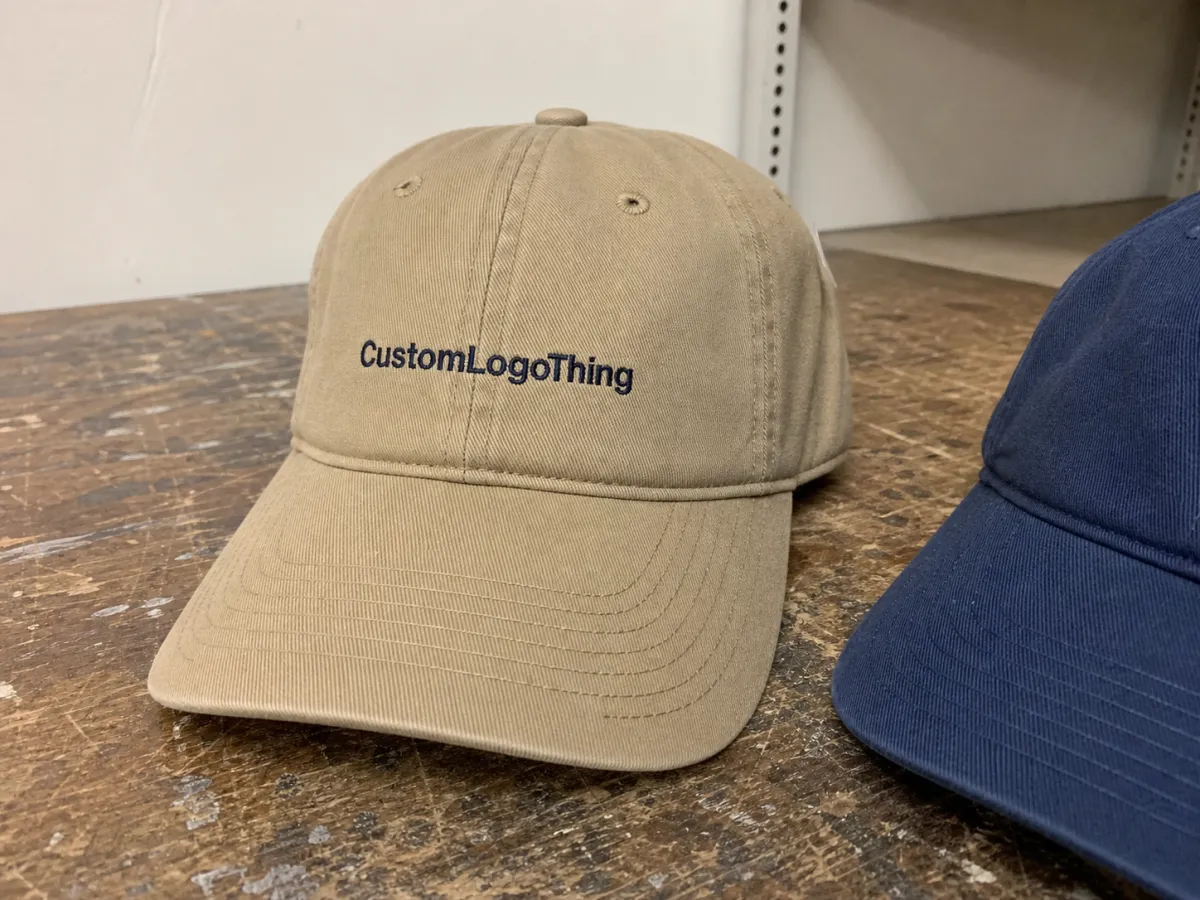
Unstructured Dad Hats are casual by design. They usually have a low crown, soft front panels, and a curved brim that depends on drape rather than reinforcement. That is what makes them comfortable, and it is also why the material matters so much. A fabric can feel smooth in a swatch book and still collapse too far on the head once the panels lose tension.
Photos are useful for direction. They are poor at showing behavior. A digital mockup cannot tell you whether a cotton twill feels dry or brushed, whether a recycled blend holds shape, or whether a washed finish introduces enough texture to change the logo edge. For stationery-linked merchandise, that matters more than people expect. The cap often has to sit beside notebooks, paper goods, and mailers without looking like a leftover add-on.
In practice, the first sample review should answer four questions: does it feel intentional, does it fit naturally, does the color read correctly, and is it decoration-ready? If any answer is weak, the sample stage has already done useful work. Better to find the flaw in a prototype than in 500 finished units.
That is the core of a stationery Unstructured Dad Hats material sample guide. Start with behavior, then compare appearance. Soft front panels, a curved visor, eyelets, sweatband quality, and closure hardware all influence the final impression. None of those details are dramatic on their own. Together, they decide whether the hat feels retail-ready or simply printed and packed.
How Samples Reveal Fit, Drape, and Finish
Swatches tell you texture. Full samples tell you truth. The difference is obvious once the cap is placed on a head form or worn for a few minutes. Flat cloth can look crisp on a table and then settle into a much softer silhouette once the crown bends and the front panel loses its tension. That is not a defect. It is the nature of an unstructured build.
I like to compare samples in daylight, office light, and warehouse LEDs. The same stone, taupe, or faded olive can shift enough to matter. Under cool bulbs, some colors read flatter and cleaner. In daylight, they often show more warmth and depth. If the hat has to match stationery packaging, envelope stock, or a brand palette with strict color tolerances, that shift can make or break the choice.
The tactile checks are just as important. After 10 to 15 minutes of wear, a buyer can usually tell whether the inner band scratches, whether the crown traps heat, and whether the fabric bounces back after it is folded or stuffed. A soft cap that feels pleasant for thirty seconds but becomes clammy after half an hour is not a good buy, even if the mockup looked polished.
Decoration testing belongs in the sample stage too. Direct embroidery, woven labels, printed patches, and heat-applied emblems all behave differently on loose fabric. A cloth that is too supple can let stitches sink. A cloth that is too thin can show shadowing or seam pull. If the logo matters, test it on the actual crown, not just on the art board.
Buyer note: the same logo may need a different treatment depending on the fabric. Thin script embroidery often looks sharp on stable twill and messy on brushed canvas. A bold patch can rescue a softer crown, but only if the panel underneath does not wrinkle. Those tradeoffs are easy to miss in digital approval and hard to fix after production starts.
Fabric, Trim, and Decoration Factors That Change the Quote
Fabric choice is usually the largest pricing lever, but it is not the only one. Cotton twill, brushed canvas, pigment-dyed cotton, recycled blends, and washed heavyweight fabrics all create different hand feels and different cost structures. In many factories, the baseline twill cap is the easiest and cheapest to produce. Everything else introduces either extra processing, more expensive yarn input, or a higher rejection risk during QC.
As a practical guide, standard cotton twill for unstructured hats often sits around 240-280gsm. Brushed canvas can move closer to 260-320gsm, depending on finish. Washed heavyweight cotton may feel more premium because it drapes with character, but that softness can make the crown less predictable during embroidery. Recycled blends vary more widely. Some are crisp and dry; others feel slick or slightly papery because the yarn source and finishing process differ from mill to mill.
| Material option | Hand feel and drape | Decoration behavior | Typical quote signal |
|---|---|---|---|
| Cotton twill | Balanced, familiar, and stable | Usually the cleanest for embroidery and woven labels | Baseline pricing |
| Brushed canvas | Softer, slightly more relaxed | Patches and stitch lines can sink more than expected | Often +$0.15-$0.35 per unit |
| Pigment-dyed cotton | Washed look with visible character | Color variation is part of the appeal, not a defect | Often +$0.20-$0.50 per unit |
| Recycled blends | Can feel dry, slick, or slightly crisp depending on yarn source | Good to test for puckering and seam shadow | Often +$0.25-$0.60 per unit |
| Washed heavyweight cotton | Most casual, with visible drape and softness | Strong for vintage styling; less forgiving for sharp logo edges | Usually a small premium over baseline |
Trim details stack on top of fabric cost. Sweatband grade, eyelet count, seam tape, visor insert, and closure hardware can move both comfort and unit price. A self-fabric strap with a brass buckle gives a more classic retail feel than a plastic snap, but it may add labor. A tri-glide or metal clip can improve adjustment and perceived quality, yet also increases assembly time. On a large run, those seconds matter.
Decoration choice affects the quote almost as much as fabric. Direct embroidery is often cost-effective for smaller logos, but dense stitching can distort on thin cloth. Leather or PU patches add a premium look and a little more weight at the front, though they work best when the crown has enough stability to carry the patch cleanly. Woven labels look refined and are easy to place on the side or back, but they do not hide panel problems the way a thicker patch sometimes can.
Buyers should also ask for basic performance information: shrinkage, pilling resistance, and colorfastness. If the hat will be worn outdoors, sweat and abrasion matter. Not every supplier tests the same way, so ask what method they use and whether they can provide a short wear note from the sample stage. A vague promise that the hat is “durable” is not enough. A supplier who can explain the finish, the fabric weight, and the likely weak point is usually more credible.
Packaging can change the quote too, especially if the project needs retail-ready presentation. A simple kraft insert costs less than a custom printed box. Corrugated cardboard may be perfectly adequate for shipping, while FSC certified paper stock may be required if the brand story mentions sustainable materials. Confirm that upfront. Otherwise, factories often substitute a cheaper material to keep the quote down, and the packaging no longer matches the pitch.
Sample Cost, MOQ, and Quote Inputs
Swatch packs and decorated prototypes are not the same expense, and buyers should treat them separately. A swatch kit may run about $15-$40 depending on how many fabrics are included and how polished the presentation is. A decorated prototype usually lands around $35-$95 before freight. If the hat includes special embroidery, custom hardware, or a difficult wash finish, that number can go higher. Some suppliers credit the cost back against the bulk order, but many only do that after purchase order approval or after the sample is fully signed off.
MOQ has a direct effect on price and choice. Lower minimums usually mean fewer fabric options, less room for custom trim, and a higher unit cost because setup work is spread across fewer hats. A 50-piece order and a 500-piece order are not built on the same math. Comparing them side by side without adjusting for scale creates false conclusions. A smaller run may look expensive per unit, but it can still be the better move if the launch is uncertain or if the color needs a short seasonal test.
To get a clean quote, a supplier needs enough detail to avoid guessing. At minimum, include the following:
- Fabric code or material type so the factory knows whether it is quoting cotton twill, brushed canvas, recycled materials, or another base.
- Crown profile so the cap is low profile, mid profile, or a custom fit.
- Closure type such as self-fabric strap, brass buckle, plastic snap, or metal clip.
- Logo size and placement for front, side, back, or under-brim decoration.
- Decoration method including embroidery, patch, woven label, or print.
- Shipping destination because freight can swing with carton count, weight, and service level.
It helps to compare at least three sample paths: one low-cost option, one target spec, and one premium benchmark. That side-by-side view makes the tradeoffs visible. Often the difference between “acceptable” and “best” is only a few cents, especially once better stitching, a sturdier sweatband, or a cleaner buckle is included. Without comparison, buyers tend to overreact to the first price they see.
One more practical point: if the supplier is quoting from a broad idea rather than a written spec, expect the first sample to be a rough draft. That is normal. A good sample process narrows ambiguity early. A bad one leaves too many decisions for the final production run, which is where expensive surprises tend to show up.
Production Steps and Timeline for Approval
A clean approval path is usually simple: request swatches, review the prototype, note revisions, approve the spec, and move into bulk production. The process sounds straightforward because it is. The real challenge is keeping feedback precise enough that the factory is not rebuilding the hat three times for changes that could have been solved in one note.
For timing, a practical range helps. Swatch requests often move in 2 to 5 business days. A decorated prototype usually takes 7 to 12 business days, depending on embroidery complexity, fabric availability, and whether trims are already in stock. If revisions are needed, add another 3 to 7 business days. Bulk production for a standard unstructured dad hat may run 15 to 25 business days after approval, though specialty washes, imported materials, or peak-season schedules can stretch that further.
Most delays come from the same few places: late artwork, changing fabrics after pricing, and revising closure style or stitch count after the first sample arrives. None of those are unusual. All of them consume time. If a launch date is tied to a stationery drop, event, or retail bundle, the approval calendar needs to reflect actual factory capacity rather than a wishful estimate.
Shipping and packaging belong in the approval path too. If the hats are packed in corrugated cartons with kraft inserts, confirm whether the outer pack needs transit testing. The International Safe Transit Association publishes common packaging test methods at ista.org. If the project requires paper inserts, labels, or mailers, check whether the supplier can source FSC certified stock. That is more than a branding detail. It protects the credibility of any sustainability claim tied to the product.
Biodegradable packaging is not automatically the right answer for every hat order. It can work well for some retail programs, but it is not always the most protective option for long freight moves. If the packaging has to survive compression, humidity, and multiple handling points, protection may matter more than the material story. The right choice depends on the route, the retail format, and the cost of damage versus the value of the presentation.
Common Sampling Mistakes That Skew the Decision
The most common mistake is judging the hat only by appearance. That is understandable. The sample is visible, the logo is easy to compare, and the front panel feels like the headline feature. But an unstructured crown can look attractive in a photo and still fail after a few hours of wear if it collapses too much or twists when adjusted.
Another mistake is comparing fabrics without logging weight and finish. Two cotton samples can both be described as soft, but one may be 260gsm and the other 330gsm. The heavier one usually holds shape better and can feel more premium. The lighter one may be better in warm weather because it stays cooler on the head. If those details are not written down, the comparison becomes a memory test instead of a product test.
Logo testing is where many buyers get surprised. The same artwork can look crisp on cotton twill and then lose edge definition on brushed canvas. Thin script can sink into a loose weave, and small text can become unreadable once the panel relaxes. Patches are not immune either. If the front panel lacks body, a patch may wrinkle at the corners or pull the crown forward in a way that looks awkward after packing and unpacking.
Do not rely on photos alone if the brand needs a specific palette. This is especially true for stationery launches, where packaging, notebooks, sleeves, and merch often share one color system. A muted green that looks elegant on screen may read too dark under office lighting. A cream tone can shift warm enough to clash with the rest of the line. Physical samples are the easiest way to stop those mismatches before they become inventory.
Finally, avoid changing too many variables at once. If the fabric, closure, embroidery size, and packaging all change in the same sample round, it becomes hard to tell which adjustment improved the hat and which one made it worse. A controlled process may feel slower at the start, but it is usually far faster than reopening decisions after approval.
Expert Tips and Next Steps for a Better Final Order
A simple scorecard makes review easier. Rate each sample from 1 to 5 on softness, structure, color accuracy, decoration quality, and fit across different head sizes. Add one short note beside each score. “Brim sits well but crown collapses” is useful. “Looks nice” is not. The goal is to document what the eye and hand are actually telling you.
From there, narrow the group to three finalists. Request one decorated prototype for each, not six variations that blur the decision. If a factory pushes for a larger sample cycle, ask whether the extra round is creating new information or simply increasing spend. Sometimes the answer is a genuine need for more testing. Sometimes it is just indecision dressed up as process.
Before bulk production, ask for the final spec in writing. Confirm the fabric code, closure type, stitch count, decoration method, packaging details, and any special labeling. If the hat ships with tissue wrap, a hang tag, or a recycled insert, those details should be on the sheet too. Written confirmation prevents the familiar “that is what we quoted” conversation later.
Keep the approved notes in one place and use them as the working reference for reorders, seasonal color swaps, and future merch planning. That record becomes the fastest shortcut in the room. It tells the next buyer what worked, what did not, and which details actually moved the needle. In a category that looks simple from the outside, that kind of documentation is what keeps a repeat order from drifting off spec.
The value of a stationery Unstructured Dad Hats material sample guide is not that it turns a basic cap into something complicated. It does the opposite. It turns a soft, subjective product into a documented buying decision. That difference is what separates a hat people wear once from a hat people keep reaching for.
What fabric works best in an unstructured dad hat sample guide?
Cotton twill is usually the safest starting point because it gives a familiar drape, a stable crown, and predictable embroidery behavior. It is not always the most interesting option, but it is often the easiest one to approve.
Brushed canvas or washed cotton creates a softer hand, which many buyers like for casual merch. The tradeoff is that patches and stitches can sit differently on a softer base, so request at least one backup fabric before making a final call.
How many material samples should I request before choosing a final hat?
Three fabric options are usually enough to show a clear spread without overwhelming the review process. One lower-cost option, one target option, and one premium benchmark make the pricing conversation much easier.
If the hat will carry embroidery or a patch, ask for a decorated prototype for each finalist instead of judging the fabric alone. That is the fastest way to see how the full system behaves.
Do sample fees get credited toward the bulk order?
Sometimes, but not always. Some suppliers credit the fee only after the bulk purchase order is confirmed, while others apply it once the sample is fully approved. The policy needs to be clear before you pay.
Treat the sample fee as risk control first and a possible credit second. That mindset prevents a lot of frustration later.
How long does the sample and approval process usually take?
Simple swatch requests can move quickly, but decorated prototypes take longer because artwork, fabric, and trims all need to be confirmed. A realistic plan should include time for at least one revision round.
If the buyer changes closure style, logo placement, or fabric base after the first sample arrives, the clock resets. Fast feedback is one of the easiest ways to protect the schedule.
What should I check on a dad hat sample before I ask for pricing?
Look at crown collapse, brim curve, seam quality, sweatband comfort, and balance across different head sizes. Those are the details that determine whether the hat feels like a product or a placeholder.
Then test logo clarity under real lighting and inspect for puckering, thread shadow, or patch distortion. Once those points are clear, pricing conversations become much more meaningful.


