A beauty unstructured dad hats Unit Cost Review begins with a basic but often overlooked fact: two caps can look nearly identical in a mockup and still land far apart on the final invoice. The blank body is only one piece of the calculation. Embroidery density, patch construction, woven labels, inner branding, packing method, and freight can move the cost more than the cap shell itself, especially on smaller runs.
That matters in beauty because the hat is rarely just an accessory. It is part of the shelf story, the event kit, the salon uniform, or the creator mailer. If the decoration is poorly specified, the program can lose margin or, worse, miss the presentation standard that makes the item feel worth keeping. A disciplined beauty Unstructured Dad Hats Unit Cost review gives buyers a way to compare quotes that are actually comparable.
The lowest number on a supplier sheet is not always the best deal. A useful quote should show cost per piece, MOQ, setup charges, lead time, and any tooling or packout fees that might surface later. If those items are hidden, the order is not truly priced yet.
Beauty Unstructured Dad Hats Unit Cost Review: why buyers should price the full build, not the blank cap
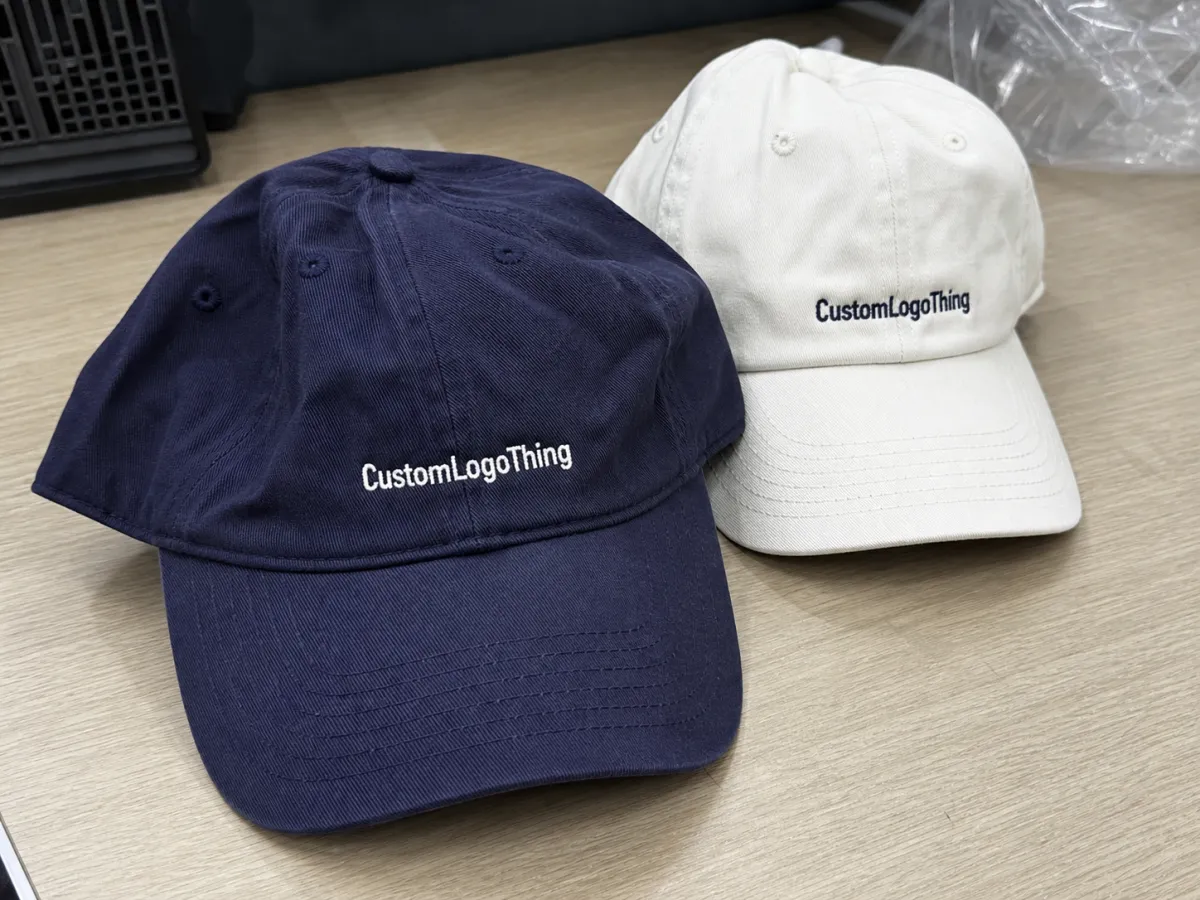
The blank hat is the base layer. Everything else changes the economics. A six-panel unstructured dad hat with a flat embroidered logo may stay relatively close to the base price, while a dense woven patch, tonal side embroidery, custom woven label, and branded hang tag can push the total up quickly. On short runs, decoration can cost more than the hat body itself.
That is why the decoration method should be the first pricing decision, not the last. In practice, embroidery tends to be the easiest to control on cost, proofing, and lead time. Patches introduce more variables. Heat-applied patches, sew-on patches, merrowed edges, and multi-color yarn builds each affect labor and setup in different ways. The quote should reflect those differences instead of flattening them into one vague line.
Unstructured Dad Hats fit beauty programs well because they read casual without turning sloppy. The soft crown feels easier to wear than a rigid sports cap. The curved brim photographs well. The adjustable back lets a single size work across a mixed audience, which is useful for retail, gifting, and events where fit is not measured in advance.
There is also a merchandising angle. A beauty cap often sits next to tubes, jars, cartons, pouches, or paper inserts. If the hat feels too stiff or too athletic, it can clash with the rest of the assortment. A lower-profile silhouette usually supports a more editorial or lifestyle-led brand tone. That is not a soft preference; it affects sell-through, repeat wear, and the perceived value of the item.
Sometimes a slightly higher unit cost is still the smarter buy. A cleaner front panel, better thread coverage, or a more durable closure can reduce returns and improve how the hat presents in photos and on shelf. In beauty, the visual read is part of the economics.
What makes the unstructured dad hat format work for beauty collections
The construction is simple on paper: low-profile crown, soft front panel, curved brim, and an adjustable closure. In the factory, those details are what give the style its shape, and small changes can produce a very different feel in hand. The same pattern can read premium, promotional, or vaguely flimsy depending on fabric weight, seam finish, and how well the front panel holds decoration.
Cotton twill usually offers the cleanest surface for embroidery and the richest color appearance. Washed cotton adds a softer, already-broken-in look that works well for creator kits, salon merch, and launch drops with a more relaxed tone. Poly blends can improve consistency across lots and sometimes hold shape better in humid or warm conditions, but they do not always feel as natural or as premium to the touch.
That tactile detail matters more than many teams expect. Beauty buyers often sample products by feel first and by logic second. If the fabric feels cheap, the cap can lose the room before the logo gets noticed. If the fabric has enough body and the finish looks intentional, a modest decoration can still read expensive.
The style also works across a wide set of use cases:
- Salon retail add-on tied to a product launch or seasonal collection
- Staff uniform piece for events, education days, or in-store activations
- Influencer seeding item packed with a PR box or mailer
- Promo giveaway for appointments, pop-ups, or trade shows
- Limited-edition capsule item tied to fragrance, haircare, or skincare campaigns
Color and finish are not decorative afterthoughts. Tonal stitching can make a cap feel quieter and more expensive. Matte hardware usually looks more coherent with beauty branding than glossy closures. A front-center logo is the most obvious choice, but side or back placements can work better when the goal is subtle staff wear rather than retail display.
The hat should also be considered alongside the broader beauty packaging system. If the box uses a soft neutral palette and the cap uses a bright, high-contrast thread, the mismatch will show immediately. Even a well-made cap can look off if the closure, label finish, or stitch color competes with the rest of the kit.
Spec sheet checklist for consistent fit, finish, and color match
Sampling goes faster when the spec is complete. The factory needs more than artwork and a quantity. Confirm panel count, crown height, brim curve, sweatband construction, eyelet count, closure type, seam style, and stitch density. These details shape comfort, fit, and how the decoration sits on the front panel.
Artwork placement should be written clearly. Front-center embroidery is usually the simplest to quote. Side hits, back hits, and split logos often require extra setup or a different stitch path. If the cap uses a patch, specify the exact size, shape, backing method, and edge treatment. A sew-on woven patch and a heat-applied patch may look similar from a distance, but they do not behave the same in production or wear.
Color control needs more discipline than most buyers expect. Thread, label yarn, patch background, printed art, and cap body should all be tied to a clear reference system. Pantone is still the cleanest common language for many teams, but the fabric itself also needs a tolerance range. Some mills hold shade tightly. Others drift enough that two production lots will look different under store lighting.
Before sampling starts, it helps to lock a written checklist:
- Approved tech pack with artwork file format and placement notes
- Measurement tolerance for crown depth, brim curve, and closure length
- Sample approval standard for logo clarity, stitch density, and panel alignment
- Packaging spec for fold method, polybag type, and carton count
- Rule for color substitutions, thread matching, and label approval
If the hats will ship in retail cartons or kits, ask how the supplier checks for transit damage. A curved brim can flatten. A front panel can crease. A printed box can scuff. Those are packaging failures, even if the sewing itself is perfect. Distribution testing frameworks such as ISTA help keep the conversation grounded in shipping realities rather than assumptions.
Acceptable variance should be defined before bulk production begins. A tiny stitch shift may be normal. A logo that changes scale or placement is not. The goal is not perfection in an abstract sense; it is avoiding the kind of inconsistency that becomes expensive once the order is already in motion.
Unit cost review: pricing, MOQ, and what moves the quote
A practical beauty unstructured dad hats Unit Cost Review needs to show the full price stack: blank cap, decoration, setup charges, packaging, and freight. A one-line unit price is not enough to compare suppliers, because different vendors may bury charges in different places. A low quote can become expensive once digitizing, label work, carton packing, or shipping are added back in.
MOQ pressure usually comes from the decoration method. Simple embroidery often allows lower minimums than complex patch builds or custom label programs. More thread colors, denser fill, and extra trim pieces raise labor time, which is why the minimum order often rises with visual complexity. The longer the run, the more setup gets spread out, and the lower the apparent unit cost becomes.
A landed-cost mindset is the cleanest way to compare options. Ask for pricing at multiple quantities and include freight and packaging in the comparison. The number that matters is the one that lands in your warehouse, not the factory number that looks good in an email.
| Order size | Flat embroidery | Woven patch | Custom label + packout |
|---|---|---|---|
| 300 pieces | $3.90-$5.20 per piece | $4.40-$6.10 per piece | $4.70-$6.50 per piece |
| 1,000 pieces | $2.55-$3.55 per piece | $2.95-$4.05 per piece | $3.20-$4.50 per piece |
| 3,000 pieces | $1.95-$2.85 per piece | $2.25-$3.20 per piece | $2.55-$3.75 per piece |
These ranges assume a mid-grade blank unstructured cap and standard one-location branding. Change the fabric weight, add a special wash, move to multiple decoration locations, or package each unit in a custom box, and the number shifts. Freight does the same thing. Ocean shipping usually protects margin better than air, but air may still make sense if a launch date is fixed and inventory risk is higher than the shipping premium.
Tooling fees deserve careful attention. Digitizing can be a one-time charge or bundled into the decoration cost. Patch molds, print screens, woven label setup, and hang tag prep may be priced separately. None of those fees are automatically a problem. The issue is ambiguity. Buyers lose margin when a quote looks clean only because critical setup costs are hidden.
"The most useful quote tells me what is fixed, what is variable, and what still needs approval before bulk production begins."
That is the right framework for a beauty accessory program. Pricing should help merchandising, finance, and operations read the same map before the order is placed.
Production steps and turnaround: from approved sample to delivery
The path from idea to delivery is usually straightforward, but only if approvals are controlled. First comes tech pack review. Then artwork mockups. Then sample production. After sample approval, the factory moves into bulk sewing or decoration, then inspection, then shipment booking. If any step is vague, the schedule starts to slip.
Timeline depends on the construction. A simple embroidery program is often faster than a woven patch program because the patch version can require extra artwork prep and proofing. Custom labels, hang tags, and retail packouts add more time. As a planning range, many buyers should allow 7-12 business days for sampling and 12-20 business days for bulk production after approval, with freight added on top. If the art keeps changing, add more time.
The most common delay points are predictable: slow sample sign-off, late artwork edits, color corrections after the proof is approved, and packaging changes after cartons have already been scheduled. These are preventable problems if one person owns final approval and the team decides early what is frozen and what is still negotiable.
Transit planning matters too. A cap that looks perfect at packing can arrive crushed if carton size, fold method, or stacking limits are not controlled. Ask for a sample carton load, confirm the fold direction, and request a packing list that matches the actual count. If the order will move through multiple handling points, practical transit testing is worth the extra step.
Documentation shortens turnaround because fewer things are left to interpretation. Good factories move faster when the color references, decoration placements, and packaging rules are all defined. In production, clarity is speed.
Why a packaging-minded supplier lowers risk on beauty hat programs
A packaging-minded supplier does more than sew a cap. They manage how the item presents, repeats, and survives transit. That shows up in color control, label placement, fold consistency, carton quality, and the ability to re-order without drifting away from the approved sample.
The difference is often communication quality. A supplier that understands packaging tends to flag risks earlier and provide cleaner mockups. That matters on beauty launches, where the schedule is tight and there is little room for a surprise that could have been caught in sample review. Repeat-order consistency matters too. If a drop sells out, the next batch should match closely enough that customers do not notice a visual reset.
Small operational details have an outsized effect on how the product is received. Labeled cartons can make warehouse intake faster. A consistent fold direction helps shelf presentation. Barcode support keeps retail handling simpler. Polybag choices matter if the hat is sold individually or packed into a kit. Even paper inserts and hang tags affect whether the item feels finished or merely assembled.
Recordkeeping is part of the value. Batch notes make it easier to reorder the same construction later. They also show what changed between runs, which is useful if the team is trying to preserve a best-selling look across multiple seasons.
If the program includes paper inserts, cartons, or tags, ask about recycled content and traceability. The point is not to decorate the quote with sustainability language. It is to know what materials are being used and whether those claims can be supported. Buyers in beauty need that information because the product is part of a larger brand story, and that story should hold up under scrutiny.
The safest partners reduce surprises before they turn into claims, returns, or markdowns. That is the quiet benefit that does not always appear in a per-unit quote.
Next steps to request an accurate quote and lock your specs
The cleanest way to request pricing is to give the supplier enough detail to quote honestly the first time. Include artwork files, target quantity, preferred decoration method, cap color, closure preference, and delivery location. If there is a target retail price, say that too. Once the margin goal is visible, a supplier can often suggest a simpler construction or a different decoration method that still fits the brand.
- Request tiered pricing at 300, 1,000, and 3,000 pieces so the breakpoints are visible.
- Ask for separate line items for the blank cap, decoration, setup charges, packaging, and freight.
- Confirm sample timing, bulk lead time, and approval deadlines in writing.
- Lock packout details: polybag, carton count, fold method, hang tag, and barcode needs.
- Approve color references and decoration placement before bulk production begins.
Ask for a landed-cost quote, not a factory-only number. That one change makes vendor comparison much easier and helps protect margin later. If a supplier cannot separate the base cap from decoration and freight, the quote is incomplete.
For beauty programs, the smartest purchase usually balances presentation, lead time, and repeatability. That is the real purpose of a beauty unstructured dad hats Unit Cost Review: not to chase the lowest number, but to choose a spec that holds up in production and still makes sense once the boxes are opened.
FAQ
What is the unit cost for beauty unstructured dad hats at different order sizes?
Per-unit cost usually drops as quantity rises because sampling and setup get spread across more pieces. Decoration method, fabric choice, and packaging details often affect the final number as much as the base cap.
Which decoration method gives the best value for beauty unstructured dad hats?
Flat embroidery is often the best value for simple branding because it is easier to control on cost and timing. Woven patches or custom labels make sense when the goal is a more premium retail presentation.
How long does a beauty unstructured dad hats order usually take?
A sample-first order commonly needs 7-12 business days for sampling and 12-20 business days for bulk after approval, before freight. Complex decoration, late artwork changes, and custom packaging can extend that timeline.
What specs should I approve before placing a bulk order?
Lock crown shape, brim curve, closure type, color reference, decoration placement, and packaging format. Approve a sample or proof that shows the final decoration size and position, not just a general mockup.
Can I combine multiple colors in one MOQ for beauty unstructured dad hats?
Sometimes, but the MOQ may apply by color or decoration setup instead of by style alone. Ask for a quote that separates single-color and mixed-color scenarios so you can see the real unit cost.

