Tea unstructured dad hats Bulk Order Planning works best when the hat is treated as a production item first and a style choice second. That sounds obvious until the quote comes back and the buyer realizes the silhouette, the fabric finish, the closure, and the logo method all changed the price. A soft crown gives the hat an easy, lived-in look, but that relaxed construction also means the decoration has to be chosen with more care than on a structured cap.
Tea is a useful color for this category because it sits in the neutral family without reading flat or sterile. It can feel warm, vintage, slightly workwear, or clean retail depending on the fabric and the thread choice. That flexibility makes the style a strong candidate for staff apparel, merch programs, and event giveaways, especially when the buyer needs one order to serve different audiences without splitting into multiple SKUs.
There is a practical reason this format keeps showing up in bulk programs: it is forgiving. One size usually covers most heads. The relaxed front panel avoids the rigid “promo hat” feel that turns people off. And if the logo is sized correctly, the cap can look polished without losing the casual character that makes dad hats easy to wear in the first place.
The catch is that unstructured caps reveal problems quickly. A design that looks sharp on a mockup can buckle, sink, or pucker once the thread lands. Tea fabric can also shift in tone under different lights, so a buyer who approves only a screen image is taking a real risk. Good bulk planning closes those gaps before production starts.
Tea unstructured dad hats bulk order planning that stays readable at scale
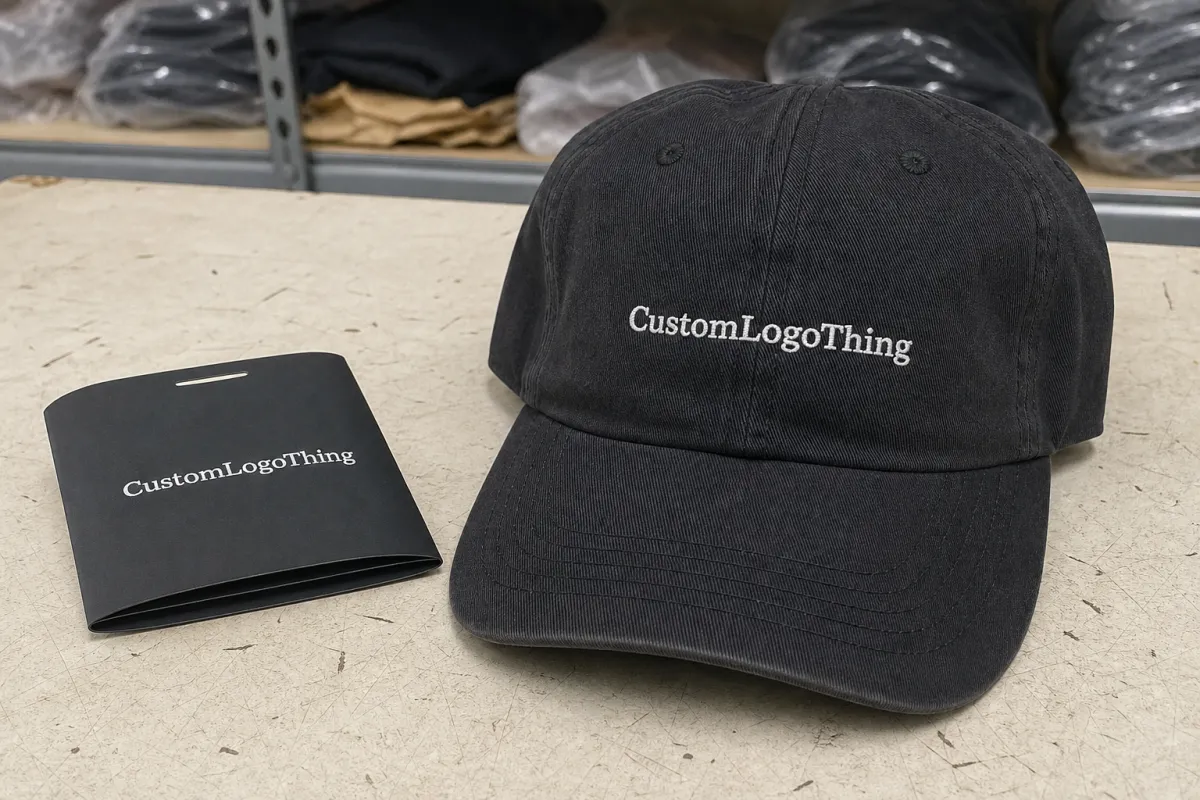
The first advantage of tea unstructured dad hats Bulk Order Planning is simplicity. A soft-crown six-panel cap usually needs fewer decision points than structured headwear, and that keeps approvals moving. One fabric, one crown shape, one decoration lane, one size range. For procurement teams, that means fewer chances for a split order, a missed spec, or a late change that throws off the schedule.
That simplicity does not mean all unstructured hats are the same. A garment-washed cotton twill cap will drape differently from a brushed cotton style. A pigment-dyed tea tone may look slightly dusty and broken-in, while a cleaner khaki-tea shade can read more uniform on retail shelving. The buyer who knows the end use can choose the right version instead of assuming the color name tells the whole story.
Fit is another reason this style sells well in volume. A relaxed dad hat tends to be more forgiving across head shapes than a high-crown cap with a stiff front. That matters in bulk because a small percentage of fit complaints can create outsized noise once the hats are distributed. Fewer complaints means fewer replacements, and fewer replacements means less budget leakage after the order is already closed.
For branding, tea gives you a quiet background that supports black, navy, off-white, forest green, burgundy, and tonal embroidery. It can also hold up well with a patch if the artwork has fine detail. The important part is restraint. A soft front panel does not like oversized, dense, or heavily stacked embroidery. Push the design too far and the hat starts to look forced.
Buyer rule of thumb: if the cap needs to feel easygoing and broadly wearable, unstructured is usually the right starting point. If the logo must stay bold from a distance, reduce the stitch load or switch to a patch so the crown does not lose its shape.
Tea unstructured dad hats Bulk Order Planning also benefits from a straightforward inventory strategy. Because this is usually a one-size product with a single crown type, it is easier to forecast than headwear that requires multiple sizes or variable front structure. That makes reorder planning cleaner too. If the first run performs well, a second run can often reuse the same files, the same decoration spec, and the same closure setup.
Tea unstructured dad hats bulk order specs to confirm before pricing
Before asking for a quote, confirm the specs that actually change the outcome. The most important ones are crown depth, panel count, fabric type, bill shape, closure style, and the decoration method. These details affect appearance, cost, and wearability. A cap can be described as “tea dad hat” in three words and still arrive looking nothing like what the buyer expected if those items were not defined early.
Fabric is a good place to start. Most bulk dad hats use cotton twill, brushed cotton, chino twill, or garment-washed cotton. Each one has a slightly different hand feel and visual character. Brushed fabrics tend to feel softer and look more casual. Crisp twill usually feels a little sturdier. Garment-washed builds can produce that broken-in look buyers want for lifestyle merch, but they also introduce more variation in shade and finish.
The tea color itself should be checked under more than one light source. A warm neutral can drift tan, green-gray, dusty beige, or even slightly olive depending on the dye lot and the display environment. That is why a digital render is not enough for color-sensitive orders. If the hats need to match another item in the line, request a physical swatch or a sample cap before the bulk run is released.
Decoration compatibility belongs in the same conversation. A flat embroidery logo may work well on a soft crown, but stitch density should be kept under control so the front panel does not pucker. A woven patch can handle more detail and gives the hat a more retail-oriented feel. Tonal embroidery can be very effective on tea fabric if the goal is subtle branding rather than loud event promotion.
- Crown depth: low-profile and mid-profile caps wear differently and change how large the logo can be.
- Panel count: six-panel is standard; four-panel builds alter the front shape and placement area.
- Bill shape: pre-curved bills feel more casual, while lightly curved bills leave more room for personal adjustment.
- Closure: self-fabric strap, brass buckle, tri-glide, or hook-and-loop each signals a different value level.
- Finish: washed, brushed, or crisp fabric changes both comfort and color perception.
Sample approval is the safest way to reduce risk. A proof shows placement and proportion. It does not show how the crown collapses under stitch tension, how the bill holds its curve, or whether the tea tone sits too yellow once light hits it. A physical sample takes longer, but it reveals the problems that are most expensive to fix after production is underway.
For orders that need packaging support, inner labels, or retail-ready hang tags, the buyer should also confirm whether those elements are included in the base quote or treated as add-ons. A small label change can affect sewing time. A hang tag can affect packing time. Those are small line items individually, but in bulk they affect the landed cost more than many first-time buyers expect.
Stitch count, panel shape, and closure details
Construction details determine whether the final hat looks deliberate or merely assembled. Stitch count matters because dense embroidery costs more and can distort a relaxed crown. A logo that looks crisp in a file can become heavy on a soft panel if the fill is too tight or the lettering is too compressed. On unstructured caps, less thread often looks better than more thread.
As a general production observation, many clean chest logos or front marks sit in the roughly 4,000 to 8,000 stitch range, though the real number depends on size, fill area, line thickness, and thread direction. A more detailed crest can run higher. The issue is not the count alone; it is whether the fabric can support it without warping. That is why logo size and stitch density should be evaluated together.
Panel shape changes the way the front panel carries the design. A six-panel dad hat with an unstructured crown has a softer, rounder profile than a structured cap, so a logo that is too wide can make the front appear flattened. Thin letters can disappear if they are pushed too small, while large fills can pull the crown inward. The best placement usually leaves breathing room around the mark instead of filling the entire front face.
Closure choice also changes the perception of the run. A self-fabric strap with a metal buckle generally reads more retail-friendly than a basic plastic closure. A tri-glide gives a neat, adjustable finish. Hook-and-loop is fast and functional, but it looks more promotional than premium. None of these options is wrong. The right one depends on whether the hats are meant to feel like merchandise, uniforms, or giveaway pieces.
Internal finishing deserves attention too. Sweatband quality, seam tape, and label placement are easy to overlook because they are hidden in product photography. In hand, they matter. A sweatband that sits flat and a label that does not twist after a few wears give the hat a more finished feel. Cheap inner construction often shows up as comfort complaints, even if the outside of the cap looks fine.
| Build option | Best for | Typical cost impact | Production note |
|---|---|---|---|
| Flat embroidery | Simple branding and clean logos | Lowest to moderate | Works best when stitch density is controlled |
| Woven or embroidered patch | Retail feel and more detailed artwork | Moderate | Helps keep fine art readable on tea fabric |
| Tonal embroidery | Quiet merchandising and understated uniforms | Moderate | Looks refined, but contrast must be tested |
| Washed or brushed finish | Casual lifestyle programs | Moderate to higher | Changes both hand feel and final color tone |
For transit expectations, especially if the hats are part of a larger merchandise shipment, the ISTA test methods are a sensible reference point. And if the order includes packaging inserts or paper components, FSC-certified materials can support a cleaner sourcing story; FSC is the standard reference most buyers already understand.
Pricing, MOQ, and unit-cost drivers
Pricing on tea unstructured dad hats is shaped by more than quantity. Decoration method, stitch complexity, patch construction, special washing, label work, and packaging all matter. A basic embroidered cap and a washed cap with a woven patch and branded hang tag can live in very different cost bands even if the quantity is identical.
MOQ changes the math quickly. Smaller runs usually carry a higher unit price because setup and machine time are spread across fewer pieces. As volume increases, the fixed cost gets diluted and the per-unit cost often drops. That is why it helps to ask for tiered pricing instead of one static quote. A jump from 100 to 250 pieces may reduce the unit cost enough to justify the extra inventory; sometimes it does not. The only way to know is to compare.
For planning, a working range of roughly $4.20 to $7.80 per unit at a few hundred pieces is a fair starting point for simple-to-mid complexity builds, though actual pricing can move lower or higher depending on decoration, material, and finishing. A basic tea dad hat with flat embroidery may sit near the lower end. A cap with premium closure hardware, patch work, and special washing will climb fast. Freight, sample revisions, and packaging changes can push the landed cost higher than the quote suggests, so buyers should compare total cost, not just the front-end unit number.
Freight is a common blind spot. A quote that looks slightly cheaper can turn out more expensive once cartons, domestic handling, and final delivery are added. The same is true for revisions. If a sample needs a second round because the logo is too large or the tea color is too warm, the project loses both time and money. The cleanest supplier quotes explain what is included and what triggers extra charges before the run is approved.
It also helps to ask for alternatives. A good supplier should be able to show the pricing difference between embroidery and patch decoration, between buckle closure and strap closure, or between standard packing and individual polybagging. Those comparisons reveal where the real cost drivers sit and make it easier to protect margin without stripping the hat of the features that matter most.
Process, timeline, and production steps from proof to ship
The fastest orders begin with clear inputs. Quantity by color, logo file, decoration method, delivery destination, and in-hand date should all be included in the first request. If the buyer already knows a budget ceiling, that helps too. It narrows the quote to options that actually fit the project instead of creating unnecessary back-and-forth.
After the inquiry comes the proof. Artwork review and pricing can move in parallel if the supplier is organized. That saves time, especially when the logo needs resizing or the design has multiple color elements. A proof should confirm placement, proportion, and thread or patch treatment. If any of those details are vague, the order is not ready.
Sample timing and bulk production timing are not the same thing. A sample may take about 5 to 8 business days depending on complexity and queue depth. Bulk production often falls in the 12 to 20 business day range after final approval. Special washing, custom labeling, or more detailed patch work can extend that window. Buyers should build in a cushion, not because delays are inevitable, but because apparel production rarely behaves like software.
Most delays are ordinary. An artwork file arrives in the wrong format. The logo needs to be reduced after the first proof. The thread color is changed after pricing is already locked. The shipping address is still being reviewed when cartons are ready to move. None of those issues is dramatic, but each one adds friction. A buyer who keeps the approval loop tight usually gets the cleanest result.
- Confirm quantity, tea color, closure style, and decoration method.
- Send vector artwork and define the maximum logo size.
- Approve the proof with clear placement and color notes.
- Confirm packing requirements, carton marks, and any polybag or sticker needs.
- Verify the ship-to address and the person authorized to approve final changes.
Shipping protection deserves a direct question. If the hats are traveling a long distance or passing through multiple handoffs, ask how the cartons are packed and whether the crown shape is supported in transit. A supplier that understands packaging will not treat that as a side issue. It affects whether the caps arrive with the front panel still looking clean or whether they pick up crease marks before the buyer even opens the box.
For teams that also manage apparel kits, inserts, or event packs, keeping all product notes in one approval chain reduces missed details. The hat order should not be finalized in isolation if it is part of a larger package. The more moving parts the program has, the more valuable the production checklist becomes.
What a dependable supplier should handle for repeat runs
Repeat orders reveal whether a supplier actually understands the product or just filled out the first invoice well. A dependable partner keeps the spec sheet, artwork, color references, and approval notes on file so the next run does not start from zero. That matters a lot in tea unstructured dad hats Bulk Order Planning because the color tone and the relaxed crown need to match the earlier batch closely enough that the difference does not jump out.
Consistency in communication matters as much as consistency in manufacturing. A buyer should be able to ask whether the same tea tone is available, whether the same patch construction can be reproduced, and whether the closure style will require a fresh setup charge. If those answers are easy to get, the reorder path becomes far easier to manage.
Pricing predictability is just as important. A good supplier should explain why a reorder costs what it does, what changed since the last run, and whether the previous approval notes affect the current quote. Seasonal programs, monthly drops, and recurring employee orders all benefit from that kind of clarity. A low quote that forces the buyer to chase answers later is not actually a good quote.
Technical feedback is where experience shows. The supplier should be able to say when a logo is too wide for an unstructured front panel, when a patch edge will sit better than direct embroidery, and when a closure choice makes the cap feel too promotional for the intended audience. That is the difference between a vendor taking an order and a production partner preventing mistakes.
For a repeat run, the most useful proof of quality is simple: the second batch should look and feel like the first one. Color drift should be minimal. Stitch placement should stay consistent. Closure hardware should match. If any of those elements change, the buyer should be told before production, not after the cartons arrive.
Next steps to lock your order without delays
The cleanest way to move is to assemble the basic order inputs before requesting final pricing. Quantity, tea shade, decoration choice, delivery deadline, and packaging notes are the core items. If the project has a budget cap, include that too. It helps the quote land closer to reality on the first pass.
Ask for a mockup and a price at the same time. That keeps visual approval and cost review moving together instead of creating two separate rounds of delay. It also makes it easier to catch problems early if the logo is dense, the tea tone is sensitive, or the closure changes the perceived value more than expected.
The three details most likely to trigger rework are thread color, logo width, and color expectation. A buyer may call the shade “tea” and picture a warm beige, while the factory reads it as something slightly greener or more muted. That mismatch is avoidable if the reference is described clearly and the sample is approved with enough context.
Tea unstructured dad hats Bulk Order Planning is easiest when the spec is narrow, the approval path is short, and the supplier knows how relaxed caps behave under decoration. Once those pieces are in place, the order usually moves in a straight line instead of wandering through revisions.
FAQ
How do I plan a tea unstructured dad hats bulk order without overbuying?
Start with the real distribution count, not the largest possible headcount. If the hats are for staff, retail, or an event, allow a small buffer for replacements and last-minute needs, but do not inflate the quantity just because the minimum is easy to reach. Tiered pricing helps here because it shows whether a modest increase in quantity lowers the unit cost enough to justify the extra stock.
What decoration works best on tea unstructured dad hats in bulk?
Flat embroidery, tonal embroidery, and clean patch work usually perform best because they respect the soft crown. If the logo includes tiny text or thin lines, ask for a size adjustment before production so the design stays legible. On a tea base, a woven patch can often carry more detail than direct stitch without making the hat feel overloaded.
Can I mix colors or logo placements in one bulk order?
Sometimes, but every variation adds complexity. A color change may be easy; a placement change often requires a separate setup or a separate production step. Ask for the cost of each variation before approval so you know whether the flexibility is worth the price. Mixed orders look simple on paper and become expensive when the setup work is counted correctly.
What lead time should I expect after proof approval?
For many cap runs, bulk production lands in the 12 to 20 business day range after final approval, with sample time added before that if a physical sample is needed. The schedule can stretch if the hat has special washing, custom labeling, or a more complex patch build. Faster approvals usually matter more than almost any other variable.
What should I send for the fastest quote on tea unstructured dad hats bulk order planning?
Send quantity, decoration method, logo file, preferred tea shade, delivery ZIP code, and the date you need the goods in hand. If you already know the budget ceiling, include it. Clear inputs lead to cleaner pricing, fewer revision rounds, and a better chance that the final hats match the original intent.

