Subscription frosted zipper Bags Material Sample guide is not just a packaging search term. It is a practical decision tool for buyers who need to know whether a bag will hold up in real use, not merely look good on a screen. A frosted zipper bag can feel premium in a product photo and still disappoint once it is filled, shipped, handled, and opened more than once. The sample stage is where those gaps show up.
That matters more for subscription packaging than for a one-off retail pouch. Subscription packs usually have to do several jobs at once: protect the contents, fit a defined box size, support a brand image, and survive fulfillment without slowing the line. If the material is too soft, too cloudy, or too hard to seal, the problem spreads across cost, presentation, and operations. A clean sample review keeps those issues small enough to fix.
There is also a simple commercial reason to take the sample stage seriously. Changing a bag spec after production starts is rarely cheap. Even a small adjustment to film thickness, zipper profile, or print coverage can trigger new tooling, fresh proofs, or a different MOQ. A few extra days spent reviewing samples can save a far larger mess later.
What a subscription frosted zipper bags material sample guide actually shows
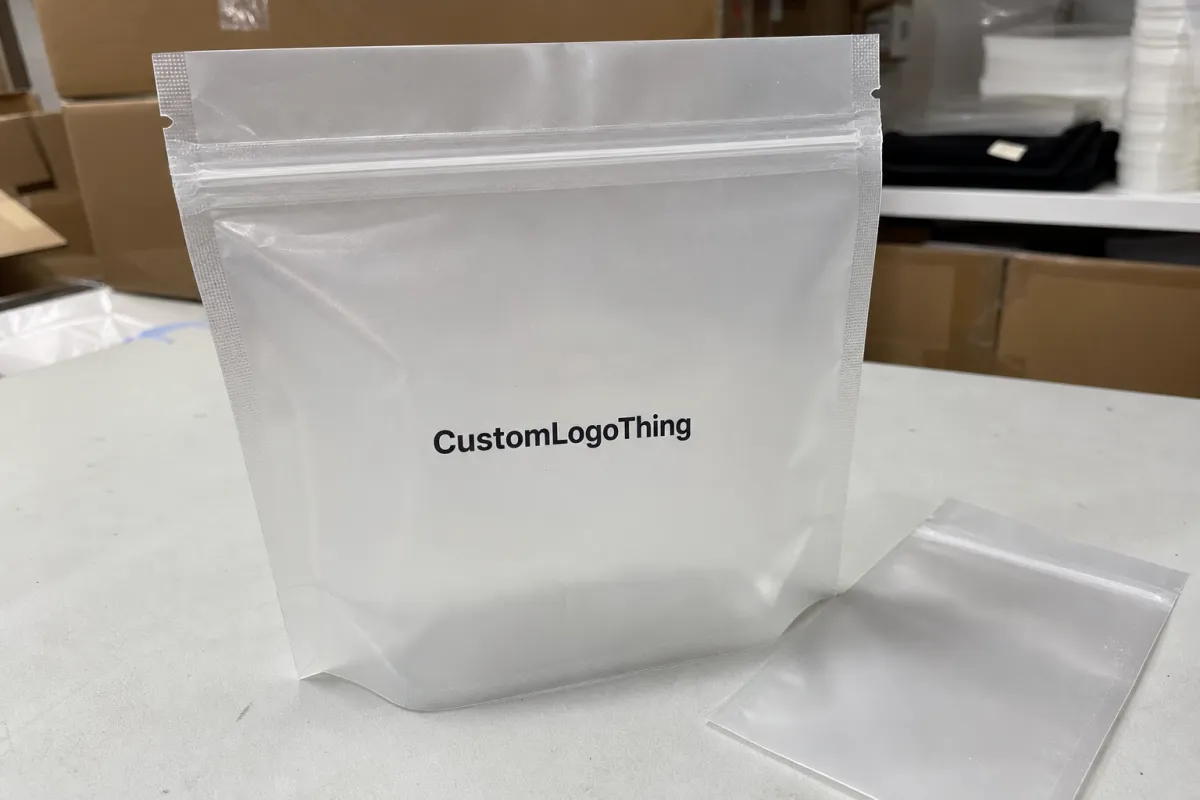
A subscription frosted zipper Bags Material Sample guide should function like a comparison sheet, not a catalog page. The buyer is not trying to admire packaging in the abstract. The real question is whether the bag can survive routine handling while still meeting the brand's visual standards and the product's storage needs.
That is why the word "frosted" needs careful interpretation. Two bags can both be described that way and behave very differently. One may have a soft matte finish with strong product visibility, while another may be nearly opaque and mute the contents almost completely. One may show scuffs quickly. Another may resist surface marks but feel stiffer or less refined. The label alone does not tell you enough.
The sample should also reflect the actual use case. A pouch for light beauty refills behaves differently from one holding supplements, tea, apparel accessories, or small hardware. Contents affect everything from seal pressure to panel stretch to how the bag sits in a subscription box. If the sample is tested with filler that does not resemble the real product, the result can be misleading in exactly the way that causes expensive mistakes.
Good sample work is repetitive in a useful way: same fill weight, same handling motion, same lighting, same viewing distance. Strip away those variables and the differences become easier to judge. Film clarity, zipper precision, corner strength, and shelf appearance are much easier to compare when the test conditions stay consistent.
"The sample that looks best under office light is not always the one that performs best after 20 or 30 open-close cycles."
How the sample review process works before you commit
The review process usually starts with a narrow request: ask for versions that reflect the real production decision, not a vague approximation. That means film thickness, zipper style, dimensions, and print method should all match the planned order as closely as possible. If the launch spec is still undecided, ask for a baseline option and one or two controlled variations so the tradeoffs are visible.
Next comes side-by-side testing. One bag at a time gives you a false sense of certainty because the eye adjusts quickly. Put the samples next to each other, fill them the same way, and inspect them under the same light. Then open and close each bag several times. A weak zipper often feels acceptable once. It becomes obvious after repeated use.
That repeated-use test is not fussy; it is the point. Subscription packaging tends to be touched by multiple people before the customer sees it. The bag may pass from a pack-out table to a shipping carton to a customer desk or shelf. If the seal is inconsistent, the zipper drifts, or the film creases sharply at the corners, the weakness will show up in the chain somewhere.
When possible, test the bag with the final product rather than a substitute item. A sample that behaves well with lightweight filler may sag, balloon, or trap air once the actual product is inserted. A pouch for a flat refill and a pouch for a rigid component do not impose the same stress on the film. The review should respect that difference instead of pretending all products load the same way.
Key material factors that change feel, protection, and shelf appeal
Three variables carry most of the weight: thickness, film structure, and surface finish. Thickness affects stiffness and puncture resistance. Film structure affects how the bag bends, folds, and holds a line at the seal. Finish affects perceived quality, photo performance, and how visible scuffs become after the sample has been handled a few times.
For most buyers, thickness is the easiest spec to understand and the easiest one to oversimplify. A thicker bag does not automatically mean a better bag. It usually means more body, better resistance to damage, and a more substantial hand feel, but it can also make the pouch feel bulky or reduce flexibility at the zipper area. Too thin and the bag folds over itself, especially once it is filled. Too thick and it may fight the box dimensions or add freight weight unnecessarily.
Frost level is the other major variable. A more translucent frosted bag allows the product to be seen through the film, which can help when item recognition matters. A heavier frost gives a more premium, subdued appearance, but it can hide the contents to the point where the pack feels vague. For subscription brands, that balance matters because the customer needs enough visibility to identify the item without losing the polished look that frosted packaging is often chosen for in the first place.
The zipper deserves its own review. A closure that snaps shut with a clean, even feel usually inspires confidence. A loose zipper or one that catches at the ends can create the opposite reaction: customers may assume the bag was built down to a price. This is a small part on paper, but in use it can define the product experience. Even a good bag can feel cheap if the closure is clumsy.
Surface finish affects the image more than many buyers expect. Matte frost can make printed logos look refined, but it can also mute contrast if the ink density is too low. Glossy ink on a matte film may pop too much. Soft-touch coatings, if they are involved, can show fingerprints or rub marks depending on the print method. The sample should reveal those interactions before they become a shipment-wide problem.
Claims need the same level of scrutiny. A frosted zipper bag is not automatically biodegradable packaging. If the supplier says otherwise, ask for the actual resin, additive package, and test basis. The same caution applies to recycled content. If the bag includes recycled materials, that is useful information, but the exact percentage and verification method matter. If paper inserts or outer cartons are part of the sustainability story, check whether they are FSC certified instead of assuming the claim is already covered.
Cost, pricing, MOQ, and unit cost tradeoffs to watch
Cost in a sample review should be treated as a map, not a verdict. A low sample price can be useful for early fit checks, but it may tell you very little about the final production cost if the real order uses different film thickness, a better zipper, custom printing, or a different pouch size. The number on the sample invoice is only one piece of the picture.
The main cost drivers are predictable. Larger bags use more material. Thicker film costs more. Custom print raises setup complexity. A premium zipper adds a bit to the unit price, and so does any special finish or barrier layer. If the bag is going into a subscription box, there is a second layer of cost pressure: the pouch has to fit the carton layout efficiently. A bag that wastes space can raise total fulfillment cost even if the unit price looks reasonable.
MOQ matters because it changes the arithmetic. A buyer may only want a few hundred units for a pilot, but many factories price more favorably at 3,000, 5,000, or higher. That is useful if the spec is locked. It is risky if the team is still arguing over zipper feel or visual opacity. Locking in a larger run too early can save pennies and cost months.
| Option | Best for | Typical sample cost | Estimated production price at 5,000 pcs | Main watch-out |
|---|---|---|---|---|
| Stock frosted zipper bag | Fast fit checks and early testing | $15-$35 | $0.08-$0.16/unit | May not match the final print or zipper profile |
| Custom-printed 8 mil bag | Brand presentation and launch packaging | $40-$90 | $0.14-$0.28/unit | Artwork setup and ink coverage can change the quote |
| Thicker premium version | Heavier product or repeat handling | $60-$120 | $0.20-$0.38/unit | Better body, but higher freight and material cost |
| Pilot run with special spec | Launch validation before scale-up | $75-$150 | $0.24-$0.45/unit | Only useful if the spec is unlikely to change again |
Freight and setup charges deserve the same attention as the unit price. A sample that looks inexpensive can become less attractive once shipping, plate charges, and revision rounds are added. Buyers often discover that the real budget issue is not the bag itself but the chain of choices around it. That is true whether the pack includes recycled inserts, kraft paper separators, or FSC certified paper components alongside the pouch.
Process and lead time: from sample request to approved production run
The normal sequence is request, confirmation, preparation, transit, review, revision, and final approval. Stock samples can move relatively quickly, often in a few business days before shipping time is added. Custom samples move more slowly because the supplier may need to adjust dimensions, print registration, film grade, or zipper settings. A revision round extends the timeline again. That is not a delay in the unusual sense; it is simply how packaging development works.
Most timeline trouble comes from preventable changes. Artwork gets tweaked after the sample is already under way. Someone decides the zipper should feel firmer. A team member notices a different finish on another package and wants the same look here. None of these requests is unreasonable, but each one adds another cycle. The cleaner the brief, the shorter the path.
There is a simple way to shorten lead time: send complete input the first time. Include exact dimensions, target fill weight, product type, intended use, artwork files in the right format, and any storage or shipping requirements. If the bag must fit a particular subscription box insert, say so. If the pouch will be handled on a packing line rather than packed by hand, say that too. The more concrete the use case, the fewer assumptions the supplier has to make.
Transit expectations should also be part of the discussion. If the bag will travel inside a box and be exposed to vibration, compression, and occasional drops, that should be reflected in the review. The packaging industry often refers to ISTA methods for distribution thinking. And if the project includes paper inserts or outer cartons with sustainability claims, confirm the sourcing path with FSC rather than assuming the paper is already certified.
Step-by-step checklist for evaluating frosted zipper bag samples
The best way to review a bag sample is to treat it like a controlled test, not a first impression contest. Start with the surface. Is the frost even across the panel, or do some areas look cloudy and others too clear? Do the edges cut cleanly? Does the zipper line sit straight? If a sample looks uneven before it is even filled, it is unlikely to get better in use.
Next, assess body and flexibility. A good frosted zipper bag has enough structure to hold its shape without becoming rigid or awkward. It should open without fighting the user, but it should not collapse over itself the moment the product is inserted. This is especially relevant for subscription orders because the pouch may need to sit neatly in a box alongside inserts, tissue, or corrugated dividers.
Then test functionality with the real product. Fill the pouch to the intended level, seal it, open it, and close it again several times. If the product is sharp, dense, or oddly shaped, pay extra attention to puncture points and seal pressure. If the bag is meant to be reused, repeat the cycle enough times to see whether the closure remains predictable. A single smooth closure is not proof of durability.
Presentation comes last, but it should not be ignored. Check print space, logo contrast, and whether the frosted surface still looks clean after handling. A bag that photographs poorly under normal phone lighting can create a hidden problem for e-commerce listings, insert cards, and social content. If the packaging is meant to carry a premium feel, the sample should hold that feeling in ordinary lighting, not only in a controlled photo setup.
A practical scorecard helps keep the review grounded:
- Clarity: enough visibility for the product, without losing the frosted look.
- Zipper feel: even closure, no snagging, no loose ends.
- Seal strength: stays closed through repeated opening and closing.
- Stiffness: holds shape without looking bulky or overbuilt.
- Scuff resistance: surface still looks clean after handling.
- Print visibility: logo and copy remain readable in normal light.
Record the result right away. Once several samples are on the table, memory becomes unreliable. A short note with photos, dimensions, zipper comments, and a score for each category is much more useful than a vague conclusion written from memory the next morning.
Common mistakes buyers make before approving the order
The first mistake is testing the sample with the wrong product weight or shape. A bag that looks excellent with a light refill can sag or bulge once the real product is inserted. The second mistake is judging by appearance alone. A prettier frost finish does not matter much if the zipper feels weak or the bag opens too easily after a few cycles.
Another common error is reviewing one sample at a time. Without side-by-side comparison, the most familiar option often wins because the eye has nothing to measure it against. Put the samples next to each other and the differences become harder to miss. One may have better stiffness, another may show stronger logo contrast, and a third may close more cleanly. Those distinctions matter.
Dimensions create more problems than buyers expect. Too little headroom makes the closure awkward. Too much headroom makes the bag look loose or wasteful. Fit also affects how the pouch sits in a subscription box or shipping carton. An oversized bag can cause wasted space, while an undersized one can make the pack look crowded even if the fill is correct.
Sustainability messaging is another place where buyers get careless. A bag, an insert, and a mailer are not the same material category, so they should not be described with one broad claim. A pouch may be plastic, the insert may be FSC certified paper, and the shipping mailer may contain recycled materials. Those are separate facts, and customers usually trust brands more when the facts stay separate and clear.
One last mistake is assuming the production sample will mirror the hand sample in every detail. In reality, the final run can reveal small shifts in print tone, zipper feel, or surface texture because of machine settings, batch variation, or supplier substitution. That is why the approved spec should be documented in writing rather than left in a thread of casual messages.
Expert tips and next steps for a cleaner final approval
Ask for at least three controlled versions when the project is still being shaped: one baseline, one premium upgrade, and one cost-conscious version. That range makes the tradeoffs visible. It also helps internal reviewers understand exactly what changes when the material spec moves up or down. A team can argue more intelligently about actual differences than about a single sample that is being asked to do too much.
Once the best version is chosen, document it carefully. Keep the sample photos, dimensions, zipper notes, print observations, pricing, and final approval in one place. If marketing, operations, and procurement are not reading the same spec, the order can drift before the production run starts. The written record matters as much as the sample itself.
Before approving the run, check line compatibility and storage conditions. Will the bag still behave properly in a warm warehouse? Can pack-out staff close it quickly without hand fatigue? Does the closure remain reliable after the product has sat for several weeks? Those are small questions with large consequences. Packaging usually fails at the edge cases, not the easy ones.
Used properly, a subscription Frosted Zipper Bags material sample guide turns a vague packaging decision into a controlled one. It helps buyers compare film, zipper, finish, price, and lead time with enough discipline to avoid costly surprises. That is the real value of the sample stage: not excitement, but fewer errors, cleaner launches, and a final pack that behaves as well as it looks.
What does a subscription frosted zipper bags material sample guide help me compare first?
Start with clarity, seal performance, and zipper feel because those usually affect customer experience fastest. Then check thickness, stiffness, and print contrast so you can tell whether the bag matches the brand look you want.
How many frosted zipper bag samples should I request before choosing one?
Three samples is usually enough to compare a standard option, a premium upgrade, and a cost-saving alternative. Add more only if your product weight, print layout, or sealing needs change the result in a meaningful way.
What pricing details belong in a subscription frosted zipper bags material sample guide?
Include sample fees, shipping, setup charges, and estimated unit cost at your likely MOQ. Also note how material thickness, custom printing, and zipper type change the final quote.
How long should the sample and approval process usually take?
The timeline depends on whether you need stock samples or custom revisions, but simple reviews move faster when specs are clear. Build in time for transit, testing, revisions, and final sign-off so the production run does not stall.
Can a material sample review prevent packaging mistakes for subscription orders?
Yes, because it catches fit problems, weak seals, confusing opacity, and shelf presentation issues before you buy in volume. For subscription brands, the subscription Frosted Zipper Bags material sample guide is the cleanest way to lock in the right spec before launch.


