Buyer Fit Snapshot
| Best fit | Sustainable Pouches Manufacturer projects where brand print, material claims, artwork control, MOQ, and repeat-order consistency need to be specified before quoting. |
|---|---|
| Quote inputs | Share finished size, material target, print colors, finish, packing count, annual reorder estimate, ship-to region, and any compliance wording. |
| Proofing check | Approve dieline scale, logo placement, barcode or warning zones, color tolerance, closure strength, and carton packing before bulk production. |
| Main risk | Vague material claims, crowded artwork, missing packing details, or unclear freight terms can make a low unit price expensive after revisions. |
Fast answer: Sustainable Pouches Manufacturer: Film, Print, MOQ, and Carton Packing should be specified like a repeatable production item. The safest quote records material, print method, finish, artwork proof, packing count, and reorder notes in one written spec.
Production checks before approval
Compare the actual filled-product size with the drawing, then confirm tolerance on folds, seals, hang holes, label areas, and retail display edges. Reserve space for logos, QR codes, warning copy, and material claims before decorative graphics fill the panel.
Quote comparison points
Review material grade, print process, finish, sampling route, tooling charges, carton quantity, and freight assumptions side by side. A quote is only useful when the supplier can repeat the same color, closure quality, and packing count on the next order.
Sustainable Pouches Manufacturer: What to Know First
A sustainable pouches manufacturer can make a pouch look responsible at first glance and still miss the real assignment if the barrier layer, zipper, ink system, or sealant does not fit the product or the recovery stream. I have seen buyers chase a tidy-looking pouch with a recycled symbol, only to find that the pack was too light for shelf life or too heavy for the actual fill weight. That kind of mismatch is expensive, and it usually shows up after the artwork has already been approved, which is where the headache starts.
So the first question should not be about the slogan on the front panel. It should be about the spec. A dependable sustainable pouches manufacturer balances product protection, converting methods, line speed, and end-of-life logic so the package works in real use, not only in a sales deck. If you want a clearer look at the team behind the packaging work, the background on About Custom Logo Things explains how the company approaches custom packaging support, though the practical decisions still begin with the pouch itself.
In production, the pouch that avoids the most waste is often the one that protects freshness, survives shipping, and runs through the filling equipment with fewer adjustments. That is a better goal than chasing the loudest eco language. A thoughtful sustainable pouches manufacturer understands that tradeoff well, and honestly, it is the difference between a nice pitch and a package that actually earns its keep.
What a Sustainable Pouches Manufacturer Really Means
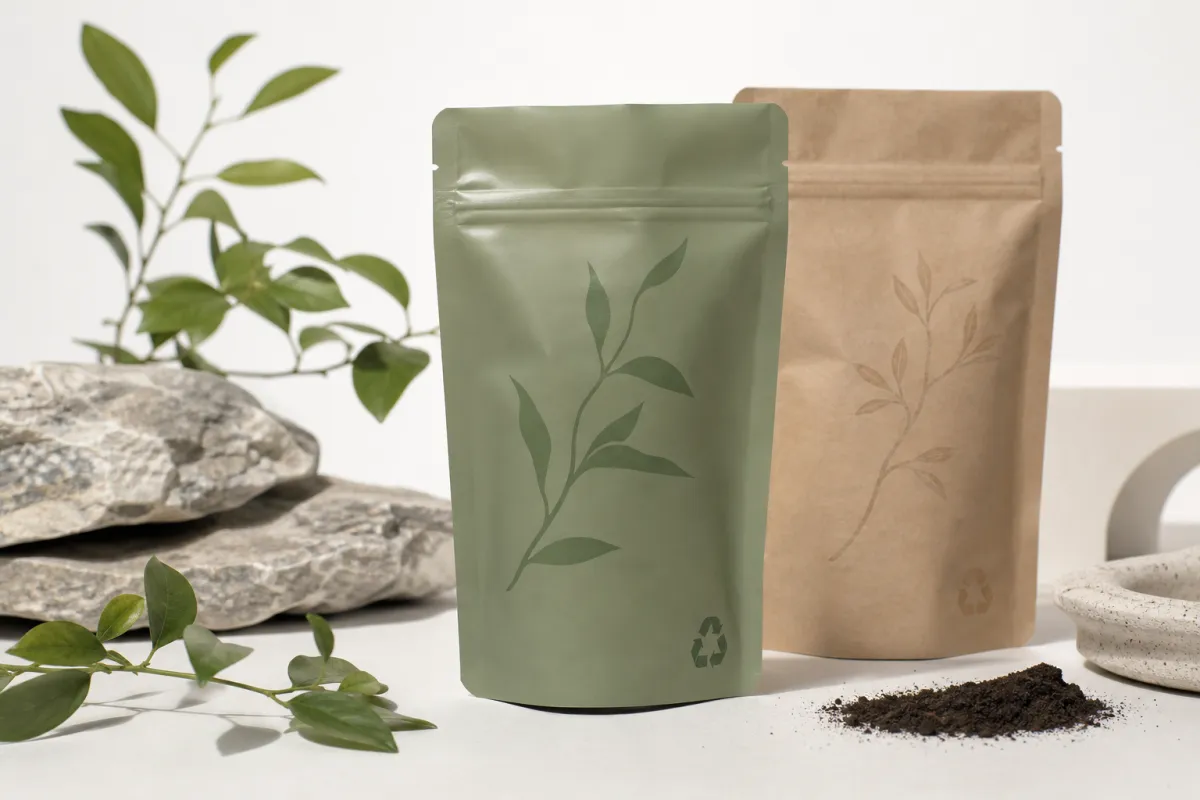
People use the phrase sustainable pouches manufacturer loosely, and that is where confusion starts. Some buyers mean recyclable structures. Others mean compostable films. Some are asking for downgauged material, recycled content, or a move away from hard-to-recover laminations. Those ideas overlap, but they do not solve the same problem.
A sustainable pouches manufacturer does more than print a green leaf on the front panel. It studies the full package system: film choice, seal performance, barrier level, closure style, artwork coverage, and what happens after the pouch leaves the shelf. Coffee, for example, leans heavily on oxygen barrier. Snack food often cares more about puncture resistance and grease resistance. Powder products need dust control and reliable seals. The sustainable answer shifts with the product, so the right structure for one brand can be the wrong answer for another.
Here is the clearest way to think about the main directions buyers hear about from a sustainable pouches manufacturer:
- Recyclable structures usually aim for a mono-material build, often mono-PE or mono-PP, so the pouch is easier to sort and recover in the right stream.
- Compostable films use different resin families and are designed for specific disposal pathways, which means the product and the local infrastructure both matter.
- Downgauged films reduce total plastic use by trimming thickness or redesigning the structure, though the pouch still needs enough strength to protect the fill.
- Recycled-content options bring post-consumer or post-industrial content into the structure, which can lower virgin material use without changing the pouch format entirely.
The most common mistake is assuming the most visible eco claim is also the best technical answer. A pouch can look responsible on the outside and still miss the mark if the barrier layer is wrong for shelf life, if the zipper adds an incompatible component, or if the sealant fails on the fill line. A sustainable pouches manufacturer has to think that way from the beginning, because the real outcome is not the label; it is whether the product arrives intact and stays that way.
The better lens is straightforward: the best pouch usually reduces waste across the whole system, not the one with the most aggressive marketing language. A sustainable pouches manufacturer should help a brand protect product quality, lower material waste where it matters, and avoid packaging that looks eco-friendly but creates problems later.
How a Sustainable Pouches Manufacturer Builds the Pouch
The build starts long before the printer runs. A sustainable pouches manufacturer usually begins by matching the product to a film structure, then moves forward through printing, laminating, slitting, converting, and closure selection. That order matters because each decision affects the next one. If the film is too stiff, the pouch may not fill cleanly. If the barrier is too low, shelf life can fall apart. If the artwork is too heavy, the visual result may still be attractive while the package no longer fits the recovery story the brand wants to tell.
For monomaterial pouches, the goal is often to stay within one resin family, such as PE or PP, so the package is easier to recover. A sustainable pouches manufacturer may use compatible tie layers or sealants to preserve machinability while keeping the overall structure cleaner from a recycling standpoint. Compostable pouches follow a different logic. They rely on compostable resin families and have their own handling expectations, which means the end-of-life claim has to line up with the product, the market, and the certification path.
Once the structure is chosen, the technical checks begin. A good sustainable pouches manufacturer pays close attention to:
- Seal strength, often measured with ASTM F88 methods, because a weak seal turns into leaks, spoilage, or split seams during transport.
- Puncture resistance, especially for products with sharp inclusions, irregular shapes, or heavy fill weights.
- Oxygen transmission rate and moisture vapor transmission rate, since barrier performance can make or break shelf life for coffee, snacks, and dry mixes.
- Line behavior, including how the pouch tracks, opens, fills, and seals at the actual machine speed.
- Closure compatibility, whether the design uses a zipper, tear notch, spout, hang hole, or clear window.
Artwork should be planned alongside structure, not after it. Heavy ink coverage, matte versus gloss finishes, and large print areas all affect how the pouch behaves and how claims are presented. If a brand wants a compostable or recyclable claim on the panel, the design has to leave space for the right language and the right certification marks, where those apply. A sustainable pouches manufacturer that understands this will push for early artwork review instead of waiting until the final proof cycle.
If the pouch fails on the filling line, the sustainability claim does not carry much weight. Buyers remember the pallet that leaked, not the nice recycling icon.
That is why the technical side of a sustainable pouches manufacturer matters so much. The work is not just material selection; it is matching material, machine, product, and claim into one package that can survive real use.
Materials, Barrier Layers, and Sustainability Tradeoffs
The word sustainable gets used as if it were a single feature, but packaging is never that tidy. A sustainable pouches manufacturer has to weigh the full stack of tradeoffs, because a thinner film may save material while also raising the chance of puncture, oxygen ingress, or seal failure. That is not a good trade if the product loses shelf life and gets thrown away sooner.
Here is how the common material families usually play out in real packaging decisions:
- Mono-PE is often chosen for recyclability-focused designs and can work well for snacks, dry goods, and some frozen items when barrier needs are moderate.
- Mono-PP is useful for certain dry foods and snack applications, especially where stiffness and clarity need to hold up.
- Paper-based laminations can improve shelf appeal and may support fiber-based storytelling, but the paper layer alone does not make the pouch recyclable or compostable.
- Post-consumer recycled content can reduce virgin resin use, yet the exact percentage, clarity, and performance window depend on the structure.
- Compostable films can fit specific market needs, but they need careful validation for heat resistance, moisture sensitivity, and distribution conditions.
Paper-based work brings its own set of questions. Buyers often ask about FSC paper, and that can be helpful for the paper component, but it should not be confused with the performance of the entire laminate. The outer web is only one part of the pouch. A sustainable pouches manufacturer should explain the full build, not just one layer that sounds attractive in a pitch deck.
Product category changes the conversation fast. Coffee usually needs a high oxygen barrier and a dependable one-way valve if the coffee is freshly roasted. Snacks may need grease resistance, crisp texture protection, and puncture resistance from sharp corners or broken pieces. Powders often need excellent seal integrity and dust management. Pet food can demand tougher film, more abuse resistance, and better puncture protection because of the weight. Dry ingredients may be less demanding in barrier terms, yet they still need enough protection to survive shipping and storage.
A sustainable pouches manufacturer should explain why one structure is better than another, even if the answer is not the one a buyer first hoped for. Sometimes the greener choice is a downgauged pouch. Sometimes it is a recycled-content film. Sometimes it is a recyclable monomaterial with slightly more material than a thinner laminate, because the extra thickness prevents damage and reduces waste from returns or spoilage. That sort of judgment comes from packaging experience, not from reading a marketing sheet.
There are also hidden tradeoffs in the small parts. Zippers, valves, spouts, adhesives, metallic effects, and matte coatings can all shift the sustainability profile. One incompatible component can weaken the entire claim. A sustainable pouches manufacturer should be able to explain whether a zipper fits the target recovery stream, whether a metalized look is purely decorative or truly necessary, and whether a window is worth the compromise. The pouch should earn every layer it carries.
| Material Option | Typical Best Fit | Approximate Unit Cost at 5,000 Pieces | Key Strength | Main Tradeoff |
|---|---|---|---|---|
| Mono-PE | Snacks, dry goods, some frozen items | $0.14-$0.24 | Cleaner recyclability story in the right stream | Barrier can be limited for highly sensitive products |
| Mono-PP | Dry foods, some granola, certain wellness items | $0.16-$0.28 | Good stiffness and print presentation | Not the best fit for every fill line or target market |
| PCR-containing laminate | Brands balancing recycled content and visual quality | $0.18-$0.32 | Lowers virgin material use | Clarity and consistency can vary by resin source |
| Compostable film | Programs with a clear disposal pathway and suitable product | $0.22-$0.40 | Fits compostability claims where infrastructure exists | Needs careful testing for shelf life and handling |
| Paper-based laminate with barrier | Premium shelf appeal, lighter dry goods, specialty foods | $0.20-$0.38 | Strong tactile look and retail presence | Fiber content does not guarantee recyclability |
The numbers above are broad because size, print coverage, barrier level, and closures can move pricing quickly. Even so, the table gives a practical starting point. A sustainable pouches manufacturer should be able to explain why one route costs more and what that extra spend buys in return, whether it is shelf life, better brand presentation, or a more realistic end-of-life story.
Sustainable Pouches Manufacturer Process, Timeline, and Lead Time
A sustainable pouches manufacturer usually follows a predictable path, even though every order has its own wrinkles. The process normally begins with a discovery call or written spec review, then moves into material recommendation, sample development, proof approval, production scheduling, quality checks, and shipping. Brands that understand that sequence tend to avoid a lot of frustration later.
The pace depends on several factors. Custom tooling can add time. Specialty materials may need sourcing windows. Complex print can require extra proof rounds. If the pouch includes a zipper, spout, or unusual window cutout, the converting step may take longer. A sustainable pouches manufacturer that handles high-detail orders will want the artwork, dimensions, and claim language settled early so there is less back-and-forth once the job enters production.
Typical lead time for a straightforward custom run may land around 12-15 business days from proof approval, but that is only a baseline. Once you add specialty film, testing, or new structure validation, the window can stretch. If the order lands during a seasonal rush, or if the product must be tested on the fill line before full production, the schedule can easily extend to 3-5 weeks or more. Freight time is separate, and that part often gets underestimated.
There are a few moments where lead time usually lengthens:
- New sustainable structure qualification, because the material may need to be proven before a brand commits to the full run.
- Artwork revision cycles, especially when sustainability language needs to match the actual pouch build and market requirements.
- Seasonal demand spikes, which can tighten machine availability and supplier capacity.
- Line validation, since fill equipment may need adjustments for stiffness, seal windows, or closure placement.
A sustainable pouches manufacturer should help a buyer work backward from the launch date rather than forward from the order date. That means building in time for sample review, internal approvals, technical testing, and freight delays. For a product launch, a safe plan is often to leave room for one extra review cycle even if it seems unnecessary. That little cushion saves a lot of stress.
If you are comparing suppliers, ask how they handle proofing and whether they provide technical data early in the process. A shop that can talk about barrier properties, closure compatibility, and production windows with clarity is usually easier to work with than one that only talks about design. A sustainable pouches manufacturer earns trust by making the timeline feel manageable instead of mysterious.
Cost, Pricing, MOQ, and Quote Factors to Compare
Cost is where many packaging decisions get distorted. A sustainable pouches manufacturer may quote a pouch that looks slightly more expensive on paper, but that quote may include better shelf life, less spoilage risk, lower rework risk, or a cleaner recovery story. From a buyer’s point of view, the real question is not only what the pouch costs; it is what the pouch saves or prevents later.
The main cost drivers are usually material type, pouch size, print method, barrier level, closures, special finishes, testing requirements, and freight. Heavy ink coverage costs more than a light design. Matte finish can cost more than a basic gloss. A zipper adds cost. A valve adds cost. A higher barrier film generally adds cost. A sustainable pouches manufacturer should be able to explain each line item clearly, and that transparency matters.
MOQ, or minimum order quantity, has a major effect on unit price. Smaller runs often cost more per pouch because setup, materials, and production changeover are spread across fewer pieces. For example, an order of 5,000 units may carry a higher per-piece cost than 25,000 units even when the structure is straightforward. That is normal. What matters is whether the quote fits the launch plan, the cash flow, and the expected sell-through.
Use this checklist when you compare quotes from a sustainable pouches manufacturer:
- Artwork setup: Is design prep or file cleanup included?
- Tooling: Are plates, cylinders, or custom dies separate line items?
- Samples: Are prototypes or material samples included?
- Freight: Does the quote include shipping, or is that billed later?
- Documentation: Are test reports or sustainability details provided?
- Revision policy: How many proof rounds are included before extra fees apply?
That list sounds basic, but it catches a lot of hidden variation. A quote that is $300 lower can become more expensive once freight, artwork changes, or compliance documents are added. The smartest way to compare a sustainable pouches manufacturer is to compare total value, not just the front-end number.
Here is a practical way to frame price: if one pouch costs three cents more but reduces product loss, keeps your line running smoothly, or avoids a claim problem later, it may be the cheaper option overall. I have seen brands save more by right-sizing a pouch than by squeezing the lowest quote out of the market. The pouch does not need to be fancy. It does need to be right.
Step-by-Step Guide to Choosing the Right Pouch Spec
Choosing the Right pouch spec gets much easier once the product, the machine, and the claim language are all on the table. A sustainable pouches manufacturer can guide the process, but the brand still needs to bring clear information. A vague request like “eco-friendly pouch” usually produces vague answers. A precise request leads to a much better structure recommendation.
- Start with the product. Write down fill weight, texture, oil content, moisture sensitivity, oxygen sensitivity, and target shelf life. A dry snack and a roasted coffee product do not need the same pouch.
- Define the use case. Will the pouch sit on a shelf, move through ecommerce shipping, or go through a club-store style distribution model? Drop exposure and transit abuse change the structure choice.
- Set the sustainability goal. Decide whether the priority is recyclability, compostability, recycled content, or material reduction. A sustainable pouches manufacturer can only optimize what the brand actually wants to achieve.
- Match the closure. Choose zipper, tear notch, spout, or no closure at all based on how the consumer will use the package and how the filling line behaves.
- Request samples or prototypes. Compare them with the real product if possible. Test the fill, the seal, the drop resistance, and the shelf presentation together, not separately.
- Review claims and artwork. Make sure recycling or composting language matches the structure and the market you are selling into.
- Lock the spec and plan reorders. Confirm the lead time, the MOQ, and the reorder threshold so you are not guessing after the first run sells through.
That sequence sounds practical because it is practical. A sustainable pouches manufacturer should be able to help with each step, but the best results happen when the brand knows what it is trying to protect, where the pouch will travel, and how the consumer will actually use it. The spec is not just a technical document. It is the bridge between the product and the promise on the pack.
One more point: if your product is sensitive to heat, grease, oxygen, or moisture, do not approve a structure before you understand how it behaves in real conditions. A pouch can look fine in a proof and still fail after a week in storage or after a rough shipment. A sustainable pouches manufacturer that encourages real-world testing is usually thinking in the right direction.
Common Mistakes and Expert Tips to Avoid Rework
The biggest mistake I see is choosing a sustainability claim before testing shelf life. A brand may want the story to be recyclable or compostable, but if the product needs more barrier than the chosen structure can provide, the pouch becomes a liability. A sustainable pouches manufacturer should be honest about that tradeoff early, before the brand prints thousands of units.
Another common miss is ignoring machine compatibility. Seal window, zipper style, film stiffness, and tear notch placement all affect fill speed and seal consistency. I have seen a pouch that looked excellent on a sample board create headaches on the line because it was too slick, too soft, or simply awkward for the packer’s equipment. A sustainable pouches manufacturer that asks about the fill line is doing the right kind of homework.
Brands also forget to verify how a recyclability or compostability claim will be understood in the target market. A pouch that is technically recyclable in one collection system may not be accepted the same way in another region. That is where local guidance and documentation matter. The recycling guidance from the EPA is a useful reference point, and the transport validation methods published by ISTA are worth reviewing if your pouch has to survive shipping abuse.
My expert advice is direct:
- Ask for technical data early, not after artwork approval.
- Test with the real product whenever possible, especially for oily, moist, or fragile items.
- Build time into the calendar for approvals, samples, and freight.
- Keep the pouch right-sized so you are not paying for excess air or overpackaging.
- Use clear claims that match the actual structure and the market’s disposal pathways.
Most packaging waste is not solved by a louder claim. It is solved by a better spec, a better fit, and fewer mismatched layers.
A sustainable pouches manufacturer can help you avoid rework, but only if the brief is honest. If the product needs a stronger seal, a different barrier, or a more realistic closure, it is better to hear that early than after production has started. That kind of candor is worth a lot in packaging, and it usually saves money too.
Next Steps After You Shortlist a Sustainable Pouches Manufacturer
Once you have three or four suppliers in view, the process should become more disciplined, not more confusing. A sustainable pouches manufacturer is easiest to evaluate when you give each supplier the same brief and ask for the same type of response. That lets you compare structure, Price, and Lead Time on equal terms.
Start with a one-page spec sheet. Include the product type, fill weight, shelf-life target, market region, artwork status, annual volume, pouch style, closure preference, and any must-have sustainability claims. If your team can also note whether the product is dry, oily, moisture-sensitive, or fragile, the recommendation will improve quickly. A sustainable pouches manufacturer can only be as precise as the information you provide.
Then ask each supplier for at least two structure options. One could be the most economical fit, and the other could be the more sustainable or higher-barrier option. That side-by-side view makes it easier to see where the tradeoff sits. A good sustainable pouches manufacturer should be able to explain the difference in plain language, not bury it in jargon.
Before you place the order, request samples and line-test them if at all possible. That matters even more for moisture-sensitive products, oily products, and high-speed filling operations. The test does not need to be fancy. It needs to be real. A few hours of line validation can save weeks of rework later.
Finally, confirm the commercial details in writing: MOQ, unit price, lead time, freight terms, artwork approval milestones, and any testing or documentation that supports the sustainability claim. If the team has questions about who they are working with, the details on the Custom Logo Things team can help set expectations, but the order itself still lives or dies on the spec sheet, the proof, and the production schedule.
The best outcome is not a pouch that sounds impressive. The best outcome is a pouch that holds the product, fits the machine, matches the market, and supports the sustainability goal without overpromising. That is what a dependable sustainable pouches manufacturer should deliver, and the practical takeaway is simple: write the spec first, test the pouch with the real product, verify the claim against the actual structure, and lock the reorder plan before launch gets close.
Frequently Asked Questions
What should I ask a sustainable pouches manufacturer before requesting a quote?
Send the product type, fill weight, target shelf life, and the exact pouch style you want so the quote is based on a real use case. Ask what material structure they recommend, what MOQ applies, and whether samples or line tests are included. Confirm whether the quote includes art setup, freight, and any testing or documentation needed for sustainability claims.
How do I know if a sustainable pouches manufacturer is offering a truly recyclable pouch?
Ask for the exact layer structure and resin family, not just a broad marketing label like “eco-friendly” or “recyclable.” Check whether the structure aligns with the recycling stream in your target market and whether closures, inks, and adhesives are compatible. Look for documentation that supports the claim, especially if you plan to print recycling language on the pouch.
Are sustainable pouches more expensive than standard pouches?
Often yes at the unit level, especially when the structure is specialized, the MOQ is lower, or the barrier performance is higher. The real comparison should include product protection, spoilage risk, and total landed cost, not just the per-pouch number. Some brands save money by reducing overpackaging, Choosing the Right pouch size, or avoiding rework from poor line compatibility.
What lead time should I expect from a sustainable pouches manufacturer?
Simple repeat orders may move faster, but new custom structures usually need time for samples, proofs, and production scheduling. Lead time can stretch if the material is specialty-sourced, the artwork needs revisions, or the pouch must be tested on the fill line first. The safest approach is to work backward from your launch date and leave room for approvals and shipping.
Can a compostable pouch work for oily or moisture-sensitive products?
Sometimes, but only if the barrier, seal performance, and shelf-life requirements are proven for that exact product. Compostability and product protection are different goals, so the right structure has to satisfy both packaging performance and disposal expectations. A sustainable pouches manufacturer should help you test the pouch against the real product before you commit to a full production run.