Buyer Fit Snapshot
| Best fit | Sustainable Stand Up Pouches with Logo projects where brand print, material claims, artwork control, MOQ, and repeat-order consistency need to be specified before quoting. |
|---|---|
| Quote inputs | Share finished size, material target, print colors, finish, packing count, annual reorder estimate, ship-to region, and any compliance wording. |
| Proofing check | Approve dieline scale, logo placement, barcode or warning zones, color tolerance, closure strength, and carton packing before bulk production. |
| Main risk | Vague material claims, crowded artwork, missing packing details, or unclear freight terms can make a low unit price expensive after revisions. |
Fast answer: Sustainable Stand Up Pouches with Logo: Film, Print, MOQ, and Carton Packing should be specified like a repeatable production item. The safest quote records material, print method, finish, artwork proof, packing count, and reorder notes in one written spec.
Production checks before approval
Compare the actual filled-product size with the drawing, then confirm tolerance on folds, seals, hang holes, label areas, and retail display edges. Reserve space for logos, QR codes, warning copy, and material claims before decorative graphics fill the panel.
Quote comparison points
Review material grade, print process, finish, sampling route, tooling charges, carton quantity, and freight assumptions side by side. A quote is only useful when the supplier can repeat the same color, closure quality, and packing count on the next order.
A lightweight pouch can cut freight cost, reduce breakage, and still look sharper than a rigid jar. That is part of the reason sustainable Stand Up Pouches with logo keep landing on buyer shortlists, but the real story usually has little to do with the green language in a quote sheet. The material stack, the print method, the barrier performance, and the way the package survives filling, shipping, and shelf life tell you far more than any polished sales line ever will. I have spent enough time reviewing sample packs to know that a pouch can look perfect in a render and still stumble the moment it meets a real product.
A pouch earns the word sustainable only when it protects the product well enough to avoid waste. Pretty packaging that fails is still waste, just with better branding.
Sustainable stand up pouches with logo: why they matter now
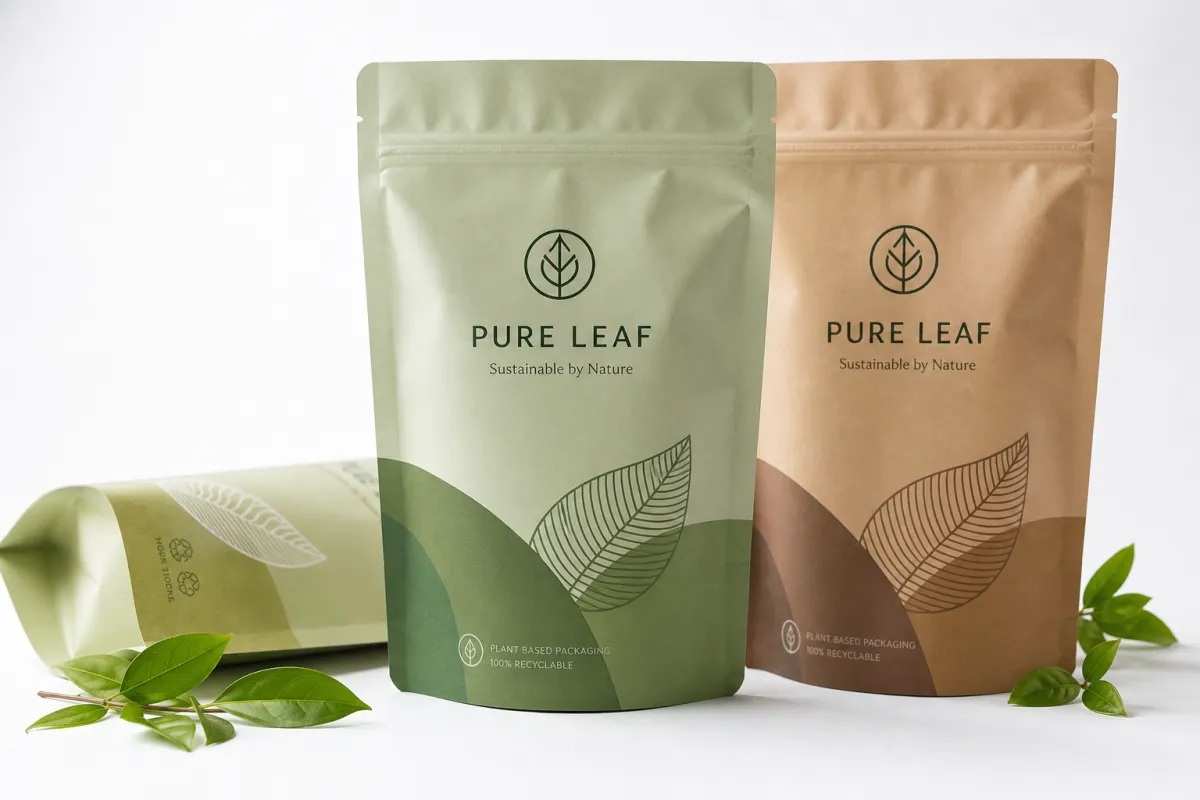
Packaging buyers tend to look at this format for practical reasons first. Sustainable Stand Up Pouches with logo usually weigh far less than glass, tin, or thick rigid plastic, and that difference can lower shipping weight, reduce storage pressure, and simplify pallet planning. Those gains matter fast once you move beyond a few hundred units and start thinking in monthly volumes, because every ounce removed from the package becomes part of a bigger freight and warehousing picture.
The logo does more than decorate the pouch. A clean logo treatment can carry the brand without adding another label, a sleeve, or a printed carton, which keeps the material count lower and the presentation tighter. For many brands, sustainable Stand Up Pouches with logo are the most direct path to a polished shelf presence without piling on extra components that complicate production and disposal. That is a useful place to be, especially if you are trying to keep the package story straightforward for both retail buyers and end consumers.
There is a catch, and it deserves a straight answer. Sustainable Stand Up Pouches with logo are not automatically eco-friendly just because the sales sheet says so. The actual structure matters: how much film is used, whether the pouch is mono-material, whether recycled content is real and documented, and what recovery path exists after use. A pouch can be lighter than a jar and still be a weak sustainability choice if it shortens shelf life, increases spoilage, or cannot fit into any meaningful disposal stream.
That tradeoff is where a lot of teams get tripped up. Packaging is not a badge of virtue. It is a functional part of the product system, and if the package fails, the environmental damage usually gets worse instead of better. A pouch that looks responsible on a mockup but leaks, stales, or comes back as a return is only relocating the waste, not reducing it. I have seen more than one project lose its sustainability advantage because the team focused on the label claim and not the product outcome.
A cleaner way to evaluate the format looks like this:
- Less material can reduce impact, provided the pouch still performs.
- Clear branding can replace extra labels or secondary packaging.
- Real sustainability depends on the build, barrier, and disposal route, not marketing language.
- Fit for product matters more than a green claim on the mockup.
For brands that need a premium look without the bulk of a rigid container, sustainable stand up pouches with logo are often a strong fit. Snack brands, coffee roasters, pet treat companies, specialty dry goods, and some powders usually work well in this format. Liquids ask for a different level of engineering, and highly oxygen-sensitive products do too, because barrier performance starts setting the rules long before design finishes the conversation.
How sustainable stand up pouches with logo work
A stand-up pouch starts with flexible film layers that form the front panel, back panel, and bottom gusset. Those layers are sealed into a body that can stand on shelf, and the structure can be expanded with a zipper, tear notch, spout, valve, or hang hole depending on what the product needs. That is the basic reason sustainable stand up pouches with logo can deliver upright shelf presence without the weight and stiffness of rigid packaging.
The logo is typically added through digital printing or flexographic printing. Digital printing tends to suit shorter runs, fast artwork changes, and tighter sampling cycles, while flexographic printing usually makes more sense at higher volumes because the setup cost is spread across more units. That choice affects unit price, finish quality, and lead time, and it also shapes how much revision time you can afford before production starts slipping. With sustainable stand up pouches with logo, print method is not an accessory decision. It changes the economics in a real way.
The sustainability route usually falls into four common directions:
- Downgauged material, where the film is made thinner while still meeting performance needs.
- Recycled content, often PCR in the outer layer or another qualifying substrate depending on the build.
- Mono-material construction, usually PE-based or PP-based, designed to improve compatibility with recycling systems.
- Compostable options, which can be useful in narrow applications but are not a cure-all for packaging waste.
Those options are not equal in every market or for every product. A compostable pouch may fit a very specific program, but that does not make it the best option by default. In many projects, sustainable stand up pouches with logo built as mono-materials or downgauged structures are the more practical answer because they can hold stronger barrier performance while keeping logistics simpler. Compostable films often ask for special storage conditions, tighter sealing windows, and a verified disposal pathway. That is a lot to place on a package that still needs to survive the warehouse, the truck, and the customer's hands.
Printing compatibility matters just as much as film selection. Some sustainable substrates accept ink and finish differently than conventional multi-layer laminates. Matte surfaces can give a quiet premium feel, though they can show scuffing during transit. Gloss often holds color better and resists abrasion more readily, but the visual language changes. Spot varnish, soft-touch coatings, and metallic effects are all possible, yet each one carries a cost and a sustainability consequence. If the goal is to keep sustainable stand up pouches with logo believable, every decorative choice should earn its place.
When a supplier talks through the build in plain language, the conversation gets much easier. Ask for film type, thickness in microns or mils, sealant layer, barrier layer, zipper type, and whether the final structure has a recognized recycling pathway. If that explanation gets slippery or vague, the sustainability claim is doing too much of the work.
Useful references help here too. The EPA recycling guidance is a solid place to check disposal claims, and the ISTA test standards are useful if you need a distribution test that reflects real shipping stress.
Key factors that decide performance and shelf life
If one thing deserves to stay top of mind, it is this: sustainable stand up pouches with logo need to be selected around the product first, not the artwork. A pouch that photographs well and fails in use is still a waste machine, just one with nicer graphics.
Different products ask for different barrier levels. Dry snacks usually need moisture resistance and aroma retention. Coffee often needs oxygen control and, in many cases, a valve. Powders need clean sealing and good puncture resistance. Pet food may require stronger seams, heavier gauge film, and a little more tolerance for rough handling in transit. Liquids bring seal integrity, fitment compatibility, and leak prevention into the equation. That is why sustainable stand up pouches with logo are never a single-spec purchase.
Shape and size matter more than many teams expect. A pouch that is too tall can look unstable and awkward. One that is too wide can waste material and hog shelf space. Gusset depth changes how well the pouch stands and how much volume it can hold. Headspace affects seal quality and product protection. Closure style changes the user experience too, because a zipper adds convenience but can raise material cost and complicate the filling process if the line is not tuned for it.
Here is the practical checklist I would use before approving sustainable stand up pouches with logo:
- Barrier needs: oxygen, moisture, light, or aroma protection.
- Seal strength: enough to survive filling and shipment without failures.
- Puncture resistance: especially for sharp or irregular products.
- Shelf life target: the pouch has to support the full sales window.
- Pack-out method: manual fill, semi-auto, or fully automated line.
- Customer handling: reclose, pourability, tear behavior, and grip.
Visual choices deserve attention too, though they should support the product rather than distract from it. Matte finish gives a softer premium tone and often fits natural brands very well. Gloss pushes color harder and usually handles surface abuse better. Clear windows help shoppers see the product, but they can complicate sustainability claims if they force a more complex laminate. Metallic effects can signal quality, though they may make recycling claims harder to defend. The point is not to avoid design flourishes; the point is to choose them with full awareness of what they cost and what they imply.
A simple sustainability check cuts through a lot of noise: if the pouch does not keep the product usable for its full shelf life, the packaging is not actually reducing waste. It is only creating a prettier path to the same failure. Some brands focus hard on package footprint while ignoring product loss, and that balance is backwards in most categories, because the product itself usually carries the larger environmental burden.
So yes, sustainable stand up pouches with logo can be a smart choice. The right spec depends on product chemistry, distribution stress, climate exposure, and the way the consumer will use the package. That is the unglamorous part of the job, and it is also the part that keeps the project from going off track.
Process and timeline: from brief to approved production
The process tends to be more predictable than people expect, as long as the brief is complete. For sustainable stand up pouches with logo, the usual path runs through product brief, material recommendation, dieline selection, artwork prep, proofing, sampling, production, and shipment. Leave one of those out and the schedule tends to make the missing step obvious.
The strongest briefs are clear and specific. List the product type, fill weight, pouch size target, closure preference, barrier needs, print coverage, and sustainability goal. If you want sustainable stand up pouches with logo that are recyclable, say that directly. If you need compostable, be honest about the disposal route your market can actually support. If your main aim is to cut material use, say that too. Vague goals create vague quotes, and vague quotes have a way of turning into awkward surprises later.
Delays usually show up in the same places:
- Artwork is not supplied in vector format.
- Brand colors are not clearly defined.
- The dieline gets approved too late.
- Sustainability requirements change after quoting.
- Copy is rewritten after proofing has already started.
That last one happens more often than people admit. A small wording change sounds harmless until it shifts the layout, which creates a new proof, which adds days. With sustainable stand up pouches with logo, the easiest way to slow a project down is to treat artwork like a moving target after production has been scheduled. I have watched a launch date slide for a week over a single line of copy that someone wanted to "just clean up."
For straightforward digital jobs, the timeline can move fairly quickly if the artwork is final and the film structure is standard. A common window runs about 12 to 18 business days from proof approval to shipment, depending on volume and finish. More complex orders with specialty materials, new tooling, or several sample rounds take longer, often 3 to 6 weeks or more from final approval to delivery. That is not a scare tactic; it is simply how packaging production behaves once reality enters the room.
Ask for a milestone schedule before you sign off. You want dates for artwork approval, sample approval, production start, quality check, and ship date. If the launch depends on retail placement or e-commerce inventory, that schedule matters more than the rendering. The rendering does not fill warehouse bins.
One more practical point: if you are moving to sustainable stand up pouches with logo from a rigid format, test how the new pouch behaves on your actual line. Filling temperature, seal dwell time, and product settling all affect the outcome. A good supplier should ask about those details instead of pretending the pouch works the same way everywhere. That kind of conversation tells you a lot about whether the supplier understands packaging as a system or just as a printed item.
Cost and pricing: what changes the quote
Pricing for sustainable stand up pouches with logo comes down to a handful of variables, and none of them are mysterious if you have bought packaging before. Material choice usually drives the biggest shift. Print method comes next. Size, quantity, closure type, special finishes, and whether samples or multiple proof rounds are needed all play a part. A single price with no explanation usually means someone is guessing or hiding the inputs, and neither version helps a buyer make a good decision.
Unit price tells only part of the story. A cheaper pouch can end up costing more if it fails during shipping, needs extra handling, or forces you to carry too much inventory. That is especially true for sustainable stand up pouches with logo, because buyers often chase an environmental claim and then discover the savings disappear once the pouch is too fragile or the barrier is too weak for the product.
MOQ matters as well. Smaller runs usually carry a higher unit price because the setup cost gets spread across fewer pieces. That does not make small orders a bad idea. It simply means the economics change quickly. A brand ordering 3,000 pouches will pay more per unit than one ordering 25,000, even if the artwork is identical. Add premium finishes, custom zippers, or specialty film structures and the gap grows wider.
To make comparison easier, ask suppliers to break out the following:
| Option | Typical unit cost at 5,000 pcs | Lead time | Best fit |
|---|---|---|---|
| Digital printed mono-material pouch | $0.22-$0.38 | 12-18 business days after proof approval | Shorter runs, fast artwork cycles, cleaner recyclability story |
| Flexo printed recyclable pouch | $0.16-$0.29 | 18-30 business days after approval | Higher volume, stable artwork, tighter unit economics |
| Compostable pouch with logo | $0.28-$0.52 | 20-35 business days after approval | Specific composting program, natural-positioned brands, careful testing |
| Premium matte pouch with zipper and window | $0.24-$0.45 | 15-28 business days after approval | Shelf appeal, retail display, stronger brand presentation |
Those figures are directional, not a promise. They shift with size, coverage, ink count, finish, and the current material market. Even so, they give you a useful way to compare sustainable stand up pouches with logo without getting buried in sales language that sounds helpful but hides the real variables.
When you request quotes, give the supplier a clean package of information:
- Product type and fill weight.
- Target pouch dimensions or a sample reference.
- Logo files and brand color references.
- Desired sustainability goal, such as recycled content or mono-material construction.
- Expected annual volume and first order quantity.
- Whether you need zipper, tear notch, window, valve, or spout.
That is how you get a number you can use instead of a number that feels invented. A clear brief also lets you compare sustainable stand up pouches with logo across suppliers without comparing different builds and pretending the quotes mean the same thing.
Common mistakes when ordering sustainable stand up pouches with logo
The first mistake shows up constantly: choosing the eco claim before checking product compatibility. A brand falls in love with a recycled or compostable story, then discovers the pouch cannot protect the product for the required shelf life. That is how you end up with attractive packaging that leaks, stales, or loses seal integrity. Sustainable stand up pouches with logo should protect the product first and support the environmental story second.
The second mistake is ignoring seal strength and puncture resistance. Buyers often spend their attention on print finish and forget the parts of the pouch that actually do the work. Sharp edges, tight stacking in transit, and hot fill conditions all matter more than a prettier matte coating. The pouch can only be as sustainable as the number of units that survive the trip.
The third mistake is treating the logo like an afterthought. A weak logo treatment can make even a good pouch feel cheap. Low contrast, crowded artwork, or placement that fights the structure of the pouch all weaken the shelf presence. For sustainable stand up pouches with logo, the branding should feel intentional, not dropped into the nearest open area because it was available.
The fourth mistake is skipping proofing and real testing. A quick screen check is not the same thing as filling samples, checking seals, testing drop resistance, and reviewing how the pouch behaves after handling. If you want confidence, test the package in a way that resembles actual use. That may mean an internal drop test, a seal audit, or a more formal transit program based on ISTA procedures. For fragile or high-value products, those tests are small money compared with a production failure.
Greenwashing is another trap. Some suppliers use broad claims like "eco-friendly" without explaining whether the structure is recyclable, compostable, downgauged, or simply lighter than the old version. Ask for specifics. Ask for documentation. Ask what the pouch is actually made of. If the answer stays vague, the claim is probably selling more than it is informing.
Ordering too close to launch creates its own mess. Sustainable stand up pouches with logo can move quickly, but not magically. Samples, color matching, approvals, and inbound freight all need time. The supply chain does not care that the campaign calendar is tight. It only cares whether the files are approved and the material is available.
Expert tips and next steps for sustainable stand up pouches with logo
Start with three decisions: what the product needs, how many units you are ordering, and what sustainability standard you actually need. That sounds basic because it is, yet many projects begin with the package style and only later ask whether the pouch can do the job. For sustainable stand up pouches with logo, the right sequence is product first, structure second, design third.
Request samples and test them in real conditions. Fill them. Seal them. Put them on a shelf. Ship them in a carton. Hand one to someone who has never seen the product and watch whether the closure makes sense. If the pouch is going into retail, compare how it stands beside competing packages. If it is for e-commerce, pay attention to abrasion and case packing. Sustainable stand up pouches with logo should be judged as a working system, not as a polished mockup.
Ask for documentation on material composition and on any recyclability or compostability claim. If a supplier says the pouch is recyclable, ask where and under what conditions. If they say compostable, ask for the relevant certification and the disposal reality in your market. The goal is not to collect certificates for the drawer. The goal is to keep the sustainability message honest. Packaging buyers get into trouble when the claim sounds better than the supply chain can support.
For brands that want a cleaner path, I usually recommend comparing two or three specifications side by side. One might be a lower-gauge mono-material pouch with a simple logo. Another might be a premium matte version with stronger shelf presence. A third might be a recycled-content structure if the product and market support it. Compare the quotes, shelf life expectations, and production timeline together, then choose the option that gives the best balance. That is how sustainable stand up pouches with logo become a business decision instead of a branding gamble.
From a packaging buyer's point of view, the best option is rarely the cheapest and rarely the loudest. It is the one that balances protection, print quality, disposal logic, and cost without creating headaches for operations. That balance is usually where sustainable stand up pouches with logo make the most sense.
If you are moving forward, here is the practical action plan:
- Define the product, fill weight, and shelf life target.
- Pick the sustainability route that matches your market and disposal reality.
- Request two or three quotes with the same brief.
- Review samples for fill, seal, display, and shipping performance.
- Approve only after the logo, film, and timeline all make sense together.
That may sound unglamorous. Packaging often is. It still works, and in the real world that matters more than a large sustainability claim on a proposal. The brands that get the best results are the ones that stay honest about the tradeoffs and make the pouch earn its place on shelf.
FAQ
What makes sustainable stand up pouches with logo actually sustainable?
The pouch needs a lower-impact structure, not just green branding. Common routes include downgauged film, recycled content, or mono-material builds, and the claim should match the product, barrier needs, and end-of-life route. If the package protects the product longer and uses less material, that is a real sustainability gain. If it only looks cleaner on a render, not so much.
Are sustainable stand-up pouches with a logo recyclable?
Sometimes, yes, but only if the film structure fits the recycling system available in your market. Multi-layer pouches can perform very well and still be hard to recycle. Always verify the exact film build, not just the headline claim. If a supplier cannot tell you what the pouch is made of, that answer is already a problem.
How much do sustainable stand up pouches with logo cost?
Pricing depends on material type, print method, size, MOQ, and finishing options. Smaller orders usually cost more per unit because setup is spread across fewer pieces. For a useful comparison, ask for quotes at two or three volume levels so you can see where the break-even point sits. That saves time and keeps the discussion grounded.
What is the usual turnaround for sustainable stand up pouches with logo?
Simple digital orders can move quickly if artwork is final and materials are standard. Custom structures, specialty finishes, and multiple proof rounds add time. A safe plan is to get a milestone schedule before approving production, including artwork sign-off, sample approval, production, and shipping dates.
What artwork files do I need for the logo on sustainable stand up pouches?
Vector files are best, usually AI, EPS, or PDF with outlined fonts. Provide Pantone references or exact color values if brand color accuracy matters. Ask for the supplier's dieline so the logo lands in the safe print area and does not drift into a seal, zipper, or gusset zone.
Bottom line: sustainable stand up pouches with logo work best when the material, print method, and performance spec all point in the same direction. Get those three right and the package looks credible, ships well, and supports the product instead of fighting it. Get them wrong and you pay extra for a pouch that talks a good game while doing very little else.


