Tea Unstructured Dad Hats Unit Cost Review for Buyers
Tea Unstructured Dad Hats sit in a useful part of the market: low-profile enough to feel relaxed, clean enough to look retail-ready, and neutral enough to work across seasonal programs. The tea color adds another layer of value. It reads softer than black, less expected than navy, and more refined than the bright promotional colors that tend to age quickly in storage or on shelves.
For buyers, that matters because the cap does not need to do much to look good. The crown is soft, the shape is easy, and the color carries a quiet premium feel before decoration even enters the conversation. That lowers the risk of overdesigned artwork and keeps the logo, patch, or small monogram at the center of the product.
Cost is only part of the story. The real question is whether the hat can be produced consistently, shipped without crushing, and decorated in a way that holds up after a few months of wear. That is where unit cost stops being a simple number and becomes a buying decision.
Why Tea Unstructured Dad Hats Feel Premium Without the Bulk
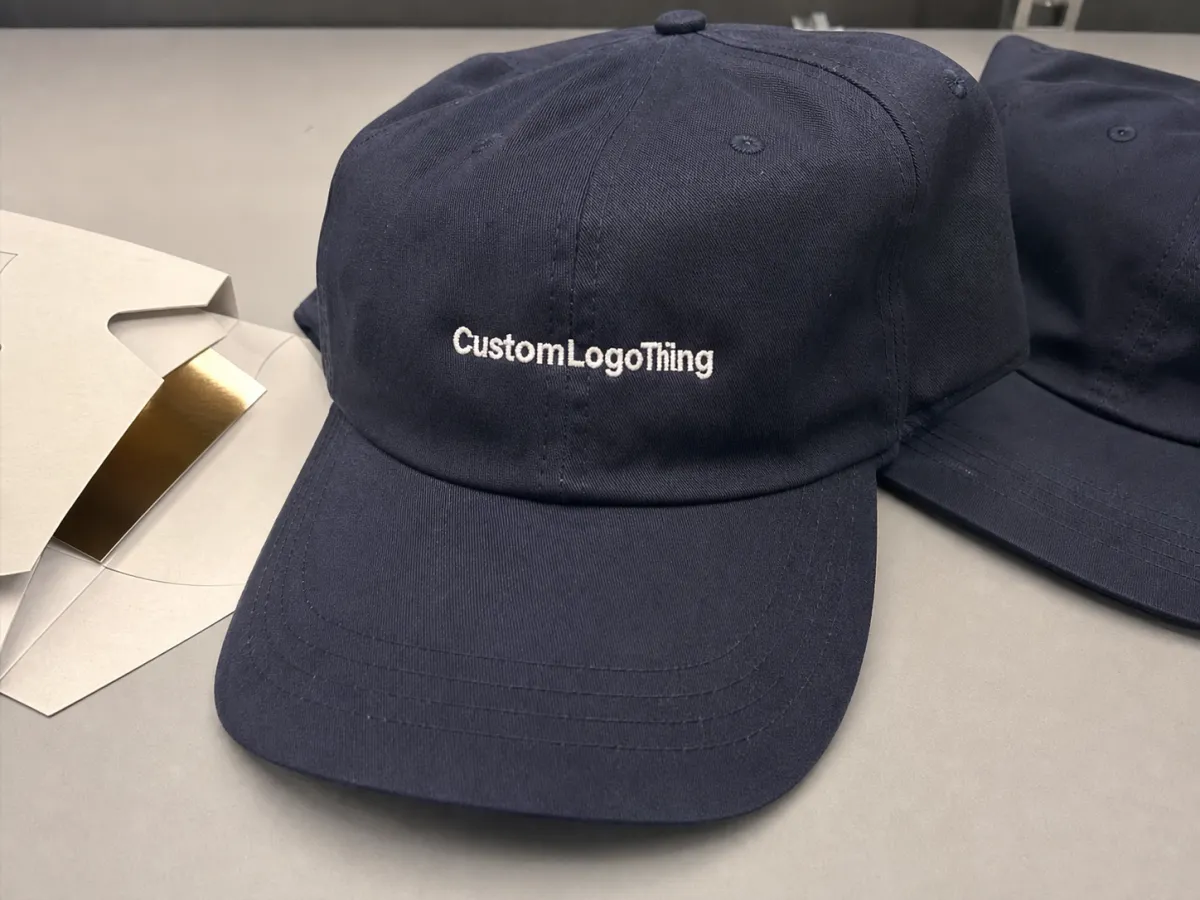
The appeal of an unstructured dad hat starts with the silhouette. Instead of standing upright with a firm front panel, the cap settles naturally on the head. That looser drape changes the entire read of the product. It feels less corporate, less stiff, and usually more flattering on a wider range of wearers.
Tea works especially well in that form because the color has some depth without getting dark. Depending on dye lot and fabric finish, it can lean tan, muted khaki, washed brown, or a slightly earthy taupe. That range is useful, but it is also why buyers should not rely on one screen image. Two suppliers can both call a shade tea and still deliver noticeably different results.
The color also handles decoration intelligently. White thread stays crisp. Black thread adds sharper contrast. Cream, olive, and muted burgundy can feel more deliberate than loud primary colors. For brands that want a restrained look, tone-on-tone embroidery often works better on tea than on brighter neutral caps because the base already carries enough character.
That helps explain why tea unstructured dad hats move across different types of orders. Retail programs use them because the cap feels current without chasing a trend. Team apparel uses them because they are comfortable enough for long wear. Premium giveaways use them because the product feels considered, not generic.
There is a practical edge here too. Buyers often get fewer complaints about a soft crown than they do about a structured cap that feels tall or boxy. The fit is more forgiving, and the visual profile is easier to balance with most logos. That can reduce the number of redesign rounds before production begins.
Bottom line: if the color is accurate and the decoration is clean, a tea dad hat can look more expensive than the raw cap cost suggests.
Product Details: Tea Color, Soft Crown, and Dad Hat Fit
A standard tea dad hat is usually built as a six-panel, low-profile cap with an unstructured front and a pre-curved brim. The adjustment is typically a strap-and-buckle, metal slider, or similar back closure rather than a rigid snapback system. That combination keeps the cap soft and wearable while still giving the buyer some control over fit.
Fabric choice changes the product more than many teams expect. Cotton twill is the most common base because it gives the embroidery a stable surface and resists obvious distortion. Brushed cotton and washed cotton feel softer in hand, but they can introduce more texture and a slightly more casual visual finish. That works well for lifestyle brands and retail drops. It is less ideal if the artwork is small or highly detailed.
The tea color should be confirmed with a physical swatch whenever possible. Digital mockups can flatten subtle differences, especially when the cap is shown next to a logo with strong contrast. A warm tea tone may look great next to cream thread, while a cooler version of the same color may shift the relationship enough to make the design feel less balanced.
Closure choice affects both comfort and cost. A self-fabric strap with a metal buckle usually costs more than a basic plastic closure, but it also tends to feel more premium in hand and photograph better in product shots. A fabric strap with a metal slider can be a good middle ground. If the order is budget-sensitive, the closure is one of the easier places to control price without changing the silhouette.
Small details matter because buyers notice them later, not during mockup review. Interior seam taping, sweatband quality, and the consistency of the brim curve can affect how the cap feels after a few hours of wear. None of those items are flashy, but they are part of whether the product feels finished.
Decoration placement should be tied to the cap structure, not treated as an afterthought. Center-front embroidery is the cleanest choice for most orders because it creates a direct focal point. Side embroidery works better for small marks, initials, or subtle event identifiers. A back hit can help with web addresses or sponsor marks, but too much decoration can fight the relaxed look that makes this cap category appealing in the first place.
For larger shipments, it also helps to think about packaging and transit together. A low-profile cap can still arrive misshapen if cartons are overpacked or if the brim is forced into a tight stack. Buyers who want the hats to look retail-ready on arrival should confirm carton quantity and packing method early, not after the proof is approved.
For shipping and carton planning, it is useful to reference ISTA standards when the order will travel far or sit in inventory before launch. The goal is simple: protect the shape, protect the logo, and avoid preventable damage in transit.
Specifications Buyers Should Confirm Before Approving Artwork
Most production problems start with a mockup that looks acceptable but does not match the actual build. A digital proof can hide issues with seam placement, crown depth, fabric texture, or the way a logo behaves when stitched into a soft panel. The cap may look simple, but the spec behind it is not.
Before approving artwork, buyers should lock the core construction choices. That includes the fabric type, fabric weight, panel count, closure style, brim insert, and any internal finishing. A one-line spec is rarely enough if the order needs to be repeated later or compared against another supplier.
- Fabric type: cotton twill, brushed cotton, washed cotton, or another soft-hand finish.
- Fabric weight: lighter fabric feels more casual; heavier twill holds shape better.
- Panel count: six-panel is standard for this silhouette.
- Eyelets: embroidered eyelets or self-fabric eyelets can change the visual finish.
- Brim insert: flex, cardboard, or plastic insert affects stiffness and shipping durability.
- Internal taping: clean seam finishing improves comfort and presentation.
- Stitch density: too loose looks thin; too dense can distort small lettering.
Decoration details deserve the same level of scrutiny. A simple flat embroidery may be the best fit for a small brand mark, but it will not carry micro-type well. A woven patch can handle smaller text more gracefully, though it adds a step in the production chain. Leather patches create a different visual language entirely and should only be used when that look genuinely fits the brand.
Thread color should be confirmed against a physical reference when color accuracy matters. Pantone guidance can help, but thread and fabric are not the same as print. What looks like a subtle warm white on a screen may land as stark contrast on the actual cap. Buyers who skip this step often discover the mismatch only after the first sample comes back.
Fit tolerance is another point that gets ignored until it becomes a problem. Even with an adjustable back, buyers should ask for crown depth, brim curve, and the acceptable size range. That sounds technical, but it prevents confusion when a reorder fits slightly differently from the initial sample.
“If the spec sheet is vague, the quote will be vague too. Clear fabric notes, a defined closure, and a final logo placement save more time than most people expect.”
If the program includes packaging or sustainability requirements, confirm those early as well. Recycled inserts, FSC-certified paper tags, and recyclable cartons can be added without much friction if they are discussed before quote approval. Once production starts, every change becomes slower and more expensive.
For paper-based components, FSC is a practical reference point for the material side of the packaging conversation.
Tea Unstructured Dad Hats Unit Cost Review: Pricing, MOQ, and Samples
The price of a tea unstructured dad hat depends on more than the blank cap. Fabric quality, decoration method, closure hardware, sample handling, and delivery terms all shape the final unit cost. Two quotes can look close on paper and still land far apart once setup and freight are included.
For a straightforward embroidered order on a standard cotton twill dad hat, a realistic bulk range is often around $2.10 to $4.25 per piece at moderate quantities. That range widens if the cap uses upgraded fabric, a metal closure, or more detailed artwork. If the decoration is switched to a woven or embroidered patch, the add-on often runs about $0.60 to $1.75 per piece, depending on patch size, shape, and attachment method. Leather and specialty patches usually sit above that.
Setup costs deserve a separate line in the conversation. Digitizing a logo can add a modest one-time fee, often $25 to $65 for straightforward artwork. More complex patch tooling, multi-location decoration, or difficult artwork can push that higher. The important point is not the exact number, but whether the buyer is comparing quotes that include the same setup assumptions.
| Decoration Option | Typical Cost Impact | Best For | Buyer Notes |
|---|---|---|---|
| Flat embroidery | Lowest to moderate add-on | Simple logos, clean retail runs | Usually the best balance of cost and a polished finish |
| 3D or high-density embroidery | Moderate add-on | Bolder branding | Works best with thicker lettering and simpler shapes |
| Woven patch | Moderate to higher add-on | Fine detail, small text, premium branding | Patch size and shape can affect setup charges and lead time |
| Leather patch | Higher add-on | Rustic, heritage, or premium looks | Custom tooling may apply if a die is required |
MOQ usually follows the complexity of the order. A simple embroidered tea dad hat might start around 50 to 100 pieces, while a custom patch run or a special fabric request often needs a higher threshold. Lower MOQs are sometimes possible if the supplier already has the base cap and the decoration remains uncomplicated. Buyers should ask directly rather than assume a single rule applies.
Sample policy is another quiet cost driver. Some suppliers credit the sample fee back against the bulk order once the proof is approved; others treat sampling as a separate charge. The difference is small on a spreadsheet and large when several product variations are being tested. If a cap needs multiple revisions, sample costs can accumulate fast.
Land cost is where the review becomes real. Carton strength, packaging, domestic freight, international shipping, and import handling all affect the final number. A quote that looks strong on unit price may no longer be competitive once transport and packing are added. That is why the tea unstructured dad hats Unit Cost Review should always separate blank cost, decoration, setup, sample policy, and shipping.
One useful rule: compare only quotes that share the same fabric, closure, decoration, packing, and delivery assumptions. Otherwise, the lowest number may simply reflect a thinner cap or a less durable finish.
Production Steps, Timeline, and Lead Time From Proof to Delivery
The production flow is usually predictable, but each stage can add time if the details are not settled early. It begins with artwork review. The supplier checks file quality, logo placement, stitch feasibility, and whether the design needs digitizing or simplification. A logo that looks balanced on a flat page may need minor cleanup before it can be stitched onto a soft panel without distortion.
After the proof is approved, bulk production starts. The cap is cut, sewn, and assembled, then the decoration is applied. Finishing comes next: trimming loose threads, inspecting the stitching, adjusting the closure, and packing the hats into cartons. If the order includes a patch, the patch itself may need an additional approval path before attachment begins.
For a standard embroidered order, a reasonable lead time is often 12 to 18 business days after proof approval. That can stretch if the tea fabric is out of stock, if the artwork needs a second round of revisions, or if the decoration is more complex than originally quoted. Patch orders often take longer because there is a separate production step for the patch. Rush work is possible in some cases, but the tradeoff is usually narrower approval windows and less room for late changes.
The more detailed the first approval, the fewer surprises later. Buyers who want consistent repeat orders should save the approved thread colors, placement measurements, closure choice, and packing notes. That makes the next run faster and reduces the chance of a cap drifting out of spec months later.
Communication matters as much as the calendar. A solid production update should tell the buyer when the proof is complete, when decoration begins, when finishing starts, and when the shipment leaves the facility. That may sound basic, but it is often what separates a controlled order from one that requires constant follow-up.
Transit planning belongs in the lead-time conversation too. Hats can arrive in good condition and still lose value if they are crushed in a poorly packed carton. For retail programs, the safest move is to treat shipping and packaging as part of the product, not as a final checkbox.
How Custom Logo Things Keeps Tea Dad Hat Orders Clear and Repeatable
The strongest part of a well-run order process is clarity. Custom Logo Things works best when the quote is built around specific specs instead of assumptions, because tea dad hats are sensitive to small changes in fabric, closure, and decoration method. A low-profile cap can look casual or refined depending on those choices.
Artwork review is the first safeguard. If a logo needs resizing, simplification, or placement adjustment, that should happen before bulk approval. Embroidery-friendly art is not always patch-friendly art, and the wrong format can increase setup cost without improving the final look. Matching the decoration method to the artwork is usually the cheapest way to protect the finish.
Material selection needs the same discipline. A washed cotton cap and a tighter twill cap can both work in tea, but they should be quoted as different products. The softer version may photograph better in lifestyle settings, while the tighter weave may hold a sharper embroidery edge. Buyers benefit when those tradeoffs are visible instead of buried in a generic description.
Repeat orders become much easier when the spec trail is complete. Thread callouts, placement notes, crown depth, closure type, and the approved reference image should all be saved together. That reduces the need to reconstruct old decisions and helps preserve the original look when the product is reordered months later.
That level of documentation is not just administrative tidiness. It is what keeps a product line from drifting. A slightly different fabric weight or a new closure style can change the entire feel of the hat, even if the logo stays the same. For buyers trying to maintain consistency across seasons, that is a real cost.
What to Prepare Before You Request the Final Quote and Proof
The quickest route to an accurate quote is a complete spec package. Start with a clean vector logo file, then add the tea color reference, preferred decoration method, quantity, and placement. If the cap needs a center-front mark, side hit, or back detail, say so early. The more the supplier knows, the less room there is for assumptions.
It also helps to define the budget priority. If unit cost is the main constraint, say that directly. If the cap must feel more retail than promotional, say that instead. If the order is tied to a launch window, include the deadline before proof approval so production can be planned around it. Most delays come from late changes, not from the cap itself.
Use a short checklist before requesting the final quote:
- Send the logo file and any font or color notes.
- Confirm the tea color reference or swatch target.
- Choose embroidery, patch, or another decoration method.
- State the exact quantity and any expected reorder volume.
- Clarify packaging, carton, and shipping destination requirements.
That checklist is basic, but it prevents the most common quoting mistakes. It also makes the tea unstructured dad hats Unit Cost Review easier to compare across suppliers because everyone is pricing the same build. Once the quote is locked, a clean proof should confirm decoration size, placement, closure style, and final packed format before the run starts.
For reorders, keep the same spec package on file. The second or third run should not require rediscovering the basics. If the original order was documented well, repeat production is usually faster, cleaner, and more predictable on unit cost.
What affects tea unstructured dad hats unit cost the most?
Fabric grade, decoration method, and stitch count usually drive the biggest cost differences. Quantity lowers the unit price because setup is spread across more pieces. Shipping, packaging, and sample handling can change the landed cost even when the cap itself stays the same.
What MOQ should I expect for tea unstructured dad hats?
MOQ depends on the factory, the decoration method, and whether the cap uses stock materials or special-order components. Embroidery usually allows lower starting quantities than custom patch work. If you need a lower MOQ, ask whether the quote is based on existing blanks and standard closures.
Is embroidery or a patch better for tea dad hats?
Embroidery usually gives the softest, most integrated look on an unstructured crown. Patches can carry more detail and create a stronger brand mark. The better choice depends on your artwork, budget, and the finish you want the cap to have.
How long does production usually take after approval?
For a straightforward embroidered order, lead time is often about 12 to 18 business days after proof approval. Complex patches, material shortages, or late revisions can add time. The timeline becomes more predictable when the art, color, and packaging details are finalized early.
What details do I need to get an accurate tea unstructured dad hats quote?
Send the logo file, color reference, decoration method, quantity, and placement. Include any packaging or shipping requirements so the landed cost is realistic. A complete spec sheet makes the quote easier to compare and reduces the chance of revisions later.
Tea unstructured dad hats work well when the buying process is disciplined. The silhouette is forgiving, the color is versatile, and the decoration options are broad enough to fit different budgets. The unit cost makes the most sense when the order is priced as a full production package rather than a blank cap with a logo attached. That distinction is usually where the better purchase decisions are made.

