A trade show Woven Label Beanies material sample guide matters because a label that looks clean on a screen can fall apart fast once it is sewn onto a stretchy cuff beanie and viewed under harsh convention lighting. The gap between a polished mockup and the real thing usually shows up in the sample, not in the artwork review.
That is especially true for giveaway beanies, staff gear, and retail merch. The label has to hold the logo details. The hat has to sit well on the head and read clearly from a few feet away. If either one misses, the booth piece turns into dead weight.
A mockup can hide a lot. Once knit tension, cuff height, and stitch placement enter the picture, the actual read changes fast.
If you are ordering branded headwear for a show, think beyond the label itself. The beanie body, the fold, the attachment method, and even the way the sample is packed can change what you see when the proof arrives. Buyers who care about recycled materials, FSC certified paper, post-consumer waste content, or biodegradable packaging should set those requirements at the sample stage, not after production has already started.
Trade show woven label beanies material sample guide reality check
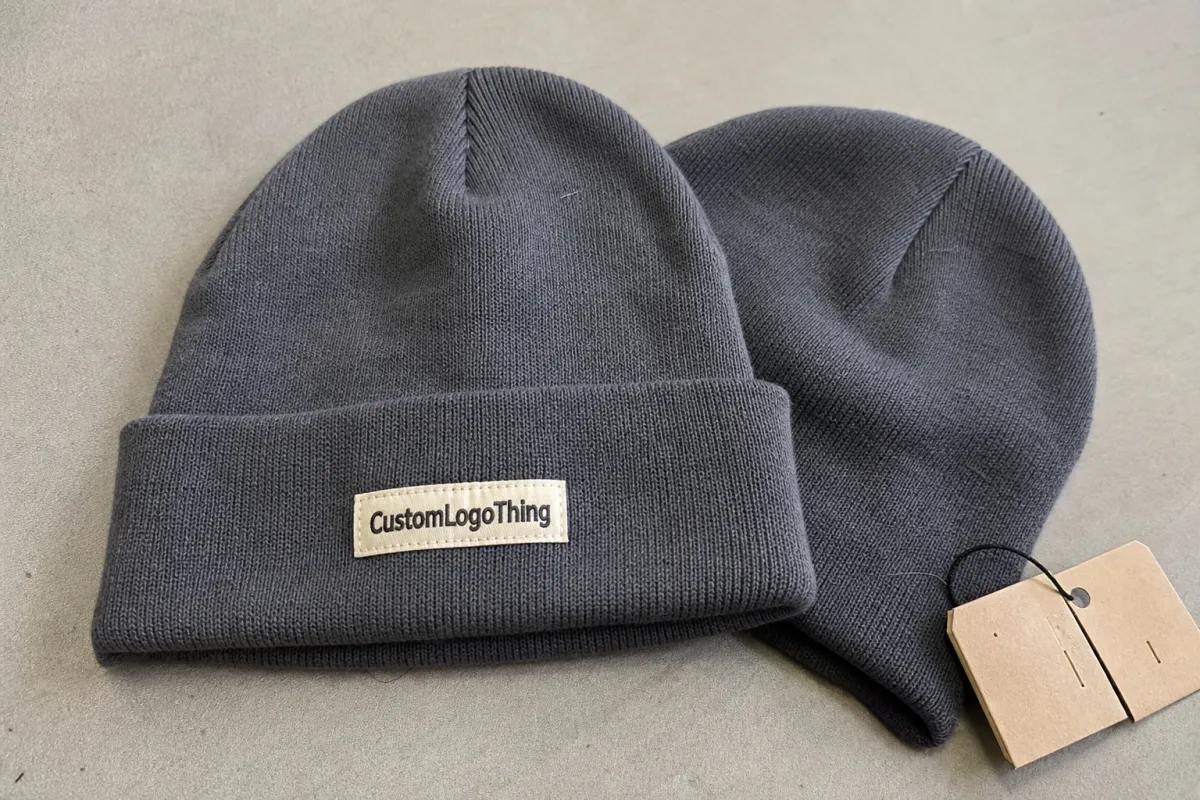
The first mistake is treating a woven label like a flat logo patch. It is not. Once it is sewn onto a rib-knit beanie, the fabric stretch can shift the borders, compress small text, and change how the color blocks read. A label that looks balanced on a table can look crowded on a cuff.
Trade show buyers rarely have the luxury of close inspection. They glance, pick up the item, and keep moving. That means the sample needs to answer a few blunt questions quickly: does it read from arm's length, does it stay flat, and does the logo still feel intentional when the hat is folded or worn?
That is the practical point of a trade show Woven Label Beanies material sample guide. It is not just about confirming the artwork. It is about checking whether the finished piece can survive the show floor. The label has to stay legible in mixed light, and the beanie has to look like something someone would actually keep.
- Loose swatch helps confirm weave quality, border definition, and color accuracy.
- Sewn sample shows placement, stretch behavior, and the final read on the hat.
- Photo proof is useful for discussion, but it should not replace the physical sample.
One more reality check: the same label can behave very differently on an acrylic cuff beanie, a wool blend, or a recycled yarn style. Texture changes the visual read. Stitch density changes how the label sits. A sample on the actual blank beats a perfect-looking digital proof every time.
How the sample is built from art file to sewn piece
The process starts with vector art, not a screenshot. Clean files let the production team map thread colors, define the finished size, and check whether the artwork can survive the weave. Thin type, tiny symbols, and tight negative space are the usual problem spots. If the design depends on hairline rules or small registration marks, the weave usually needs to be simplified so the final label still reads cleanly.
A good proof should show more than a logo image. It should show dimensions, color mapping, fold style, and the intended attachment method. Flat, folded, and wraparound labels behave differently on a cuff. If a supplier skips those details, the sample is not doing enough work.
The most useful way to think about the proof is to split it in two: the woven swatch and the sewn-on hat sample. The swatch answers a materials question. How fine can the detail go? Are the borders crisp? Does the color hold? The sewn sample answers a production question. Does it sit where it should, and does the beanie still look clean once the label is on it?
What a solid proof should show
- Actual label dimensions, usually in millimeters or inches.
- Thread color mapping, ideally tied to Pantone references where possible.
- Border style, fold style, and any backing or stitch method.
- A sewn placement photo on the selected beanie body.
If you are also ordering inserts or sample mailers, ask how those ship. A tidy kit in kraft paper wrap inside corrugated cardboard usually holds up well and avoids the overpacked look that cheapens the presentation. If sustainability matters to the order, say so clearly. FSC certified stock, post-consumer waste content, and biodegradable packaging need to be part of the brief, not a last-minute add-on.
For transit durability, the ISTA test standards are a useful reference if samples need to survive multiple legs of shipping. The goal is simple: the proof should arrive looking like a proof, not like a box that got run through a warehouse first.
Material and weave details that change the look
Thread type, weave density, and backing all matter. More than most buyers expect, actually. A high-density damask-style weave can hold smaller detail better than a looser structure, but only if the artwork supports it. If the logo is bold and simple, extra density may not buy you much. If the logo has small type or narrow line work, it usually does.
The beanie body matters just as much as the label. Acrylic knit is common for trade show giveaways because it is cost-effective and flexible. Cotton can feel softer but may sit differently under a stitched label. Wool blends and recycled yarns can look more premium, but they often have more surface texture, which affects how the label lays and how the edge feels in the hand.
Backing and attachment are the hidden variables. A soft sew-in label on a cuff often feels better than a stiff heat-applied piece, especially on a hat someone will wear the same day. The same logo can feel refined on one placement and bulky on another. That is why the sample should be checked on the beanie fold it will actually ship with.
Cuff placement usually wins for trade shows because it keeps the logo visible at eye level. Front-panel placement can work too, but only if the beanie shape stays consistent. Side-seam placement looks subtle and clean, yet it can disappear once the crowd starts moving. If the goal is quick recognition, the cuff is usually the safest bet.
Color count has a real impact on both cost and clarity. One or two solid colors generally produce a cleaner label and a lower-risk sample. Once the art starts stacking several tones, gradients, or tiny color separations, the weave has less room to work. That does not make the project impossible. It just means the proof has to do more to show where the limits are.
| Sample option | Typical price | Best for | Typical lead time |
|---|---|---|---|
| Loose woven label swatch | $25-$60 | Checking weave, edge finish, and color accuracy | 5-8 business days |
| Sewn-on beanie proof | $40-$95 | Evaluating placement, stretch, and final presentation | 7-12 business days |
| Mini pilot run, 12-24 pieces | $3.50-$6.50 per unit plus setup | Testing booth-ready consistency before a larger order | 10-18 business days |
Those numbers move with thread count, color count, backing, and whether the supplier already has the blank beanie in stock. A simple one-color label on a standard acrylic cuff beanie will almost always be cheaper than a multicolor version on a specialty knit. The lowest quote is not automatically the best value if the sample comes back stiff, washed out, or too loose to sit flat.
If you are sourcing other branded pieces at the same time, keep the label conversation tied to the full merch program. Custom Labels & Tags can cover the fabric label side, while the beanie sample shows how that branding behaves in the real world. The same logic applies whether the item is a tag, a woven patch, or a cuffed hat.
For paper-based packaging, the FSC resource helps clarify certified paper and responsible sourcing language. That matters if hang tags, inserts, or mailers are part of the same order and need to match the brand's sustainability claims.
Cost, MOQ, and quote factors for sample orders
Sample pricing is usually a bundle of setup, weaving, sewing, thread matching, and shipping. Some suppliers show those costs separately. Others roll them into one fee. Either way, the quote should make it obvious what is included before you approve the proof. If a revision is needed, ask whether it triggers a fresh setup charge or just a small art adjustment fee.
MOQ affects more than the bulk order. It can also shape the sample path itself. If the vendor uses the same tooling for the proof and the run, a small size change can alter the cost. Additional thread colors, specialty backing, and more complex fold styles add labor and time, so those choices need to be settled early.
A practical trade show woven label Beanies Material Sample guide should make value visible. A $35 swatch that proves the weave is often better than a cheaper one that hides the real limits of the art. A sewn sample costs more, but it is usually the smarter spend if you need to know exactly how the label will read on the cuff.
- Ask for sample credit toward the bulk order whenever possible.
- Confirm revision rules before requesting a second proof.
- Clarify shipping method so the sample lands before internal review deadlines.
- Match the budget to the use case if the beanies are giveaways, retail, or staff uniforms.
Packaging can matter as much as the label when a sample is being reviewed by a team, not just one buyer. A proof that arrives in a compact corrugated cardboard carton with kraft paper wrap looks more disciplined and usually survives shipping better. If the program calls for biodegradable packaging or recycled mailers, it makes sense to align that with recycled yarns or other recycled materials in the product itself.
Production steps and lead time from approval to shipment
A clean production path usually moves in this order: artwork review, woven proof, sample approval, bulk weaving, finishing, inspection, and packing. If any step is vague, the timeline gets slippery fast. That matters on trade show orders because a small delay in proof approval can spill into freight, receiving, and booth setup.
Lead time depends on label complexity and beanie availability. A simple one-color woven label on an in-stock hat can move faster than a multicolor design that needs thread matching or a special fold. Recycled yarns or custom-dyed beanies can also add time because the blank itself may have a longer procurement window.
Leave room for at least one revision round if the logo has tiny type, a tight border, or any element that could collapse during weaving. That is not poor planning. It is just how textiles behave. The weave has limits, and the sample is supposed to expose them before the order gets expensive.
For shipping-sensitive programs, compare the sample timeline with the event date and then subtract a buffer for freight delay, internal signoff, and any last-minute inventory checks. If the trade show is on a Tuesday, the final approval should not be happening the Friday before. That leaves no room for a box sitting in the wrong hub or a sample arriving after the team has already left.
Shipping method is part of quality control. A sturdy outer shipper, sensible void fill, and a simple packing card help the proof arrive intact and readable. Not exciting. Still necessary. In practice, boring often means reliable.
Common sample mistakes that cause trade show surprises
The biggest mistake is approving from a screen mockup alone. Digital art can hide weave limits, soften color drift, and make thin lines look safer than they really are. Once the label is woven and sewn onto knit fabric, those same details may disappear or look heavier than expected.
Another common miss is ignoring the base color of the beanie. A label that looks rich on white can turn muddy on charcoal, and a logo with pale thread can look washed out on a light heather knit. Booth lighting makes the problem worse, because convention halls often mix light temperatures across the same display area.
Placement issues show up often too. If the sample was not checked for stretch, the label can twist when the cuff moves. If the logo sits too close to a seam, it may look crowded or break the visual balance. If the beanie is handed out folded differently from the sample, the presentation can change again.
Then there is timing. Teams treat the proof as if it were the final product and order against the show date with no cushion. That works until the first sample reveals a sizing issue, a color mismatch, or a text element that needs simplification. Once that happens, the calendar starts doing the damage.
Here is a simple way to reduce the most common problems:
- Review the physical sample under both warm and cool light.
- Check the logo at arm's length and from a few feet away.
- Test the label on the actual beanie fold and cuff height.
- Confirm that the sample matches the final packing method.
- Lock the approved spec before bulk production begins.
That checklist sounds basic because it is. Basic is what keeps trade show apparel from becoming a correction order. The sample exists to remove guesswork. If it still leaves questions, keep digging before approval.
QC details deserve attention beyond color and placement. Tug the label lightly and check whether the stitching holds. Run a finger across the edge to see if the finish feels scratchy. Compare left and right sides if the design is supposed to be centered. These are small checks, but they catch the kind of issues that make people notice the product for the wrong reason.
Expert tips and next steps before you place the order
Ask for three views of the proof if you can: the physical sample, a close-up of the weave, and an on-hat photo at a normal viewing distance. Those three views tell you far more than one polished mockup ever will. They also help different people on the team evaluate different risks, from branding accuracy to booth visibility.
Before pricing starts, have the logo file, preferred Pantone references, beanie color, label placement, and target quantity ready. That short list speeds up quoting and reduces back-and-forth. It also helps the production team tell you whether the requested detail level is realistic in the chosen weave.
Check the sample in the environment where it will actually be seen. A conference room is useful, but a trade show floor is better. If that is not possible, stand under mixed lighting and look at the hat from across the room and at arm's length. The answer changes more often than people expect.
The best proofs do not just look good. They remove uncertainty. If the sample reads cleanly, sits flat, and matches the approved spec, the production order becomes much easier to trust.
If the beanie is part of a larger branded package, keep the materials conversation consistent. Matching the label to the hat, the inserts to the packaging, and the shipment to your sustainability goals makes the whole program feel deliberate. That is where details like FSC certified paper, post-consumer waste content, and recycled materials can support the brand story without turning it into marketing fluff.
For buyers comparing vendors, the smartest choice is usually the one who explains the tradeoffs clearly. A good supplier will tell you what the weave can hold, what should be simplified, and what the lead time really looks like. That honesty matters more than a flashy quote sheet, especially when the show date is fixed and the booth team is already planning around it.
Once the sample passes, lock the spec, confirm the timeline, and leave the art alone unless there is a real production reason to revise it. That is the point where a trade show woven label Beanies Material Sample guide stops being a checklist and becomes a decision you can stand behind.
How many trade show woven label beanies material samples should I request?
Start with one sewn sample and one loose label swatch so you can judge both the weave and the final placement. If your logo has multiple approved colors, ask for alternate thread options before you commit to bulk production.
What should I check on a woven label beanie sample before approval?
Check readability at arm's length, edge finish, softness, and whether the label stays flat on the beanie. Review the sample under warm and cool light so you can spot color shifts that may show up on the trade show floor.
How much do trade show woven label beanie samples usually cost?
Expect sample pricing to include setup, weaving, sewing, and shipping, with some vendors separating those charges from bulk pricing. Ask whether the sample fee is credited toward the final order and whether revisions will create extra setup charges.
How long do trade show woven label beanie samples take to produce?
Timing depends on artwork complexity, color matching, and whether the beanie blank is already available. Leave extra time for revisions and freight so a small proofing delay does not threaten the booth deadline.
Can I change the label placement after seeing the sample?
Yes, but moving the label from the cuff to the side seam or front panel can change visibility and may require a new proof. Confirm the revised placement before bulk production so the final beanies match the look you approved.