Ecommerce Twisted Handle Paper Bag Physical Sample Checklist
The ecommerce Twisted Handle Paper Bags physical sample checklist is the quickest way to verify whether a bag can survive real use, not just a polished mock-up. A render can hide a weak handle bond, a soft base, or a gusset that looks fine until the bag is filled. A physical sample shows the real build, the real finish, and the real weak points before you commit to production.
That matters because ecommerce packaging is judged in ordinary conditions: packing speed, transit stress, customer handling, and storage. If the bag feels flimsy, opens awkwardly, or arrives with print shift or distorted folds, the order loses value fast. The sample is useful only if it behaves like the production bag you plan to buy.
What the sample actually needs to prove
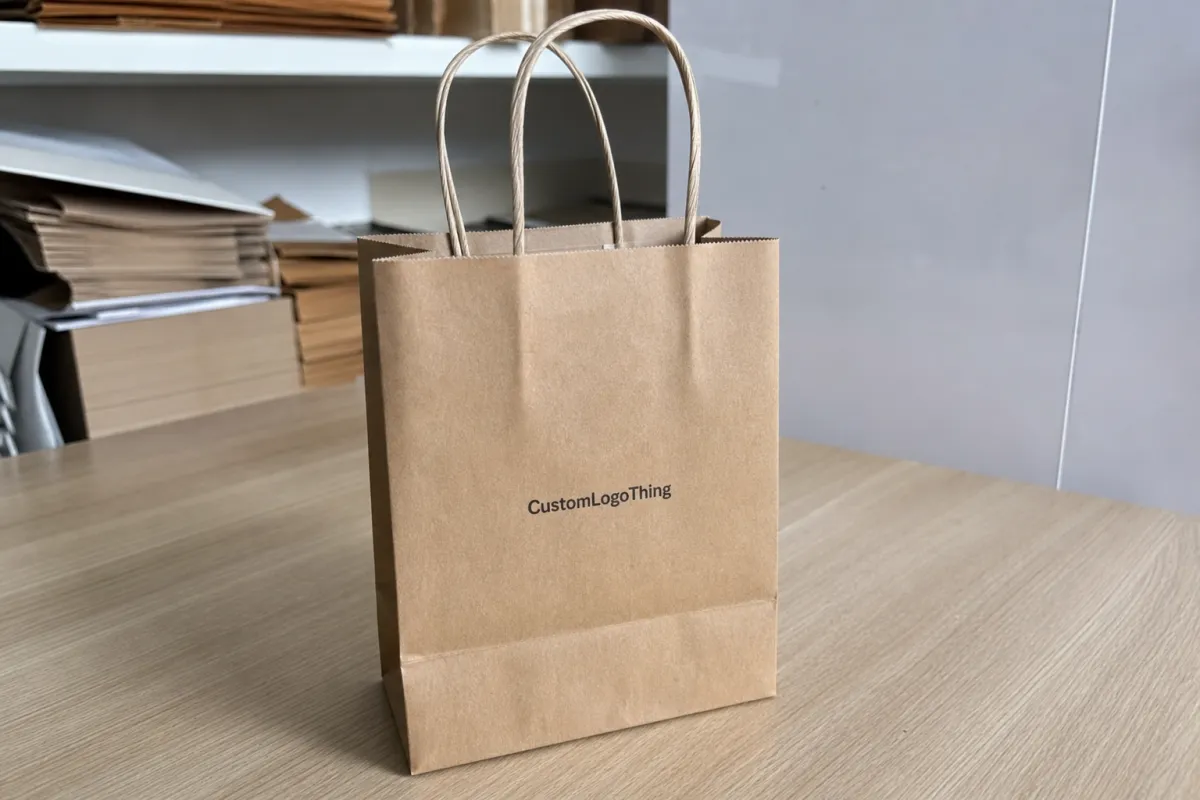
A Twisted Handle Paper bag sample should prove structure, comfort, and repeatability. For ecommerce, the bag needs to open cleanly, stand up straight, and keep its shape after filling. That sounds basic because it is, but those are also the details most likely to break when the sample is built from the wrong spec or judged too casually.
Start with the obvious checks: size, paper grade, handle style, print placement, and finish. Then move to the parts that fail in use. Does the handle spread the load across the top edge, or does it create stress in one narrow spot? Does the base sit flat? Does the mouth stay open enough for packing without forcing the gusset apart every time?
The sample should also confirm that the supplier understood the brief. Small errors show up quickly: logo placement drifting because a fold was treated as decoration instead of a hard reference, handle strength dropping because the sample used lighter stock, or print alignment shifting near a seam. If the sample does not reflect the build you want, it is only a prototype, not approval material.
For many ecommerce paper bags, the useful load range is roughly 2 kg to 6 kg, depending on paper weight, reinforcement, and handle attachment. Heavier contents are possible, but only with the right structure. If the bag will carry dense products, test it with the actual packed item instead of estimating. Guesswork tends to protect weak specs.
A sample that only looks right on a table is not ready for production.
How to test a production-style sample
The sample should be built the same way the production bag will be built. Same paper. Same handle construction. Same glue pattern. Same print method. Same fold sequence. If any of those change, the sample stops being a reliable approval tool.
That distinction matters. A visual mock-up can help with artwork and proportions, but it usually tells you little about use. A production-style sample shows whether the handle holds, whether the bag opens and closes smoothly, and whether the structure stays stable after gluing, curing, folding, and flat packing. If the supplier changes a handle stock or moves the glue line, the sample should expose it.
A practical check sequence catches most issues quickly:
- Measure the bag: compare width, gusset, and height against the approved spec; many factories hold cut-and-fold bags within about +/-2 to 3 mm, but confirm the actual tolerance.
- Inspect the handle bond: look for even glue spread, no lifting edges, and no weak spot where the handle meets the mouth.
- Test the base: load the bag, set it down, and watch whether the bottom stays flat or shifts under the weight.
- Check the mouth and gusset: the opening should stay usable for packing without needing to be forced apart.
- Lift and hold: hang the bag by the handle with intended contents for a few seconds and feel for strain, tearing noise, or handle bite.
- Review print around folds: seams and fold lines expose sloppy registration fast, especially on clean branding.
It also helps to judge the bag as a shipping unit. Flat-packed samples should stack evenly and should not spring back in a way that slows packing or creates carton waste. If the order will run through a warehouse line, pull several bags from the stack in sequence. One good sample means little if the next ten snag or warp.
For transit-style checks, the ISTA framework is still a useful reference point for compression and distribution handling; see ista.org. If the order uses recycled or certified paper, confirm the chain-of-custody documents early through fsc.org. Waiting until after artwork approval is how paperwork turns into a schedule problem.
Specs that change performance
Three specs usually decide whether the bag feels solid or flimsy: paper weight, handle construction, and print coverage. Once those are locked, the rest of the build is easier to judge.
Paper weight is the first lever. For light retail items or small accessory orders, 120gsm to 150gsm can be enough if the bag is not carrying much mass. For heavier ecommerce kits, 170gsm and above is usually safer. If the contents have sharp corners or uneven weight, reinforcement matters as much as the paper itself.
Handle construction deserves close attention. Twisted handles may look similar on paper, but the build changes comfort and load resistance. A thicker twist usually grips better and resists fatigue more effectively. Attachment position matters too. If the handle sits too close to the seam or too low on the mouth, the top edge can distort when the bag is lifted. The glue should be even, and the reinforcement should spread stress instead of trapping it at one weak point.
Print and finish also affect usability. Heavy ink coverage can make the bag look sharp, but too much coating can make the paper feel closed or brittle. Registration near a fold or seam needs real scrutiny. A one- or two-millimeter shift may sound minor in a spreadsheet, but on a clean branded bag it looks sloppy. Matte, gloss, aqueous, and soft-touch finishes each change scuff resistance and hand feel, so judge them on the actual sample rather than on a material name alone.
Small geometry details matter more than they get credit for. A narrow mouth slows packing. A shallow gusset makes bulkier items bulge. A base that refuses to sit flat creates trouble on the filling line. Odor can matter too for apparel, beauty, and gift sets; if the bag smells strongly of adhesive or coating, customers notice even if they do not describe it in technical terms.
| Sample Type | Typical Sample Cost | Typical Lead Time | Best Use |
|---|---|---|---|
| Stock-size reference sample | $25-$45 | 3-5 business days | Quick size and feel check |
| Printed approval sample | $45-$90 | 5-10 business days | Logo, color, and finish review |
| Revised structural sample | $60-$120 | 7-12 business days | Handle, base, or paper changes |
| Pre-production signoff sample | $80-$150 | 10-15 business days | Final approval before bulk release |
Those numbers are not fixed across every factory, and they should not be treated like a promise. They move with size, print complexity, freight, certification requests, and whether the sample is built from a standard die or a custom setup. Even so, the range is useful because it helps buyers separate a real structural sample from a cheap placeholder that may lead to revision charges later.
Sample timeline and approval flow
A sample run starts with a complete brief. Send dimensions, artwork files, target load, paper preference, handle style, packing format, and finish requirement. If the supplier has to guess, the first sample will likely miss something important. Vague briefs create avoidable loops, and loops cost time.
The cleanest requests include the actual product weight, the bag width, gusset, and height, plus the logo position relative to the fold and mouth. If the bag needs a natural kraft look, say so. If the handles need to match a brand color, say that too. If the finish should be matte rather than glossy, do not bury that in a side note.
Timelines depend on the sample type. A straightforward structural sample can move in a few business days. Artwork-sensitive samples take longer. Revised samples take longer still because the factory is solving a problem, not just building a shape. That is normal; the mistake is approving too early because the first piece looks close enough on a desk.
The approval step should be strict. Compare the physical sample to the spec sheet line by line: dimensions, paper weight, handle detail, print notes, carton count, and packing format. If something changed during sampling, write it down before the order moves forward. A quiet change in a sample file can become a loud problem in production if nobody catches it.
The most useful approval package usually has three parts: the marked physical sample, annotated photos, and a written spec summary. That combination keeps production, quality control, and receiving on the same page and makes it easier to identify which version was actually signed off.
Pricing, MOQ, and quote comparisons
Sample pricing only makes sense if you know what it includes. Paper grade, size, handle style, print coverage, finish, and setup work all shape the quote. A simple unprinted sample costs less than a fully custom approval sample with artwork, coating, and reinforcement changes. That difference is normal.
MOQ affects the math too. Small sample requests often look expensive on a per-piece basis because the setup work is nearly the same whether ten units or ten thousand units are involved. Once the order reaches production, the per-bag price usually falls. That only helps if the sample is final; if the spec is still moving, the lower unit price can disappear into another revision.
The cleanest way to compare quotes is to separate sample cost, setup charges, freight, and production pricing. Do not let the cheapest sample quote win by default. Some low quotes hide revision charges. Others quietly assume a simpler build than the one you actually need. A clearer sample usually saves more money than a bargain sample because it prevents a weak handle, wrong size, or print mismatch from entering the run.
- Paper grade: recycled kraft, virgin kraft, and coated board do not perform or price the same way.
- Handle style: twisted paper, flat paper, and reinforced attachments affect labor and strength.
- Print coverage: one-color logos cost less than full-wrap artwork or dense coverage.
- Finish: matte, gloss, aqueous, and soft-touch coatings change appearance and scuff resistance.
- Quantity: higher MOQs usually improve unit pricing if the spec is already stable.
When comparing factories, ask one blunt question: which sample actually reflects the production bag? Not the prettiest sample. Not the cheapest sample. The most accurate one. That question cuts through a lot of noise very quickly.
Mistakes that cause rework
The most common mistake is approving a sample because it looks fine on a table. A bag can pass the eye test and still fail under load, especially with twisted handles where the empty bag feels strong and the filled bag exposes the weak point. Base stability, fold memory, and handle comfort matter as much as print.
Another frequent problem is sloppy artwork direction. Missing bleed, vague color references, and unconfirmed logo placement can turn a good sample into a headache. If the artwork lands near a seam or gusset, request a sample that shows the exact position. Close enough is not enough for clean branding.
Dimensions also get skipped too often. A bag that is off by a small amount in width, gusset, or height can change fill fit, carton count, and shelf appearance. On an ecommerce line, that affects packing speed. In the customer’s hand, it can make the product look cramped or loose.
Documentation mistakes are just as dangerous. If revisions are not recorded clearly, the approved version can get buried in email threads while the factory builds from an older file. Name the approved sample clearly. Keep photo records. Make sure production knows exactly which version is final.
The cleanest way to avoid rework is simple: treat the sample like a gate, not a courtesy. If it fails, it fails. A weak handle is not a near miss. A print shift is not a small detail. The sample exists to catch those issues while they are still cheap.
After approval, before bulk production
Once the sample is approved, turn it into a control document. Record the dimensions, paper weight, handle style, print notes, and pass-fail observations in one shared spec sheet. Attach the marked-up photos. Production and quality control should be able to open one file and understand what was approved without digging through message history.
Confirm the carton pack count and shipping format before release. Flat-packed bags should stack neatly and arrive without crushed handles or distorted mouths. If palletization is part of the order, note stack height, wrap method, and storage limits. Bags are not fragile in the same way as glass, but they still get damaged by bad packing.
This is also the moment to verify sustainability claims. If the paper is FSC-certified, the claim has to be written correctly and backed by the right paperwork. If the bag will be marketed as recyclable in a specific market, the material and coating need to support that claim. Packaging and product copy need to agree.
Before the bulk order is released, run the ecommerce Twisted Handle Paper Bags Physical Sample Checklist one more time against the approved piece. That final pass catches drift, especially if someone updated artwork, changed a handle note, or rewrote a spec after sign-off. Lock the approved version, confirm every detail, and then move the order forward.
What should I check first in a twisted handle paper bag sample?
Start with dimensions, paper weight, and handle attachment. Those three checks reveal most structural problems early. Then load the bag with the real product weight and test handle comfort, base stability, and seam behavior under pressure.
How many physical samples do I need before approving ecommerce paper bags?
One production-style sample is often enough for a simple order. A second revised sample makes sense if the artwork, weight, or structure changes after the first review. For heavier products or high-visibility branding, another round of sampling is cheap insurance.
What affects the price of a twisted handle paper bag sample?
Paper grade, size, handle style, print coverage, and custom setup all affect the price. Freight and revision rounds can also change the real total. Compare sample pricing separately from production pricing if you want a clear read on the numbers.
How long does the sample process usually take for ecommerce paper bags?
A straightforward sample can move in a few business days. Artwork review, structural revisions, and approval delays usually extend the timeline more than the physical build itself. The fastest route is a complete brief with size, finish, handle detail, and target load.
What if the sample looks right but the handles feel weak?
Do not approve it. Ask for stronger glue coverage, a different handle build, or a revised attachment point. A weak handle is a structural issue, not a cosmetic one, and it is much cheaper to fix during sampling than after a bulk run.

