Tea Unstructured Dad Hats are deceptively simple products. A cap that reads soft, relaxed, and refined in a photo can feel too stiff in hand, too shallow on the head, or too warm in the wrong light once it is cut, sewn, washed, and finished. That gap between image and reality is exactly why the sample stage matters.
Tea Unstructured Dad Hats Material Sample Guide for Buyers
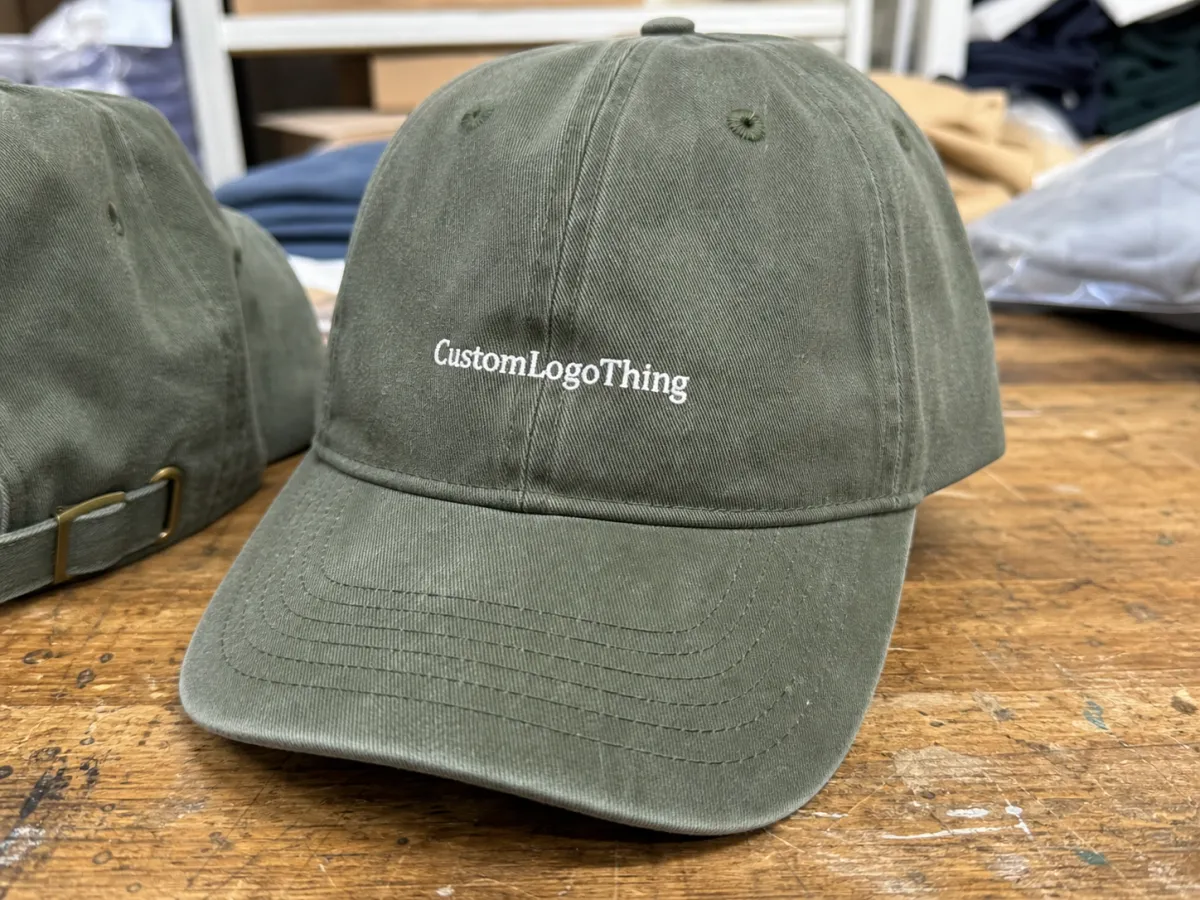
A good tea Unstructured Dad Hats Material Sample guide is really a risk-control tool. It helps buyers check whether a soft crown, muted tea tone, and low-profile silhouette actually work together before production starts in volume. A physical sample shows what a spec sheet cannot: drape, hand feel, crown recovery, brim curve, sweatband comfort, and the way decoration changes the cap after it has been worn for a few minutes.
Unstructured caps have less internal support than structured styles, so the fabric itself does more of the visual work. That makes material selection unusually important. A light cotton twill may look clean and retail-friendly, while brushed cotton feels softer but can lose crispness faster. Washed canvas can deliver a relaxed, broken-in look, though it may also show dye variation, surface texture, and seam waviness more clearly. In tea shades, those differences show up fast because the color sits in a middle range: warm enough to soften hard lines, but pale enough that stitching, thread color, and panel balance remain visible.
Most buyers benefit from sampling in three stages. First comes the fabric swatch or shade set, which is useful for confirming color direction and hand feel. Next is the pre-production or proto cap, which checks crown shape, sewing balance, and fit. Finally, a fully decorated sample verifies the whole package: logo placement, embroidery density, patch scale, label position, and packaging. Skipping any of those stages is possible, but it raises the odds of a costly mismatch later.
The practical point is straightforward. A sample should be judged as if it were the production product, not as a rough draft. If it is too soft, too rigid, too shallow, too warm in color, or too heavy once decorated, that problem tends to scale across the order.
“On an unstructured cap, the fabric, stitch balance, and brim shape are not separate questions. They interact, and one weak choice can change the whole profile.”
How the Sample Review Process Works From Request to Approval
The process usually begins with a brief but specific request. Buyers should share the target style, preferred tea shade, fabric direction, decoration method, estimated order quantity, and any reference cap or photo. That gives the supplier enough information to narrow the build without guessing. If the artwork is complex, the request should also include the logo size, placement, and any limits on stitch count or patch thickness.
Once the brief is in place, the supplier should confirm what kind of sample is being made. That distinction matters. A fabric swatch tells you almost nothing about wear. A cap sample without final decoration can still help with fit and finish. A fully decorated pre-production sample is the closest thing to the eventual bulk order, but it takes longer and usually costs more. If a supplier blurs those categories, the buyer may think they are approving the final product when they are really only approving a partial mockup.
Lead time depends on what is being sampled and whether stock materials are already on hand. A simple swatch set may be ready in a few business days. A sewn and decorated sample often takes one to three weeks, sometimes longer if the factory is sourcing custom fabric or waiting for a new patch mold, woven label, or embroidery setup. International shipping can add another week or more. For a buyer working on a seasonal launch, that timeline is not a small detail; it determines whether the whole program stays on schedule.
Feedback should be precise enough to act on. “Front panel needs more body” is useful. “Make it nicer” is not. The same goes for color. Tea tones can read warmer, cooler, more beige, more brown, or more washed depending on lighting and fabric finish, so the note should say what changed and where it was observed. Office fluorescent light, daylight, and a camera flash can each tell a slightly different story.
If the sample needs revision, ask for one controlled change list instead of reopening the whole spec. Replacing three variables at once makes it impossible to isolate what solved the issue. Good sample programs are less about speed than about clarity. The fastest approval is the one that does not need a second correction because the first round was measured carefully.
For packaging, many teams request a simple protective carton or mailer with paper fill so the cap does not arrive crushed. That matters more than people expect. A hat that is packed carelessly can appear mis-shaped even if the sewing is sound. If sustainability is part of the brief, ask early about recycled board, FSC certified paper, or low-plastic packing options. The sample shipment is the easiest place to check those details before they become embedded in the final order.
Material, Stitching, and Shape Factors That Change the Look
Fabric is the first lever, but it is not the only one. The feel of an unstructured dad hat is shaped by weight, weave, finishing, seam construction, and the amount of support hidden inside the front panels. A cap marketed as unstructured may still contain a light fusible layer or internal reinforcement, because pure softness can make embroidery collapse or cause the crown to twist after repeated wear. If the front panels are heavily supported, the cap starts behaving more like a structured style, which may not be what the buyer intended.
Cotton twill remains a common choice because it is predictable, easy to sew, and generally stable under embroidery. Brushed cotton is softer at first touch, though it can telegraph seam lines more visibly. Chino cloth tends to read smoother and a little cleaner. Washed canvas has the most casual hand, but it can also reveal uneven dye uptake, subtle abrasion, and texture changes after decoration. In tea shades, that surface variation can be attractive if the brand wants a lived-in look. It can also be a problem if the buyer wants the cap to match an exact retail reference.
Stitching quality matters more on soft caps than people assume. Even panel seams, consistent topstitching, and clean thread tension keep the crown from looking lumpy or off-center. Small puckers near the front seam may not look serious on a table, yet they become obvious once the cap is worn. Eyelet placement affects both ventilation and symmetry. Brim stitching influences how the curve settles. On a relaxed cap, a slightly aggressive curve can make the profile feel sporty; a flatter curve reads more casual. That difference is subtle in a spec, but easy to notice in the hand.
Decoration changes shape too. Dense embroidery adds stiffness, especially if the design sits high on the front panel. A patch with heavy backing can make a soft cap feel more rigid than expected. Heat-applied graphics often create a firmer hand than woven labels or light embroidery. None of those methods is inherently wrong, but each one changes drape. For an unstructured cap, the decoration method is part of the construction story, not an afterthought.
Color control is another practical issue. Tea, oatmeal, khaki, and garment-washed neutrals often shift under different lighting. Indoor light can make the shade look deeper and warmer. Daylight usually exposes more of the gray or tan undertone. That is why a sample should be checked in more than one setting. A buyer who approves a cap under one lamp may be surprised when the bulk order is photographed for e-commerce or displayed near a window.
One more caveat: the bulk order may still differ slightly from the sample even when the sample is approved. Fabric comes from dye lots. Thread can vary by supplier batch. Sewing consistency changes when a different operator or line handles the run. A good factory controls those variables, but no production system removes them entirely. That is why the sample is a benchmark, not a guarantee of perfect duplication.
Step-by-Step Material Sample Check Before You Order
Start with the simplest checks first. Compare the sample to the reference cap or color target, then inspect the crown on a head form or a real wearer. An unstructured dad hat should sit low and relaxed without looking collapsed or underbuilt. If the front panels fall too far, the silhouette can seem sleepy rather than effortless. If they stand up too much, the cap loses the soft profile that makes this style work.
Next, review the fabric itself. Feel the hand on both sides. Look for even dye coverage, consistent weave, and no strange stiffness in one panel versus another. Run fingers along the seams to catch puckering or rough internal finishing. On tea-colored fabric, tiny defects can be easier to see because the shade is neutral enough to reveal shadow and edge inconsistency.
Then check the decoration in context. Measure placement against the crown, not just against the artwork file. Confirm that embroidery is not pulling the front panel inward. If the sample uses a patch, make sure the shape is aligned and the backing does not create a hard rectangle under the fabric. Logos can look correct on paper and still feel oversized on a soft crown. That is one of the more common mistakes in hat sampling.
Now test the closure and internal comfort points. Adjust the strap several times. Check whether the metal buckle digs into the fabric, whether a tuck-in tail sits neatly, and whether the sweatband feels soft enough for longer wear. These details are minor only until the buyer has to explain why a seemingly attractive sample feels cheap after 20 minutes on head. Inside comfort is part of product quality, especially for retail or staff-use programs.
A quick wear test is worth the time. Put the cap on, leave it there for a few minutes, then remove it and see how the crown recovers. If the front panel folds awkwardly or the brim twists, that tells you something about balance and support. Photograph the cap in natural light and indoors. Photograph it flat, on head, and at a slight angle. Those three views usually reveal what one close-up image hides.
For teams that like a more disciplined process, use a short checklist: fabric, crown, brim, closure, decoration, and color. Keep notes under each item. That approach reduces vague feedback and gives the supplier something useful to work from if a revision is needed.
Cost, Pricing, MOQ, and Quote Questions to Ask
Sample pricing usually depends on how close the sample is to the final product. A basic swatch set is inexpensive because it uses little labor and no full assembly. A pre-production cap sample costs more because it requires cutting, sewing, finishing, and often a decoration setup. A fully decorated sample is the most expensive of the three, especially when embroidery digitizing, patch tooling, or specialty labels are included. If a quote seems unusually low, ask what is excluded. Hidden costs often show up later as freight, revision fees, or setup charges.
MOQ affects unit pricing in a very direct way. Lower quantities spread the same cutting, sewing, and decoration burden across fewer pieces, so the per-unit cost rises. For custom Unstructured Dad Hats, many buyers see order minimums in the 100 to 300 piece range per color or style, though more detailed builds can push that higher. If the cap uses custom fabric, a special wash, or a complex patch system, the minimum may move again. There is no single number that fits every order.
Typical sample and setup costs vary widely, but a practical range helps with early planning:
| Sample option | Typical price range | What it tells you | Best use |
|---|---|---|---|
| Fabric swatch set | $8-$20 plus freight | Hand feel, tea shade, surface texture | Early material screening |
| Pre-production cap sample | $35-$85 | Fit, crown balance, brim shape | Final approval before order release |
| Fully decorated sample | $55-$120 | Logo size, stitch count, patch placement | Brand and retail presentation checks |
| Revised sample | $25-$70 | How the requested changes actually landed | Second-round approval |
Quote comparisons should be made line by line. Confirm fabric weight, closure type, decoration method, packing assumptions, and whether sample fees are credited back to the bulk order. Ask whether embroidery digitizing is included. Ask whether a woven patch has a new mold fee. Ask how shipping is handled if the sample needs to cross borders. A lower quote with missing pieces is not actually a lower quote.
It also helps to ask about timing before any money changes hands. If a factory says a sample can be ready quickly, that may be true only if it is using stock fabric and standard trim. If the buyer wants a custom tea tone, specific wash, or a proprietary closure finish, the schedule usually stretches. A realistic planning window for a custom sample and one revision round is often several weeks once shipping is included, and bulk production can take another few weeks after approval. Seasonal demand can extend that further.
Common Mistakes Buyers Make With Hat Samples
The first mistake is treating photos as a substitute for the real cap. Images are useful for placement and visual direction, but they can hide surface texture, subtle color shift, and the way the crown collapses when worn. Tea tones are especially tricky because they sit in a neutral range that changes with lighting. A cap that looks perfect in a studio can feel too yellow, too brown, or too flat once it leaves that controlled environment.
Another mistake is focusing on the exterior and ignoring the inside. Sweatband softness, seam finishing, and closure comfort matter more than buyers often expect. An unstructured dad hat is supposed to feel easy. If the inside rubs, scratches, or presses awkwardly after a short wear test, that issue will only become more visible in production, not less.
Decoration can also distort the result. Dense embroidery stiffens soft fabric. Heavy patches change drape. Heat-applied emblems can leave a firmer hand than a buyer expected from the artwork alone. That does not mean the decoration method is wrong. It means the method needs to be tested on the actual cap construction before approval.
Vague feedback creates avoidable delay. Comments like “make it better” or “the shade is off” are too broad to act on. Better notes identify the problem and the direction of correction: warmer or cooler, flatter or more curved, softer or more body, higher or lower placement. The more measurable the note, the less likely the next sample is to drift away from the target.
A final mistake is approving a sample without asking whether the bulk run will use the same fabric lot, trim supplier, and sewing line. If any of those change, the finished order can vary in hand feel or shape even when the sample was good. That is not a rare edge case. It is normal production behavior, which is why the approval conversation should always include repeatability, not just appearance.
Buyer reality: sample problems usually come from several small misses at once, not from one dramatic failure.
Expert Tips and Next Steps After the Sample Arrives
Keep the approval process small and disciplined. One checklist, one target reference, one decision owner. That sounds almost too simple, but it prevents the drift that happens when three people describe the same cap in different language. A short checklist should cover fabric, crown, brim, closure, decoration, color, and packaging. Nothing more is needed if the team actually uses it.
Ask for a sealed reference sample once the approved version is signed off. That sample becomes the benchmark for the bulk run and reduces arguments later about what was approved. If the factory can keep a production reference on file as well, even better. That creates a clear comparison point when bulk pieces start arriving and the buyer needs to check consistency.
Revision notes should be sent with the same artwork file and the same color reference every time. Small changes in source materials create confusion quickly. One person may think the tea shade should move lighter while another wants it warmer. Those are not the same instruction. A good sample cycle slows down just enough to preserve precision.
Some buyers also overlook packing, though it can affect first impression more than they expect. A cap crushed in transit may look like a manufacturing issue even when the construction is sound. Corrugated cartons, paper fill, and sensible stacking help avoid that. If the brand has a packaging requirement tied to recycled materials or paper certification, that should be aligned before the bulk order starts, not after the sample is already approved.
The most reliable pattern is also the least glamorous: compare the sample against your target, gather feedback quickly, make one clean decision, and move only after the practical issues are resolved. That is how a tea Unstructured Dad Hats material sample guide earns its keep. It protects shape, color, comfort, and cost before the order becomes expensive to change.
What should I check first on a tea unstructured dad hat sample?
Start with the crown feel, brim curve, and overall fit on a head form or real wearer. Then check fabric hand, sweatband comfort, and whether the front panels relax in a natural way rather than collapsing unevenly.
How do tea unstructured dad hats differ from structured caps in sampling?
Unstructured caps reveal fabric behavior more quickly because they rely less on internal support. Structured caps hold their shape more firmly, which can hide softness, seam balance, and drape differences that show up right away on an unstructured sample.
What affects the price of a sample order?
Fabric choice, decoration method, closure style, and whether the sample is fully finished all affect cost. Revision rounds, digitizing, tooling, and shipping can also change the final amount.
How long does a sample and revision cycle usually take?
Timing depends on material availability, decoration setup, and shipping distance. A simple swatch may move quickly, while a fully decorated cap with revisions can take several weeks once transit and internal review are included.
Can I approve a sample from photos alone?
Photos help confirm placement, proportions, and overall direction, but they do not replace handling the actual cap. Physical review is still the best way to judge drape, softness, color shift, and wear comfort before production.


