Beer ribbed winter Beanies Unit Cost Review work starts with a practical question: will the beanie still look like a solid piece of merch after shipping, stacking, handling, and a few cold days in the wild? Rib knit usually keeps its shape better than softer, slouchier styles, which gives the product a cleaner silhouette, a more reliable decoration area, and fewer complaints when the cartons are opened.
That matters more than buyers sometimes admit. A low blank price can still turn into an expensive mistake if the cuff collapses, the logo lands crooked, or the order picks up add-ons that were never explained clearly. The cheapest option on paper is not always the cheapest order.
Why Ribbed Winter Beanies Hold Up Better for Merch Drops
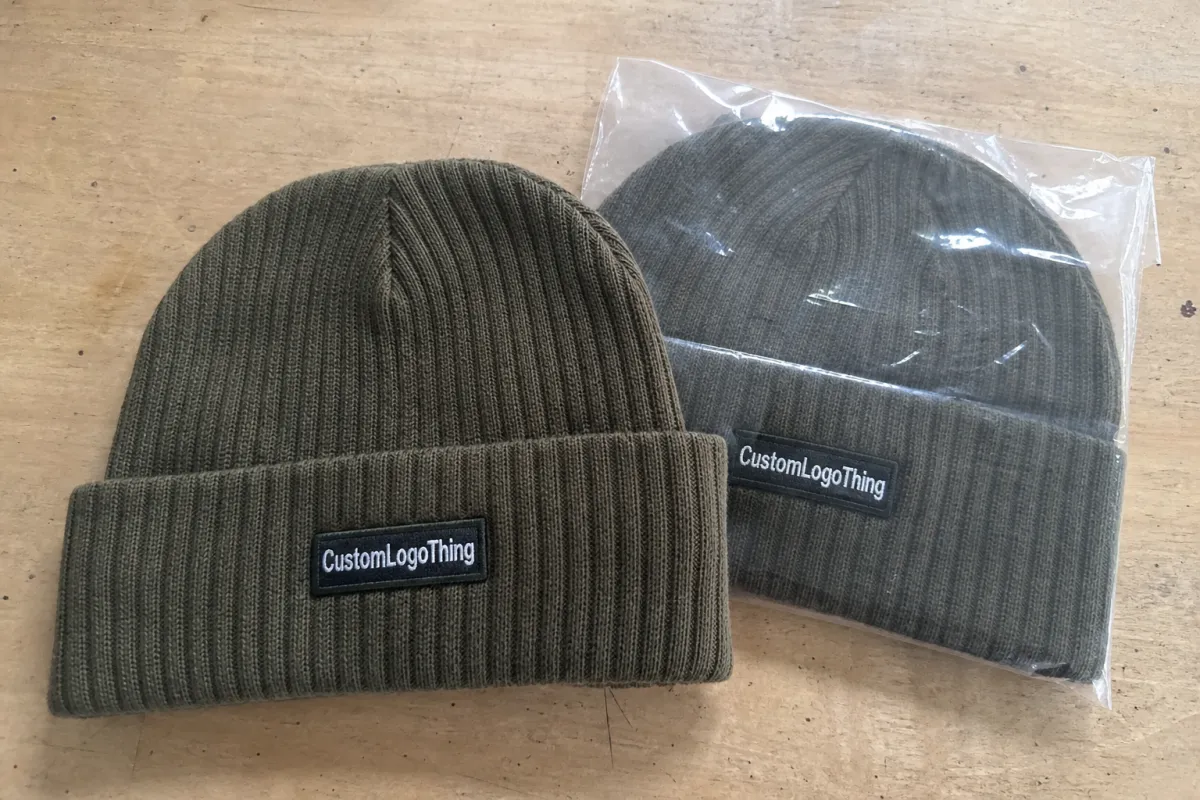
A ribbed beanie has a tighter structure, so it keeps a sharper shape on display and resists that tired, over-worn look after repeated handling. For beer brands, that is useful because the cuff usually carries the logo, and a structured cuff gives embroidery a flatter, more stable surface.
That small difference changes the customer’s first impression. A beanie that rebounds after being folded, stacked, and repacked feels more deliberate. It also travels better. Cartons packed with saggy knit pieces tend to arrive looking messy, and messy inventory does not help a merch drop, a retail shelf, or a brewery event table.
The lowest blank cost is not the lowest landed cost if the knit loses shape, the logo stretches, or the packing needs rework. That is just bad arithmetic with nicer photos.
Beer-branded winter beanies work especially well in rib knit because the surface stays disciplined. Brewery merch needs quick readability. Event giveaways need instant recognition. Retail buyers want something that feels justified at the price point. Ribbed beanies hit those needs more reliably than loose, fashion-first caps that often look better online than in a carton.
The structure also helps with repeat orders. When the knit is predictable, the decoration sits in the same place from run to run. That sounds minor until a second production batch lands with logo drift, stitching that sits too high, or a cuff that behaves differently because the material relaxed more than expected. Small shifts become big arguments in bulk.
Product Details That Decide Whether the Beanie Feels Cheap
Material is the first decision. 100% acrylic remains the standard budget choice for custom winter beanies because it is consistent, widely available, and usually easier to match across color runs. It also keeps the price from jumping every time a buyer asks for a second decoration color or a last-minute adjustment.
Blends and recycled yarns cost more, but they can make sense if the brand story depends on a lower-impact material claim or a softer hand feel. Wool blends usually deliver a warmer, more premium finish, though they raise cost and can narrow the buyer pool. Fleece lining pushes the price further because it adds comfort, an extra production step, and more inspection points.
Then there is the knit itself. Rib depth, cuff height, crown shape, and stretch recovery all affect how the beanie fits across a bulk order. A tighter rib generally holds embroidery more cleanly. A looser knit can feel soft in a sample and then look tired once the first carton has been opened and restacked a few times.
Details that change perceived quality:
- Rib gauge: tighter gauges usually support cleaner embroidery and sharper edges.
- Cuff height: a 2.5-3.5 inch cuff gives useful room for a logo without crowding the crown.
- Stretch recovery: too much stretch can distort patches, labels, and small lettering.
- Crown shape: a balanced top helps the beanie sit level instead of collapsing at one side.
Decoration choice matters just as much as yarn choice. Centered cuff embroidery is usually the strongest value for brewery merch because it is durable, straightforward, and easy to reproduce. Woven patches work better when the knit surface is too stretchy for fine stitches. Faux leather patches can look premium, but they rely on a cleaner, heavier base so they do not appear out of place.
Woven labels are fine for subtle branding, especially on minimalist retail pieces, but they rarely carry enough visual weight on their own if the beanie is meant to sell from across a room. Buyers often want bigger artwork because the mockup looks louder. On the finished knit, bigger artwork can warp, shift, or crowd the cuff. Smaller and cleaner usually survives production better.
Specifications to Lock Before You Request a Quote
If the brief is vague, the quote will be vague too. That creates fake comparisons, and fake comparisons waste time. Ask suppliers to price the same beanie, not four different interpretations of the same idea.
Lock these details before requesting pricing:
- Knit gauge and yarn content: for example, 7-gauge or 9-gauge acrylic, or a blend if softness matters more than price.
- Finished size and gram weight: both affect warmth, fit, and shipping volume.
- Rib count, cuff depth, and crown style: these shape the final silhouette and the decoration zone.
- Branding method: embroidery, woven patch, faux leather patch, or woven label.
- Artwork format: AI, EPS, or a high-resolution vector PDF keeps proofing moving.
- Color count and thread references: too many small changes slow approval and create avoidable corrections.
- Packaging: polybag, size sticker, belly band, hangtag, or retail-ready packing.
Packaging sounds secondary until it is not. If the beanies are meant for retail, ask about inner labels, carton marks, and whether any paper components need certified stock. For shipping durability, standards from ISTA are worth checking, because freight handling has no patience for pretty mockups. For paper inserts or hangtags, FSC is the cleaner reference if certified material is part of the plan.
Destination matters too. Domestic packing and export-ready packing are rarely the same thing. If the delivery market is not stated clearly, the quote may come back with extra labeling work, carton mark changes, or repacking charges. A good brief removes those surprises before they hit the invoice.
Beer Ribbed Winter Beanies Unit Cost Review: What Moves Price
Here is the honest version of a beer ribbed winter Beanies Unit Cost Review: there is no single number. The final cost is a stack of smaller decisions, and each one behaves differently depending on quantity, decoration, packaging, and freight.
The main pieces are straightforward. You have the blank beanie, the decoration method, setup or tooling charges, sampling, packing, and shipping. Knit headwear does not usually carry the same tooling burden as molded products, but there are still real setup costs. Embroidery digitizing, patch dies, label prep, and packaging setup all show up somewhere.
Main price drivers for bulk orders:
- Blank beanie cost: the biggest base number, especially at low volume.
- Decoration method: embroidery usually gives the best value for clean branding.
- Setup charges: digitizing, patch tooling, and label prep are often one-time fees.
- Packaging: polybags, size stickers, and hangtags all add small increments.
- Freight: landed cost changes quickly once cartons start moving internationally.
| Option | Typical MOQ | Setup / Tooling | Unit Cost Impact | Best Use |
|---|---|---|---|---|
| Blank ribbed beanie | 100-300 pcs | Low or none | $1.10-$2.20 per piece | Fast merch drop, resale blank, simple budget buy |
| Single-color embroidery | 100-500 pcs | $25-$80 digitizing | $0.45-$0.95 added per piece | Clean brewery logo, strong value, durable branding |
| Woven patch | 150-500 pcs | $40-$120 patch setup | $0.60-$1.20 added per piece | Small details, sharper artwork, stretchier knit surfaces |
| Faux leather patch | 150-500 pcs | $35-$100 die / setup | $0.70-$1.40 added per piece | Premium look, bold branding, heavier retail positioning |
Those numbers are directional, not a promise. A 100-piece order will almost always cost more per piece than a 500-piece run because the setup gets spread over fewer units. That is why MOQ matters so much. At low volume, every added step hurts more. At mid-volume, the math starts to settle.
For a practical benchmark, a decorated ribbed beanie often lands around $2.20-$4.80 ex-factory depending on yarn, decoration, and quantity. Freight can add another $0.25-$1.20 per piece, sometimes more if the shipment is small, urgent, or moving through an expensive lane. The landed number is the one that matters for margin, not the first quote line that looks friendly.
The best value is usually a single-color embroidery on a structured cuff. It is clean, easy to repeat, and durable enough for winter use. Patches are a good fallback when the knit surface is too stretchy for crisp stitches. If the design gets too detailed, cost rises and quality usually drops. That tradeoff is exactly where buyers lose money without realizing it.
Practical check: if a supplier does not separate blank cost, decoration cost, setup charges, and freight, ask for a clearer breakdown. A real Unit Cost Review needs line items, not one tidy number that hides the expensive parts.
Process and Timeline From Art File to Delivery
The production flow is simple on paper. The hard part is keeping it simple. One missing vector file can add more delay than the actual knitting run, and approvals usually take longer than buyers expect.
- Inquiry and spec confirmation: align on yarn, gauge, color, logo method, MOQ, and packaging.
- Quote and proof: compare blank, decoration, setup, and freight as separate numbers.
- Sample or mockup approval: confirm placement, size, thread colors, and cuff dimensions.
- Bulk production: knitting, decoration, finishing, and inspection.
- QC and packing: count verification, carton checks, and retail pack review.
- Shipment: book transit after packing is confirmed, not before.
Timelines depend on complexity. A blank sample can often move within a few days. Decorated samples usually take longer, especially if thread colors need matching or the artwork needs another proof. Bulk production commonly runs 12-20 business days after sample approval for standard orders, though holiday demand can stretch that window quickly.
Freight is a separate clock and should stay that way. Buyers get into trouble when they combine production and transit into one imaginary lead time. That is how launch dates slip. It is also how people end up paying for rush shipments that could have been avoided with better planning.
The usual delays are predictable: missing vector art, late color approvals, packaging changes after sample approval, and last-minute logo tweaks that seem small but trigger a second proof round. Each change has a cost. Sometimes the cost is time. Sometimes it is both time and money.
Why Reorders Stay Consistent When QC Is Built In
Repeat orders show whether a supplier was organized or merely lucky. A proper QC system keeps the second run aligned with the first by saving approved specs, stitch settings, thread references, and packaging details. Without that, each reorder becomes a fresh guess, and buyers pay for that guesswork again.
Pre-production checks do the real work. Knit inspection catches odd tension or weak panels. Decoration alignment keeps the logo centered on the cuff. Thread matching prevents the usual “close enough” discussion. Carton count verification keeps shipping honest. None of that is glamorous, but it protects the order.
Consistency matters more than charm. Fewer color drifts. Fewer size disputes. Fewer arguments over whether the second batch matches the first. For a brewery or an event series, that consistency helps the merch line feel intentional rather than improvised. The difference is obvious on a table, even if it is subtle in a spreadsheet.
Good QC also protects unit cost over time. A slightly higher price from a supplier who actually checks cartons, artwork placement, and sample approval can beat a lower quote that creates rework later. Cheap production with weak controls is not savings. It is deferred expense.
That is why it helps to ask what gets saved after approval. If the answer is nothing, expect more back-and-forth on the next run. If approved specs are stored clearly, reorders move faster and tend to land closer to the original sample.
What to Send for an Accurate Bulk Quote and Fast Start
If you want a useful quote, send a complete brief in one message. Not five fragments. Not a screenshot with “can you make this?” A clean request gets a clean answer.
Send these items together:
- Logo file in vector format, plus a PNG for quick reference if needed.
- Target quantity with at least two breakpoints, such as 100, 300, and 500 pieces.
- Desired delivery date and destination.
- Beanie color and yarn preference.
- Decoration method preference, or ask for the best option by budget.
- Packaging request: polybag, hangtag, size sticker, or retail-ready pack.
- Any market-specific labeling or carton mark requirements.
Ask for tiered pricing. That is the fastest way to see where the real savings begin. A 100-piece quote may look steep, while 300 pieces suddenly make sense. The difference between those breakpoints tells you more than a single line price ever will.
Then make decisions in order. First, blank or decorated. Second, which decoration method gives the best look for the budget. Third, compare landed cost against your margin target. That sequence keeps the buying process rational and helps the beer ribbed winter beanies Unit Cost Review turn into an actual purchase instead of another round of quote revisions.
Clarity is what keeps winter merch under control. If the artwork, quantity, shipping destination, and delivery target are all sent at once, the supplier can price the order properly and flag problems before production starts. That is usually the difference between a precise bulk quote and a long chain of correction emails.
What affects the unit cost of ribbed winter beanies with a beer logo?
Quantity, decoration method, and stitch count usually matter more than the base knit fabric. Packaging, sample fees, and freight can also move the landed cost even when the ex-factory quote looks fine.
What MOQ should I expect for custom ribbed beer beanies?
Small runs are possible, but the best pricing usually starts once you move beyond the very low-volume tier. Ask for multiple quantity breaks so you can see where the price drop becomes meaningful.
How long does production usually take for ribbed winter beanies?
Sampling is usually faster than bulk production, but artwork approval and color matching can add days. Freight time should be counted separately so the delivery date does not get padded with guesswork.
Which decoration method gives the best value on beer ribbed beanies?
Embroidery is often the best balance of clean branding and durability for ribbed knit caps. Patches or woven labels can make sense when the knit is too stretchy for fine detail.
Can I mix colors or packaging options without raising the price too much?
Yes, but every extra color or packaging variant can add setup time and reduce pricing efficiency. Limit the number of versions if you want the cleanest unit cost and the least confusion in production. A detailed beer ribbed winter Beanies Unit Cost Review should include landed pricing, not just the blank quote.


