Buyer Fit Snapshot
| Best fit | Tissue Paper With Logo projects where brand print, material claims, artwork control, MOQ, and repeat-order consistency need to be specified before quoting. |
|---|---|
| Quote inputs | Share finished size, material target, print colors, finish, packing count, annual reorder estimate, ship-to region, and any compliance wording. |
| Proofing check | Approve dieline scale, logo placement, barcode or warning zones, color tolerance, closure strength, and carton packing before bulk production. |
| Main risk | Vague material claims, crowded artwork, missing packing details, or unclear freight terms can make a low unit price expensive after revisions. |
Fast answer: Tissue Paper With Logo: Branding, Costs, and Process should be specified like a repeatable production item. The safest quote records material, print method, finish, artwork proof, packing count, and reorder notes in one written spec.
Production checks before approval
Compare the actual filled-product size with the drawing, then confirm tolerance on folds, seals, hang holes, label areas, and retail display edges. Reserve space for logos, QR codes, warning copy, and material claims before decorative graphics fill the panel.
Quote comparison points
Review material grade, print process, finish, sampling route, tooling charges, carton quantity, and freight assumptions side by side. A quote is only useful when the supplier can repeat the same color, closure quality, and packing count on the next order.
Tissue paper with logo can change the feel of a package before the product is even visible. A customer lifts the lid, peels back the fold, and the brand is already making an impression on the first surface their hands touch. That layer is thin. The signal is not.
For a packaging buyer, the appeal is practical as much as visual. Tissue can conceal, cushion, separate, and present, while still keeping the logo visible enough to feel deliberate. It sits between decoration and utility, which is a useful place for packaging to live. It looks finished, it stays light in transit, and it adds perceived care without forcing a new box structure or a heavier freight bill.
The details matter because tissue paper with logo is only simple on the surface. Paper weight, repeat spacing, ink coverage, fold style, and proof approval all affect the result. A small change in any one of those pieces can alter the way the sheet looks in a box, how it behaves on the packing line, and how much the final order costs. That is why experienced buyers treat the spec as a working document, not a decorative afterthought.
Tissue Paper With Logo: Why the Smallest Layer Matters
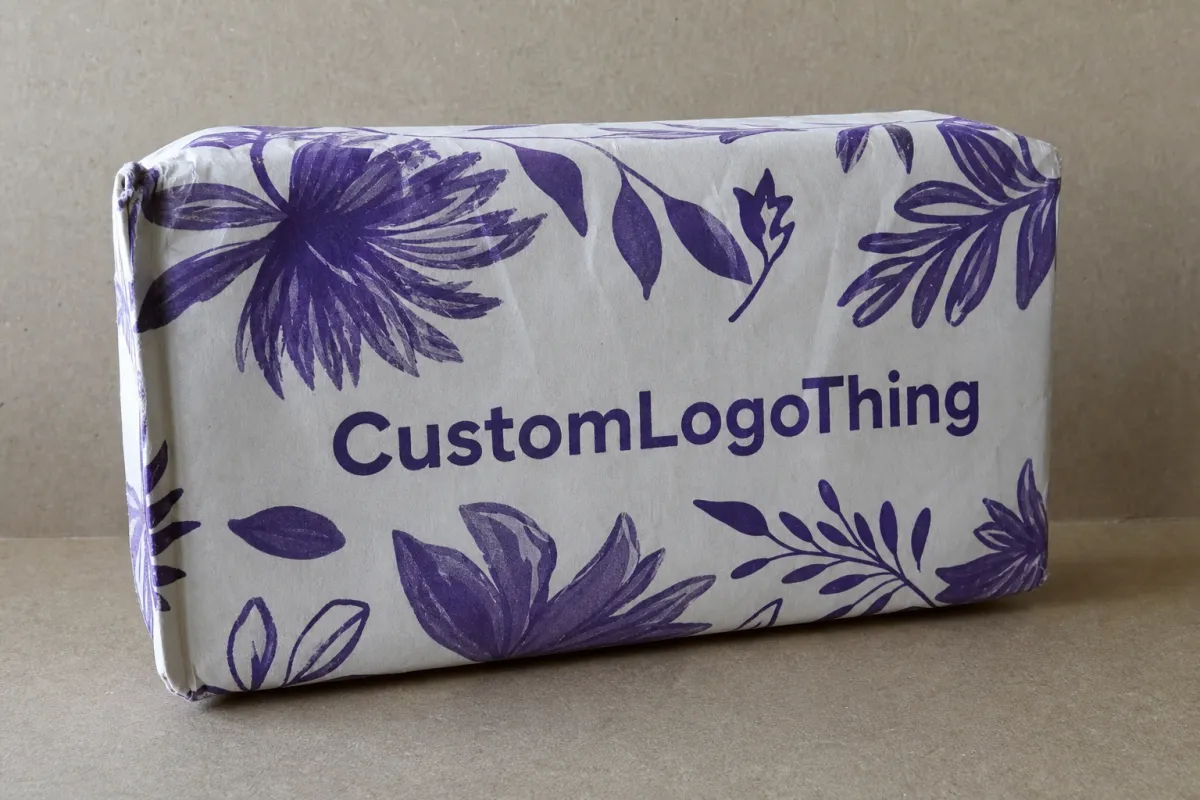
The first branded material a customer often handles is not the product itself. It is the tissue wrapped around it. That sounds minor until you watch the unboxing moment unfold. A plain mailer says the shipment got from point A to point B. A neatly folded sheet of tissue paper with logo says someone planned the experience before the box ever left the warehouse.
Tissue does several jobs at once. It wraps garments, separates a product from the wall of a rigid box, softens scuffing, and creates a controlled reveal. For apparel, cosmetics, gift items, and lightweight accessories, that first layer links protection to presentation. Customers rarely comment on tissue directly, yet they feel the difference. The package reads as cared for rather than assembled.
Restraint is part of the appeal. Full coverage is not necessary to make custom tissue feel premium. A simple repeat logo, a one-color mark, or a two-color print on a lightly tinted sheet can give a retail bag, mailer, or gift box a specific identity. An overcrowded design can look noisy fast. A calmer repeat tends to feel more refined, especially once the sheet is folded and only partly visible.
There is also a strong return on perceived value. Tissue paper with logo is light, so it adds little to shipping weight. The visual effect is larger than the physical material would suggest. That matters for online brands, boutique retail, and seasonal gifting programs where presentation counts and every ounce in the pack is tracked.
A practical packaging test is blunt: if the tissue looks attractive but tears, wrinkles badly, or resists folding, the spec needs work. The best custom tissue feels easy in the hand and quiet in the final presentation.
That working quality matters more than many buyers expect. Tissue is not just a graphic surface. If it folds poorly, if the print is too dense, or if the sheet size fights the product, the packing line slows and the premium impression slips away. Good tissue helps the operation. Bad tissue creates friction no one wants.
In a boutique apparel launch, for example, a sheet that folds cleanly can save seconds per order. Across several hundred orders a day, that becomes real labor. In a cosmetics kit, the same tissue may need to hold a set in place without crushing the carton corners. The use case changes, but the logic stays the same: the sheet has to look polished and behave predictably.
How Tissue Paper With Logo Is Printed and Finished
The production path is straightforward, but the order of operations is not trivial. Artwork gets reviewed first, then the file is prepared for the chosen sheet size and repeat pattern, then the tissue is printed, dried, cut or converted as needed, packed, and shipped. Each step can shift the final result because tissue behaves differently from carton board or coated paper. It is thinner, softer, and more reactive to ink and handling.
Printing on tissue usually calls for careful ink control. Heavy coverage can make the sheet feel less supple and can stretch the drying window. That is why simple graphics often work best. A clean logo repeat, enough white space around the mark, and a controlled number of colors usually stay crisp without overwhelming the substrate. The goal is not to blanket the sheet. The goal is to keep the logo readable and attractive while preserving the paper's natural feel.
Several layout choices shape the finished result. Some brands want a loose repeat pattern that feels airy across the sheet. Others want a tighter repeat so the logo still shows after folding. Some orders ship flat. Others ship folded to match a customer’s pack format. Sheet size matters too, since a 15 x 20 inch sheet behaves very differently from a 20 x 30 inch sheet once it is wrapped around a product or tucked into a retail bag.
The best layout depends on the job. Wrapping a folded garment in a mailer does not require the same print density as lining a gift box or building a presentation fold inside a boutique shopping bag. If the print sits too close to the edges, it may vanish after folding. If the repeat is too sparse, the brand presence can weaken. Good artwork setup solves that before production starts.
What looks bold on a flat proof can read differently once the sheet is in motion. A logo that fills the screen may look balanced on press, then shrink to a corner band after it is tucked, creased, and wrapped around the product. Proofing should reflect the actual pack-out method, not only the flat artwork file. That difference is where many first orders go sideways.
For that reason, thoughtful suppliers ask about the product and the pack-out before they talk about print. A sheet meant for a folded shirt is not specified the same way as one meant for a jewelry box, and the difference is not just size. It affects opacity, repeat placement, and how forgiving the paper will be when a packer handles it quickly.
In many programs, the finishing choices matter more than people expect:
- Flat sheets work well for hand folding and boutique presentation.
- Bulk-packed tissue can support higher-volume packing lines.
- Pre-folded tissue can save time if the wrapping motion is standardized.
- One-side printing is common when the outer face is the main brand surface.
- Repeat patterns help the brand stay visible even after folding and creasing.
For brands that want a polished but practical result, the strongest layout is usually the one that respects the packing line. A beautiful design that slows fulfillment is rarely a smart trade. A simpler design that folds quickly and still looks good from several angles usually wins.
Key Factors That Affect Quality, Look, and Performance
Paper weight is one of the first variables to understand. Very thin tissue has a soft, elegant feel and a light hand, which is part of its appeal. It also shows through more easily. Slightly heavier grades feel more substantial and usually hold up better during folding and wrapping. That does not make heavier tissue the automatic choice. The look can become less airy. Still, it often suits brands that want the sheet to survive more handling.
Opacity follows close behind. A translucent sheet can look refined on its own, yet if the logo color sits too close to the paper color, the print may fade visually once the tissue is wrapped around a product. A darker logo on a pale sheet usually reads faster. Contrast matters more on tissue than on rigid packaging because the substrate itself is soft, light, and partly decorative by design.
Logo size and repeat spacing can have a bigger effect than many first-time buyers expect. Fine detail can disappear into the absorbent surface, especially if the artwork uses hairline rules, tiny type, or delicate gradients. A stronger mark with clean edges, a simpler icon, or slightly larger type often prints better and looks more confident. On tissue, clarity usually beats complexity.
Ink coverage is another balancing act. Too much coverage can slow drying and make the tissue feel less pleasant to handle. It may also give the sheet a stiffer look after printing, which is not always the intent. A well-controlled one-color or two-color treatment can feel more premium than a crowded full-sheet design because the eye reads it faster and the paper keeps more of its softness.
Quantity affects consistency and price at the same time. Larger runs usually make setup more efficient, which helps unit economics, but they also demand tighter process control if the repeat has to stay consistent from sheet to sheet. Smaller runs may cost more per unit, yet they offer flexibility for a seasonal launch or a limited product drop. The right run size is the one that matches the actual packaging need, not the one that feels safest on a spreadsheet.
It helps to think in terms of the buyer scenario, not just the production spec. A subscription box brand may need a consistent look across months of fulfillment, so repeat stability matters more than a one-time novelty effect. A bridal boutique may value a softer, more restrained print that feels elegant in hand. A cosmetics brand launching a holiday set may choose a bolder repeat because the tissue only has to work for one season and the unboxing moment matters more than long-term inventory flexibility.
A simple comparison makes the tradeoffs easier to see:
| Option | Typical Use | Visual Effect | Relative Cost | Notes |
|---|---|---|---|---|
| Lightweight tissue, one-color repeat | Retail bags, gift wrap, apparel inserts | Soft and minimal | Lower | Often the easiest way to get a clean branded look without heavy ink coverage |
| Midweight tissue, two-color logo | Boutique boxes, premium mailers | More visible brand presence | Moderate | Good balance of durability and appearance when folding matters |
| Heavier tissue, larger repeat | Higher-touch presentation, product sets | Substantial and polished | Moderate to higher | Useful when the tissue needs to feel more protective or hold shape better |
| Full-coverage design | Special campaigns or high-impact unboxing | Bold and graphic | Higher | More demanding on print control and drying; not always the best choice for delicate tissue |
Fiber sourcing and print methods deserve attention too, especially for brands that track sustainability claims closely. If recycled content, chain of custody, or forest stewardship matters to your program, it is worth checking references like FSC for sourcing context and the EPA recycling guidance for broader material handling basics. Recyclability depends on the fiber, the ink load, and any coatings or finishes, so those details should be confirmed before a spec is locked.
Packaging standards still matter here, even for a light item. Many teams think about ISTA testing for the outer shipper and ASTM methods for material performance, and that habit is useful. Tissue itself may not be the part that fails in transit, but it belongs to the larger package system. If the outer pack gets crushed or shifted, the branded tissue can wrinkle in ways that change the opening moment.
Process and Timeline: From Artwork to Delivery
Once a logo is submitted, the project usually moves through a predictable sequence. First, the artwork is reviewed for resolution, line weight, color count, and repeat behavior. Then the print team prepares the file for the chosen sheet size and confirms how the mark will sit on the tissue. After that come proofing, production, drying, finishing, packing, and freight planning. The flow sounds tidy. In reality, each stage depends on the one before it.
Artwork readiness is often the biggest schedule variable. Clean vector files, simple spot-color builds, and clear instructions for logo size and repeat spacing move faster than files that need to be rebuilt. If the logo includes tiny type or very thin strokes, the proof stage may take longer because those details need checking against the material. Good preparation saves time later, and it usually improves the print result too.
Proofing is where buyers protect themselves. A digital proof can confirm placement and repeat logic, while a physical sample or pre-production proof can reveal more about color tone, softness, and the way the print behaves on real tissue. That extra step is valuable when the logo carries the entire presentation. If the repeat is off by a little, or the logo looks too heavy after folding, catching that before the full run begins is far cheaper than discovering it after the order ships.
Typical lead times vary with complexity, but there is a practical range. A straightforward order with ready-to-print artwork may move in roughly 12 to 15 business days after proof approval. More involved projects can take longer if they need sampling, special packing, or custom sizing. Larger runs may need more drying and conversion time. Freight can add a few days too, especially if the order is packed to protect the sheets from corner damage.
The fastest way to shorten the timeline is not to rush the factory. It is to remove uncertainty early. Have the logo file ready, decide the intended use of the tissue, specify sheet dimensions, and approve the proof quickly. Those small actions save more time than trying to compress the production stage itself.
Here is the order flow in plain terms:
- Submit artwork and basic order details.
- Confirm sheet size, print color count, and repeat style.
- Review a digital proof or sample if needed.
- Approve the final layout.
- Move into print, drying, and finishing.
- Pack, label, and ship according to the carton plan.
If the tissue is part of a larger packaging program, it should be scheduled alongside boxes, inserts, bags, and outer shippers. Too often, tissue gets ordered late because it feels like a finishing touch, and then it becomes the one item that delays the launch. A better approach is to treat it as a real component of the packaging system, not an afterthought.
Cost and Pricing: What Changes the Quote
Pricing for tissue paper with logo usually turns on a handful of practical variables: quantity, sheet size, number of colors, repeat complexity, packing format, and shipping method. That is why two orders that sound similar on the phone can come back with very different quotes once the details are fixed. A simple one-color repeat on a standard sheet size is very different from a larger sheet with two or three ink colors and a tighter register requirement.
Setup cost is part of the picture too. Printing tissue is not just a matter of running paper through a press. The file has to be prepared, the press has to be set, the repeat has to be aligned, and the dry time has to be managed. For small quantities, that setup is spread across fewer sheets, so the unit cost tends to be higher. For larger quantities, the same setup is divided across more pieces, which usually lowers the price per sheet.
Minimum order quantity can matter as much as the base price. A brand that only needs a few hundred sheets for a short run may face a higher per-unit cost than a brand ordering several thousand sheets for ongoing fulfillment. That is normal. It reflects the amount of prep required to produce a consistent branded sheet on a light substrate.
Shipping deserves careful planning because tissue is light but bulky. Weight may not be the issue. Carton volume often is. That means freight method, carton count, and packing arrangement affect the final landed cost. If the order ships flat rather than folded, or if it needs special protection to preserve the edges, the freight math changes.
A practical pricing view is usually more useful than a vague estimate. The figures below are illustrative only, but they show how the economics tend to move. Actual quotes vary by region, substrate, print method, and supplier capacity, so they should be treated as planning ranges rather than promises.
| Order Size | Typical Unit Range | What Usually Drives It | Buyer Takeaway |
|---|---|---|---|
| Small run, around 500-1,000 sheets | About $0.35-$0.75 per sheet | Setup spread over fewer pieces, modest freight efficiency | Good for testing a design or a short seasonal program |
| Mid run, around 2,500-5,000 sheets | About $0.18-$0.35 per sheet | Better setup efficiency, more stable production flow | Often the sweet spot for growing brands |
| Larger run, 10,000+ sheets | About $0.10-$0.22 per sheet | Scale benefits, lower setup burden per sheet | Best when usage is predictable and storage is available |
| More complex layout or extra print colors | Usually higher than the ranges above | Additional setup, stricter print control, more ink management | Worth it only if the extra visual effect supports the brand |
Over-ordering can trap budget in inventory that sits too long. Under-ordering can create gaps in packaging supply at the worst possible time. The best quote is usually the one based on actual usage, repeat frequency, and storage reality. If the tissue will be consumed steadily, a larger run may make sense. If it is tied to a campaign or launch, a smaller quantity with a cleaner spec may be the stronger choice.
Design complexity can raise cost even when the logo itself looks simple. Thin lines, tiny type, gradients, and off-register effects push the process toward tighter control. A straightforward mark can often deliver the same branded effect at a lower price and with fewer production headaches. That is one reason many procurement teams favor restraint over novelty.
Common Mistakes to Avoid When Ordering
The most common mistake is sending artwork that was never meant for tissue. A logo designed for a website header or a large box panel may carry details that look fine on screen but disappear on absorbent paper. Hairline rules, tiny taglines, and delicate gradients are the usual trouble spots. Tissue rewards simple, confident artwork far more than intricate decoration.
Another frequent issue is choosing a sheet size without matching it to the product. A sheet that is too small looks skimpy once wrapped, and a sheet that is too large can waste material or make the fold feel awkward. For apparel, beauty products, and small gift items, the right dimension is the one that gives clean coverage with a manageable fold. Size should be chosen from the product outward, not from a catalog list inward.
Buyers also underestimate the importance of fold style and pack-out method. If the tissue is going into a hand-packed retail box, the way it folds needs to support speed and consistency. If it is meant for a mailer, the sheet has to survive the tuck and the closing motion without cracking the visual repeat. Tissue that looks great flat but becomes awkward in the pack line has missed the point.
Skipping proof review is another expensive shortcut. Even with a simple one-color logo, a proof can reveal whether the repeat feels too crowded, whether the logo scale is too small, or whether the paper shade changes the perceived color. For branded unboxing, those small visual shifts matter. A proof is not a formality; it is the step that keeps the order aligned with intent.
It is also easy to ignore the surrounding packaging system. Tissue does not live alone. It sits with boxes, tape, stickers, inserts, and shipping materials. If the rest of the package has a clean premium feel but the tissue is flimsy or off-color, the customer notices the mismatch. If the tissue is specified well, it helps the whole package feel coherent.
These are the mistakes I would watch for first:
- Using a logo file with thin detail that cannot reproduce cleanly on tissue.
- Picking a sheet size before measuring the product and the packaging it goes into.
- Ignoring how the paper will be folded, packed, and handled on the line.
- Skipping proof review because the design seems simple.
- Ordering more heavily printed tissue than the product presentation really needs.
A careful buyer thinks about the whole experience, not just the artwork. The tissue has to look good in the box, behave well during packing, and still feel clean when the customer opens the package. If one of those pieces is missing, the branded effect weakens fast.
Expert Tips and Next Steps for a Better Order
Start with measurement. That sounds basic, but it prevents a lot of trouble. Measure the product, measure the package it will sit in, and estimate how much tissue is needed for a full wrap or liner effect. Once the functional size is clear, choose a sheet that gives enough coverage without creating excess folds that add waste and slow the packing line.
Keep the artwork clear and restrained. On tissue, a strong logo usually outperforms a crowded one. If the brand mark has multiple elements, decide which parts truly need to appear on the tissue and which parts can stay on the box or insert. A simplified treatment often prints better, looks more elegant, and costs less to produce. That does not mean the design has to feel plain. It means every printed element should earn its place.
Ask for a proof early, and ask specific questions. How large is the repeat? How many logos appear on a sheet? Will the tissue arrive flat, folded, or bulk packed? How will the printed side sit during wrapping? Those questions tell you more about the final experience than a generic promise of quality ever will. Good suppliers can usually explain the tradeoffs clearly, and that conversation often reveals the smartest spec before production starts.
If sustainability is part of the buying brief, make that clear from the beginning. Ask about fiber sourcing, ink type, and whether any coatings are involved. The goal is not to chase a marketing label. The goal is to understand what the material can actually do and how it fits the brand's packaging commitments. A lighter print, a paper-based finish, and a straightforward structure often make the order easier to position responsibly.
Think about supply timing as well. Tissue should arrive with enough buffer for receiving, count verification, and staging at the packing area. If the order is part of a launch, build in time for proof approval and transit so the cartons are not arriving on the same day as the product. That buffer protects the launch schedule and gives the team room to fix a problem before customers see it.
From a packaging buyer's point of view, the best tissue order is the one that feels almost effortless to use after the first carton is opened. The sheets separate cleanly, the logo sits in the right place, the paper folds without fuss, and the brand detail shows up exactly where the customer expects it. That is the real test of Tissue Paper with Logo: it should make the package feel more thoughtful without making the operation harder.
If you are narrowing down a spec now, keep the next steps simple:
- Measure the product and packaging.
- Choose the sheet size and fold method.
- Keep the artwork bold and readable.
- Request a proof before production.
- Schedule the order around your packing calendar.
Handled well, tissue paper with logo becomes a quiet brand asset rather than a decorative extra. It adds a polished first touch, supports the packing workflow, and helps the whole package feel intentional from the first fold to the final reveal. The strongest spec is usually the simplest one: the right sheet size, a logo that reads cleanly, and enough proofing time to catch problems before they become inventory.
Frequently Asked Questions
How much does tissue paper with logo usually cost?
Pricing depends on quantity, sheet size, number of print colors, and whether the order uses a simple repeat or a more involved layout. Larger runs usually lower the per-sheet cost because setup is spread across more pieces. Shipping, packing format, and any rush requirement can also change the final quote.
What file type works best for tissue paper with logo artwork?
Vector artwork is usually the safest choice because it keeps the logo sharp at different sizes. Clean, high-contrast files are important because tissue printing favors simple shapes and clear line work. It helps to share the exact logo repeat size and any brand color references before proofing starts.
How long does tissue paper with logo production take?
Lead time depends on artwork approval, order size, print complexity, and current production capacity. Clean files and fast proof sign-off can shorten the timeline significantly. If a project needs sampling or custom packing, that can add time before shipment.
What tissue weight or thickness is best for logo printing?
A lighter tissue creates a soft, elegant feel, but it may show through more and needs careful ink coverage. A slightly heavier grade can feel more durable and often handles printing and folding more consistently. The best choice depends on whether the tissue is meant for wrapping, cushioning, or decorative presentation.
Is tissue paper with logo recyclable or eco-friendly?
It can be, but recyclability depends on the paper fiber, inks, and any added coatings or finishes. Brands should ask about paper sourcing and print methods if sustainability is a priority. Using a lighter print design and avoiding unnecessary coatings can help keep the material easier to process.
Related packaging resources
Use these related guides to compare specs, costs, quality checks, and buyer decisions before making the final call.


