Soap Brand Kraft Paper Bags Unit Cost for Bulk Orders
The biggest price swing is not always the supplier’s margin. For soap brand kraft paper Bags Unit Cost, the fastest savings usually come from freezing the format before chasing discounts. A brand that locks in one bag size, one paper weight, and one print setup often gets a cleaner number than a brand that keeps changing handles, finishes, and dimensions mid-quote.
That matters because soap packaging is not one use case. Single bars, gift sets, seasonal bundles, and subscription shipments all create different cost profiles. A bag that looks “close enough” on screen can waste material, reduce shelf appeal, or force a higher MOQ than the line actually needs.
Soap Brand Kraft Paper Bags Unit Cost: What Moves It Fast
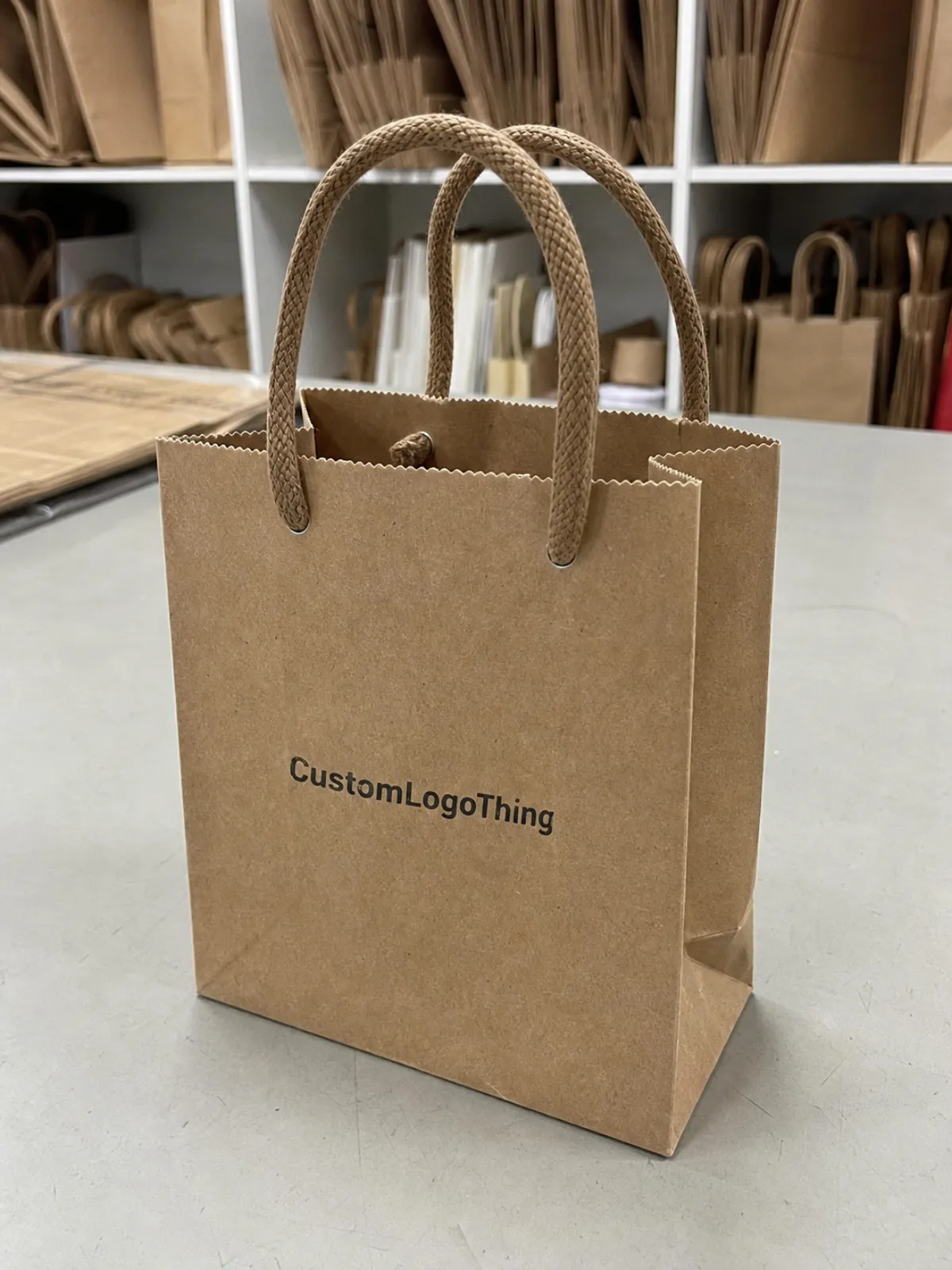
Unit cost often drops more from format standardization than from bargaining. The supplier may only shave a few cents, but a tighter spec can cut waste across every step of production. That is why Soap Brand Kraft Paper Bags unit cost should start with a spec conversation, not a price fight.
From a packaging buyer’s point of view, the first question is not “How cheap can this be?” It is “Which specs can be standardized without hurting shelf appeal, protection, or the unboxing experience?” That shift changes the quote. A soap brand that sells three bar sizes can often consolidate to one outer bag dimension, then use inner wraps or inserts to separate SKUs. The bag stays consistent, and the pricing logic gets simpler.
Small changes matter more than many brands expect. A switch from a flat handle to a twisted handle affects material usage and labor. A soft-touch finish or spot UV may look minor in a mockup, but it adds process time, rejection risk, and cost. If the order is large enough, those upgrades can be justified. If the order is only moderate, they can push the bag into a different pricing tier entirely.
Standardize the bag before negotiating the price. In bulk packaging, that is usually where the real savings live.
Retail-ready soap packaging also has a different cost logic depending on the channel. A boutique gift set sold on a shelf needs stronger visual impact and cleaner print registration. A subscription shipment packed into corrugated cardboard can be more forgiving on appearance, but it must survive transit without scuffing or tearing. Those are not the same bag requirements, even if the soap itself is identical.
For buyers comparing quotes, the useful question is which line item actually moves the number. Paper grade? Handle style? Coverage? Reinforcement? Once you know that, you can see whether the quote is expensive because the bag is truly premium or because the spec drifted in three small ways that added up fast.
One more practical point: some brands chase the cheapest looking quote and then pay for it later in damaged print, flattened handles, or a bag that feels thin in hand. That kind of savings is usually fake. The better target is a bag that holds its shape, prints cleanly, and ships without adding hidden labor on the packing line.
Paper Bag Formats That Fit Soap Brands Best
The best format depends on what the soap is doing in the customer journey. A wrapped bar in a kraft sleeve has very different packaging needs from a boxed soap set or a sampler bundle. That is why the right paper bag format should be chosen for product fit first, then for cost.
Flat-bottom kraft bags work well for boxed soaps, gift bundles, and soap-plus-accessory kits. They stand more cleanly on a shelf, hold shape better, and usually make the display look more intentional. For many soap brands, this is the quiet workhorse format: simple, stable, and relatively efficient to produce.
Twisted-handle shopping bags are common for retail counters and gift-with-purchase programs. They offer a familiar carry experience, and the handle makes the bag feel complete without requiring a separate carrier. The tradeoff is cost. Handles add material and assembly, so the unit price rises compared with a plain bag of the same footprint.
Boutique-style carry bags with reinforced tops are better for premium positioning. They can support heavier product loads and usually create a stronger brand identity, especially when the printed art is restrained and precise. The cost is higher, but so is the perceived value. In a crowded soap aisle, that difference can matter.
There is also the shipping side. A bag that folds efficiently saves carton space. That matters when freight is already climbing and the order must move through corrugated cardboard master cartons. More efficient folding means fewer cartons, less air, and a better chance of keeping the landed cost under control.
For soaps sold as seasonal bundles or holiday sets, brands often oversize the bag to “be safe.” That usually costs more than it should. A bag that is too large wastes paper and can make the product feel loosely packed. A bag that is too tight risks creasing and returns. The best format fits the product closely enough to look considered, not improvised.
There is also a subtle retail issue that gets missed in early sourcing: bag geometry changes how the product sits under store lighting. A narrow front panel can look elegant on a shelf but may not leave enough room for copy or a logo lockup. A wider panel gives the designer breathing room, though it may increase sheet waste. The right answer depends on whether the brand is selling by tactile premium or by graphic storytelling.
Material, Size, and Print Specs That Change the Quote
This is where quotes start to diverge. Two bags can look nearly identical in a render and still land in very different cost bands because of paper grade, GSM, size, and finishing. A buyer who understands those inputs is much less likely to be surprised when the final quote arrives.
Paper grade is the first filter. Natural kraft paper is often the most cost-efficient choice, but recycled materials can shift the price depending on the post-consumer waste content and the strength target. If your brand wants an FSC-certified substrate, ask for documentation early. FSC chain-of-custody requirements can affect sourcing, and it is better to price that in before artwork is approved. For brands positioning around biodegradable packaging, that paper story should be checked against coatings, adhesives, and inks, because the surface finish can change the sustainability claim.
GSM and reinforcement matter almost as much. A 120-150 GSM bag can be fine for light soap sets. Heavier kits may need 170-200 GSM or a reinforced top edge. Once reinforcement enters the build, material usage and labor both go up. The bag may still be the right choice, but it is no longer the same cost structure.
Size is another hidden driver. A few millimeters in width or depth can reduce sheet efficiency and increase waste. On a large run, that adds up. This is why buyers who standardize around one core size often see better pricing than buyers who ask for three near-identical dimensions across the same order.
Print coverage changes the quote quickly. One-color logo work is usually the most efficient. Full-bleed artwork, inside printing, foil stamping, embossing, or spot finishing adds steps and creates more rejection risk. That does not mean decorative work should be avoided. It means the buyer should know exactly which finish is doing brand work and which finish is just consuming budget.
A common trap is treating all “custom” options as equal. They are not. A simple one-color flexographic print on kraft paper behaves very differently from a multi-pass decorated bag that needs tighter registration. Even if the visual difference looks modest in proof files, the production burden can be far higher.
| Bag format | Typical soap use | Typical spec | Indicative unit cost at 5,000 pcs | Cost driver |
|---|---|---|---|---|
| Flat-bottom kraft bag | Boxed bars, bundles, sampler kits | 120-150 GSM, one-color logo | $0.18-$0.28 | Efficient structure, simple print |
| Twisted-handle shopping bag | Retail counters, gift sets | 150-180 GSM, 1-2 colors | $0.22-$0.36 | Handle assembly, extra material |
| Boutique carry bag | Premium soap lines, seasonal launches | 170-200 GSM, reinforced top, specialty finish | $0.30-$0.55 | Reinforcement, finish, tighter QC |
Those figures are directional, not universal. Artwork, ship point, paper market movement, and packing method all matter. Still, they give buyers a realistic frame. If a quote lands far outside these bands, the next step is to ask which spec is driving the difference rather than assuming the supplier is padding the number.
A practical spec sheet should include these points before a formal quote:
- Finished bag dimensions, including gusset depth and handle drop if applicable.
- Paper grade, GSM, and whether recycled content or FSC-certified paper is required.
- Print method, number of colors, and whether artwork covers one side or both.
- Finish details such as matte varnish, lamination, foil, embossing, or spot UV.
- Packing method, master carton count, and whether the bags must fit a specific corrugated cardboard shipper.
If you send that list up front, the quote usually comes back cleaner the first time. That alone can save a week of back-and-forth.
MOQ, Pricing Tiers, and Where Unit Cost Drops
MOQ is not just a gatekeeper. It is a pricing mechanism. Higher volume usually lowers the per-unit cost more effectively than small design tweaks do, because setup labor gets spread across more bags and the line can run with fewer interruptions. That is why soap brand Kraft Paper Bags unit cost improves most noticeably when the order moves into a more efficient production tier.
Typical tiering looks something like this: a sample run, a first production run, and a repeat order. The sample run may be priced high because the factory is covering setup, proofing, and short-run inefficiency. The first production run is better, but still not the lowest point. Repeat orders usually produce the cleanest economics because the dieline, artwork, and material decision have already been locked.
For many soap brands, the useful question is not “What is the lowest MOQ?” It is “What MOQ gives me a stable repeatable spec without overbuying?” A very small run may be helpful for a launch, but if the brand already knows the bag will be reordered, it often makes sense to move closer to a production tier that unlocks real savings.
Hidden cost drivers deserve attention. Custom inserts raise labor. Special die cuts can increase scrap. Premium inks may require more curing time. Rush scheduling can force the plant to resequence work, and that usually shows up in the quote. None of these are red flags by themselves. They just need to be visible before the buyer signs off.
One of the most common mistakes is comparing quotes that are not actually comparable. If one supplier prices a 150 GSM bag with one-color print and another supplier prices a 170 GSM bag with foil, the gap is not a pricing mystery. It is a spec mismatch. Match paper weight, size, print coverage, reinforcement, and packing method first. Then compare.
A buyer can also protect margin by asking for three scenarios at once:
- A test quantity for launch validation.
- A mid-volume order that reflects realistic first-season demand.
- A scale-up price break that shows where repeat ordering becomes materially cheaper.
That gives finance a clearer picture of landed cost, and it helps operations decide whether the order should be split by SKU or consolidated into one bag format. It is a small request, but it often exposes the best value band immediately.
The other reason MOQ matters is that paper converting has fixed startup costs that do not shrink politely just because the order is smaller. Plates, die-cutting, machine setup, and inspection all have a baseline cost. If a bag is only barely above sample volume, the supplier has fewer places to recover that overhead. That reality is not always visible in a quote, but it explains why a low quantity can look disproportionately expensive.
Production Steps, Proofing, and Lead Time
A clean production schedule usually follows the same path: inquiry, artwork review, dieline confirmation, sampling, prepress approval, manufacturing, packing, and shipment. The sequence sounds obvious. The delays, however, usually come from small omissions. Missing logo files. Unclear finish notes. A dimension change after the quote has already been issued. Those are the moments that stretch timelines.
For standard custom paper bags, a realistic lead time is often 12-15 business days from proof approval. More complex builds, especially those with specialty finishing, can move into the 18-25 business day range. That is not a scare tactic; it is a practical way to prevent launch-day surprises. Quantity matters, too. A larger order can be efficient on press, but it still takes time to convert, inspect, and pack.
Proofing is where speed is won or lost. Fast approval matters more than most buyers think. A factory may have the press available, but if artwork is still being revised, the schedule slips. Good suppliers keep this visible. They tell the buyer exactly what they need to release production, and they do not pretend a vague email is the same as approved artwork.
For soap brands shipping nationally, packaging durability is worth a quick reality check. If the finished bags are going into outer cartons, ask whether the carton spec and ship method align with common ISTA test logic. You do not need a lab report for every order, but the standards exist for a reason. See the ISTA testing framework for a straightforward reference point when transit risk matters. For material sourcing claims, the FSC certification system is a better credibility marker than a vague “eco-friendly” label.
QC should not stop at color approval. On a useful run, the factory should be checking glue line integrity, handle pull strength, board rigidity, print rub resistance, and carton pack-out efficiency. Bags that look perfect in a flat proof can still fail if the adhesive bead is uneven or the fold memory is poor. That is especially true with heavier kraft builds, where stiffness and print registration can move against each other if the process is rushed.
These checks also shape the unboxing experience. A bag that survives distribution without dents or scuffs protects the brand as much as the print does. That is especially true for giftable soap sets, where the customer is buying the feel as much as the formula.
If you want a useful benchmark before ordering, review a few soap packaging case studies and compare them against your own dimensions, print coverage, and order size. That is often the fastest way to see whether the current spec is too elaborate for the target budget.
Why Direct Manufacturing Beats Middleman Pricing
Direct manufacturing is not just a sourcing preference. It is a cost-control strategy. Removing extra layers usually reveals the true factory unit cost, which makes it easier to understand what is actually driving the number. Brokers can be useful in some situations, but every additional hand in the chain tends to add margin, delay, or ambiguity.
Direct communication matters even more for custom packaging. A soap brand needs quick answers on color matching, paper substitutions, reinforcement, and sample changes. A factory can usually respond more precisely because the people who answer the question are closer to the line. That matters when the difference between an acceptable quote and an expensive one is a single finish detail.
Consistency is another advantage. Repeat orders should feel boring in the best possible way. Same spec. Same build. Same expected quality range. That kind of consistency is what lets a purchasing team forecast soap brand Kraft Paper Bags Unit cost with confidence instead of treating every reorder like a new negotiation.
There is also a practical advantage for brands balancing soap packaging with other materials such as corrugated cardboard cartons, inserts, and mailers. Direct manufacturing makes it easier to coordinate the bag with the rest of the packaging system, so the visual language stays aligned and the freight plan stays sensible. If the bag is part of a broader launch, that coordination protects both budget and brand identity.
For buyers comparing sourcing models, the simple test is this: who can explain the spec most clearly, and who can stand behind the final number? A low quote is not valuable if it changes after artwork approval. A slightly higher direct-manufacturing quote may be better if it reduces revision cycles, shipping surprises, and production inconsistency.
There is a second-order benefit too. Direct factories usually have better visibility into material substitutions when paper markets move. If a quoted kraft stock becomes scarce, the supplier can suggest an equivalent grade before the order slips. A middle layer often turns that same issue into a slower, vaguer conversation, and delay is usually more expensive than the paper adjustment itself.
Our bulk packaging examples show the same pattern again and again: the most reliable cost wins come from stable specs, not from chasing the lowest line item on the first estimate.
How to Request a Quote and Lock In the Best Unit Cost
If the goal is a precise quote, send precise inputs. The more complete the request, the closer the estimate will be to the invoice. That matters because a vague request can look affordable at first and then drift upward once the real material and print assumptions are added.
Send these details:
- Bag size, including width, gusset, and height.
- Paper grade, GSM, and recycled content target if relevant.
- Print colors, coverage, and any specialty finish.
- Quantity and whether this is a launch order or repeat order.
- Shipping destination and target in-hand date.
- Artwork file status and whether dieline approval is already complete.
Ask for two or three quote scenarios at once. A low-MOQ test order is useful for validation. A mid-volume order usually shows the realistic first-season cost. A scale-up price break shows the unit economy once the line is committed. That structure makes planning much easier for both procurement and sales.
It also helps to decide early whether the order should be split by SKU or consolidated into one bag format. Consolidation usually improves unit economics. Splitting can make sense for premium lines, but it should be a deliberate branding decision, not an accident caused by late sizing changes.
Do not finalize artwork before the structure is frozen. The bag size, print method, and finish should be locked first, because each change after that multiplies the chance of rework. Once the paper structure is settled, the rest of the budget becomes much easier to control. That is how soap brands keep the launch attractive without burning margin.
There is one more buyer habit worth adopting: ask for a photo or physical sample before full production whenever the print is complex or the bag carries heavier soap kits. A flat proof cannot tell you how the handle feels in hand, how the kraft stock behaves at the crease, or whether the print sits cleanly against the fiber grain. Those details are small on paper and obvious in the hand.
Once the spec is fixed, soap brand kraft paper bags unit cost becomes far easier to manage. The buyer can compare quotes on equal terms, the factory can run with fewer surprises, and the brand gets a packaging format that supports both budget and shelf presence.
What affects soap brand kraft paper bags unit cost the most?
Paper weight, bag size, print coverage, and MOQ usually have the biggest impact. Extra finishes like foil, embossing, and specialty coatings raise the price quickly. Standardizing one format across multiple soap SKUs usually improves unit economics.
How can I lower soap brand kraft paper bags pricing without hurting quality?
Choose a standard bag size that fits most of your soap line. Reduce unnecessary print coverage or move from multiple colors to a cleaner one-color logo. Order in a volume that hits a better production tier instead of repeating small runs.
What MOQ is typical for custom kraft paper soap bags?
MOQ depends on size, print method, and finishing, but larger runs usually unlock better per-unit pricing. Ask for tiered quotes so you can compare test quantities against repeat-order economics. If you plan to reorder, choose an MOQ that supports production consistency across batches.
How long does it take to produce custom soap kraft paper bags?
Lead time depends on artwork approval, sample sign-off, quantity, and finishing complexity. Simple custom runs move faster than highly decorated bags with multiple finishing steps. Fast proof approval and complete specs are the two biggest levers for keeping the schedule on track.
What should I send for an accurate quote on soap brand kraft paper bags?
Send dimensions, paper grade, quantity, print colors, finish, and shipping destination. Include artwork or a logo file if available, plus any packaging or retail display requirements. The more complete the spec sheet, the closer the quote will be to the final invoice.


