Beauty Ribbed Winter Beanies Unit Cost Review & Quotes
A beauty ribbed winter Beanies Unit Cost Review only makes sense if the price is read alongside the knit structure, yarn weight, and decoration method. A plain blank number can be misleading. Rib count, cuff depth, stitch density, and finishing all affect how much material goes into the cap, how long the machine runs, and how much handwork is needed before packing. Those are the details that usually explain why two quotes for what looks like the same beanie can differ by more than a dollar per piece.
The right buying question is not simply “Which quote is lowest?” It is “Which spec gives the best mix of warmth, shape retention, decoration quality, and repeat-order consistency?” A beanie that feels better in hand, keeps its fit after wear, and carries a clean logo often performs better in retail, uniform, and seasonal promotion programs. That matters because seasonal headwear is judged quickly. Shoppers feel it, compare it to a neighboring style, and decide within seconds whether it looks worth the shelf price.
There is also a practical point that many first-time buyers miss: a low quote can hide weak finishing. If the knit is loose, the cuff is unstable, or the logo placement is sloppy, the cap may still be usable, but it will not read as premium. The cost of that weakness shows up later in returns, markdowns, or a reorder that has to be corrected.
Beauty Ribbed Winter Beanies Unit Cost Review: What Drives Price
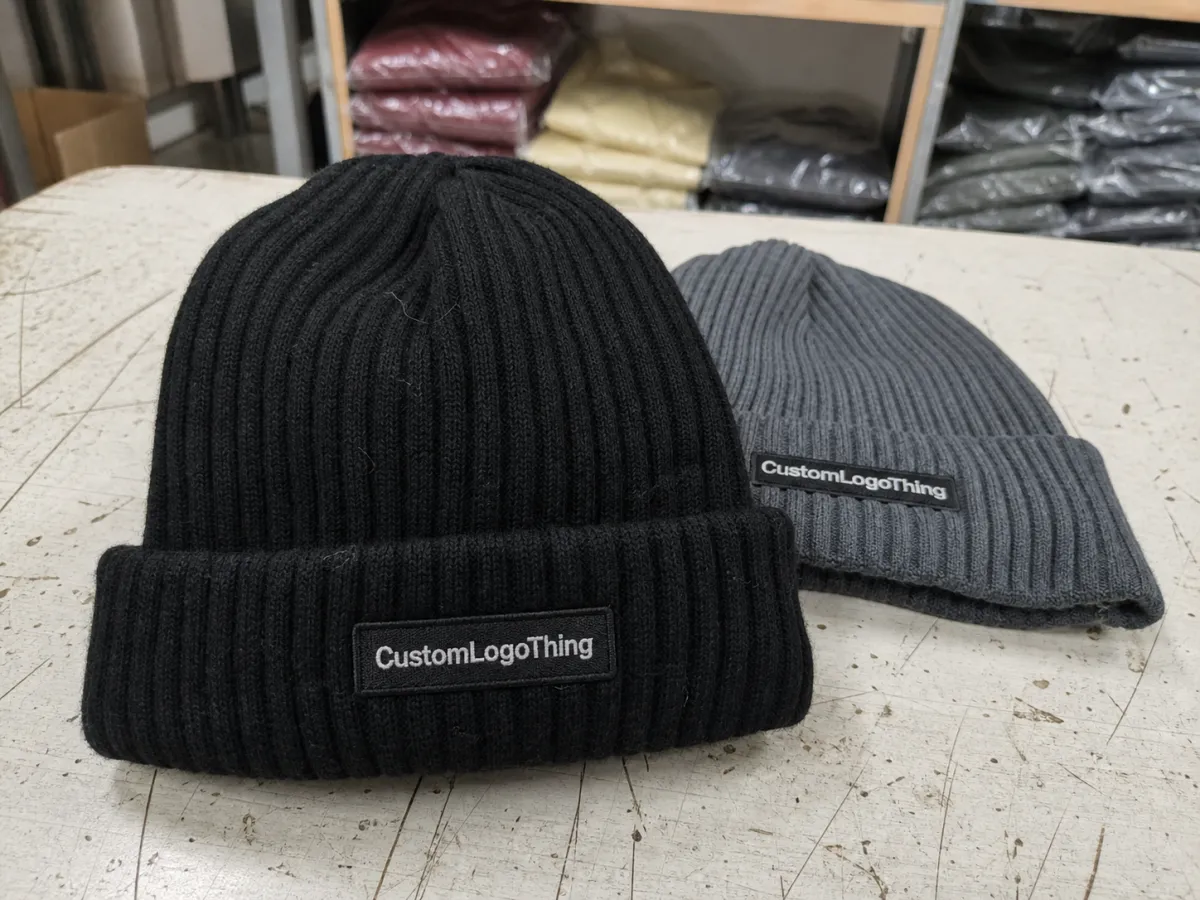
Ribbed Winter Beanies do not all start from the same price base. A tighter rib, a heavier yarn, and a more structured cuff all add material and labor. Even small changes in construction can shift the cost because the production line has to spend more time knitting, shaping, inspecting, and packing each piece. In a beauty ribbed winter beanies Unit Cost Review, those are the variables that actually move the number.
Build quality matters more than many buyers expect. A 1x1 rib usually feels snugger and rebounds well after stretch. A 2x2 rib often looks fuller and can feel a little more substantial on the head. Neither is automatically better. The choice depends on the intended use. A promotional cap that needs broad appeal may do well with a forgiving fit, while a retail piece may benefit from a denser structure that holds its profile in display and in use.
Color count is only one slice of the pricing puzzle. A one-color logo can still be expensive if it needs dense embroidery, a knit-in design, or a stitched patch that has to be positioned exactly. A two- or three-color design can be economical if it uses a simple woven label or a small embroidery hit. The key is the production path, not the artwork count in isolation.
Think of the quote in layers. Material cost is the base. Construction adds shape, warmth, and machine time. Decoration adds setup and finishing. Packing adds another small but real cost. On a small run, those layers stack up fast. On a larger run, they spread out. That is why the same beanie can look expensive at 100 units and much more reasonable at 1,000.
A clean rib structure and a stable cuff usually create more perceived value than a small discount on a weak build.
For buyers comparing several suppliers, the most useful request is a spec-driven quote. Define the yarn, rib pattern, cuff depth, decoration method, and packaging format before asking for pricing. That gives the supplier a real basis for calculation and reduces the chance that one quote is low only because it excludes a detail that will appear later as an add-on.
Yarn Weight, Rib Construction, and Fit Details
Yarn choice is one of the clearest levers in winter beanie pricing. Standard acrylic remains common because it is predictable, warm enough for most campaigns, and usually available in a broad color range. Blended yarns can improve softness, reduce itch, or improve the hand feel, but they may also raise the unit price, especially if the blend requires tighter sourcing control or more limited dye lots. Heavier yarns add body and warmth, but they can also change stretch and affect how the cuff sits when folded.
Fit is not a cosmetic issue. It changes whether people keep wearing the cap. A beanie that is too loose can look sloppy after the first wear. One that is too tight gets left in a drawer. For teamwear, retail, and promotional winter programs, that difference affects repeat exposure, which is the whole point of the item in the first place.
Rib count changes the feel of the hat and the way the surface takes branding. A 1x1 rib tends to show narrower vertical lines and often recovers well after stretching. A 2x2 rib can look broader and more textured, which may read as more substantial in a shelf presentation. Both can work. The choice depends on whether the buyer wants a sharper, body-hugging fit or a fuller visual profile.
Before placing a bulk order, verify these points:
- Cuff depth: a deeper cuff gives more room for decoration and often improves the premium look.
- Crown finish: a neat crown reads cleaner than a bulky top seam, especially on retail programs.
- Seam comfort: internal seams should not feel scratchy or overly thick against the forehead.
- Size target: adult, youth, and universal fits change the measurement spec and can alter tension.
- Stretch recovery: ask how much the cap rebounds after being expanded, because weak recovery shows up fast in wear.
Swatches and pre-production samples are useful when the hand feel matters. A product can look correct in photos and still feel too thin, too loose, or too stiff once it is in hand. That is one reason a careful unit cost review is more valuable than a narrow price comparison. It connects the buying decision to the actual end use.
If the beanies are intended for retail shelves, folding, tagging, and packing matter more than buyers sometimes expect. A cap that holds its shape in a polybag is easier to present and easier for store staff to handle. A softer cap can still be a good value, but it may need better packaging and clearer merchandising support to look right on arrival.
Decoration Options That Change the Final Quote
Decoration often explains the largest jump between one quote and another. Buyers see a small logo and assume it is simple. The production side sees setup time, thread use, placement control, and the risk of rework if the first proof is not approved. On a ribbed beanie, the decoration method should fit the structure of the hat, not fight it.
Embroidery is usually the easiest place to start. It works well for smaller runs, looks crisp on a cuff or front panel, and gives a recognizable branded finish. The main variables are stitch density, logo size, and placement. A dense fill stitch or a large design increases thread consumption and machine time, which can push both setup and per-piece pricing upward.
Woven labels are often the most stable choice from a pricing standpoint. They keep the design clean, work across many product tiers, and rarely create major complications in production. Knit-in logos look more integrated because the artwork becomes part of the cap itself, but they require more planning, tighter approval control, and a clearer understanding of color matching. Patches add texture and can make the piece feel more retail-focused, though they introduce extra sewing or application work.
The tradeoffs are easy to see in a quote, once you know what to look for.
| Decoration method | Typical setup charges | Typical cost per piece at 500 units | Best use case | Buyer note |
|---|---|---|---|---|
| Simple embroidery | $35-$75 | $0.45-$1.10 | Short runs, clear branding | Good balance of speed and appearance |
| Woven label | $25-$60 | $0.15-$0.35 | Low-profile logo work | Often the most cost-stable option |
| Knit-in logo | $80-$180 tooling fees | $0.30-$0.90 | Retail-minded custom programs | Needs more planning, but feels integrated |
| Patch application | $40-$90 | $0.35-$0.85 | Premium finish, textured branding | Check edge quality and placement carefully |
What stands out in that comparison is not just the price range. It is the relationship between setup and repeat cost. Embroidery can be efficient for a small branded run, but the design has to stay within the stitch limits of the knit surface. Woven labels can be less dramatic visually, yet they are often the easiest path when the buyer wants consistency and low risk. Knit-in art creates the most unified look, but it is less forgiving if the artwork changes late in the process.
Decoration simplicity also shortens proofing. Fewer colors, fewer placement decisions, and fewer special instructions mean fewer revisions. That reduces the chance of schedule drift, which matters more than most buyers admit. A product can be priced well and still fail commercially if the delivery misses the launch window.
Pricing, MOQ, and Unit Cost Breakpoints
Quantity is the main reason unit cost falls. Setup, sampling, and decoration work are fixed costs at the beginning, so the more pieces in the run, the smaller those charges look on each individual beanie. That is why the best quote comparison uses more than one quantity breakpoint. One number tells only part of the story.
For a stock-style ribbed winter beanie with a straightforward decoration, a small run may land around $2.80-$4.25 per unit, depending on yarn weight, finishing, and packing. At roughly 500 units, many buyers see pricing closer to $2.10-$3.40 per unit. At 1,000 units or more, the price can drop again if the spec stays stable and the decoration is not overly complex. Fully custom knit programs, especially those with specialty labeling, unique yarn combinations, or premium finishing, can move above those ranges because of additional tooling fees and labor time.
Minimum order quantity depends on how custom the cap is. A stock-based beanie with a single logo application can usually support a lower MOQ than a fully custom knit cap with special trim or multi-yarn construction. If a supplier offers a very low minimum, make sure the quote is still honest about sampling, labeling, and freight. A quote can look attractive until the missing charges are added back in.
Ask for pricing in clear line items:
- Sample charge: physical sample or digital proof fee.
- Unit price: production cost before freight.
- Setup charges: embroidery, print, or label preparation.
- Tooling fees: custom knit or special program prep if needed.
- Freight: domestic or imported shipping to the receiving point.
- Revision limits: how many changes are included before extra billing applies.
A useful buying habit is to compare at least three breaks, such as 100, 250, 500, and 1,000 units. That shows the real bulk pricing curve. In some programs, moving from 250 to 500 pieces pays back quickly because the unit price drops enough to offset the extra inventory. In others, the savings are too small, and the lower MOQ is the better call. The point is to see the curve before deciding, not after.
Also compare the packing spec. Polybags, barcode stickers, size stickers, hang tags, and carton marks all add small costs that matter once the order scales. If one supplier quotes only the garment and another includes the full pack-out, those are not comparable prices. Landed cost is the figure that matters.
Order Process, Lead Time, and Production Steps
A practical order process usually starts with a quote request, then moves into artwork review, proof approval, sampling if needed, bulk production, inspection, and shipment. That sounds straightforward. The delays usually happen in the middle, when the buyer is still deciding on decoration placement, yarn color, or pack-out details. The faster those decisions are locked, the easier it is to hold the schedule.
The production flow for a ribbed winter beanie is not complex, but it does need discipline. Yarn is prepared first. The cap is then knit to spec. Decoration is applied either during knitting or after the body is made, depending on the chosen method. After that, the piece is finished, inspected, packed, and boxed. Every step affects the delivery date.
If the decoration is knit-in, the front end usually takes longer because the program needs clear charting and more careful approval. If the decoration is embroidery, woven label, or patch-based, the knitting stage may move faster, but the later finishing work still has to be controlled. The apparent simplicity of the decoration does not remove the need for quality checks.
Lead time depends on quantity, complexity, and the time spent waiting for approvals. A simple decorated beanie may ship in roughly 12-15 business days after proof approval once the order is queued and materials are ready. More custom knit work, special packaging, or multiple color approvals can stretch that to 3-5 weeks. Seasonality can extend it further. Winter orders often compete for the same machine time, so a late decision can turn into a missed shelf date.
Packaging should be discussed early if the goods are going into retail channels. If the order includes printed inserts, hang tags, or cartons, the buyer should confirm paper stock, carton strength, and whether transport testing is part of the production plan. For packaging claims, some teams ask for recognized guidance such as ISTA methods. If paper sourcing matters, asking for FSC-certified paper stock is a sensible way to keep the materials story cleaner without changing the cap itself.
One blunt truth: faster approvals save more time than rush handling. If the buyer keeps changing measurements, colors, or label placement after the proof stage begins, the schedule slips. Suppliers can only build the order once the spec is stable.
What Reliable Supply Looks Like
Reorders happen when the first run feels predictable. The rib texture matches the sample, the cuff depth stays consistent, the logo lands in the same place, and the fit does not drift from batch to batch. Buyers notice those small consistencies because they affect how the product is displayed, worn, and replenished.
Consistency matters even more in seasonal programs. A winter line often has a short selling window. If the first batch is good and the second batch looks slightly different, the buyer is forced to manage a mismatch across the same campaign. That can be a minor annoyance or a real merchandising problem, depending on the channel.
Clear communication matters too. Quotes that spell out sample cost, unit price, freight, and revision limits are easier to trust. Production updates that flag a problem early are more useful than polished language after the shipment is already late. For headwear buyers, the most valuable supplier is usually the one that keeps the sample, the bulk run, and the reorder within the same quality band.
That is where a disciplined beauty Ribbed Winter Beanies unit cost review pays off beyond the first order. A buyer who starts with a clean spec sheet and a realistic benchmark can reorder with less friction because the supplier already knows which yarn, decoration method, and packaging format worked. The hidden savings are real: fewer revisions, fewer rush fees, less rework, and fewer emergency freight decisions.
The lowest figure on page one is not always the best value. A more reliable quote is the one that holds together through sampling, bulk production, inspection, and delivery. That is what turns a seasonal product into a repeatable program.
What to Send for a Fast, Accurate Quote
If you want a quote that is actually useful, send the full buying picture. Partial specifications often produce a low number that has to be corrected later, and that is usually where frustration begins. The more complete the request, the easier it is to return a line-item quote that reflects the real product.
Include these details in the first email or form submission:
- Quantity: total pieces and any likely reorder volume.
- Delivery destination: city, warehouse, or receiving dock.
- In-hand date: the actual deadline, not just the order date.
- Logo file: vector art is best for embroidery, labels, and knit planning.
- Decoration method: embroidery, woven label, patch, or knit-in art.
- Color requirements: body color, cuff color, and logo thread match.
- Packaging needs: polybagging, hang tags, barcode labels, or carton marks.
If the cap is going into retail, say so early. If it is for school, team, employee, or giveaway use, say that too. Those use cases change the packing and labeling details. A simple promo beanie does not need the same pack-out as a product going to store shelves, and the cost difference can be small on paper but meaningful in the warehouse.
It also helps to ask for a quote that separates sample cost, unit cost, freight, and any revision limits. Then compare suppliers on the same basis. One quote may appear cheaper because freight is left out. Another may look higher because the setup is shown honestly. The clean comparison is the one that reflects the real landed cost.
For a focused beauty ribbed winter beanies unit cost review, send the full spec, request more than one quantity break, and ask for the quote to show the costs tied to each decoration path. That gives you a realistic picture of what the beanie can do, what it should cost, and which option is most likely to stay stable in production.
What changes beauty ribbed winter beanies unit cost the most?
Quantity is usually the biggest driver because setup and sampling are spread across more pieces as the run gets larger. Decoration method, yarn weight, rib structure, and packing details also move the price quickly. A simpler spec with fewer production steps usually gives the strongest unit cost.
What MOQ should I expect for custom ribbed winter beanies?
MOQ depends on whether the beanie is stock-based, partially customized, or fully custom knit. Simple embroidery or label work often supports lower minimums than knit-in artwork or specialty trims. Ask for pricing at several quantities so you can see where the cost curve starts to flatten.
Which decoration method is most cost-effective for ribbed beanies?
A clean woven label or simple embroidery is often the best balance of price and presentation. Knit-in graphics can look more integrated, but they usually add setup complexity. The right choice depends on the brand standard, the run size, and how much proofing time you have.
How long does sampling and bulk production usually take?
A digital proof is usually quicker than a physical sample, while bulk lead time depends on order size and decoration complexity. Simple decorated beanies may ship in about 12-15 business days after proof approval, while more custom programs can take 3-5 weeks or longer in peak season. Build approval time into the schedule early.
What should I include when requesting a quote for beauty ribbed winter beanies?
Send quantity, delivery date, destination, logo artwork, decoration method, color requirements, and packaging needs. Include the in-hand deadline so the supplier can judge whether the schedule is realistic. A complete spec sheet leads to a more accurate line-item quote and a cleaner buying decision.


