Beauty slider lock bags bulk order planning starts with one simple truth: a low-cost bag can turn expensive fast if the slider binds, the film clouds, or the size is wrong for the fill. In beauty packaging, that usually shows up as wasted labor, repacks, shelf damage, or customer complaints that cost far more than the bag itself. The best buying decisions usually come from matching the closure, the film, and the dimensions to the actual product mix, not to a generic retail assumption.
Beauty slider lock bags bulk order planning starts with fit
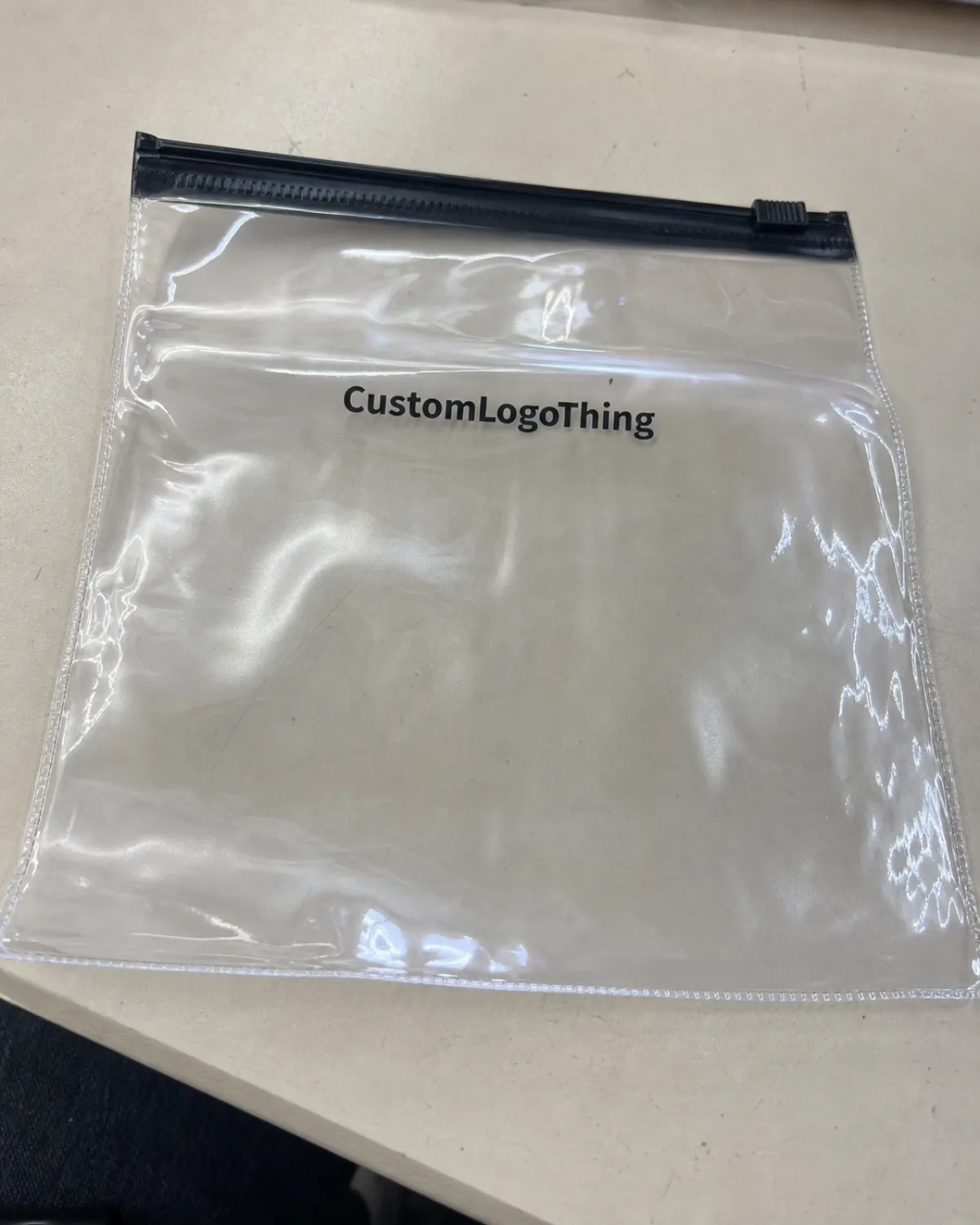
From a packaging buyer's point of view, slider bags make sense because they are easy to open, easy to close, and familiar to end users who want to see the product before they buy it. That matters for small beauty items, sample sets, travel kits, cotton accessories, hair clips, and multi-piece bundles, where presentation is part of the value. A clear resealable bag can protect the contents and still keep the line card, shade, or accessory visible on shelf.
The part many teams miss is that beauty slider lock bags Bulk Order Planning is not really a search for the cheapest unit price. It is a search for the lowest total cost once you factor in spoilage, slower packing, damaged returns, and the time it takes to fix a bad fit. Honestly, I think buyers get the best result when they treat the bag as part of the product system, not just as a container.
A low unit price means little if the slider catches on the fill line or the bag has to be reworked by hand. That is where the real cost shows up.
That is why the first order of business is to define the product mix. Is the bag holding one compact item, a mixed sample set, or a kit with irregular shapes and sharp corners? The answer changes the film gauge, the closure feel, the panel clarity, and even the pack-out method. Once those details are clear, the rest of beauty slider lock bags Bulk Order Planning becomes a straightforward specification exercise instead of a guessing game.
Material and closure choices that change performance
Most beauty slider bags are built from LDPE or LLDPE, and the difference matters more than people think. LDPE usually gives a softer feel and good clarity, while LLDPE tends to offer better puncture resistance and a bit more toughness at similar thicknesses. For lighter sample packs, a thinner film can be perfectly adequate. For heavier travel kits or items with rigid caps, a stronger gauge often saves money because it reduces tears and returns.
In practice, many buyers end up in the 2.5 mil to 4 mil range for standard beauty use, with 4 mil to 6 mil worth considering when the fill is dense, angular, or likely to be opened and closed many times. That extra thickness is not free, of course, but it can improve slider track stability and reduce scuffing during shipping. If the bag is being used for a premium kit, a thicker film often makes the presentation feel more substantial in the hand.
The slider itself deserves attention too. A good closure should engage smoothly, maintain a consistent seal line, and resist accidental opening in transit. Poor slider alignment is one of those problems that sounds small on paper and becomes a warehouse headache later. If a bag is meant to be reopened by the end customer, test the closure feel more than once; what matters is not just that it closes, but that it closes the same way every time.
For finish, clear film works when product visibility matters most, while frosted film gives a softer, more cosmetic look that can help a private-label program feel more deliberate. Some buyers add a print area for branding, shade names, batch notes, or compliance copy. That can be a smart move, especially for skincare bundles, hair accessory sets, sample cards, and promotional kits where the outer package needs to do more than just hold the contents.
Dimensions, fill behavior, and print-ready specifications
Size is one of the most expensive details to get wrong. Always confirm the finished width, length, gusset depth if there is one, and the usable opening against the actual product dimensions, not the outer retail carton. A compact lip balm, for example, may fit in a bag that looks generous on a drawing, but the same bag may become frustrating once you add a folded insert, a rigid cap, or a small accessory bundle. Measure the widest point, then allow enough clearance for clean loading without stressing the zipper track.
Fill behavior matters because beauty items are rarely uniform. A mixed kit can include soft sachets, rigid bottles, sample cards, and accessories with sharp corners all in the same pack. If the bag is too tight, the slider gets forced while closing and the film can wrinkle or whiten at the edges. If it is too loose, the contents shift around, which can look sloppy and sometimes break the visual rhythm a retailer wants on the shelf.
When you build the spec sheet, include the details that a production team actually uses:
- Film thickness in mils or microns.
- Seal width and reinforced edge requirements.
- Slider type and whether the closure needs a smooth or firm engagement.
- Tolerance range for finished dimensions.
- Hang holes, tear notches, or retail display features.
- Artwork placement, barcode space, and any clear panel requirements.
That last point is easy to overlook. If the bag needs to work for merchandising and logistics, the panel layout should leave room for barcode scans, SKU labels, or a short compliance message without fighting the brand artwork. From a buyer's point of view, the cleanest custom bag is the one that does not force a warehouse team to improvise.
Pricing, MOQ, and unit cost at bulk volume
Pricing becomes much easier to evaluate once you separate the variables. The main drivers are size, film gauge, printed or unprinted construction, closure type, and packing configuration. A plain clear bag in a standard size will usually price lower than a frosted bag or a printed retail pack, and a heavy-gauge slider lock bag will usually cost more than a lighter one. That is normal. What matters is whether the added cost improves presentation, durability, or packing speed enough to justify it.
For bulk programs, a realistic quote comparison might look like this:
| Option | Typical MOQ | Indicative unit cost at 5,000 pcs | Best fit |
|---|---|---|---|
| Plain clear LDPE slider bag | 3,000-5,000 | $0.10-$0.18 | Sample sets, accessories, basic storage |
| Frosted finish slider bag | 5,000 | $0.13-$0.22 | Premium presentation, softer shelf look |
| One-color printed bag | 5,000-10,000 | $0.18-$0.32 | Branded kits, retail launches, promos |
| Heavy-gauge reinforced bag | 5,000 | $0.16-$0.28 | Denser fills, repeated opening, travel use |
Those numbers move with size, artwork coverage, and order volume, so they are best used as planning ranges rather than promises. Larger runs usually lower the unit cost once setup is spread across more pieces, but a quote should always be compared on the same spec sheet. Otherwise, one vendor is quoting a thicker film, another is quoting a lighter gauge, and the "lower" price is not really lower at all.
Also ask about the hidden costs that affect landed cost: freight, palletization, special carton labels, inner bagging, and inspection requirements. A quote that looks strong on paper can become less attractive once you add export cartons or rush shipping. If you are building a sourcing program, review the options through our Wholesale Programs page and keep every supplier on the same format so the comparison stays fair.
Comparing quotes the smart way
The easiest way to protect margin is to compare apples to apples. Make sure every supplier is pricing the same bag size, same film gauge, same slider style, same print coverage, and the same packing count per carton. If one quote includes a master sample, a proof, and export packaging while another does not, the headline number can be misleading. That is where a written spec sheet saves real money.
Process and timeline: sample approval to shipment
The normal workflow is simple, but each step matters. It starts with a spec review and quote, then moves to a sample or proof, pre-production confirmation, the full run, inspection, packing, and shipment. If the product is custom printed, artwork review can add another round of checks. If the dimensions are unusual or the closure is a special style, sample approval becomes even more important because it confirms both fit and finish before the larger run is released.
As a working range, many plain or lightly customized runs move in about 12 to 15 business days after sample approval, while printed jobs often need 15 to 25 business days depending on artwork, queue time, and quantity. Freight adds its own clock, especially if the bags are crossing borders or need to arrive by a fixed launch date. If the timeline is tight, complete information is your best tool: finished dimensions, target quantity, final artwork files, and fast feedback on proofs.
Delays usually come from avoidable changes. A buyer approves one size, then changes the fill a week later. Or the artwork is sent before the barcode is final, so the print file has to be adjusted after proofing. That is why the smoothest programs keep the first approval round as final as possible. A good supplier will ask questions early, because that is usually cheaper than fixing a problem after production starts.
For transit testing and shipment planning, many teams reference ISTA methods for parcel and distribution testing, especially when the bags will travel inside master cartons with other beauty components. For broader packaging structure and industry language, packaging.org is a useful reference point. Standards do not guarantee success, but they do give buyers a more disciplined way to discuss drop risk, carton strength, and shipping abuse before an order is locked.
If you need support on reorder terms, product fit questions, or packaging program structure, the FAQ page is a good place to start before you request the next quote.
Quality checks that protect repeat beauty orders
The strongest repeat programs are built on consistency. That means checking seal integrity, slider alignment, film thickness consistency, print registration, and bag-to-bag size accuracy against an approved master sample. A small variation might not look serious on a drawing, but in production it can change how the bag loads, how the closure feels, and how the package presents in the hand. For larger beauty accounts, those differences show up fast when one shipment feels "right" and the next one feels off.
Approved samples matter because they give everyone one physical reference. Color, clarity, finish, and closure performance should all match that master sample unless the buyer signs off on a change. In practice, a stable program often holds a dimensional tolerance around plus or minus 1 to 2 mm on smaller bags, though the exact tolerance depends on the size and construction. Ask for the factory's written tolerance before you approve anything. Do not assume every supplier works to the same standard.
Packing also affects quality. Carton counts should be easy to verify, inner bagging should protect the film from scuffs, and moisture control matters more than some buyers expect, especially for long transit routes or humid storage areas. Clear carton labels help warehouse teams receive the right SKU without opening every box. A good supplier documents these details early and communicates any change before it becomes inventory trouble.
If your beauty program includes paper cartons, inserts, or display trays alongside the slider bags, FSC sourcing on the paper side can support a cleaner procurement story. If the bags are part of a larger kit, the whole package should be reviewed as one system, not as isolated pieces that each pass inspection on their own.
Next steps for a faster quote and cleaner reorder
If you want a clean quote, send the essentials first: product dimensions, target quantity, film preference, print needs, and whether the order is for retail, kits, or storage use. Add photos if the contents are irregular, fragile, or mixed in size. That saves time for both sides because the supplier can estimate fit and loading behavior before anyone starts adjusting the spec.
For a first run, ask for a written spec sheet and a sample. That lets you confirm the closure feel, the appearance, and the real-world loading process before you commit to a larger order. If the bag is going to be re-ordered, lock in the carton count, pallet needs, freight terms, and an expected reorder window so the next purchase moves faster. This is the part of beauty slider lock bags Bulk Order Planning that buyers appreciate later, because a clean record today saves a lot of back-and-forth six months from now.
Once the first order is approved, keep the file set and the master sample together. That way the next quote can be tied to a known spec instead of rebuilt from memory. If you are buying through a wholesale channel, the right process is straightforward: define the spec, confirm the sample, compare landed cost, and place the order with confidence. That is how beauty slider lock Bags Bulk Order Planning stays controlled, even when the product mix changes or the calendar gets tight.
What MOQ should I expect for beauty slider lock bags bulk orders?
MOQ usually depends on size, film gauge, and whether the bag is printed or plain. Custom dimensions and special finishes typically need a higher minimum than stock formats. Ask for MOQ by spec sheet so you can compare true buying options, not just the headline number.
How do I choose the right thickness for beauty slider lock bags?
Match thickness to the product weight, corner shape, and how often the bag will be opened and closed. Heavier kits and sharper items usually need a stronger film to reduce punctures and seal stress. If clarity and flexibility matter most, test a few gauges before placing a full bulk order.
Can these bags be printed for beauty branding?
Yes, many orders use one-color or multi-color printing on the front or back panel. Confirm the usable print area, required artwork format, and whether the bag needs a clear viewing window. Ask for a proof so logo position, barcode space, and copy placement are approved before production.
What lead time should I plan for after sample approval?
Lead time usually depends on order size, material availability, and print complexity. Simple unprinted runs move faster than custom printed jobs with artwork revision cycles. Build in extra time for freight if the bags need to arrive by a fixed launch or replenishment date.
What information do I need for an accurate quote?
Provide finished dimensions, target quantity, film preference, closure style, and printing requirements. Share product photos or a sample pack if the items are irregular, fragile, or mixed in size. Include destination, shipping method, and carton or pallet preferences so landed cost is quoted correctly.

