For a crowded booth, a beanie has to do more than carry a logo. It needs to wear well for long shifts, fold flat inside a shipment, and still look deliberate when it comes out of the box under harsh convention lighting. That is why trade show Jacquard Knit Beanies MOQ planning deserves attention early: quantity, knit complexity, yarn choice, and finish details shape the quote long before production starts.
Jacquard construction is attractive because the artwork becomes part of the fabric instead of sitting on top of it. That usually gives the hat a cleaner, more integrated appearance than a simple print or a last-minute patch. For trade show teams, dealer programs, and seasonal giveaway campaigns, that distinction matters because the item is often judged in motion, not on a polished product page.
There is also a practical reason knit headwear keeps showing up in event kits. A beanie packs efficiently, holds its shape better than many soft accessories, and can be distributed in bulk without much handling damage. Compared with promotional items that depend on fragile finishes or oversized packaging, a knit cap is economical to move and easy to standardize across several events.
Why Knit Headwear Wins at Busy Trade Booths
Trade show headwear gets handled, folded, stacked, shipped, and worn by people who may not know the brand at all. A knitted beanie handles that pressure better than many apparel add-ons because the silhouette is simple and the material has natural stretch. That means fewer shape problems during setup and a cleaner presentation when staff are standing under bright hall lights.
The other advantage is how little space it takes. A flat-packed beanie uses far less carton volume than bulkier apparel, which can matter when orders are moving from a warehouse to a booth, then to a secondary event, then to storage. In practice, that lower shipping footprint is one of the reasons knit headwear often gets approved faster than more complicated branded merchandise.
Jacquard adds value because the design is built into the fabric structure. The branding feels more permanent and less applied, which can make a simple logo read as more premium. That is not the same as saying every design should be jacquard. It does mean the decoration method should match the role of the item. A staff uniform piece usually needs clearer branding and better fit. A giveaway item may need a simpler graphic and a lower unit cost.
There is a comparison buyers sometimes overlook: a beanie with a woven-in design may cost more than a plain knit cap, but it can still compare favorably with decorated apparel once setup, decoration, and packaging are included. The price difference narrows further when the same design is reused for multiple shows or reordered in the next season. Repetition rewards a stable spec.
What Buyers Need to Know About the Beanie Build
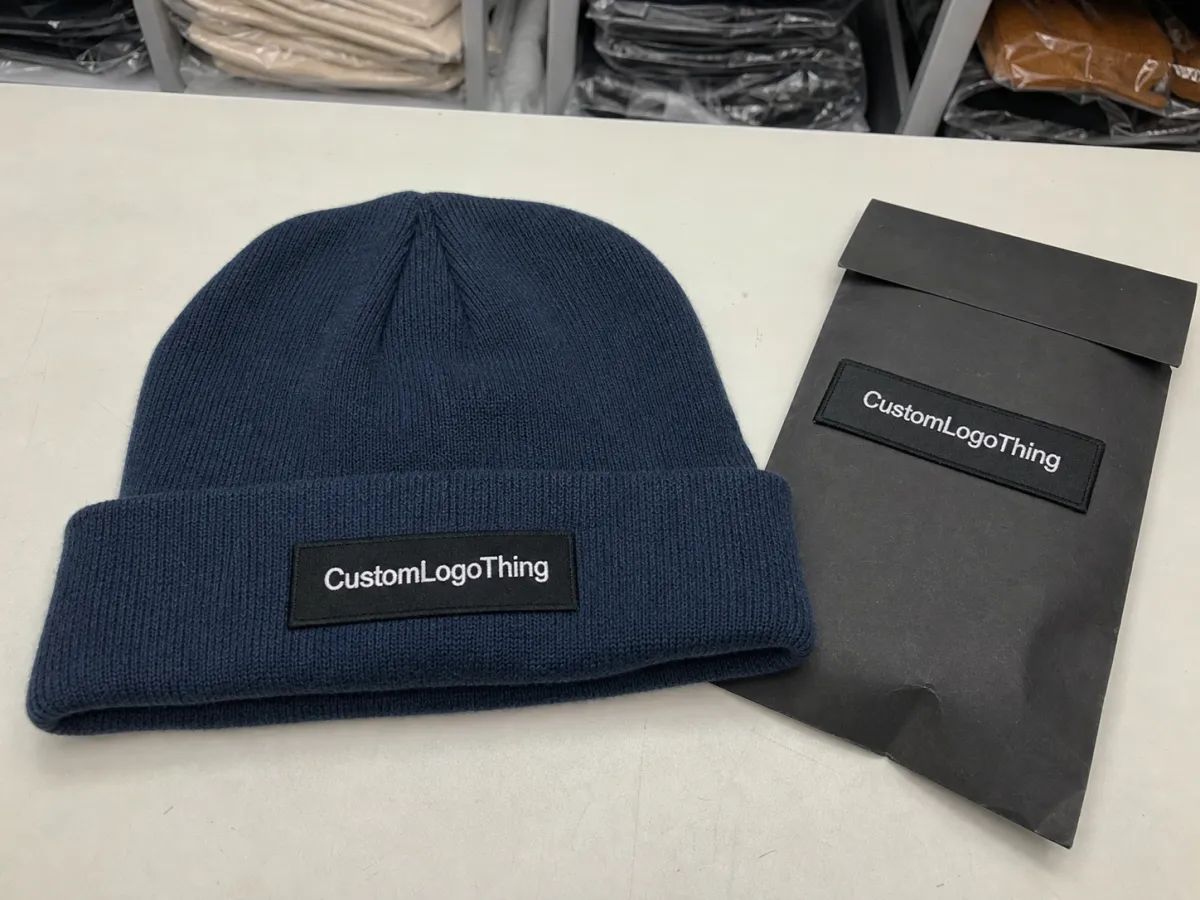
Buyers usually start with shape. Cuffed beanies give a stable branding zone and are easier to balance visually. They also make room for a woven label, a small patch, or a cleaner front placement if the jacquard design needs to stay restrained. Slouch styles feel more casual, but they give less predictable surface area, so artwork needs to be simple and the brand needs to accept a softer silhouette.
Double-layer knit bodies are common for trade show season because they provide more warmth and hold structure better than thin single-layer pieces. That extra structure helps the beanie look consistent across a group of wearers with different head sizes. The tradeoff is cost: more yarn, more knitting time, and often a slightly longer production window. Those are normal consequences of a denser build, not warning signs.
Fit deserves more attention than many first-time buyers give it. One-size headwear has to accommodate a broad range of people without riding up, squeezing too tightly, or hanging loose at the crown. If the team will wear the beanies for eight to ten hours, comfort becomes a business issue, not a softness preference. A scratchy yarn or shallow crown turns into a complaint by mid-afternoon.
Branding placement is another decision that looks simple until the design is translated into stitches. A jacquard logo can wrap around the body, sit on the cuff, or repeat as a pattern, but not every graphic scales well to knit construction. Thin lines, tiny type, and delicate outlines often need simplification. A woven label or interior tag can fill in the brand story without crowding the main face of the hat.
For many buyers, the choice comes down to what needs to be seen from a distance. A jacquard pattern is best when the beanie itself should carry the identity. Embroidery works when the logo is compact and the goal is a small raised mark. A patch is the right answer when the artwork has too much detail for knitting. Those methods are not interchangeable; each solves a different problem.
Yarn, Gauge, Fit, and Finish Specifications
Most custom knit headwear starts with acrylic yarn because it is predictable, widely available, and cost-effective across a range of colors. It also holds up well in event use, where the hat may be worn briefly, packed away, then worn again at another show. Wool blends can add warmth and a more natural hand feel, but they also raise the price and may change care expectations. Recycled blends can be a strong fit for brands that want a lower-impact story, although they can introduce extra variation in texture and shade.
The yarn choice affects more than the hand feel. It changes how sharply the pattern reads, how the colors contrast, and how much the beanie stretches after repeated wear. Softer yarns can feel better against the skin, but very soft fibers sometimes fuzz more quickly, especially if the cap is packed and unpacked repeatedly. For trade show work, the best material is usually the one that balances comfort, durability, and color clarity rather than maximizing any single trait.
Gauge and stitch density matter even more than most buyers expect. A tighter gauge sharpens the knit and makes logos look cleaner, but it adds knitting time and can raise the quote. A looser gauge lowers production effort and creates a softer feel, but fine text and narrow lines can lose definition. For event audiences, the right standard is usually readability from a few feet away, not perfect reproduction of every detail in the source file.
Color count is one of the clearest cost drivers. Two to four knit colors is often a practical sweet spot for jacquard work. Once a design pushes past that, programming gets more involved and the machine spends more time switching yarns. That can affect both price and minimum order quantity. It also makes color matching more sensitive, especially when the brand uses subtle shades that are hard to distinguish in yarn.
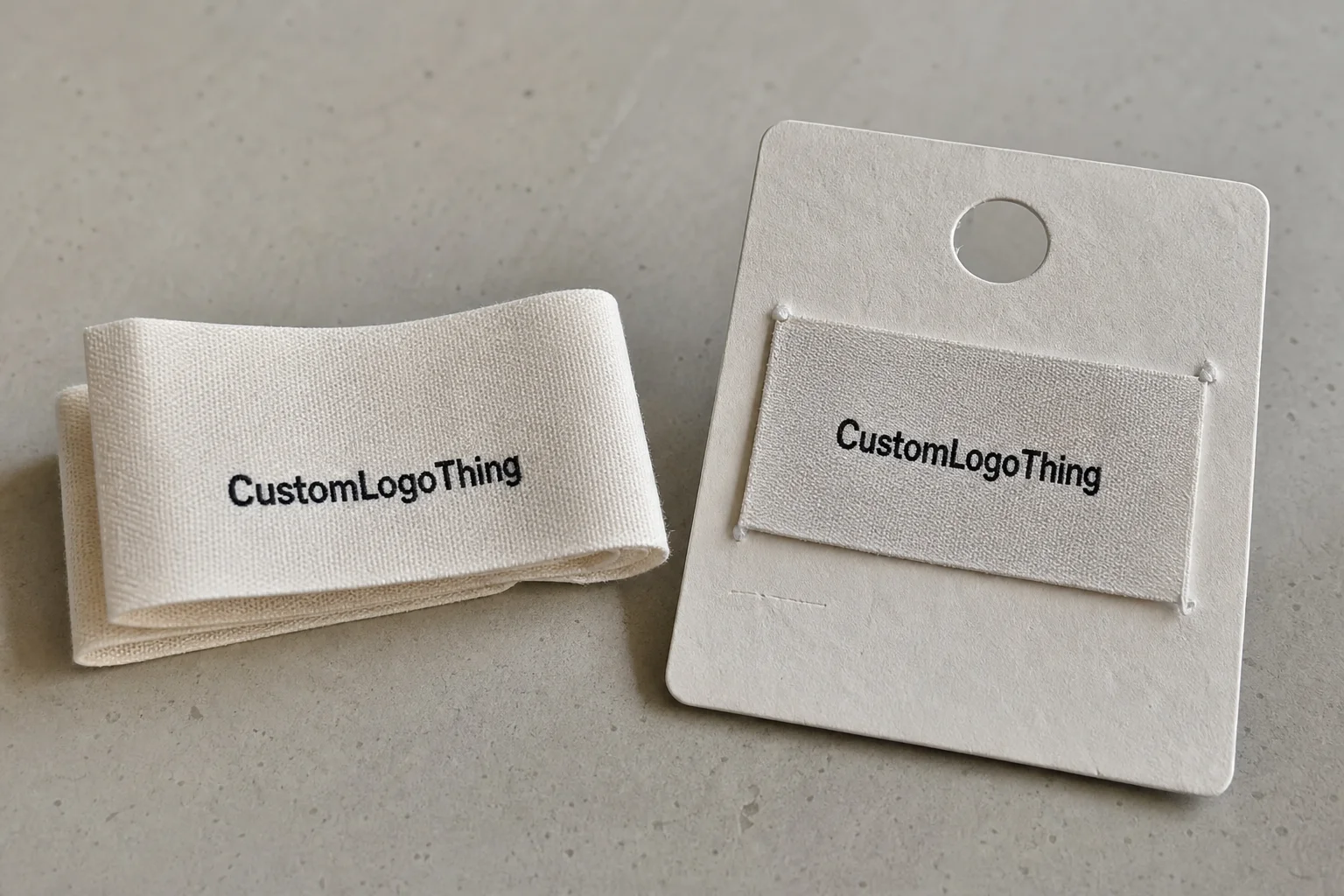
Finishing choices shape the final impression. A folded cuff adds structure and opens up more branding space. A woven label can make the beanie feel more retail-ready. A hang tag helps if the product will be displayed before distribution. Bulk packing is cheaper and faster for event giveaways, while individual polybags make sense when the order needs to be sorted across several destinations or stored for future campaigns.
There is also a shipping detail many buyers miss. Knit items are forgiving, but they still arrive better when the fold method and carton packing are planned with the destination in mind. If the order is moving through a long transit chain, the package should protect the shape without inflating shipping cost. For paper components, a supplier can reference FSC-certified sourcing; for transit planning, ISTA shipping guidance is a useful benchmark. Those standards do not change the knit, but they improve the delivery experience.
Trade Show Jacquard Knit Beanies MOQ, Pricing, and Quotes
The biggest pricing drivers are usually straightforward once the spec is written down: order quantity, color count, knit density, label or patch add-ons, and packaging. Add a custom hang tag or special fold, and the unit cost moves again. Add a dense all-over pattern, and the knitting time grows. That is why two beanies that look similar at a glance can quote very differently.
MOQ for Custom knit headwear is usually based on production efficiency rather than a marketing preference. A simple two-color design may be possible at a lower minimum because the machine setup is lighter. A detailed multi-color jacquard can require a higher run because programming and machine time are more involved. In practical terms, trade show Jacquard Knit Beanies MOQ is often quoted in dozens or low hundreds, with better pricing as the quantity rises.
| Beanie style | Typical MOQ feel | Approx. cost per piece | Best use case |
|---|---|---|---|
| Simple cuffed jacquard | Lower to moderate | $3.25-$5.25 at 300+ pcs | Staff wear, dealer kits, repeat events |
| Double-layer logo knit | Moderate | $4.25-$6.50 at 300+ pcs | Cold-weather shows, premium giveaways |
| Multi-color detailed jacquard | Higher | $5.50-$8.50 at 300+ pcs | Retail-style branding, bold visual programs |
| Beanie with label or patch add-on | Moderate | +$0.40-$1.20 per unit | Elevated presentation without redesigning the knit |
Those ranges are planning numbers, not promises. A smaller order often carries a higher unit price because setup costs are spread across fewer pieces. Some suppliers also add pattern-programming or tooling fees if the artwork needs extra knit development. Larger orders usually reduce unit cost, but only if the design stays controlled. If a quote appears unusually low, check whether shipping, sampling, labeling, or pack-out has been left out.
There is a reason experienced buyers keep a close eye on quote structure. A clean price sheet should show the real work: yarn selection, knit setup, sample approval, packaging, and freight. If those items are scattered or unclear, comparing suppliers becomes difficult. A cheaper line item can vanish once the hidden pieces are added back in. That is especially true for event orders, where timing carries real cost if the shipment misses the show date.
“The clearest quote is the one that shows the full path from yarn selection to packed cartons. Buyers make better decisions when setup, sampling, packaging, and shipping are all visible.”
Simple design choices often save more money than quantity alone. Limiting the color palette, standardizing the placement, and avoiding tiny type can reduce both machine time and approval back-and-forth. A repeat order benefits even more from consistency. If the second run uses the same measurements and the same approved knit map, the price and the finish usually stay closer to the first sample.
Production Steps, Proofing, and Turnaround Timing
The order path should feel orderly, not opaque. It usually starts with artwork review, then moves to knit specification, digital proofing, sample approval, bulk production, and final inspection. If the art file is clean and the buyer replies quickly, the process moves faster. If the design needs cleanup or the yarn colors require a second round of matching, the timeline stretches.
Proofing is where many knit jobs either stay on schedule or start slipping. A vector file makes it much easier to check line thickness, simplify fine details, and confirm where each yarn color belongs. A good proof should show placement, size, color mapping, and any label or packaging details that affect the final item. If the proof is too vague to approve confidently, it is better to pause there than discover the problem after the loom has already started.
Turnaround depends on order size, design complexity, yarn availability, and the production queue. Simple runs may be completed in a few weeks after approval, while more detailed knit work can take longer. Rush requests can sometimes be handled, but they depend on the schedule and on how much development the artwork still requires. Fast buyer feedback matters more than most people realize; every day spent waiting on a revised proof is a day lost before production even starts.
Once approval is locked, bulk production begins, then the beanies are finished, packed, and prepared for shipment to the event venue, warehouse, or distribution center. If the order is going directly to a show site, the shipping window matters almost as much as the manufacturing window. A delayed scan or a missed freight cutoff can create more trouble than a slightly longer production run. That is why a sensible schedule always leaves some margin before the event starts.
Quality control should not be treated as an afterthought. A solid program checks stitch consistency, yarn color alignment, cuff dimensions, and label placement before the cartons are sealed. If the order includes multiple colorways, a pre-pack inspection helps ensure each carton matches the approved breakdown. Small inconsistencies are easier to correct before shipment than after the boxes are already on a truck.
How Our Knit Program Supports Repeat Orders
A strong knit program should reduce uncertainty, not create more of it. That means turning artwork into knit-ready specs, pointing out where stitch limits affect readability, and explaining which yarn combinations will keep the logo clear. A supplier should be able to say, plainly, whether a concept belongs in jacquard, embroidery, or a label-based finish.
Communication matters as much as the technical side. Buyers need to know when a proof is revised, when a color match is confirmed, and when production actually begins. That is especially important for event programs because the delivery date is fixed. There is no benefit in a polished sample if nobody knows whether the bulk order is on schedule.
Repeat orders are where discipline shows up. If the same brand needs beanies for several trade shows, dealer meetings, or field campaigns, the second order should stay close to the approved original unless there is a good reason to change it. That keeps the look consistent across shows and protects the cost structure, since a stable spec is easier to reproduce than a constantly changing one.
The best suppliers are direct about tradeoffs. They do not promise every detail can knit cleanly at every price point. They explain which type of yarn improves comfort, which stitch density improves logo definition, and which changes will push the order into a higher MOQ bracket. That kind of honesty is usually more valuable than polished sales language because it reduces surprises later.
Documentation matters too. A written spec recap, approved art on file, and clear notes on yarn colors or packaging preferences make reorders much faster. If a program needs to repeat next season, those records often save more time than a new round of design explanation. They also reduce the risk of a subtle drift in size, color, or placement.
What to Send for a Fast, Accurate Quote
The fastest way to get a useful quote is to send the essentials in one message: the logo file, preferred beanie style, target quantity, color preferences, and the required delivery date. If the artwork is already vector, say so. If it is not, that is fine, but mention it early so the quoting team can estimate the cleanup work. A missing file type often delays the first proof more than the buyer expects.
Include anything that affects scope. Does the order need a cuff label, a woven patch, or a simple jacquard body only? Should the beanies arrive bulk packed, individually polybagged, or tagged for retail display? Is the shipment going to a warehouse, a distributor, or directly to a show location? Those details change setup time, packaging, and freight, so they should be part of the initial brief.
A short checklist is usually enough:
- Artwork file, ideally vector
- Target quantity and backup quantity
- Beanie style and cuff preference
- Brand colors and any approved yarn matches
- Label, tag, or patch requirements
- Pack-out method and ship-to address
- Sample request, if needed before bulk production
If the deadline is tight, say that plainly. If the event date is flexible, say that too. A clear schedule lets the supplier tell you whether the design is realistic or whether it should be simplified before quoting. That kind of directness keeps the order from drifting into last-minute damage control.
For most buyers, the real decision is not whether to get a beanie at all. It is whether the spec is tight enough that the beanie arrives on time, looks consistent across the run, and matches the brand in a way that still makes sense after the show is over. That is the point where trade show jacquard Knit Beanies MOQ stops being a pricing question and becomes a production question.
What is the usual MOQ for trade show jacquard knit beanies?
MOQ depends on knit complexity, color count, and whether the beanie includes extras like a cuff label or patch. Most custom orders land in dozens or low hundreds rather than single units. Larger quantities usually bring the unit cost down, especially when the knit design stays simple.
Can I match PMS colors on trade show jacquard knit beanies?
Knitted headwear uses yarn colors, not ink, so PMS references are translated to the nearest available yarn options. High-contrast combinations usually read best in jacquard construction because the logo edges stay clearer. A good supplier should flag color shifts early so the final pattern stays clean.
How long does production usually take after approval?
The timeline starts after artwork, spec, and sample approval are finalized. Bulk production often takes several weeks, depending on the factory queue and yarn availability. Rush requests may be possible, but they depend on the current schedule and the design details.
Do I need vector art for a knit beanie quote?
Vector art is strongly preferred because it speeds up stitch planning and logo cleanup. Simple art with fewer fine lines usually knits more clearly and is easier to approve. A supplier can often suggest ways to simplify the artwork without losing the brand look.
Are jacquard knit beanies better than embroidered beanies for events?
Jacquard knit builds the design into the fabric, which can feel more integrated and durable. Embroidery works well for some logos, but it does not create an all-over knit pattern. For trade show giveaways, jacquard is often the better fit when the brand wants a premium, cohesive look.