Trade Show Logo Patch Beanies Bulk Order Planning
Trade show Logo Patch Beanies bulk order planning works best when the goal is not just "giveaway," but something people will actually wear. That sounds obvious until a box of thin, itchy caps shows up two days before a show and everyone suddenly remembers how expensive bad choices are. A good beanie solves a real problem: cold venues, outdoor lines, early load-in, and the awkward hour before the floor opens when nobody wants to stand around freezing for brand exposure.
The useful part is also the part that gets kept. A clean patch on a decent knit cap can travel farther than most promo items because it is practical enough for staff and not so loud that attendees feel like walking billboards. If the logo is readable, the fit is forgiving, and the construction feels solid in hand, the item usually earns its place in the rotation instead of disappearing into a drawer.
That is why the planning has to go beyond decoration. You are choosing a body fabric, a patch method, a size, a color story, a packing format, and a delivery window that has to survive the actual event calendar. If the program has multiple buying categories, the Wholesale Programs page is a useful place to think through volume and presentation together.
Why trade show beanies work when every booth looks the same
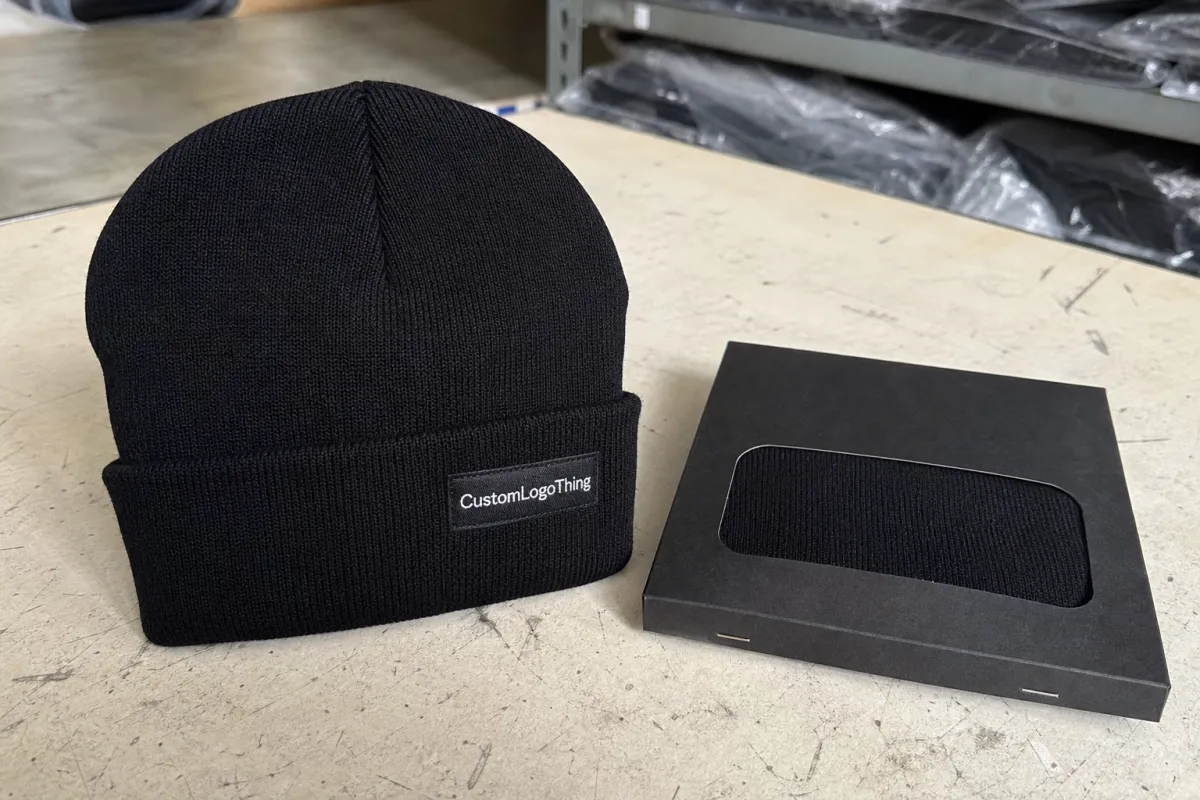
Trade shows are crowded, loud, and visually overworked. Everyone is trying to be memorable, which usually means more banners, more slogans, more stuff nobody asked for. A beanie is different because it gets worn. Once it leaves the booth, the logo patch keeps moving through hallways, taxis, hotel lobbies, and whatever cold morning comes next. That gives the brand more mileage than a flyer ever will.
The item also fits the mood of a winter event better than a lot of branded apparel. It feels earned, not forced. Attendees do not have to accept a sales pitch just to stay warm. Staff can wear the same cap and still look coordinated, which is useful when the booth needs to look intentional without feeling like a marching band.
Still, the product has to be right. Thin acrylic that stretches out fast, loose stitching, and a patch that looks slapped on instead of designed in will kill the effect. Buyers who treat the beanie like a small retail product, not a disposable promo, usually end up with better retention and fewer complaints. That means checking the hand feel, the cuff structure, and the logo placement before anyone approves production.
If it is warm, fits well, and the logo looks clean, people keep wearing it. If any one of those fails, the box becomes inventory.
Climate matters too. A cold convention center in January is one thing; a windy outdoor sponsor activation is another. Rib-knit cuffed beanies work well for most booth programs because they balance stretch and structure. Softer knits can feel more casual and retail-like, but they can also lose shape faster. The right choice depends on whether the giveaway is meant for staff, prospects, or a more premium event audience.
Patch styles and beanie builds that change the final look
The patch is doing most of the visual work, so the method matters. Woven patches are strong when the logo has small text or tight detail because the weave keeps lines cleaner than many buyers expect. Embroidered patches bring texture and depth, which works well for simple marks and brands that want a more traditional feel. Faux leather has a quieter, more retail look. PVC can deliver bold shapes and a dimensional finish, but it is less friendly to fine type. Debossed or embossed options usually land in the premium, understated lane.
Shape matters as much as method. A rectangle gives room for a wordmark. A circle or shield can look more deliberate when the logo is simple. Edge finish is not a tiny detail; it changes the whole impression. Clean merrowed edges, tidy stitched borders, or a smooth heat-sealed finish signal care. Ragged trim or a patch that lifts at the corners says the opposite.
Beanie construction changes the result just as much as the patch. A cuffed cap gives you a stable decoration zone and easier centering. An uncuffed or slouchy knit reads more casual, but it can make the logo feel less anchored. A tighter gauge usually gives a cleaner silhouette and helps the patch sit flat. A looser knit can feel softer, though it may stretch more over time and make the front panel look less precise.
Color choice needs an actual reason. High contrast makes the logo easier to read across a booth and across photos. Tonal combinations can look more elevated if the brand wants a quieter presentation. A black faux leather patch on charcoal knit feels more premium and subtle. A white woven patch on gray feels clearer in lower light. Neither is universally better. The choice should follow the event audience, the booth design, and how much visual noise the rest of the display already has.
Material details matter more than people admit. Acrylic is common because it keeps cost in check and holds shape well. Acrylic blends can feel softer or warmer depending on the mix. If a program is positioned as premium, buyers often ask for denser yarns, heavier gauge knits, or a more refined patch finish. That usually adds cost, but it also changes the way the item lands in hand. There is a difference between "free cap" and "small branded accessory," and attendees can feel it immediately.
Packaging can either support that impression or flatten it. Individual polybags help with cleanliness and distribution, especially when the beanies are going into separate staff kits. Inner packs reduce handling at receiving. Simple belly bands or hang tags can improve presentation if the item is meant to feel retail-adjacent. If paper components are used, FSC-certified paper is a reasonable ask for buyers who want the whole package to feel aligned. It does not fix a weak product, but it does keep the finishing details honest.
Fit, decoration placement, and spec details buyers should lock early
The spec sheet should answer the parts that usually create delays. Start with base size, stretch range, cuff height, patch dimensions, and exact front placement. If the patch sits too low, it disappears when the beanie is worn. If it sits too high, the cap can look top-heavy. Both mistakes are easy to avoid if someone checks the mockup carefully instead of approving it in a hurry.
Logo content needs the same discipline. Fine lines, tiny taglines, and dense detail rarely survive on a small patch without simplification. Sometimes the artwork has to be redrawn for stitch limits or patch size limits. That is not a production failure; that is normal. The supplier should say so early, not after the proof is already "ready." If the logo only exists as a JPG, it may still work, but vector artwork is far safer for clean editing and cleaner approvals.
Fit is not just a comfort issue. It changes how the decoration reads. A beanie that stretches too much across the forehead can distort the front panel and tilt the patch. A tighter knit holds shape better, but it can feel firmer. If the same product is going to booth staff, executives, and random attendees, the cap needs enough flexibility to work across head sizes without looking sloppy on the smallest or tightest fit.
Buyers should also decide how the beanies will be packed before production starts. Folded flat, banded, individually polybagged, or packed in bulk inner counts all affect receiving and distribution. If the order has to move through a warehouse before the event, carton count and carton weight matter more than most teams expect. A clean packing plan cuts down on handling errors and makes the handoff easier when the booth team is already juggling everything else.
Color matching deserves a practical approach. Knit yarn and patch materials do not behave like print on paper. Exact brand color matching is possible in many cases, but it is not magic. Dark yarns can read lighter under show lighting. Matte patches can shift visually next to glossy materials. If color accuracy is critical, the proof stage should show the safest contrast and a clear note on acceptable variation.
Cost, pricing, and MOQ: what changes the unit price
Bulk pricing is usually driven by five things: quantity, patch style, knit complexity, color count, and packing requirements. MOQ, or minimum order quantity, exists because setup costs do not disappear on small runs. The same art work, sampling, color approvals, and production prep still have to happen whether the order is 200 pieces or 2,000. Smaller runs pay more per unit because those fixed costs are spread across fewer caps.
For planning purposes, a simple acrylic cuffed beanie with a woven patch often lands around $5.50-$9.00 per unit at roughly 250 to 500 pieces. At 1,000 to 3,000 pieces, the same kind of build often moves closer to $3.50-$6.50 per unit. Add heavier yarn, a specialty patch, custom labeling, or premium packaging, and the price rises. Those are real-world ranges, not promises, but they are a more useful starting point than a vague "contact us for pricing" reply.
| Build option | Typical use | Price effect | Buyer note |
|---|---|---|---|
| Woven patch on cuffed acrylic beanie | Clear logo detail and broad giveaway use | Usually the most balanced | Good for readable text and consistent placement |
| Embroidered patch on rib-knit body | Textured, traditional brand look | Moderate, depending on stitch density | Works well for bold marks and simpler art |
| Faux leather patch on heavier knit | Premium, understated presentation | Usually a small premium | Best for simple logos and a quieter finish |
| PVC patch with custom color body | High-contrast, dimensional branding | Often the highest setup cost | Strong for bold graphics, less ideal for tiny text |
If the goal is to hold the budget down without making the item feel cheap, the easiest savings usually come from simplifying the body and the packaging. Keep the knit standard. Use one patch shape. Skip custom inserts unless they actually help the event team. Extra packaging can be useful, but it should earn its cost. A belly band looks nice for a retail display; it is less useful if the beanies are going straight into staff hands at check-in.
Buying more does lower the unit price, but it also increases inventory risk. If the event list is firm and the beanies will be used at multiple shows, a deeper run can make sense. If the schedule is uncertain, it may be smarter to keep the spec clean and buy a quantity that matches the actual audience. That is the part of trade show Logo Patch Beanies Bulk Order planning that keeps a "good deal" from turning into leftover stock.
Trade show logo patch beanies bulk order planning and lead time from proof to shipment
Production should follow a predictable sequence: artwork review, digital proof, sample or approval stage, production, quality check, and packing. If a supplier cannot explain that sequence clearly, the order is already less stable than it should be. The best vendors are direct about what they need from the buyer and what happens after approval.
Delays usually come from the same few places. Missing vector files. Color references that are too vague. Changing the patch size after the proof is already in motion. A logo in JPG format can sometimes work, but redrawing it costs time. If exact brand color matters, send Pantone references or brand-approved equivalents up front. Patch material and knit yarn will always have some variation, so the proof should show what is realistically achievable, not a fantasy version of the art.
Simple programs often land around 12-18 business days after approval. More complex builds, peak season traffic, or heavy revision cycles can stretch to 3-5 weeks before freight. That does not include transit, customs if applicable, or time spent waiting for someone to open the receiving dock. If the event date is fixed, build a buffer. Cutting timing too close is how a small correction becomes a real problem.
Shipping deserves the same attention as decoration. Ask how cartons are packed, how many units go in each case, and whether the packaging is set up for warehouse handling or direct-to-event delivery. If the goods are moving through multiple stops, the supplier should be able to explain how they think about transit stress and carton protection. If a vendor references ISTA testing standards, that usually means they understand the difference between a nice-looking carton and one that survives the route.
Seasonality also matters. Winter events, holiday orders, and crowded production calendars can tighten lead times faster than buyers expect. A clean approval path helps. One person should own final sign-off. That avoids the usual chain of half-answers and "I thought marketing already approved it" confusion. The schedule is much easier to manage when the proof, quantity, ship date, and destination are all locked before production begins.
How to compare suppliers before you place the order
Supplier comparison should be less about polished language and more about control over details. Ask for mockups that show patch placement. Ask how they handle color matching. Ask what happens if the artwork needs to be adjusted for production. A good supplier gives straight answers about stitch density, patch size, packing, and what the finished item can actually support.
Quality control is not optional on knit goods. Stretch affects centering. Dye lots affect consistency. Patch attachment affects how the front panel sits after the cap is pulled on and off a few times. Ask whether the supplier checks centering, trim, stitch finish, and carton count before shipment. If they can explain how repeat orders are handled, that is usually a sign of a more disciplined process.
Responsive proofing matters more than glossy product pages. The vendor that answers quickly and clearly on artwork changes can save a week of confusion. For teams coordinating several promotions at once, it helps to keep internal purchasing questions organized and use the FAQ for common setup issues. Clear receiving windows, dock hours, and carton labels should be part of the conversation before production starts, not after freight is already moving.
One more thing: compliance and paper sourcing are worth asking about if the project includes inserts, tags, or presentation cards. FSC-certified paper is a sensible standard for those pieces. It does not replace good product design, but it does show the supplier can handle the whole package instead of only the decoration. That kind of discipline matters when the order has to look intentional from the first carton to the final handout.
Next steps to finalize your bulk beanie order
If the event date is real, the fastest way forward is simple. Gather the logo file, choose the patch style, confirm the beanie body, estimate quantity, and decide how the order should be packed. That is enough to get a quote that is actually useful. A vague request for "custom beanies" usually creates a pile of follow-up questions and not much else.
- Send the artwork first: vector preferred, plus any Pantone or brand color guidance.
- Confirm the body: cuffed or uncuffed, knit weight, and color choice.
- Set the patch: woven, embroidered, faux leather, PVC, or embossed.
- Define packing: folded, bagged, inner packs, carton count, and label needs.
- Lock the schedule: target ship date, event date, and receiving destination.
Once the proof arrives, check the things that actually affect how the beanie will look on a person. Is the patch centered? Is the logo still readable at the chosen size? Did any thin lines need simplification? Does the text under the mark still make sense once it is reduced? These are small checks, but they separate a deliberate promotional item from something that feels rushed.
Confirm the ship-to location before approval, especially if the order is going to a warehouse first and then forwarded to the venue. Clean address, clear receiving window, named contact. That avoids a lot of preventable freight problems. After that, trade show logo patch beanies Bulk Order Planning is mostly about execution: the spec is set, the proof is approved, and the remaining work is timing and quality control.
Frequently Asked Questions
How many trade show logo patch beanies should I order for a booth giveaway?
Start with booth traffic, staff needs, and whether the beanies are for everyone or only for qualified prospects. Add a buffer for walk-up interest, replacements, and post-show requests so the team does not run short. If the event repeats, compare the current count with last year’s handout volume and adjust for attendance changes.
What patch style is best for custom trade show beanies in bulk?
Woven and embroidered patches are the most common because they keep logos readable and usually look clean on knit caps. Faux leather or embossed patches work well when the brand wants a quieter, more premium finish. The best choice depends on logo detail, brand tone, and how much texture you want on the front panel.
What affects pricing most on bulk logo patch beanies?
Quantity, patch complexity, decoration size, knit construction, and packaging all affect price. Smaller orders usually cost more per piece because setup work is spread across fewer units. Simpler specs and standard bodies keep the number more predictable.
How long does production usually take after approval?
Simple bulk runs often take about 12-18 business days after approval, while more complex programs can stretch to 3-5 weeks before freight. Late edits and missing files usually add time. If the event date is fixed, leave room for shipping and any last-minute corrections.
What files do I need to start trade show logo patch beanies bulk order planning?
Send a vector logo if possible, plus Pantone or brand color guidance and the quantity you want. Include the target event date, shipping destination, and any packing or label requirements. If patch size or placement is uncertain, ask for a mockup before final approval so the order stays on track from proof to delivery.


