A strong trade show logo patch Beanies Reorder Plan is really a control system. It protects the look, the budget, and the timing of a product that has to hold up under fluorescent hall lights, rushed packing, and a lot of handoffs. A beanie that looked sharp on a sample table can drift just enough on a second run to bother a buyer who notices placement, texture, and color variation. That may sound minor from a distance. In practice, it is exactly where repeat orders go sideways.
Buyers who treat the item as a repeatable production spec, not a one-time promo, usually avoid the most expensive mistakes. They keep a stable blank, lock the patch build, and preserve the packing method that worked the first time. That sounds simple because it is simple. The difficulty is discipline: saving the details before they disappear into email threads, sample cabinets, or someone’s memory.
Why Small Spec Changes Cause Big Trade Show Misses
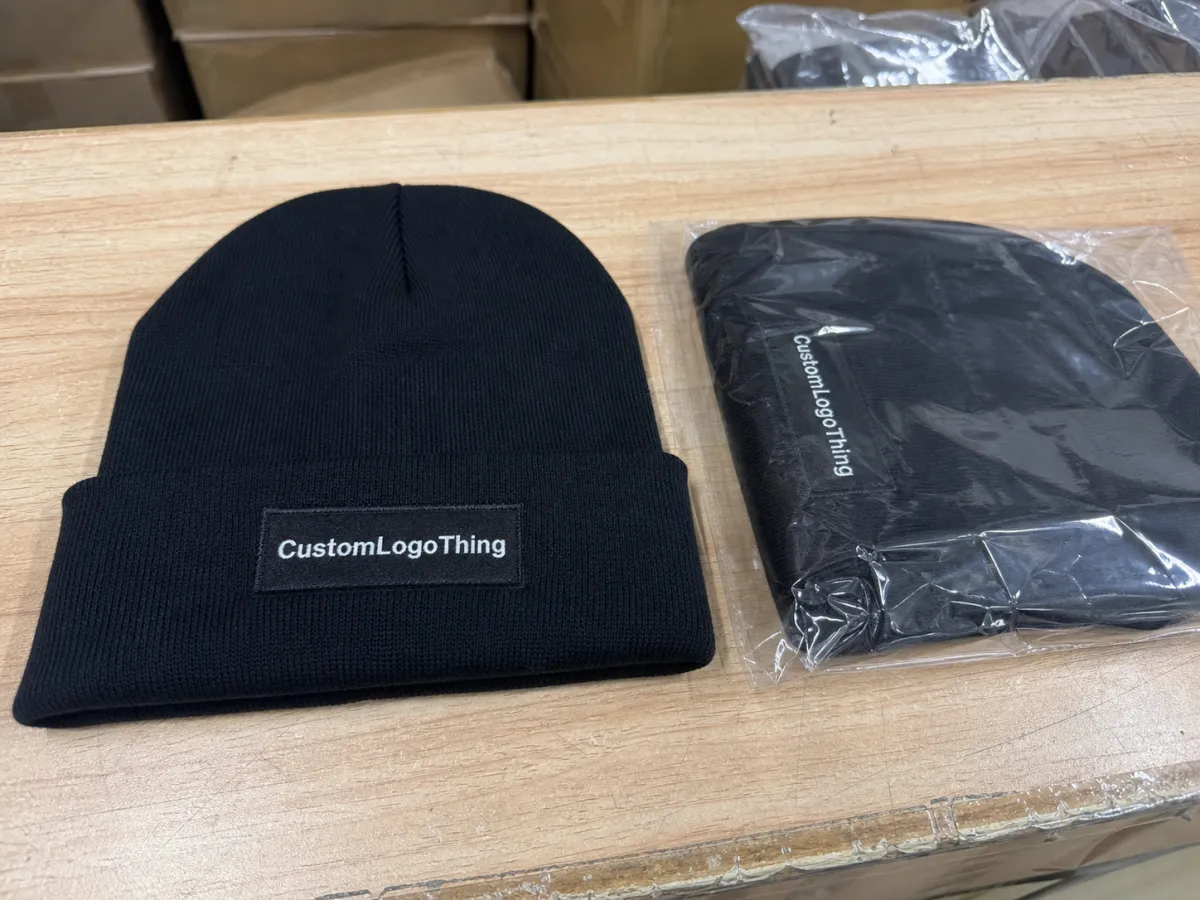
Trade show environments exaggerate tiny differences. Bright overhead lighting can make a charcoal beanie read lighter than it did in a sample photo. A logo patch that sits a quarter inch higher than the last run can look acceptable alone, then suddenly appear off when a whole team is wearing the hats at the booth. That is why a trade show Logo Patch Beanies reorder plan needs exact repeatability instead of a vague style name and a quantity.
The first order often gets approved quickly because the team is focused on the event date. The reorder usually happens after the original sample has been distributed, packed away, or lost among other event supplies. Once that happens, guesswork replaces reference. A slightly different yarn lot, a softer cuff, or a patch border that is a shade heavier can create a mismatch even if the product technically matches the original order form.
Those differences are not just cosmetic. Reproofing costs time. A blank substitution can shift the texture. Freight may move if the new order needs a different production slot. For a packaging or events buyer, those delays are not abstract. They can mean mixed branding at a show, and mixed branding reads as disorganization.
Buyer note: if the beanie will be reordered more than once, treat the first approval like a controlled spec, not a memory. The fewer assumptions left open, the easier the next run becomes.
That mindset also reduces internal friction. Marketing wants the logo to look right in photos. Sales wants enough stock for booth staff and field teams. Procurement wants a quote that can be compared without decoding every line. A good repeat plan gives all three groups the same reference set instead of three different interpretations of the item.
Beanie Specs That Keep Every Reorder Consistent
The body of the beanie comes first. Knit structure changes the way the hat fits, stretches, and photographs. A tighter rib knit usually holds shape better than a looser weave. A softer acrylic blend may feel more comfortable, but it can drape differently once worn all day. If the original order used a cuffed 100% acrylic style with a 12-inch crown and a 3-inch fold-up cuff, write that down exactly. Reorders become easier when the buyer can hand over a complete spec instead of a recollection.
Decoration choice matters just as much. Woven patches handle fine text better than many embroidered builds. Embroidered patches add texture and depth. Faux leather and PVC can feel more premium, but they change how the logo reads from a distance and may not fit every brand. For winter event programs, a patch that has clear edges and moderate thickness usually wears well without feeling stiff against the forehead.
Placement is where repeat orders most often drift. If the patch was measured from the center seam, keep that reference point. If it sat a fixed distance above the cuff edge, preserve that measurement too. Side-panel placement should not quietly migrate forward because someone used a photo instead of the production notes. The simplest safeguard is a three-point record: distance from center seam, distance from cuff edge, and patch width.
Packaging deserves the same attention. If the original order was folded a specific way for kit assembly, save that instruction. If the hats were polybagged with a size label, keep the label format. If cartons were packed at a fixed count for field distribution, record it. These details do not change the product itself, but they change how quickly the order becomes usable inventory.
- Body spec: knit type, yarn weight, cuff depth, and stretch
- Decoration spec: patch material, patch size, border style, and placement
- Finish spec: folding method, bagging, labeling, and carton count
There is a practical reason to keep packaging records. Shipping damage, crushed cartons, and sloppy repacking can turn a perfectly good decoration into a bad receiving experience. Standards such as the ISTA test framework are useful reminders that transit is part of product quality, not an afterthought. If your packaging includes recycled inserts or printed outer materials, the FSC framework can also matter for documentation. None of that makes a beanie complicated. It just keeps the receiving dock from becoming the weak link.
Artwork, Patch Build, and Approval Details Buyers Should Lock In
Vector artwork is the safest starting point. Clean lines and legible shapes survive scaling better than raster files with thin details. A beanie patch is small, which means it is unforgiving. Fine text, crowded seals, and delicate linework often shrink into noise once they are reduced to patch size. If the original design depends on tiny type, ask whether it should be simplified before production. That is a production decision, not a design failure.
Thread references should live in the reorder record, not only in email. PMS matching on textiles is approximate, so the buyer needs to know whether the previous order used a close stock thread chart, a custom-dyed match, or a specific brand-standard reference. Border color matters too. A dark border around a light patch can sharpen the logo and help the mark stand out from a booth aisle. A border that is too close to the background may soften the edge and flatten the design.
The patch build itself needs to be documented with the same level of care. Raised stitching, laser-cut edges, merrowed borders, embroidered fill, and faux-leather embossing all look different in a reorder context. Save the actual construction notes. A three-month-old inbox thread is not a production record.
Approval photos are more useful than many teams realize. Request front, side, and stacked views, and archive them with the order file. Front images confirm logo placement. Side images reveal thickness and cuff shape. Stacked images show how the product ships and whether the fold holds up. If a later reorder matches those photos, the buyer can usually move forward with far less risk.
It also helps to define the approval chain before the next order starts. Marketing may own the logo, procurement may own the budget, and the event lead may own the packing format. If those roles are unclear, the order can bounce around for a week while everyone waits for someone else to approve a detail that should have been assigned in advance.
Pricing, MOQ, and Unit Cost for Repeat Orders
Repeat-order pricing should be broken into pieces. Ask for the blank beanie base, patch application, setup or tooling, finishing and packing, and freight as separate line items. That structure makes it easier to compare quotes and spot whether the difference comes from patch size, blank inventory, or a packaging change. One blended price hides too much.
MOQ affects the true unit cost more than many buyers expect. A 250- or 300-piece reorder often carries more setup burden per unit than a 1,000-piece run, even when the product is identical. That does not make the smaller order a mistake. It just means the buyer should measure value against the event plan, not against a lowest-possible unit number. A regional show does not need national-quantity stock sitting in storage for months.
For planning purposes, a decorated patch beanie commonly lands somewhere around $2.10-$4.75 per unit, depending on blank quality, patch type, quantity, and freight. Simpler higher-volume runs can come in lower. Premium blanks, specialty patch builds, or tighter timelines push the number up. That range is not a promise; it is a realistic working band. If a quote falls far outside it, ask what changed.
Here is a simple way to compare reorder options without losing sight of the schedule:
| Reorder Option | Typical Quantity | What Usually Drives Price | Best Fit |
|---|---|---|---|
| Small replenishment | 100-300 units | Setup, packing, and freight | Emergency top-off before a single show |
| Standard event run | 500-1,000 units | Decoration efficiency and blank inventory | Recurring trade show schedule |
| Program batch | 1,500+ units | Lowest per-unit production cost | National rollout or multi-event season |
The lowest quote is not automatically the best purchase. A cheaper unit price can hide extra inventory, weaker packaging, or a blank style that is hard to repeat. A slightly higher quote that keeps the same body, the same patch build, and the same carton format may be worth more because it removes uncertainty from the program.
Process and Lead Time: How Reorders Move Through Production
Most repeat orders follow the same path. Confirm the prior spec. Check blank stock. Verify artwork and patch details. Approve the proof. Schedule decoration. Release freight. The steps are ordinary, but the sequence matters because one missing blank or one unconfirmed proof can stop the order before production begins.
The fastest reorders are the ones that already have a clean record. If the supplier can reopen the exact spec instead of rebuilding it, time is saved immediately. If the patch shape, border color, and packing method are all locked, proofing usually moves quickly. The delay is rarely the sewing itself. More often, it is uncertainty about what needs to be repeated.
Three lead-time questions usually expose most of the risk: Is the blank in stock? How long is the decoration queue? Does the timeline include freight? The answers can differ. One vendor may have hats on the shelf but need several business days to decorate them. Another may move decoration quickly but require more transit time because the order ships from a different facility or crosses multiple zones.
For straightforward repeat orders, 12-15 business days from proof approval is a reasonable planning range. That can stretch if the patch needs rebuilding, if blank inventory is thin, or if the order needs special folding and bagging. If the event date is fixed, count backward from booth setup or kit assembly, not from the day the purchase order is sent. That is usually the difference between a calm receiving window and a rushed scramble.
Shipping method should be confirmed as early as the art. A reorder that looks inexpensive on paper can become expensive if the product misses the right truck or has to be rerouted at the last minute. Packaging and transit are part of the production schedule, not a separate concern.
What Makes a Reliable Reorder Partner for Event Programs
A reliable partner keeps the record clean. The spec file stays current. Artwork is stored in a usable format. Stock status is shared early. Risks are called out before the promised ship date gets too close. Buyers should not have to chase basic information every time they reorder a familiar item.
Sampling consistency matters. If the original style is unavailable, a good supplier does not send a random substitute and hope nobody notices. They explain what changed and why. That matters because a decorated beanie for a trade show has a job to do. It should look good in a crowd, feel comfortable for a long shift, and hold the logo clearly through repeated wear.
Communication is often a better quality signal than a polished quote. Fast proof response helps, but honest timeline updates help more. If a patch reorder needs a fresh strike-off because the border thread changed, the buyer should hear that early. If a stock substitute is the only way to meet the event date, the tradeoff should be stated plainly. Buyers do not need hype. They need accurate information they can take back to their teams.
Strong suppliers do one thing well: they make repeat orders boring in the best possible way. The spec matches, the proof matches, and the shipment shows up ready for the booth.
That kind of predictability makes the buyer look organized internally. Marketing sees a consistent brand asset. Sales gets the right quantity. Procurement gets a repeatable process that can be used again. In practical terms, that is what turns a one-off promo into a dependable event item.
If your team already buys recurring headwear or related branded inventory, align the recordkeeping with the broader purchasing calendar so the same spec controls and reorder habits support more than one category. That saves time later, especially when multiple programs compete for the same quarter-end budget.
Trade Show Logo Patch Beanies Reorder Plan Next Steps
To tighten a trade show Logo Patch Beanies reorder plan, start with the latest approved sample or order confirmation. Then gather the artwork file, patch notes, color references, packing instructions, and quantity history into one place. If the original proof photos still exist, save those too. The less the next buyer has to reconstruct, the faster the order moves.
Work backward from the event calendar. Booth setup deadlines matter more than optimistic ship dates. If the beanies will be packed into field kits, add time for receiving and internal assembly. If the order ships directly to a show contractor, keep transit buffers wide enough that a delayed truck does not become an emergency.
Quotes should separate blank cost, decoration cost, MOQ impact, and freight. That format makes comparison easier and keeps the pricing discussion grounded in actual production factors. If the supplier offers tiered pricing, ask for it at the quantities the program really uses: 250, 500, 1,000, or whatever reflects the event cycle.
It also helps to set a reorder trigger. That trigger may be a minimum stock count, a date on the calendar, or a buffer level that automatically starts the next round. For recurring trade shows, that one rule often matters more than the quote itself. It is the difference between a planned replenishment and a last-minute rush that costs more in freight, time, and attention than anyone expected.
The cleanest result comes from keeping the same beanie body, the same patch construction, and the same packing format from one order to the next. That combination is not flashy, but it is what keeps the product stable across shows and seasons. A reliable reorder is built on records, not memory.
FAQ
How many units should I plan for a trade show logo patch beanies reorder?
Base the quantity on booth staff, sales reps, giveaways, and a small buffer for damaged pieces or late-added attendees. If the program repeats often, set a reorder threshold before stock gets too thin.
What specs matter most when I repeat a logo patch beanie order?
Lock the beanie body style, patch material, patch size, placement, and color references first. Also save folding, bagging, and carton instructions so the finished product arrives the same way every time.
Why did my last beanie reorder look different from the first run?
The most common causes are patch size drift, color variation, placement changes, or a different blank lot. A written spec sheet and approval photos usually prevent those differences on the next run.
How should I compare pricing on reorder quotes?
Compare unit cost, setup charges, MOQ impact, freight, and packaging changes as separate line items. A lower unit price can still cost more if it creates extra inventory or delays the event schedule.
What is the fastest way to place another trade show beanie order?
Send the prior order record, final artwork, approved sample photo, target quantity, and needed-by date in one message. When those details are ready, the supplier can usually move straight to proof confirmation and production scheduling.
For buyers who want fewer surprises, the best habit is straightforward: save the spec, save the proof, and keep the trade show Logo Patch Beanies reorder plan tied to the event calendar instead of to memory. That is how repeat orders stay on budget and keep the brand looking sharp at the next show.


