A Trade Show Pom Pom Beanies quote should do more than give you a unit price. It should tell you what the beanie is made of, how it will be decorated, how long production will take, and where the hidden costs sit. On a crowded floor, people notice shape, warmth, and movement before they read a logo, which is why this product can work well for winter events, outdoor activations, and booth staff uniforms.
The practical value is simple. The beanie needs to feel comfortable, look clean from a few steps away, and keep its decoration intact after shipping, unpacking, and a long day of wear. If the quote leaves out materials, decoration method, quantity breaks, or delivery timing, it is not a real buying tool. It is just a number on a screen.
Why Trade Show Pom Pom Beanies Get Attention at the Booth
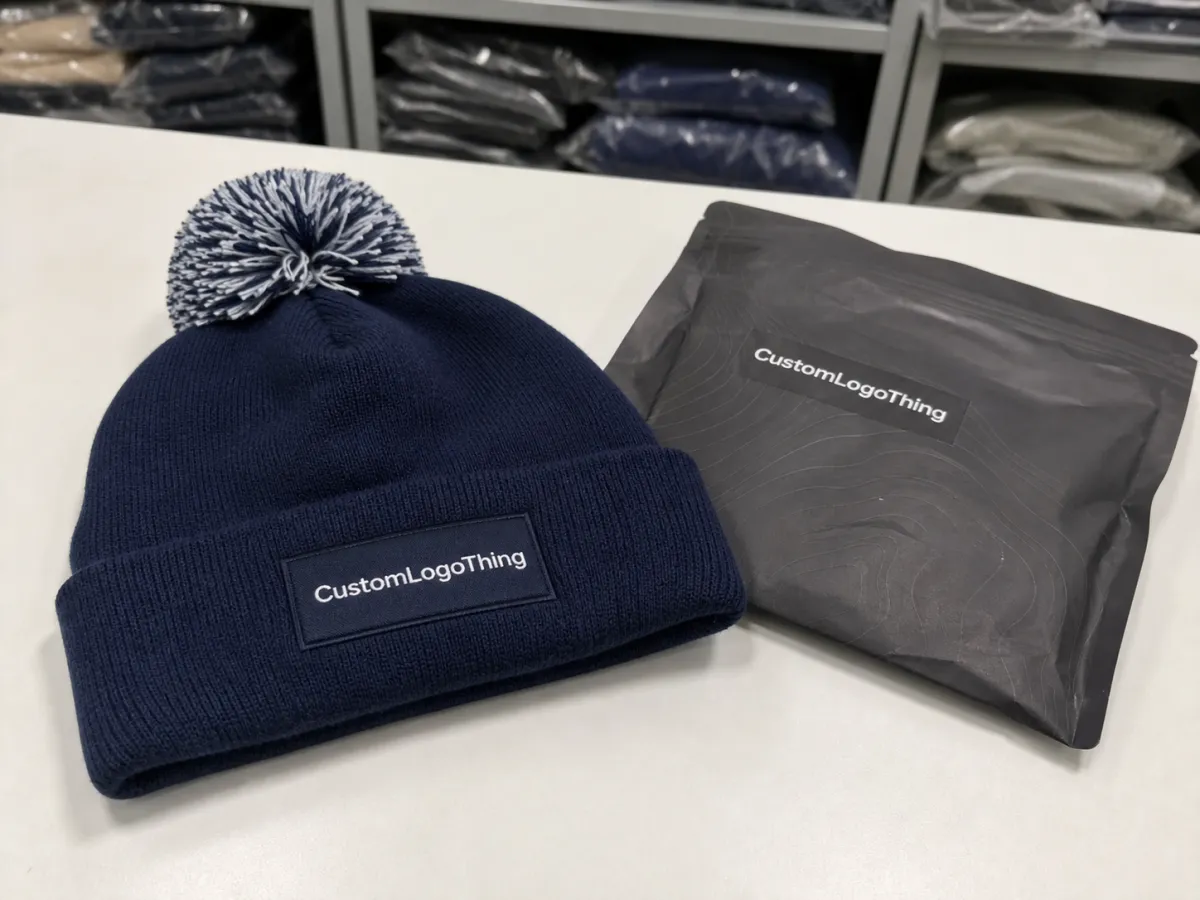
A knit beanie has immediate utility. That matters more than many buyers expect. People accept it faster than a thin giveaway because it solves a real problem on the show floor: cold loading docks, windy morning lines, outdoor demos, and exhibition halls that never seem to stay warm for long. The pom adds height and motion, so the piece stands out in a busy aisle even when the logo is modest.
That same visual lift helps in photos. Matching beanies make a staff group look intentional, not improvised. Attendees also tend to keep or wear the item later if the fit is right and the decoration stays crisp. A soft, well-structured beanie becomes a walking brand surface, which is useful long after the event itself is over.
The design works best when decoration supports the knit rather than competing with it. A small logo on the cuff, a woven patch on the front, or a compact embroidered mark usually looks sharper than forcing too much detail onto textured fabric. Buyers who start with function usually end up with better results and fewer complaints.
A beanie that looks great in a mockup but loses shape after one wear is not a smart buy. The better order is the one that still looks tidy after shipping, unpacking, and a full day on the floor.
What a Trade Show Pom Pom Beanies Quote Should Include
A useful quote starts with construction. 100% acrylic is still the most common promotional choice because it is cost-effective, easy to knit, and warm enough for most event staff. An acrylic/wool blend usually feels richer and holds shape well, but it costs more and may require a tighter approval process if touch and drape matter. A cuffed rib knit is standard because it gives the logo a flatter area and makes sizing more forgiving.
Decoration changes the whole look. Embroidery works well for simple logos and small marks. Woven patches create a cleaner face on textured knit surfaces and often handle fine detail better than direct stitching. Faux leather patches push the piece toward a retail-style finish, especially on dark beanies. Knit-in logos can look excellent for larger orders, but they need simpler artwork and a supplier that is comfortable managing the extra production complexity.
The quote should also identify the pom style. Is it color-matched, contrast-colored, or mixed-yarn? A two-tone pom can help the beanie read from a distance without making the design feel loud. For staff programs and higher-end retail pieces, that detail often matters more than buyers assume.
Fit is a quiet driver of satisfaction. Adult beanies commonly land in the 21.5 to 24 inch circumference range, with a cuff depth around 2.5 to 3.5 inches. Youth versions need a smaller profile and a softer crown. A hat that fits too tightly stays in the box; one that fits properly gets worn. That is the gap between a promotional item and something people keep.
If you want a quote that is easy to compare, ask for these pieces separately:
- Base style and fiber content
- Decoration method with logo size
- Pom style and color choice
- Packaging, such as polybag, folded pack, or gift kit packing
- Delivery timing and destination ZIP or port
Specs to Confirm Before You Request a Quote
The fastest way to get a clean price is to provide complete specs before anyone starts guessing. The basic set is straightforward: quantity, target delivery date, color count, decoration method, artwork file, and packaging needs. Once those are set, a supplier can tell you whether the order fits a stock program or needs a custom production run.
Small changes move cost faster than most buyers expect. Switching from a single-color patch to a multi-location decoration can add labor and setup time. Replacing stock heather gray with a custom-dyed yarn can raise minimums and stretch lead time. Even logo placement matters. A patch on the cuff is usually more efficient than a large decoration on the body of the hat, and it often reads better on textured knit.
Before you request a trade show Pom Pom Beanies quote, confirm these details:
- Artwork format: vector file preferred, with fonts outlined
- Color standard: Pantone references if brand matching matters
- Logo size: approximate width and height in inches
- Decoration placement: cuff, front body, side, or woven label
- Finish level: giveaway, staff uniform, or retail resale
Do not skip proofing. A digital mockup is usually enough for a simple order, but if the event is high visibility or the brand standards are strict, ask for a physical sample or a pre-production sample. Texture-heavy knit can make a logo look narrower, taller, or less legible than it appears on screen, so one round of hands-on checking can prevent expensive rework later.
If the order needs special handling, say so early. Individual folding, bagging, barcode labels, size stickers, or mixed-location cartons all affect price and schedule. For orders that include paper inserts or retail-style packaging, material sourcing may matter too. If recycled paper or hang tags are part of the brief, ask whether the supplier can support FSC-certified paper stock. If the goods need extra carton protection for freight, it is reasonable to ask how shipping tests are handled and whether the packing plan aligns with ISTA transit testing guidance.
Cost, Pricing, and MOQ for Bulk Beanie Orders
Pricing for custom beanies depends on more than knit alone. Fiber content, rib density, the number of yarn colors, pom construction, decoration type, and pack-out all affect the final number. Quantity matters just as much. A run of 250 pieces can feel expensive next to 1,000 pieces, but the lower unit price on the larger run may make sense if the event calendar, resale plan, or staff count supports it.
Minimum order quantity, or MOQ, depends on how custom the program is. Stock-style beanies with a standard patch or embroidery often start lower, sometimes around 50 to 100 units, while fully custom knit programs with specialty yarns, custom pom colors, or knit-in logos may start closer to 300 to 500 units. That is not a hard rule, but it is a realistic range buyers should expect.
| Option | Typical Use | Common MOQ | Typical Unit Range | Notes |
|---|---|---|---|---|
| Stock acrylic cuffed beanie with embroidery | Trade show staff, giveaways, quick-turn orders | 50-100 | $4.25-$6.75 at 500 pcs | Best for simple logos and faster approval cycles |
| Acrylic/wool blend with woven patch | Premium booth wear, client gifts, resale | 100-250 | $6.50-$9.50 at 500 pcs | Stronger hand feel, usually a cleaner logo face on knit |
| Fully custom knit beanie with custom pom | Brand launches, holiday programs, retail collections | 300-500 | $8.50-$14.00 at 1,000 pcs | More setup, more color control, and better retail presence |
Those ranges are starting points, not promises. Freight, rush timing, setup, labeling, and special packaging can move the number. A fair quote should say whether the price includes decoration setup, proofing, carton packs, and domestic freight. A low headline number is not useful if the extras appear later.
Buyers get into trouble when they compare only the lowest unit price. If one beanie pills quickly, loses shape, or has a patch that peels, the cheaper order becomes the more expensive mistake. A solid promotional beanie should survive handling, shipping, and wear without looking tired before the event ends.
The strongest trade show Pom Pom Beanies quote spells out the breakpoints. For example, 250, 500, and 1,000 pieces should each have its own number so the team can see where the value improves. That makes it easier for marketing, procurement, and event planning to agree on a quantity that fits both the budget and the audience.
Process, Timeline, and Lead Time From Proof to Delivery
A clean order usually follows the same path: inquiry, spec review, artwork proof, sample approval if needed, production, quality check, packing, and shipping. The calendar is rarely controlled by one step alone. More often, proof approval and freight method decide whether the order lands comfortably before the event.
For stock-based beanies, production can often move in about 12 to 18 business days after proof approval, assuming the decoration is straightforward and materials are in hand. Fully custom knit programs usually need more time, commonly 4 to 6 weeks or longer depending on yarn sourcing, sampling, and the number of color changes. If the order has a fixed booth date, build the schedule backward and leave room for shipping, not just manufacturing.
Rush orders are possible in some cases, but only when the pieces line up cleanly. A simple patch on a stock beanie is much easier to fast-track than a custom knit program with multiple yarn colors and special bagging. Even then, air freight or expedited ground service can change the budget more than the manufacturing itself.
Shipping deserves its own attention. A beanie is light, but cartons still need proper packing so the poms do not arrive flattened and the cuffs do not come out distorted. If the product is headed to a warehouse, a show site, or multiple branch locations, ask how cartons are labeled and whether the supplier can support split shipments without confusion. Good packing is part of the job, not an afterthought.
A practical timeline also includes response time on your side. Slow artwork approval creates some of the biggest delays. A buyer who gives one clear contact, one approved logo file, and one signoff path usually gets better results than a team that keeps revising the same proof for a week.
What a Reliable Supplier Should Prove and How to Move the Order Forward
A dependable supplier should explain materials and decoration limits clearly. If someone only talks about a low price and avoids questions about knit gauge, logo placement, or packaging, that is a warning sign. A real production partner can tell you what the beanie will do on the floor, what it will do after shipping, and where the trade-offs sit.
Quality control lives in the details: consistent rib tension, stable color matching, clean patch edges, centered decoration, and even stitching at the seams. On a promotional order, those small things separate a wearable item from a disappointment. A booth employee wearing the item is part of the brand presentation, so the finish has to hold up under real use, not just in a mockup.
Communication matters just as much as the machinery. You want fast answers on art changes, delivery changes, and freight options, especially if the event date is fixed. A supplier that can explain setup fees, minimums, and proof rounds without hiding behind vague language usually saves time for everyone involved.
If you are comparing options, ask for three things before you decide: a sample of the base beanie, a decoration reference from a similar knit, and a clear timeline that includes proofing and delivery. That combination reveals more than a polished sales sheet. It shows whether the supplier understands decoration on textured fabric, how they manage color, and whether their timing is real or optimistic.
For buyers who need quick alignment across marketing and procurement, the cleanest path is to provide quantity, preferred color, decoration method, artwork file, target event date, and packaging needs in one message. If the quantity is still flexible, ask for tiered pricing at 250, 500, and 1,000 pieces so the team can compare value without reopening the whole brief. That is usually enough to turn a vague request into a usable production plan.
A good trade show Pom Pom Beanies quote should leave no mystery about what is included and what is not. If the fit, decoration, and schedule are clear, the rest becomes a straightforward buying decision rather than a guessing game.
What do you need for a trade show pom pom beanies quote?
Send the quantity, desired colors, decoration method, and target delivery date. A vector logo or the best available artwork file helps the proof move quickly, and it is smart to mention packaging needs if the beanies must arrive ready for distribution.
What is the usual MOQ for custom pom pom beanies?
MOQ depends on whether the beanie is stock-based or fully custom. Simpler construction often allows lower minimums, while custom yarn colors, knit-in logos, and specialty poms usually require a larger starting order. If you want flexibility, ask for tiered pricing at different quantities.
How long is the turnaround after artwork approval?
Turnaround depends on decoration complexity, yarn availability, and the current production load. Stock styles often move faster than fully custom knit programs, and shipping time should be planned separately so the event date stays protected.
Can trade show beanies be decorated with patches or embroidery?
Yes, both are common. Patches often work well on textured knit surfaces because they create a cleaner logo face, while embroidery is a strong choice for simple artwork when the knit gauge can hold the stitching neatly.
How can we get the most accurate bulk pricing?
Provide a firm quantity, exact decoration method, and clear artwork so the quote reflects the real build. Confirm whether you need individual packaging, special labeling, or split shipping before approval, and mention a tight deadline early so freight and production can be priced honestly.


