Trade show Slouchy Knit Beanies bulk order buys tend to hold up better than short-lived promo items because they stay useful after the booth closes. A flyer disappears. A knit beanie gets worn on the ride home, in a cold hall, on a job site, or during travel weeks later. That longer lifespan is what makes the item easier to justify on a cost-per-impression basis.
Trade shows also create the right conditions for headwear to matter. Venues run cold, lines stretch, and staff spend hours talking without much movement. In that environment, a slouchy knit beanie does two jobs at once: it keeps people comfortable and it carries the brand in a way that feels natural rather than forced.
That is why buyers usually compare it less like swag and more like wearable media. If a beanie gets worn several times, the effective cost per use drops quickly. The value comes from repeat visibility, not just the handout moment.
“The best booth giveaway is the one that keeps showing up after the event calendar moves on.”
Trade show slouchy knit beanies bulk order: why they beat short-lived swag
Slouchy Knit Beanies outperform many giveaway items because they fit more situations without feeling like an ad. A pen can be useful, but it rarely creates the same staying power. A knit beanie can live in a bag for months and still get pulled out when the weather changes, which extends the brand exposure long after the event.
The slouch style also reads more like retail apparel than table swag. That softer drape makes the piece look more considered and less like something produced only for a badge pickup line. Buyers notice that difference even when they are not comparing items side by side.
Audience range matters too. A beanie works for field teams, booth staff, contractors, executives, and visitors. It crosses job titles and age groups without needing a lot of explanation. If the show involves outdoor walking, late travel, or winter weather, the case for the item gets even stronger.
There is also a basic comfort angle. Convention centers can swing from warm to cold across a single hall, and attendees often appreciate anything that removes friction. A branded beanie does not just decorate the experience; it solves a problem people already feel.
That is what makes the math practical. One handout may get one quick touchpoint. A beanie can create repeated touchpoints over a season. For event teams, that is the real comparison: short attention versus repeated use.
Materials, gauge, and slouch: the product choices that change feel
Material is the first major cost-and-comfort decision. 100% acrylic remains the standard for many bulk orders because it is affordable, easy to color match, and predictable in production. It keeps a soft slouch profile without adding much weight, which makes it a safe choice for large programs.
Acrylic-wool blends feel warmer and closer to retail knitwear, but they cost more and are not for every audience. Recycled yarn is increasingly requested for sustainability messaging, though buyers should expect tighter stock limits and fewer color options. The yarn choice affects both the quote and the final hand feel.
Gauge changes the look more than many buyers expect. Tighter knits look cleaner and more structured. Looser knits drape more and create the relaxed slouch most teams want. The tradeoff is visual sharpness: the looser the knit, the less crisp the smallest details will appear.
Fit details matter just as much as the mockup. Crown depth, cuff height, yarn stretch, and seam construction all affect how the beanie sits once worn. A shallow crown can ride up. A body that is too tight can flatten the slouch. For mixed audiences, a slightly deeper body with moderate stretch usually works best.
A sample is worth more than a polished render because knitwear behaves differently in hand than on screen. Real evaluation should cover softness, stitch consistency, stretch, and how the back collapses when worn. Those details decide whether the item feels like a premium accessory or a rushed giveaway.
- Acrylic: best value, broad color range, good for most large-volume orders.
- Acrylic-wool blend: warmer feel, more retail-like finish, higher unit cost.
- Recycled yarn: useful for sustainability messaging, but stock and color options can be narrower.
- Loose-gauge slouch knit: softer drape, casual look, less crisp for very small artwork.
Decoration limits, logo placement, and color matching details
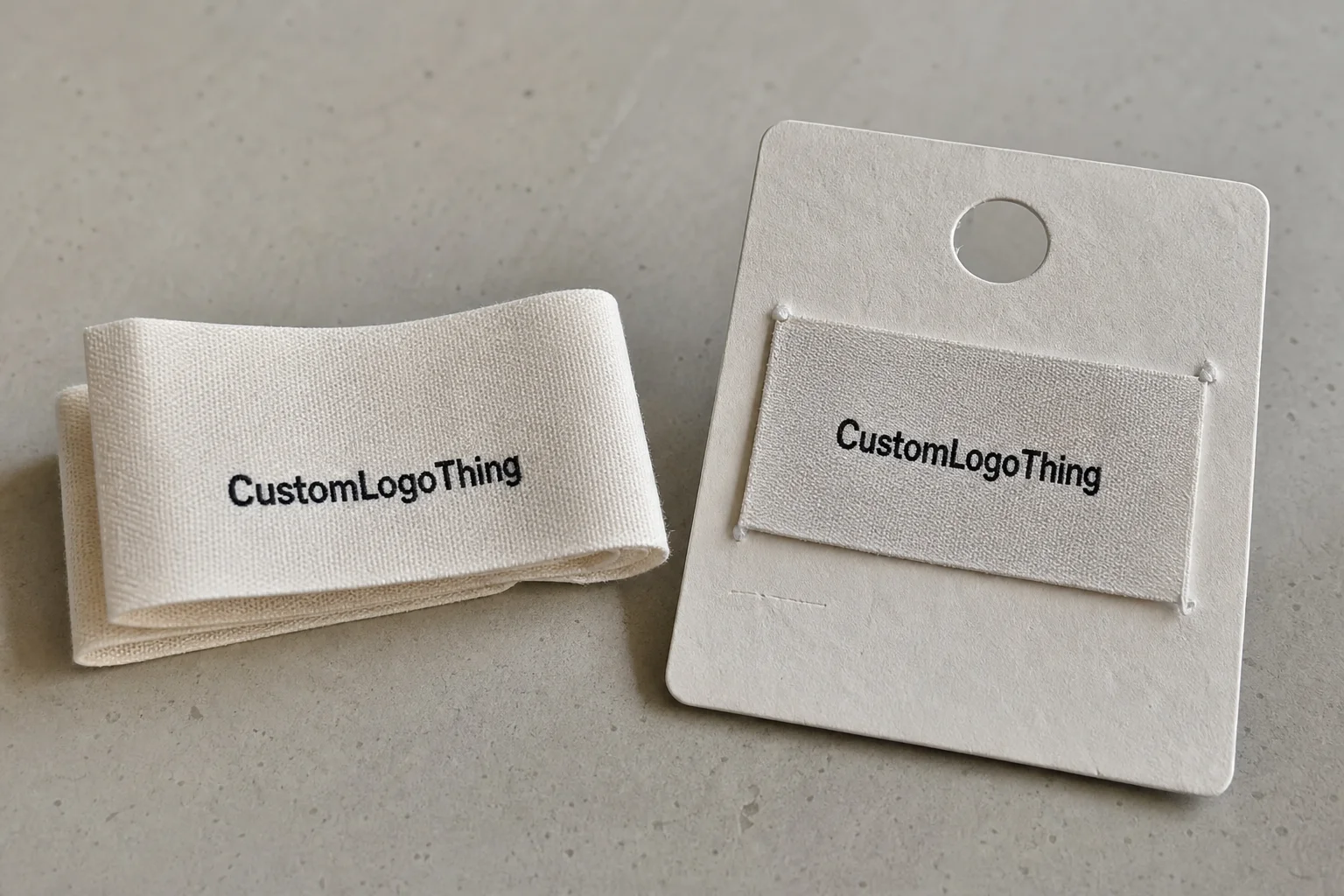
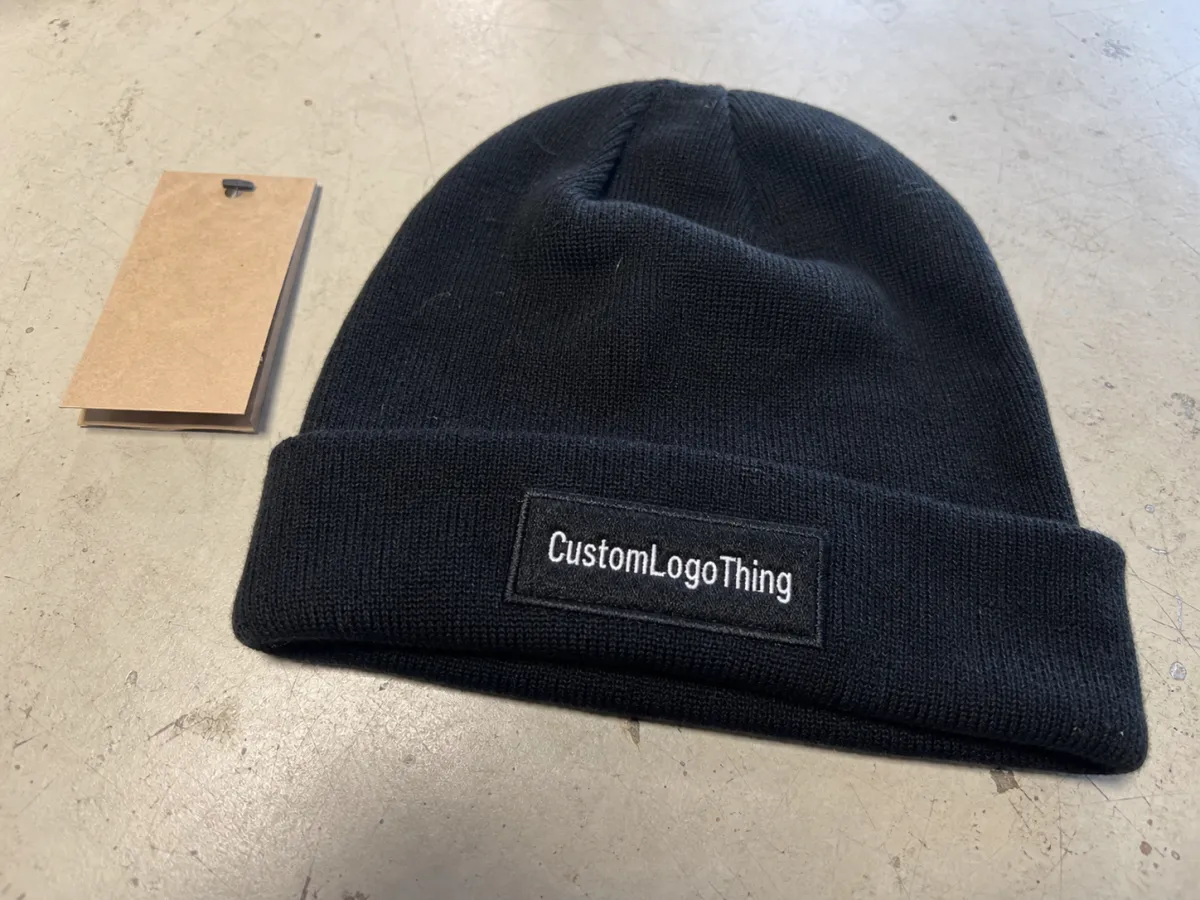
Embroidery is still the most common decoration because it holds up well, looks premium, and survives repeated wear. A woven patch is better when the logo has thin type, small details, or multiple colors. Sew-on labels and badge-style patches work well when the goal is a cleaner apparel look rather than visible stitching.
Placement changes visibility more than most buyers realize. The cuff is usually the most reliable location because it stays upright and provides the flattest surface. Center-front embroidery gives strong recognition, though larger marks may need simplification to work on a curved knit. Side placement can look relaxed, but it disappears faster into a slouchier crown.
Color matching should be discussed early and realistically. Knit yarn does not behave like coated paper or screen graphics. PMS numbers help guide the work, but exact reproduction across yarn, thread, and patch material is not guaranteed. If brand color is important, ask for the closest workable match before production begins.
Small artwork is the most common failure point. Lettering under roughly 4 mm can blur or fill in on knitwear, especially after the fabric stretches. Fine gradients, hairline rules, and tiny lines are usually better simplified into blocks, outlines, or bolder shapes. Good knit artwork is designed for the medium, not just copied from a screen file.
Logo complexity also affects proofing and risk. A one-color mark on a cuff is straightforward. A multi-color crest with thin text and a second placement on the body creates more variables and more chances for revision. The buyer who cleans that up early usually saves both time and cost.
“If the logo only works at full size on a screen, it probably needs cleanup before it reaches knitwear.”
For common artwork and ordering questions, the FAQ can help narrow the options before the quote starts drifting through unnecessary revisions.
Pricing, MOQ, and unit cost: what changes the quote
Price depends on more than volume. Yarn type, decoration method, color count, packaging, and whether each piece needs a tag or insert all move the final number. A basic acrylic beanie with one-color embroidery may land around $2.90-$4.50 per unit at 1,000 pieces. At 250 pieces, the same style may sit closer to $4.25-$6.75. Add recycled yarn, a woven patch, or gift packaging, and the total rises accordingly.
MOQ varies by construction. Stock-style beanies often start around 100-150 units. Fully custom knit patterns, unusual yarn combinations, or multiple logo versions can push the floor to 250 units or more. That is normal because setup work still has to be done even when the run is small. Buyers sometimes ask for several colors, two placements, and custom packaging in one order; it can be done, but each variable adds handling and time.
| Option | Typical MOQ | Unit price at 250 | Unit price at 1,000 | Best use |
|---|---|---|---|---|
| Acrylic beanie + one-color embroidery | 100-150 | $4.25-$6.75 | $2.90-$4.50 | Standard trade show handouts |
| Acrylic-wool blend + woven patch | 150-250 | $5.60-$8.20 | $3.80-$5.30 | Premium booth gifts |
| Recycled yarn + embroidered cuff | 150-250 | $6.10-$8.90 | $4.20-$6.40 | Sustainability-led campaigns |
| Gift packaging upgrade | Varies | + $0.35-$1.10 | + $0.25-$0.85 | VIP kits and press drops |
Hidden costs can distort a budget quickly. Ask about sample fees, rush charges, art cleanup, freight, and split shipments before signing off. If the order needs to go to a convention center, a warehouse, and a sales office, each destination may add handling cost. Low headline pricing is less useful if those extras appear later.
There is also a connection between price and proofing. More complex artwork usually needs more sampling time, and that time has value. The cheapest quote can become the most expensive one if it leads to rework, a missed show date, or a batch that does not match the approved sample.
For teams comparing order sizes and fulfillment levels across programs, the Wholesale Programs page can help frame the packaging and timeline decisions before the final brief goes out.
Production steps and turnaround for a show-ready shipment
A normal production path is quote, proof, sample if needed, bulk production, quality control, packing, and shipping. The schedule is not controlled only by stitching. Proof approval, material sourcing, and freight movement usually determine whether the order hits the event date.
For stock beanies with straightforward embroidery, 12-15 business days after proof approval is a common planning window. A fully custom knit structure or special yarn sourcing usually pushes that to 20-30 business days. Add custom boxes, hang tags, or insert cards, and the packing stage may add a few more days even after the sewing is finished.
The real deadline is the date the goods need to be on site before booth setup. Convention centers are not forgiving when cartons arrive late, and cross-border shipping adds another layer of risk. A buffer of at least 5 business days for domestic event delivery is sensible; more is safer if customs clearance or carrier transfers are involved.
Quality control should focus on the things knitwear actually gets wrong. Buyers should ask how the supplier checks stitch density, thread tension, patch placement, logo alignment, and size consistency across the run. A batch can look fine from a distance and still show problems in hand if the cuff folds differently or the logo sits too high on part of the order.
Packaging matters too. Cartons should survive compression, handling, and drops. For orders that pass through multiple hubs, suppliers who design pack-out around transit testing such as ISTA profiles usually cause fewer surprises. If the order includes inserts or hang tags, sourcing through standards such as FSC can support a cleaner materials story without adding much friction.
One rule saves more events than it should: approve artwork before the deadline gets tight. Two revision rounds are normal. Five usually means the logo, placement, or construction needs a reset. Every extra change can move the ship date, and time is the one variable that does not compress well.
What separates a reliable bulk supplier from a cheap one
The lowest quote is rarely the lowest risk. A dependable supplier asks about headwear size expectations, logo file quality, color priorities, and delivery destination before production starts. That front-loaded questioning reduces the chance of proof loops or packing mistakes, which matters when the event date is fixed.
Consistency is the real standard. Hundreds of beanies should look like one program, not one hundred separate decisions. Dye lot variation, stitch tension, patch placement, and cuff fold consistency all matter when the product is stacked on a table and compared at a glance. If the first twenty units look good but the rest drift, the buyer sees it immediately.
Communication quality matters as much as unit cost. A reliable supplier gives realistic timelines, readable proofs, and clear warnings when a design needs simplification. Price-only vendors can look attractive at the start, then add charges once artwork, freight, or packaging details show up. By that point, the savings are usually gone.
Fulfillment is part of the job, not a bonus. On-time delivery, usable tracking, and split-shipment support can matter more than a slightly lower unit cost. If 200 beanies go to the main booth and 50 go to speakers or VIPs, the supplier should handle that without turning it into manual chasing. A small premium can be cheaper than a last-minute air freight emergency.
In practice, the best supplier is often the one that prevents avoidable mistakes: a reprint, a freight upgrade, a color miss, or a delivery delay. In knit headwear, those are the costs that become visible fastest.
Order checklist and next steps before you request a quote
Before requesting pricing, gather the details that actually change the quote: exact quantity, color preference, logo file format, deadline, ship-to address, and whether the order needs split colors or split destinations. If the decoration method is already decided, include that too. A buyer asking for “a custom beanie” gets a rough placeholder; a buyer asking for a 12-gauge acrylic slouch beanie with a woven patch and polybag insert gets a usable estimate.
Internal approval should happen before production begins, not after. Marketing may care about visual impact, procurement may care about landed cost, and events may care about delivery date. Those priorities do not always line up, so the cleanest orders are the ones where the tradeoffs are settled before sampling starts.
Packaging should be decided early if the item is meant to feel elevated. Folding, tissue, hang tags, and retail sleeves all improve presentation, but they also add labor and cost. If the beanies are meant as floor giveaways, standard bulk packing is usually the right answer. If they are going into VIP kits, speaker gifts, or partner drops, the packaging can earn its keep because the first impression changes.
Bottom line: a complete brief is faster than a rushed one. The smoothest path from estimate to delivery is a trade show Slouchy Knit Beanies bulk order with the art, quantity, and timeline already settled before the first proof lands.
How many trade show slouchy knit beanies should I order for a booth?
Start with the number of staff members who need one, then add the volume of high-value prospects you expect to gift. For multi-day events, include a buffer for repeat visitors and off-floor meetings. A modest overage is usually cheaper than a second rush order.
What decoration works best on a slouchy knit beanie bulk order?
Embroidery is the most common choice because it is durable and has a clean premium feel. Woven patches work better for small text, multi-color logos, or sharper detail. Choose the method based on artwork complexity, not only unit price.
What is the usual MOQ for trade show beanies in bulk?
MOQ depends on the style, yarn color, and decoration method. Simple stock beanies often start lower than fully custom knit options. Ask whether the minimum is per color, per logo version, or for the full order.
How long does a custom slouchy knit beanie order take?
Most timelines include proofing, production, quality checks, and freight, so the full calendar is longer than the sewing stage alone. Rush orders can work if artwork is final and the quantity is confirmed early. Add extra time for convention-center delivery or cross-border shipping.
Can I split colors or add custom packaging to a bulk beanie order?
Yes, though split colors and custom packaging usually raise the unit cost and may affect MOQ. Packaging upgrades are often worth it for VIP gifts, media kits, or retail-style handouts. Ask for packaging as a separate line so you can compare it cleanly against standard pack-out.
What should I send first to get a fast quote?
Send the quantity, deadline, logo file, preferred color, shipping destination, and decoration choice. If you are planning a trade show Slouchy Knit Beanies bulk order, that level of detail is usually enough for a supplier to give you a real price instead of a placeholder.