Vitamin Pom Pom Beanies Material Sample Guide for Buyers
A vitamin pom pom Beanies Material Sample guide is not a formality. It is the first real proof that the beanie you want can actually be made the way you want it. The sample shows what the spec sheet cannot: softness, stretch recovery, knit density, pom balance, and whether the hat still looks good after someone handles it more than once.
That matters because beanies are unforgiving. A small change in yarn weight can make the silhouette collapse. A slightly loose cuff can turn a premium item into a slouchy afterthought. A pom that looks full in a photo may feel thin in hand. Buyers who skip the physical sample usually end up paying for the lesson later.
The best sample is not just a nice-looking prototype. It should reflect the final production direction for the shell yarn, cuff construction, branding, trim, and packaging. If the factory uses placeholder materials or temporary labels, that needs to be documented clearly. Otherwise, people start approving a sample that has little to do with the bulk order.
That is why the sample stage is both design review and risk control. If the product is supposed to sit in a retail line, a promo bundle, or a winter gift set, the sample should tell you which lane it belongs in before any real quantity is cut and knitted.
A sample is where the expensive mistakes show up early, while they are still fixable.
Vitamin Pom Pom Beanies Material Sample Guide: What to Inspect First
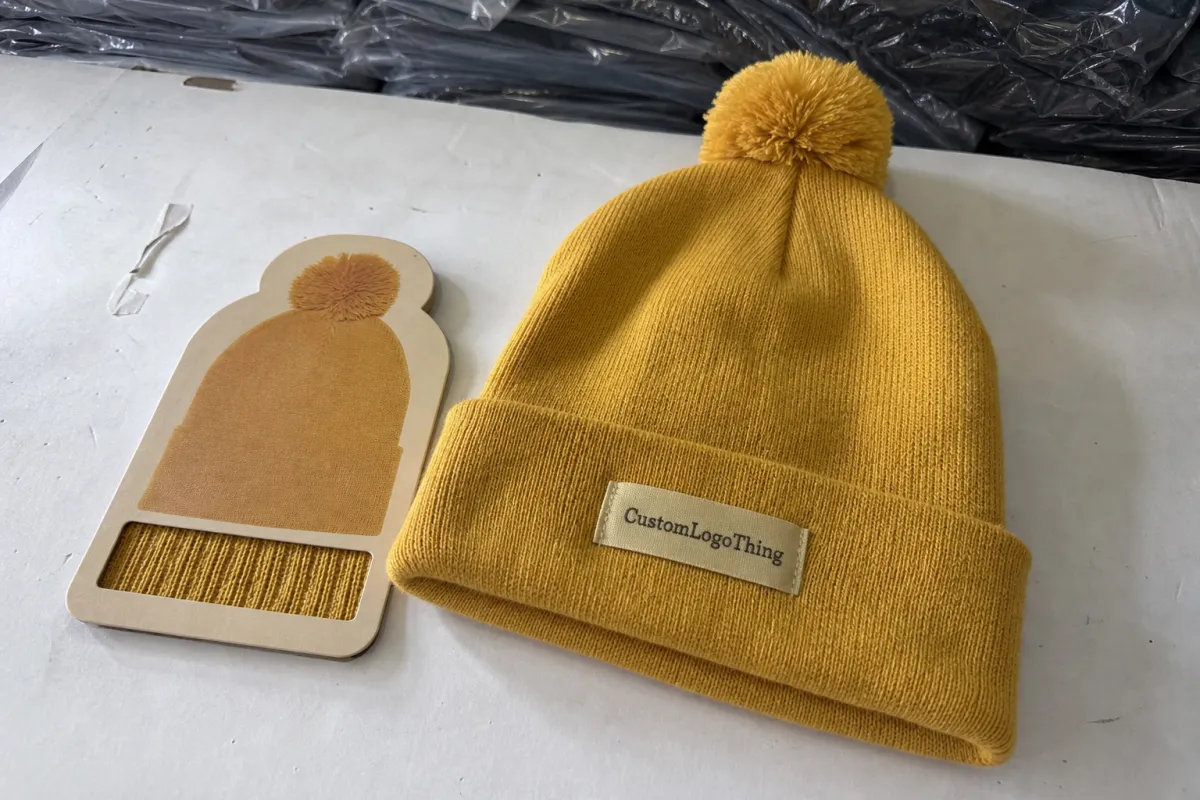
Start with fit, shape, and hand-feel. Those three checks catch more problems than any polished photo ever will. A beanie can look clean on a table and still feel wrong on the head if the cuff is too stiff, the body is too short, or the yarn is scratchier than expected.
After that, inspect the details that separate a usable sample from a convincing one. Look at stitch consistency, yarn surface, logo placement, pom fullness, seam alignment, and the way the crown sits once the hat is stretched. If a sample misses on those points, bulk production usually misses too.
The sample should also match the intended material story. If the final piece is supposed to be brushed acrylic, a wool blend, or a recycled yarn build, the sample should not quietly swap in a different fiber just to get to the finish line faster. Substitutions happen, but they should be flagged, not hidden in the hand-off. Otherwise the buyer approves the wrong standard and the production team inherits the problem.
From a merchandising angle, this is not only about looks. A beanie that feels thin, overly fuzzy, or too loose can fail a premium review even when the color is right. On the other side, a dense knit with a clean cuff can make a mid-priced item feel more expensive than it is. That difference matters when a product needs to support a specific price point.
The sample also helps decide how the beanie should be positioned. The same style can work as a value item, a seasonal retail piece, or a branded campaign giveaway. The material and construction details tell you which use case fits the product best.
How the Sample Approval Process Works From Spec to Sign-Off
A clean sample approval process starts with a proper spec sheet. That means measurements, artwork placement, yarn direction, color references, label details, packaging notes, and anything else the factory needs to build the first prototype without guessing. If the brief is vague, the sample will be vague too.
The usual flow is straightforward: review the spec, choose the yarn and knit structure, produce the first sample, compare it against the brief, then revise if needed. Once the sample passes review, it becomes the production reference. The approval is not just a thumbs-up. It is the point where the conversation stops being hypothetical.
Good review discipline helps here. Check the sample in three passes. First, measure it. Second, inspect the visual details like logo sharpness, seam placement, and pom size. Third, look at the color in natural daylight. Indoor lighting can make a dull red look richer or make a navy appear black. That kind of mismatch is one of the easiest ways to approve the wrong shade.
Comments should be specific enough that the factory can act on them without interpretation. “Make it better” is useless. “Increase cuff depth by 1 cm,” “tighten the knit around the logo,” or “reduce pom diameter by 10%” is useful. Measurable feedback keeps revision rounds short and stops the sample process from turning into a guessing game.
If packaging is part of the sample, review that too. A kraft wrap, branded sleeve, corrugated cardboard shipper, or insert card changes presentation and sometimes the handling cost. If transit protection matters, align the packaging with recognized testing methods such as ISTA guidance. If paper sourcing matters, ask for FSC certified packaging where possible. A sample that arrives crushed, damp, or badly folded is still useful. It tells you something about the shipping setup.
The approval choice usually falls into one of three buckets:
- Approve if the sample matches the intended fit, feel, and construction.
- Revise if the base is right but the details need correction.
- Replace if the yarn, gauge, or pom build is fundamentally off.
Yarn, Stitch, and Pom Details That Change the Final Look
Material choice drives most of what people feel when they pick up the beanie. Acrylic is common because it is affordable, easy to dye, and usually soft enough for broad use. Wool blends add warmth and a more natural hand-feel, but they usually cost more and can shift the price bracket fast. Recycled yarns are a useful option for brands that want a lower-impact sourcing story without moving into luxury territory.
The fiber content is only part of the picture. Yarn ply, twist, and surface finish also matter. A smoother acrylic can look cleaner and pill less quickly. A loftier wool blend can feel warmer but may show more fuzz after handling. If the sample is intended for close retail inspection, those small surface differences are not small at all.
Knit density is another deciding factor. A tighter gauge often gives sharper logo edges, better shape retention, and less distortion at the cuff. A looser knit can look relaxed and cozy, but it can also stretch out faster and make the silhouette look unfinished. If the beanie uses jacquard or intarsia, the stitch count needs even more attention because even a small gauge shift can blur the artwork.
The pom is usually the first thing a buyer judges by feel, even if nobody says it out loud. Pom diameter, fiber length, fill density, and attachment method all change the impression. A sparse pom can look tired before the product reaches a shelf. An overpacked one can feel stiff and oddly formal. The right version sits centered, rebounds after handling, and matches the body yarn instead of fighting it.
Finishing steps can shift the sample more than people expect. Washing, steaming, brushing, and trimming all change the final appearance. A brushed interior improves comfort, but if the pile is too aggressive, the surface can look fuzzy and cheap. A folded cuff can improve structure, but it also changes the fit and the logo placement. Nothing is cosmetic if it changes the way the hat wears.
Labels matter for the same reason. A woven label, knit-in mark, or heat-transfer tag each touches the product differently. If the beanie sits against skin for long stretches, the label hand-feel becomes part of the buying decision. Scratchy branding is still bad branding.
For a fast comparison, this view usually helps:
| Sample option | Typical traits | Usual sample cost | Best fit |
|---|---|---|---|
| Basic acrylic knit | Soft, consistent, economical, easy to match | $35-$75 | Promotions, event merchandise, broad retail testing |
| Acrylic-wool blend | Warmer hand-feel, stronger structure, more premium cue | $60-$120 | Brand collections, colder-weather retail programs |
| Recycled yarn build | Clearer sustainability story, sometimes a slightly less uniform surface | $70-$150 | Eco-led assortments, branded programs with sourcing requirements |
That table is a working reference, not a rulebook. Yarn pricing shifts with color demand, lot size, and whether the factory needs to knit a custom swatch before the prototype. A budget line and a premium line should not be judged against the same expectations.
Sample Process, Timeline, and Turnaround Milestones
Most buyers want a timeline that means something. A typical sample cycle runs through four stages: brief confirmation, prototype knitting, review, and revision or approval. If the spec is clean and the yarn is in stock, a first sample often lands in about 7-12 business days. If the build includes custom yarn, more detailed logo work, or special pom construction, 12-18 business days is more realistic.
The knitting itself is rarely the longest part. Yarn sourcing, color matching, label production, and shipping often take longer than the actual sample build. That gets worse when several internal teams need to sign off. Merchandising may care about silhouette, sourcing will focus on cost, and marketing may want a cleaner logo angle. Those opinions are normal. They just need a deadline.
It helps to separate first sample, revised sample, and pre-production approval sample. The first version proves the concept and exposes the obvious risks. The revised version tests whether the factory can hit the requested changes. The final approval sample should mirror production as closely as possible, including the actual yarn lot and any fixed branding details. If a sample uses a substitute material, that exception should be written down so it does not become the new default by accident.
Seasonal programs make timing tighter. If the beanie needs to hit shelves before cold weather demand peaks, the sample should be approved early enough to leave room for bulk knitting, trimming, inspection, and freight. A good buyer usually protects at least two weeks for internal review and revision, even if the supplier can produce the prototype faster. Internal delay is often the real schedule risk.
A practical milestone view looks like this:
- Day 1-2: brief, artwork, measurements, and material direction confirmed.
- Day 3-7: prototype knit and first sample made.
- Day 8-12: buyer review, comments, and revision request.
- Day 13-18: revised sample or final approval sample prepared.
- After approval: bulk production booked and final spec locked.
Cost, Pricing, MOQ, and Unit Cost Drivers
Sample cost depends on more than yarn alone. Custom dyeing, intricate knitting, embroidery, woven labels, pom construction, and revision rounds all add to the bill. A straightforward sample can stay in the $35-$75 range. More customized builds often move into the $80-$150 range, especially if there are multiple colors or a premium fiber blend.
MOQ and unit price should be read together. A lower MOQ can reduce the buyer’s risk, but the per-piece cost is usually higher. A higher MOQ can reduce the unit cost, but only if the sample has already proven the design is worth scaling. Chasing the cheapest unit price before the sample is right is how people end up with boxes of product they do not want to sell.
Ask whether the sample fee is credited against production. Some suppliers do that, some do not. Ask what the quote includes as well: shipping, packaging, revision count, color matching, and any setup charge for new knit programming. If the sample is being shipped with recycled materials, kraft paper wraps, or biodegradable packaging, that may appear as a separate line or be bundled into the fee.
From a procurement point of view, a slightly higher sample price can still be the better deal if it prevents a bad bulk run. A wrong pom, a mismatched yarn lot, or a sloppy cuff fit can cost far more in rework and freight than an extra $40 on the prototype. That is where experienced buyers save money. Not by worshipping the lowest sample fee, but by buying certainty before volume starts.
Here is a clearer cost breakdown:
| Cost driver | Lower-cost choice | Higher-cost choice | Why it changes price |
|---|---|---|---|
| Yarn | Stock acrylic | Dyed-to-match wool blend | Special dyeing and fiber cost |
| Branding | Simple woven label | Multi-color knit logo plus label | More programming and setup |
| Pom | Standard attached pom | Large custom-density pom | More fiber, more labor, more control |
| Revisions | No revision needed | Two or more rounds | Extra labor, shipping, and turnaround time |
If packaging matters to your brand, ask for the shipping format in writing. Some teams want corrugated cardboard mailers with FSC certified inserts. Others prefer post-consumer waste paper or a lighter package built from recycled materials. Those choices do not change the beanie itself, but they do affect how the sample is received by merchandising, compliance, and marketing.
Common Sample Mistakes That Lead to Reorders
The biggest mistake is approving from photos alone. Screen images hide a lot. Camera lighting, background color, and compression can make a sample look cleaner than it really is, especially on textured knitwear. If the beanie is meant for retail, the physical sample needs to be handled before sign-off.
Another common miss is checking appearance and ignoring wear. A beanie can look fine flat on a table and still fail in use because the cuff is too tight, the crown pulls backward, or the pom collapses after a few hours. Stretch it, wear it, fold the cuff, and see whether it returns to shape. That small test catches a surprising number of fit problems.
Measurement errors create their own mess. A 0.5 cm change in cuff depth can alter how the beanie sits on the head, and a small shift in body length can change the silhouette from neat to awkward. Buyers should confirm the sample against the spec with a ruler, not just with an eye test. It is basic. It also saves money.
Vague feedback is the last easy trap. If comments are too broad, the factory cannot tell whether the issue is yarn, stitch tension, pom size, or label placement. Specific notes move faster. Mark what should change, by how much, and whether the sample is blocked until the change is made.
The shortest path to fewer reorders is plain:
- Check the sample in daylight.
- Measure the key points.
- Wear test the fit.
- Confirm the pom and logo details.
- Write revision notes that can actually be built from.
Expert Tips and Next Steps After the Sample Arrives
A one-page approval checklist keeps everyone honest. List the yarn, cuff depth, body length, logo position, pom quality, label type, and packaging style. Have each reviewer mark the same sheet or digital form. That keeps sourcing, merchandising, and design aligned around one physical object instead of three different opinions.
Keep two samples if you can. Seal one as the production master so the approved version stays untouched. Use the second for handling, fitting, photo review, and internal comparison. That sounds fussy until people start asking which sample was approved six weeks later.
If revisions are needed, write them into the spec before production begins. A small change to a knit structure can alter stretch, color appearance, and pom balance. The revised document should be clear enough that someone reading it cold does not need to interpret the intent. Guesswork is expensive. Paper is cheaper.
Packaging deserves the same treatment. Ask for a plain version and a branded version if presentation is part of the decision. A kraft paper wrap in a corrugated cardboard shipper may be fine for internal review, while a retail-ready insert may need a cleaner finish. If your brand story includes recycled materials or biodegradable packaging, verify the packaging direction at sample stage instead of discovering the mismatch after approval.
Before release, compare the sample against the launch calendar, confirm the MOQ and target unit price, collect sign-off from every stakeholder, and make sure the approved piece matches the spec with no open questions. That pause is not wasted time. It is what keeps a good sample from turning into a bad bulk order. The whole point of a vitamin Pom Pom Beanies Material Sample guide is to protect the order before scale makes every mistake louder.
FAQ
What should a vitamin pom pom beanies material sample include?
The sample should show the final yarn type, knit structure, cuff shape, pom size, and any labels or branded trims. It should also reflect the intended fit and hand-feel, not just the color or artwork. If lining, embroidery, or special finishing are part of the order, those details should be included too.
How many revisions are normal for a vitamin pom pom beanies sample?
One to two revision rounds is common when color, fit, or branding needs adjustment. Major changes to yarn or construction can add more rounds because they affect the physical structure, not just the decoration. Clear specs and fast feedback usually reduce the number of revisions needed.
What affects sample cost for pom pom beanies the most?
The biggest cost drivers are yarn selection, knit complexity, custom branding, and special finishing steps. Rush timing, shipping, and revision rounds can also increase the total sample cost. A sample that requires matching multiple colors or materials usually costs more than a single-color prototype.
How long does a pom pom beanie sample usually take?
A straightforward sample can move in about 7-12 business days, but custom materials or detailed branding can add more time. Revisions may extend that window to 12-18 business days or more. Internal review often takes longer than the prototype build, so the buyer side needs time built in too.
What should I check before approving a beanie sample for bulk order?
Confirm measurements, fit, color accuracy, pom quality, and logo placement under natural light. Check how the beanie feels after stretching and wearing, not just when it is fresh out of the package. Make sure the approved sample matches the spec sheet so production follows one reference.
Used well, a vitamin Pom Pom Beanies Material Sample guide gives buyers a practical way to protect fit, finish, and margin before the order scales up. The sample is where the real decision gets made, and if it holds up there, bulk production has a much better chance of arriving the way you expected.


