The vitamin trucker caps Unit Cost Review starts with a practical point buyers learn quickly: the blank cap price is rarely the whole story. Setup charges, decoration method, packaging format, color matching, and proof revisions often decide whether the order stays inside budget or quietly drifts off course. For a supplement brand, pharmacy program, or wellness promo, the cap has to be treated like a sourced product, not a casual merch item.
Trucker caps fit vitamin campaigns well because they are familiar, easy to size, and easy to brand at scale. The mesh-back shape keeps the silhouette recognizable without making the product feel overdesigned. That balance matters if the cap is going into staff kits, event giveaways, retail bundles, or subscriber boxes where the item has to look deliberate beside the rest of the package.
Order intent changes the math. Internal staff merch can tolerate simpler decoration and plain packing. Promo giveaways usually push toward the lowest workable unit cost. Retail-ready packs need better finish, tighter visual control, and carton efficiency, because the product has to survive more handling before it reaches the end user. A quote that looks attractive in isolation may be less attractive once freight, labels, and rework are added.
Why Vitamin Trucker Caps Hold Margin in Bulk Orders
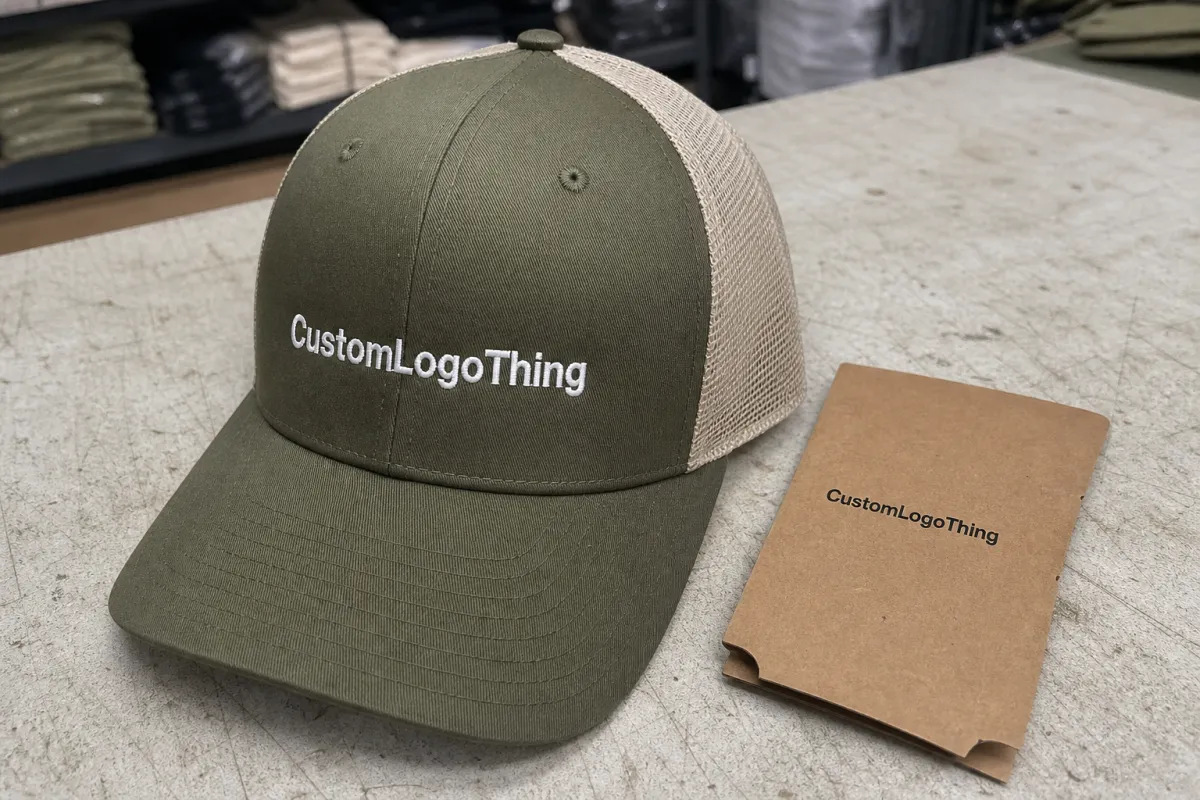
There is a reason the vitamin trucker caps unit cost review comes up so often in procurement conversations. Trucker caps can look branded without demanding expensive construction. The shape is simple, the front panel gives enough room for a logo, and the price gap between a basic build and a cleaner decorated build is still manageable if the spec stays disciplined.
The base construction does a lot of the work. A six-panel cap with a structured front, mesh back, and plastic snap closure is common enough that factories can quote it quickly and repeat it reliably. The margin risk is usually not the cap frame itself. It sits in the details around it: stitch density, artwork complexity, packing method, and how many times the design gets revised before approval.
For vitamin brands, the cap also performs well across different campaign types. It can sit beside sample sachets, hydration kits, clinic giveaways, or seasonal retail bundles without looking out of place. That repeatability helps when the same style needs to be reused for multiple programs. The more the buyer can reuse a tested spec, the less the order cost wanders from run to run.
Three common order types usually create three different cost profiles:
- Internal staff merch - standard colors, simple embroidery, and bulk carton packing.
- Promo giveaways - low unit cost matters most, so decoration and packaging stay minimal.
- Retail-ready packs - stronger presentation, more visual control, and added attention to labels and packing format.
That is why a quote can look inexpensive on paper and expensive in practice. If the factory has to add custom color matching, individual polybags, or extra proof rounds, the final number moves. The best buyers ask early whether the cap is for a fast promotional drop or a presentation piece that has to hold up under closer scrutiny.
"Cheap" is only useful if the order still ships correctly.
Panel Count, Mesh, and Decoration Choices That Change the Look
The build starts with structure. A trucker cap can be structured or unstructured, usually five-panel or six-panel, with a curved or flat brim, plus mesh back or full-fabric back. Those choices affect the appearance and the price. A structured front panel gives the logo a cleaner stage. A softer front can feel more relaxed, but it does not always hold embroidery as neatly, especially when the artwork is large or detailed.
For wellness brands, visual balance matters more than many buyers expect. A bold wordmark can work well on a foam front panel if the stitch density is right. A smaller logo may disappear if the cap looks too busy. A detailed icon can become muddy unless it is simplified for embroidery or moved to a woven patch. The cap is a poor place to assume every logo behaves the same way.
Decoration method changes both the price profile and the final look:
- Embroidery - usually the best blend of durability and perceived value.
- Woven patch - better for fine detail and sharper graphics.
- Rubber or PVC label - more dimensional, more branded, and generally pricier.
- Screen print - lower setup in some cases, but typically less durable than stitched decoration.
If the brand is strict about color, the unglamorous checks matter. Ask for Pantone references, thread cards, and placement mockups. A lot of rework starts when someone approves a screen image and expects the thread color to match perfectly in production. It will not. Thread has sheen, texture, and its own tolerance range, and those small differences become visible once the cap is in hand.
Mesh choice matters too. Standard polyester mesh keeps the cap light and familiar. A tighter mesh can make the piece look cleaner in photos. Heavier front fabric, such as cotton twill or brushed cotton, shifts the cap toward a more retail finish, but it can also increase cost and slow production if the factory needs different stock materials. From a bulk pricing point of view, each extra material change gives the quote another chance to rise.
If the goal is tighter unit cost control, the safest formula is usually simple: one decoration method, one base shape, one closure type, and one or two approved colorways. The order becomes easier to quote, easier to approve, and easier to repeat. Complexity belongs in the design brief only if the budget can support it.
Specs to Lock Before You Request Samples or Proofs
A serious quote starts with a serious spec. A cap request that omits fabric, structure, decoration, and packing details is mostly a guessing exercise. The factory cannot build a reliable cost per piece if the brief says “nice cap, maybe black, maybe logo on front.” That type of request usually leads to a polite reply and a number with plenty of room for later additions.
Lock these basics before requesting samples or proofs:
- Fabric - polyester, cotton twill, brushed cotton, or a mixed build.
- Mesh color - matching, contrast, or stock black and white.
- Front structure - foam-supported, buckram-backed, or soft front.
- Closure - plastic snap, fabric strap, or hook-and-loop.
- Brim style - curved, flat, or lightly pre-curved.
- Decoration - embroidery, patch, print, or a combination.
- Packing - bulk carton, individual polybag, retail insert, or custom box.
Fit still matters, even though trucker caps are adjustable. Crown depth, panel height, and closure range affect comfort and appearance, especially when the cap will be worn across different markets. A crown that sits too shallow can look awkward. One that rides too high can feel flimsy. You do not need multiple size options, but you do need a repeatable fit that holds across the run.
Quality checkpoints keep the order from slipping. Check stitching density, panel symmetry, logo centering, thread tension, and color consistency. If the cap will ship flat, ask how the front panel is protected from collapse. Some constructions tolerate compression better than others, and if the artwork depends on a crisp front face, carton pressure becomes a genuine issue rather than a theoretical one.
A written spec sheet or tech pack summary saves time and prevents disputes later. It also protects both sides when someone says the sample looked “slightly different.” That phrase usually leads to another sample, a rushed correction, or a shipping delay that pushes the order into the next freight window. For anything tied to a launch date, the cleanest path is written approval before production starts.
For packing and transit, some brands compare carton handling against broader shipping standards. If the caps will be stacked, shipped, and distributed repeatedly, asking about the packing approach against common transit stress expectations from groups such as ISTA is sensible. That does not replace a product spec. It just helps catch bent front panels and avoidable claims before they become expensive.
Vitamin Trucker Caps Unit Cost, MOQ, and Quote Math
This is where the vitamin trucker caps Unit Cost Review becomes useful in a buying sense. The unit price is made from several parts, not one. The cap blank, decoration setup, labor, sample handling, packing, and freight allocation all contribute. A cheap blank can still become an expensive delivered item if the order needs custom embroidery setup, special packaging, and multiple artwork changes.
The MOQ usually follows the complexity of the spec. Standard stock shapes with simple embroidery can support smaller runs. Add custom mesh colors, patch construction, or retail packaging, and the factory usually wants a higher minimum to justify the setup. That is normal. Tooling fees and setup charges are not arbitrary; machines, digitizing, and printing screens all carry real prep costs.
Useful pricing bands help buyers judge whether a quote is workable. The figures below are not a promise. They are the sort of range a buyer may see when the spec is sensible and the supplier is not hiding the expensive part in the fine print.
| Order Size | Typical Build | Estimated Unit Cost | Notes |
|---|---|---|---|
| 100 pcs | Stock cap, simple embroidery, bulk packing | $3.80-$6.50 | Setup impact is heavy here; sample and freight spread is noticeable. |
| 300 pcs | Stock cap, embroidery or woven patch | $2.60-$4.20 | Usually a better balance between setup and volume. |
| 500 pcs | Standard cap with custom branding | $2.10-$3.60 | Often the sweet spot for launches and promotional programs. |
| 1,000 pcs | Repeat build with efficient packing | $1.70-$3.10 | Best spread on labor, if the spec stays stable. |
That table shows why quote math matters. Buyers who focus only on blank cap cost miss part of the picture. At low volume, one sample fee or one rushed correction can distort the order. At higher volume, packing efficiency, carton count, and freight class start to matter more. Landed cost, not factory price, is the number that decides whether the order makes sense.
A complete quote should include:
- Artwork setup or digitizing charges.
- Sample policy and sample lead time.
- Final packing specification.
- Carton count and carton dimensions.
- Shipping terms, including whether freight is included.
- Extra cost for color matching, rush production, or special labels.
If those items are missing, the quote is incomplete. It may still be usable, but only as a rough comparison. The best supplier is the one that shows the ugly details upfront. That honesty saves more money than shaving twenty cents off the cap and discovering later that the packaging doubled the landed cost.
Production Steps, Turnaround, and Lead Time Expectations
Most production runs follow the same path: inquiry, spec confirmation, artwork review, sample or digital proof, approval, bulk production, finishing, QC, packing, and shipment. Buyers move faster when they know which step is waiting on them. If the factory is waiting on a logo file and the buyer thinks production has already started, the schedule is wrong before the first cap is sewn.
Standard stock builds move faster because the cap base is already available. Custom fabric, special closures, or multi-step decoration slow things down. A simple embroidered run might ship in 12-18 business days after approval if materials are in stock. A more custom build, especially one with patches, special colors, or retail packaging, can stretch to 20-30 business days. Rush is possible, but only when the base materials are ready and approvals move quickly.
Delays usually happen away from the sewing line. Artwork revisions, missing Pantone references, late sample approvals, and vague shipping instructions are the usual causes. The factory can only move as fast as the slowest approval. A milestone schedule helps. Ask for dates tied to proof approval, sample dispatch, bulk start, and ship-ready photos. Then the order is managed, not merely hoped for.
Good buyers also ask about the packing method before bulk production begins. Carton size, inner packing, and compression protection can change both damage rates and freight cost. If the caps need to survive long distribution chains, the supplier should explain whether the front panel is supported, folded, or nested. Those details sound small until a pallet arrives with the front panels flattened.
For cartons and inserts, some brands also review environmental claims during sourcing. If the program needs recycled cartons or paper inserts, check those claims against recognized references such as FSC for paper-based materials. That does not replace the product spec, but it helps keep packaging claims from drifting into marketing copy that cannot be backed up.
What Separates a Reliable Cap Supplier From a Cheap One
A low quote is not the same as a usable quote. A reliable supplier tells you what is included, what is not, and where the risks sit. A cheap supplier often says yes to everything. Yes to the color. Yes to the timeline. Yes to the decoration. The problems show up later, usually after the sample is approved and the order is too far along to change cleanly.
Communication is the difference. Good suppliers answer with spec confirmation, visual references, and practical advice on where to save money without damaging the cap. They might recommend a stock mesh color instead of a custom dye, or suggest a woven patch instead of detailed stitching that will blur on a curved panel. That is not upselling. That is preventing a bad result.
Quality control on caps is simple, which is exactly why sloppy suppliers are easy to spot. Check panel consistency, logo placement, thread tension, color repeatability, and carton-level inspection. If one cap has the logo too high, the next too low, and a third with loose stitching, the buyer sees it immediately. No microscope is needed to spot a crooked front panel.
Post-approval support matters as well. If the proof changes, the supplier should document it clearly. If the shipment plan changes, the packing instructions should be updated instead of improvised. Orders drift when nobody owns the revised detail. The better suppliers do not treat approval as the end of the conversation. They treat it as the start of controlled production.
That is the real divide between a vendor and a partner. One gives a number. The other gives a number you can actually use.
Next Steps to Get a Clean Quote Without Rework
If the goal is a clean quote, send a complete brief. Do not make the supplier chase basic details. Provide the logo file, cap color preference, decoration method, target quantity, delivery deadline, and whether you need bulk packing or retail packaging. If placement is already known, send a mockup. If not, say that plainly and ask for a recommended position.
Compare three build options before deciding:
- Value version - stock cap, simple embroidery, bulk packing.
- Mid-tier version - better front structure, patch or higher-density embroidery, cleaner presentation.
- Premium version - custom colors, tighter brand matching, more refined packing.
That comparison makes the tradeoffs visible. The buyer can see where the MOQ changes, where setup charges appear, and where a small upgrade alters the whole order. For many vitamin and wellness brands, the middle build is the sensible choice. It gives enough visual quality to protect the brand without turning the order into an expensive vanity item.
Ask for landed-cost logic, not only ex-factory pricing. Freight, sample cost, packing, and any duty-related handling should be visible before approval. If the supplier cannot explain the path from quote to delivered carton, the order is not being priced with enough clarity. That is where budgets get quietly eaten.
Once the spec is confirmed and the visual is approved, lock the final vitamin trucker caps Unit Cost Review with the supplier before production begins. That is the point where the order stays disciplined or starts collecting surprises. Keep the brief tight, keep approvals fast, and the run usually behaves.
FAQ
What affects vitamin trucker caps unit cost the most?
Decoration method, setup time, and order quantity usually matter more than the blank cap itself. Special colors, patches, custom closures, and retail packaging can push the cost up quickly. Freight and sample revisions also affect the final landed number.
What MOQ is normal for custom vitamin trucker caps?
Simple stock-style builds can often start lower than fully custom caps. Custom panels, custom mesh colors, or special packaging usually require a higher MOQ. Asking for pricing at 100, 300, 500, and 1,000 pieces shows the break points clearly.
How long does production usually take for vitamin trucker caps?
Standard orders move faster when the factory has the base materials in stock. Sampling, artwork approval, and decoration complexity are the main schedule drivers. Rush production is possible, but only if the spec is locked and approvals are fast.
Which decoration method gives the best value for vitamin trucker caps?
Embroidery is often the best mix of perceived value and durability. Patches work well when the logo needs more detail or a more premium look. Printed options can be cheaper, but they are usually less durable than stitched decoration.
What should I send to get an accurate quote for vitamin trucker caps?
Send the logo file, target quantity, color preference, decoration method, and delivery timeline. Include whether you want bulk packing, retail packaging, or individual polybags. The more complete the spec, the faster the quote and the fewer revisions later.

