Custom Logo Things
Buy Wine Club Recycled Poly Mailers Unit Cost Review
For subscription teams shipping tasting notes, small accessories, or replacement items, the wine club recycled poly mailers Unit Cost Review usually comes down to a simple tradeoff: lower material weight versus the hidden cost of poor fit, weak sealing, or oversized packaging. A mailer that trims even a few ounces from the parcel while still arriving clean can change the economics of a recurring program faster than most buyers expect.
Why recycled poly mailers cut waste without raising damage rates
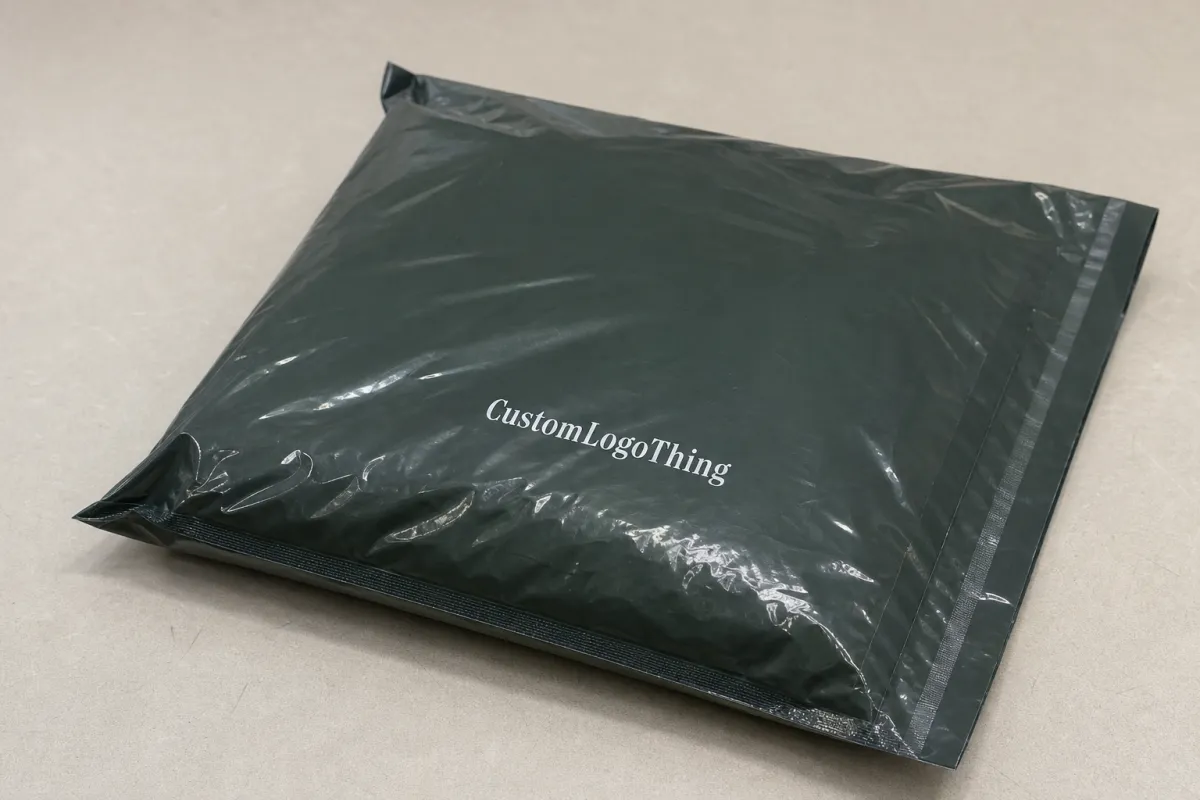
Wine clubs operate on a narrow packaging margin. The outer pack has to look intentional, survive parcel handling, and keep the cube from creeping up. Recycled Poly Mailers are useful because they reduce dead weight without asking the fulfillment team to do more work. For lightweight inserts, apparel, printed materials, and small replacement items, they often replace a small carton plus void fill at a lower total cost.
The savings are not abstract. One less corrugated layer means less material, less tape, fewer folds, and one less decision on the packing line. That matters in a program with repeat SKUs, monthly sends, and a growing number of “just one more thing” add-ons. A pack format that shaves even a little labor can matter as much as a slightly lower piece price.
They are not a substitute for every wine shipment. Glass bottles still need packaging that is built around breakage risk, pressure points, and carrier testing. But for non-breakable items, Recycled Poly Mailers solve a different problem: how to present a compact, branded shipment without paying for packaging that adds more protection than the product needs.
There is a branding angle too. A clean mailer can feel curated instead of improvised. That distinction matters in a club program, because the customer sees the outside of the package before any tasting note or insert is opened. A light, well-printed mailer often looks more deliberate than a low-cost carton that has been over-taped and overfilled.
Buyers should still think in practical terms. Dimensional weight, carrier zone, and pack-out speed usually tell the real story. On recurring shipments, a small reduction in tare weight multiplied across hundreds or thousands of parcels can create real savings. That is why recycled mailers deserve review even when the item itself is inexpensive.
Mailer formats and branding choices for wine club shipments
Most clubs narrow the choice to a few structures. Flat mailers work well for slim items such as tasting inserts, labels, gift cards, and lightweight accessories. Expandable styles are better for bundled materials or soft goods that need a little depth. Pressure-seal options help pack lines move faster because they close with a single peel-and-stick action. Tamper-evident closures add a visible opening cue, which some brands prefer for replacements or member communications.
Branding changes the economics more than many teams expect. A one-color logo usually keeps cost under control and still gives the package a recognizable identity. Full-surface artwork can look excellent, especially in seasonal campaigns, but it adds setup complexity, more ink coverage, and often more proofing time. A neat print on an appropriate film usually performs better than a busy design that looks polished in a mockup but weak in production.
Finish matters as well. Matte film tends to read more premium and hides scuffs better in transit. Gloss can make colors pop, but it also shows handling marks sooner. The right answer depends on the rest of the club’s packaging system. A mailer should feel like it belongs with the bottle shipper, tasting card, and insert materials, not like it came from a different program entirely.
Opacity deserves more attention than it usually gets. Higher recycled content can create speckling, tone variation, or a slightly less uniform surface. That is not a defect by itself. It is a material characteristic. The issue is whether the brand’s print and color choices still look clean on that film. Light pastel logos, for example, can disappear on a busy recycled surface unless the ink density is tested on the actual substrate.
For clubs comparing formats, a broader packaging catalog can be useful for side-by-side spec checks before committing to one structure. The point is not to shop forever. The point is to avoid approving a format because the sample looked good in isolation.
Specs that drive seal strength, opacity, and shipping performance
Spec sheets matter more than sales language. Buyers should review film thickness, recycled-content percentage, seam quality, closure width, print coverage, and opacity consistency before approving a run. A mailer that looks fine as a PDF can behave differently once it is folded, loaded, stacked, and handled by a carrier network.
For many club programs, recycled film in the 2.5- to 3.0-mil range is a practical starting point. That range is not a rule. Lighter inserts may not need that much material, while sharper-edged or heavier items can demand more. If the package must go through automated pack-out, ask how the film feeds, whether the adhesive strip stays aligned, and whether humidity changes the seal performance. Those details affect throughput more than most buyers expect.
Seam strength should be checked separately from the body film. A strong-looking bag with a weak seam can fail at the point of stress long before the film itself tears. The same is true for puncture resistance. A soft product may not need a heavy wall, but anything with a corner, clip, rigid insert, or folded edge can create trouble if the seal line is too narrow or the film gauge too light.
Printing also interacts with performance. Heavy ink coverage can alter the feel of the film, especially on thinner structures. Metallic ink, dense solids, or large dark fields can raise cost and change dry time. If the package needs to be inspected or inserted quickly, that matters. A good proof should show actual color on the exact substrate, not a generic digital approximation.
Ask for data, not adjectives. Tear resistance, puncture resistance, seal hold, and transit compatibility are the numbers that tell you whether the mailer will survive the route you use. If the supplier references transportation testing, ask how close it is to ISTA-style handling or the club's real distribution pattern. Test claims are useful only if they resemble the shipment you actually send. EPA recycling guidance can also help if you need clear language around recycled content and claims documentation.
Documentation matters for reporting and compliance. If a club shares sustainability data with members, retailers, or internal finance teams, ask for proof of recycled-content claims, resin sourcing details, and any certification tied to the raw material stream. It is much easier to collect that information before production than to reconstruct it later from invoices and email threads.
Wine club recycled poly mailers unit cost review
The most useful way to review unit cost is to separate piece price from landed cost. A quote can look competitive until freight, setup, sample charges, and any tooling fees are added. The real number is not just what one bag costs on paper. It is what a finished, delivered, approved run costs by the time it lands in the warehouse.
Order quantity has the biggest effect on price. Small test runs usually cost more per piece, but they reduce risk. They let the buyer confirm fit, print quality, closure behavior, and pack-out speed before committing to a larger replenishment. Higher-volume runs usually lower the unit price because setup charges are spread across more pieces, but that only helps if the club has storage room and a stable design.
Print complexity is the second major driver. One-color logo work is usually the most economical custom option. Add a second color, full-coverage art, metallic ink, or large printed areas on both sides, and the price moves up quickly. Custom sizing can add another layer of cost because the film width, sealing dimensions, or die-cut may need to change.
For procurement planning, these are common market ranges rather than guarantees:
| Option | Typical cost per piece | MOQ | Lead time | Best use |
|---|---|---|---|---|
| Stock blank recycled mailer | $0.12-$0.22 | 500-1,000 | 3-7 business days | Test packing, quick replenishment, internal use |
| One-color custom printed mailer | $0.18-$0.32 | 1,000-2,500 | 10-15 business days | Recurring club inserts, accessory kits, seasonal messaging |
| Full-surface custom mailer | $0.25-$0.48 | 2,500-5,000 | 15-20 business days | Premium presentation, retail-style unboxing, campaign launches |
Those ranges do not include every variable. Setup fees for custom art can add a modest fixed charge, and freight can swing the landed total more than buyers expect. A low piece price with expensive shipping can lose to a slightly higher piece price that ships more efficiently. That is why the quote should always show assumptions: size, film weight, recycled-content target, print count, destination ZIP code, and whether the price includes delivery.
MOQ should be treated as a planning tool, not a hurdle. A higher minimum can improve unit price, but only if the design will stay in rotation long enough to justify the inventory. If artwork changes every quarter, too much quantity becomes dead stock. If the mailer will be unchanged for a year or more, larger buys usually make financial sense. The right answer is tied to ship cadence, not supplier preference.
One detail that often gets overlooked: freight class and carton count can alter the true unit economics. A product that arrives in more cartons, or on a less efficient pallet configuration, may cost more to receive and store even when the per-piece rate looks favorable. Procurement teams that compare only the printed unit price usually miss that part.
Ask for the same assumptions from every supplier. If one quote uses a different size, a lower recycled-content target, or a shorter delivery route, the numbers are not truly comparable. Clean comparison is more useful than a cheap headline number.
Production steps, proof approval, and lead time planning
The production path is usually straightforward: specification review, quote confirmation, artwork handoff, proofing, production, inspection, and dispatch. The catch is that each step depends on the buyer responding quickly. A delayed proof can move the whole schedule, especially if the team is still adjusting logo size, barcode placement, copy, or regulatory text.
Proof approval matters more than most teams expect. One round of edits is manageable. Several rounds can push a schedule back by days, sometimes longer if the order includes custom print, color matching, or structural changes. For a wine club that ships on fixed dates, that delay can create a warehouse problem before it becomes a packaging problem.
Stock blanks are faster because they skip custom setup. Printed mailers need more lead time, and special film or finish requests can add another layer. If a supplier cannot clearly tell you the time from proof approval to production release, that is a weak sign. The answer should be specific enough to let you build a calendar around it.
Seasonal programs need a buffer. If the club has a release in the first week of the month, the packaging order should not be released at the last minute. Waiting until inventory is almost gone usually forces a compromise: rush freight, a temporary substitute, or a higher-cost emergency buy. Those choices can erase the savings from a good unit price.
Lead time planning also protects print quality. Rushed jobs tend to compress inspection and correction windows. A small logo shift, a misread color proof, or a closure problem is easier to catch when the timeline has breathing room. In packaging, speed is useful only when it does not push defects downstream.
What makes a packaging supplier reliable for wine clubs
Reliability is mostly about consistency. Same film gauge. Same closure strength. Same recycled-content documentation. Same print result from one run to the next. That matters more than a polished pitch because subscription packaging repeats the same order pattern over and over. A supplier that gets one run right but cannot repeat it is a poor fit for this kind of business.
Communication is part of the product. Replenishment programs run on timing, and timing only works if the supplier answers questions quickly enough to keep the shipment calendar intact. Slow responses to artwork revisions or quantity changes often lead to emergency buys, and emergency buys are where unit cost starts to drift upward.
Pre-production samples are valuable when the club has more than one tier. A basic member pack may contain fewer pieces than a premium tier, and the mailer needs to fit both or be intentionally separated by SKU. Samples show whether the closure holds, whether the logo lands in the right place, and whether the surface finish matches the brand standard under real light.
Inventory support matters too. Clubs with recurring ship windows need more than a price quote. They need version control, reorder history, and a straightforward way to stage stock for seasonal drops. If the supplier can hold inventory, release it on a schedule, or split a run into staged deliveries, that is a meaningful operational advantage.
There are a few simple signs of a strong supplier relationship:
- Predictability in gauge, closure behavior, and print consistency.
- Documentation for recycled content, measurements, and order specs.
- Speed on proofs, corrections, and reorders.
- Flexibility on storage, staged release timing, and artwork changes.
That checklist is practical, not decorative. It reduces packing errors, chargebacks, and last-minute substitutions. It also protects the economics of a recurring program, which is where waste tends to show up first.
Next steps to price and launch your mailer order
Before requesting quotes, gather the basics: dimensions, closure type, recycled-content target, print needs, annual volume, and delivery ZIP code. If the club ships on a fixed calendar, include the target arrival date as well. That gives a supplier enough information to price the job honestly instead of sending back a placeholder number.
Ask for at least three quote scenarios if possible: a test run, a mid-size replenishment, and a bulk order. The spread between those numbers shows how much unit cost changes with quantity, and it makes the inventory tradeoff visible. If the cost difference is tiny, smaller orders may be smarter. If the gap is wide, larger runs can justify the storage.
Ask for a sample or a formal spec review before artwork approval. That step catches fit problems early and confirms whether the closure style works in a real packing flow. Some teams discover that pressure-seal mailers reduce labor. Others decide a tamper-evident strip is worth the small premium because it makes member replacements easier to manage. Either way, the sample is far cheaper than correcting a production mistake after the run ships.
Set reorder points around the club calendar, not around a rough guess. Packaging shortages during peak weeks are expensive because they trigger rush freight and limit supplier choice. A cleaner purchasing rhythm keeps the program steady and protects margin without overbuying.
If the goal is to improve presentation without inflating shipping costs, the smartest starting point is to define the product dimensions, expected volume, and ship schedule first. From there, the wine club recycled poly mailers Unit Cost Review becomes a real procurement exercise instead of a vague packaging discussion.
What affects wine club recycled poly mailers unit cost the most?
Order quantity usually has the biggest impact on unit price. Print complexity, bag size, recycled-content requirements, and freight all move the landed number as well. A quote that looks low per piece can become expensive if shipping or setup is not included.
What MOQ should I expect for recycled poly mailers for a wine club?
MOQ depends on whether the mailer is stock blank or custom printed. Stock runs can start lower, while printed orders usually require a larger minimum. The right MOQ is the one that fits your reorder cadence and storage space, not the one that sounds cheapest on paper.
Are recycled poly mailers suitable for fragile wine-related shipments?
They work best for lightweight inserts, accessories, apparel, and non-bottle items. For glass or breakable products, confirm cushioning, closure strength, and carrier handling before choosing a mailer. If the contents can shift, puncture, or bend, a different package structure is safer.
How long does production usually take after proof approval?
Stock items can move faster than custom printed jobs. Artwork revisions, color matching, and order size affect the schedule. Build extra time into the plan if the mailers must arrive before a fixed wine club ship date, especially during seasonal peaks.
What information should I send for an accurate quote?
Send dimensions, estimated annual volume, print details, closure style, recycled-content preferences, delivery location, and target ship date. A sample or reference image also helps the supplier quote the correct structure the first time.