If you are requesting a waterproof apparel mailers Supplier Quote for Soap makers, the useful question is not whether a bar of soap fits inside a bag. It is whether the mailer can survive the trip without scuffing, splitting, or leaking fragrance onto everything around it. Soap can look finished on a shelf and still behave like an active product in transit. Residual moisture, fragrance oils, and abrasion from inserts or folded apparel all create failure points that show up only after the parcel leaves your hands.
That is why many soap brands do better with Waterproof Apparel Mailers than with generic poly bags. A mailer gives you a sealed exterior, better handling through parcel networks, and a cleaner presentation when the customer opens the package. It also reduces the chance that scent transfers to cards, tissue, or a second product in the same order. For mixed shipments, that matters more than most first-time buyers expect.
The best quoting conversations focus on actual use conditions: the soap format, the fill weight, the print method, the seal type, and the shipping route. A bag can be inexpensive and still be the wrong bag. A stronger bag can still be wrong if the adhesive softens in heat or if the dimensions force the packer to stretch the closure. The practical buyer looks at the whole chain, not just the unit price.
“Soap packaging fails in small ways first: a weak seal, a scuffed print, a bag that is slightly too short, or a closure that peels after a warm delivery truck sits in the sun.”
For brands shipping bath products alongside apparel or gift items, the right mailer can reduce returns and improve the unboxing experience at the same time. That is the point. Not luxury. Not excess. Just packaging that still looks intentional after sorting, stacking, compression, and a few rough edges from the carrier network.
Why soap makers need waterproof mailers, not generic poly bags
Soap is deceptively simple. A finished bar can still carry fragrance oils, a trace of surface moisture, or a powdery residue from curing and wrapping. That means the packaging has to do more than hold shape. It has to prevent transfer, keep the exterior clean, and avoid making the contents look tired before they reach the customer.
Generic poly bags often miss one of those jobs. They can be too thin, too slippery, or too inconsistent in seam quality. A thin bag may look acceptable during packing, then split at the fold line when the parcel is compressed in a carton or a bag sorter. Another common issue is odor bleed. If the closure is weak or the film is too porous for the application, the outside packaging starts to smell like the soap line. That is not always a defect, but it can be a problem when a retailer or subscription customer expects everything in the parcel to arrive neutral and tidy.
Waterproof Apparel Mailers are built for a tougher set of conditions. They are usually made from PE or co-extruded film and sealed with an adhesive flap or similar closure. In practical terms, that means better resistance to light moisture, grime, and friction. It does not mean the mailer should be treated as a submerged container. The useful standard is simpler: the package should keep out typical transit moisture, protect the exterior print, and stay intact after normal handling.
For soap makers bundling a bar with folded apparel, towels, scrunchies, or paper inserts, the packaging also has to manage contact between different surfaces. A mailer that performs well for clothing alone can be too weak when the contents include a hard soap edge or a boxed accessory. Mixed shipments create more abrasion and more pressure points. That is where failures start.
The buyer’s checklist is straightforward: seal strength, puncture resistance, opacity, and print durability. If any one of those is off, the mailer stops being a packaging solution and becomes another source of variance in fulfillment. A waterproof apparel mailer should reduce work, not add a repair step at the packing table.
Soap brands with repeat orders also have to think about consistency. Customers notice when the first shipment arrives in a clean matte mailer and the reorder arrives in a thinner glossy one with a weaker closure. That kind of variation looks small on a spreadsheet and obvious on a doorstep. Consistency is part of the product.
Material choices and product details that affect performance
Mailer performance starts with film structure. Standard PE mailers are the baseline: economical, light, and adequate for lower-risk shipments. Co-extruded mailers add a better balance of toughness and flexibility because multiple film layers can be tuned for puncture resistance and seal consistency. Recycled-content film can be a good option too, but only if the supplier can prove the material still meets the required tear and closure performance. Sustainability claims mean little if the bag cracks at a corner or the adhesive fails in warm storage.
Thickness is usually listed in mil or micron. For many soap and apparel shipments, a practical range is about 2.5 to 4 mil for standard use and 4.5 mil or higher for heavier or more rigid contents. A thicker bag gives you more margin against puncture and a more substantial hand feel, but it also costs more and can make automatic packing a little less smooth. There is a point where extra thickness adds stiffness without adding real protection. That is wasted material.
Closure design matters just as much as film gauge. A standard adhesive flap works for many orders, but the adhesive quality varies. Heat, humidity, and dust can reduce performance. A tamper-evident strip helps with customer confidence and return handling. Double-seal designs can be useful for higher-value bundles or seasonal kits where the outer package needs to stay clean even if the customer reuses it for storage or returns.
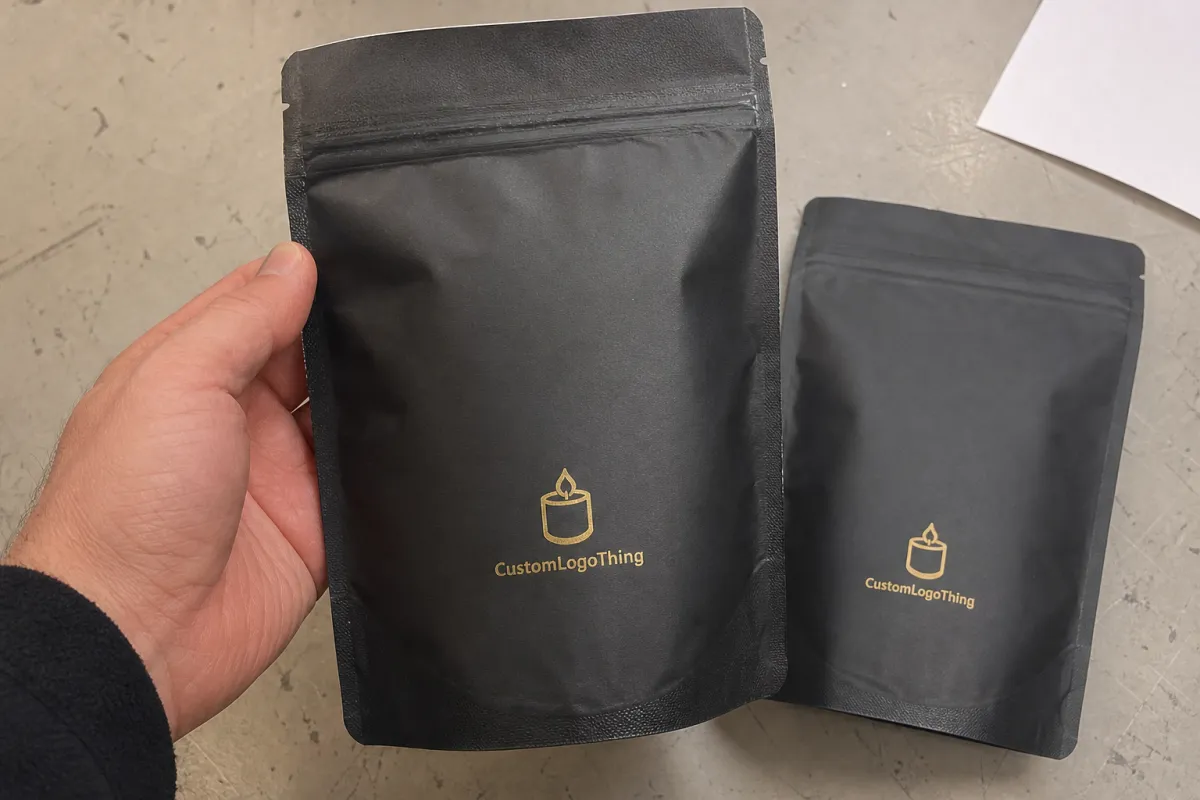
Surface finish affects both appearance and function. Matte hides fingerprints and scuffs better. Gloss can sharpen colors and make print look brighter. Opaque white remains the safest choice when the contents should stay private or when visual clutter at the doorstep matters. If the brand depends on logo visibility, custom print is often cheaper than moving to a fully printed carton, and the mailer still handles the same job at lower material cost.
Print method deserves its own attention. Flexographic printing is common for larger runs because it handles repeatable color and efficient output well. Digital printing can be useful for shorter runs or frequent artwork changes, though cost per unit is usually higher. Registration tolerance matters more than many buyers realize. Small logos near the seam or edge can look crooked if the supplier’s print control is loose. Ask for the acceptable tolerance in writing, not a vague promise that it will “look fine.”
Here is a quick comparison buyers can use before asking for a quote:
| Mailer type | Typical performance | Best use case | Common tradeoff |
|---|---|---|---|
| Standard PE mailer | Light water resistance, basic puncture protection | Low-risk soap bundles, lightweight apparel inserts | Thinner wall options, less premium feel |
| Co-extruded film mailer | Better tear resistance and more stable sealing | Mixed soap and apparel shipments, subscription packs | Higher unit cost than basic PE |
| Recycled-content mailer | Comparable water resistance when correctly specified | Brands with recycling claims or lower-impact sourcing goals | Performance depends on resin mix and process control |
| Tamper-evident or double-seal mailer | Improved closure security | Retail-ready shipments and higher-value orders | More material and slightly higher pricing |
In practice, soap makers should match material to the shipment path. A local parcel route with short dwell times is not the same as a cross-country shipment with multiple sorting touches and temperature swings. A mailer that works for one may be underbuilt for the other. The point is not to buy the heaviest option. The point is to Buy the Right one.
Specifications buyers should confirm before requesting a quote
A precise quote starts with precise inputs. The most common mistake is sending a supplier the soap bar dimensions and assuming the bag size can be guessed from that alone. It cannot. A wrapped bar behaves differently from an unwrapped bar, and a single bar behaves differently from a two-bar gift set with a card insert or a folded apparel item.
Start with the finished product dimensions, not the raw soap dimensions. Then add the amount of extra room needed for easy insertion and seal closure. If the bag is too tight, packing slows down and the adhesive flap may not close cleanly. If it is too loose, the product shifts during transit and the package looks sloppy on arrival. Either way, the result is avoidable.
Thickness should be specified clearly. If your team thinks in mil, say mil. If they think in micron, say micron. Both work, but the supplier needs one system and a target that is tied to actual performance. A thicker film can improve puncture resistance, but if the contents are lightweight and soft, extra thickness can be unnecessary. Ask for the point where the supplier thinks the material stops offering meaningful benefit.
There are a few other details that should be settled before a quote is finalized:
- Seal type if you need a simple adhesive flap, tamper evidence, or a stronger return closure.
- Opacity if the contents should not be visible through the film.
- Print coverage if you want a logo panel, full-coverage branding, or a simple one-color mark.
- Label panel if shipping labels need a smooth surface for scanning and adhesion.
- Storage conditions if the bags will sit in warm, humid, or dusty areas before use.
Practical validation matters more than a polished spec sheet. Ask for a sample and check three things: fit, closure, and print behavior. Then fill the bag with the actual soap SKU and any insert, press the seal, and shake it lightly. If the product moves too much, the dimensions are wrong. If the seal lifts, the adhesive or pressure is wrong. If the print rubs easily, the surface treatment or ink system needs attention.
For higher-value shipments, buyers should also ask about test references. Transit handling can be checked using ISTA-style methods, and material claims should be backed by a clear document trail. For sustainability statements, references should be specific and not vague. If the supplier mentions recycled content or paper-based components, ask how those claims are documented and whether chain-of-custody evidence is available where relevant. Resources like ISTA and the FSC site are useful starting points for understanding the language, even if the final certification route depends on the material mix.
One more check is often overlooked: adhesive performance in heat. A bag can pass a bench test at room temperature and still fail after a day in a hot truck. The supplier should be able to tell you the recommended storage range, or at least the conditions under which the adhesive was tested. That answer is more useful than a marketing claim about being “strong.”
Cost, pricing, MOQ, and what changes your quote
Pricing follows the spec. Material grade comes first, then size, then thickness, then print complexity, then closure type, then order volume. If a supplier gives a number before those variables are set, the number is only a placeholder. A clean quote should show what is driving the cost so you can see where a design change will save money and where it will not.
For larger runs of plain stock-style mailers, a rough unit range often sits around $0.10 to $0.22 per unit, depending on size, thickness, and resin market conditions. Add custom print, stronger film, or a tamper-evident closure, and the range often moves to $0.18 to $0.40 per unit, with small runs sometimes going higher. That is not unusual. Setup cost is simply spread across fewer pieces, which changes the unit math fast.
MOQ depends on whether the order is stock, semi-custom, or fully custom. Stock sizes usually allow lower quantities. Fully custom sizes and multi-color printed runs generally require higher minimums because the supplier has to absorb tooling, setup, and production waste. For soap brands testing a new scent or holiday bundle, it is often smarter to begin with a stock size and custom print rather than jumping straight to a custom die line. That keeps risk manageable while still giving the package brand presence.
Freight can shift the total landed cost more than people expect. Lightweight items still ship in cartons, and carton volume matters. A quote that looks good at the unit level may become less attractive once packaging, palletizing, export handling, and destination fees are added. If the order is international, ask for both factory and landed estimates when possible. Air freight can make a small order look expensive quickly, while sea freight may be cheaper but slower and more sensitive to planning mistakes.
When asking for a waterproof apparel mailers Supplier Quote for Soap Makers, the useful breakdown is simple:
- Unit price by quantity tier
- Setup or prepress fees
- Plate or tooling charges if relevant
- Sample cost and sample freight
- Production lead time
- Shipping method or freight estimate
That breakdown reveals whether the supplier is quoting a true production price or just a very low headline number. It also helps compare two formats side by side. A stock option might be cheaper but less distinctive. A custom option might cost more but reduce damage, improve repeat brand recognition, or cut down on packing time if the dimensions fit better. The correct choice depends on what the mailer is supposed to do inside your operation.
There is a second cost hidden in the process: rework. A bag that closes badly or arrives with print defects is not merely a bad purchase. It slows fulfillment, creates inspection time, and can force replacement shipments. Those costs are easy to miss because they sit outside the supplier invoice. A good buyer includes them anyway.
Process and timeline: from inquiry to production steps
The quote-to-shipment process is usually straightforward, but delays cluster in predictable places. It starts with the inquiry, moves to size and construction confirmation, then material recommendation, artwork submission, proof approval, sample verification, production, and shipment. If any step is vague, the schedule drifts.
Stock orders can move quickly once payment and proof sign-off are complete. Custom-printed or custom-sized runs take longer because the supplier has to prepare artwork, process the print method, and sometimes approve a sample before production begins. A common custom timeline is around 12 to 15 business days after proof approval, though larger volumes, multiple print colors, or unusual construction details can extend that. If a supplier promises much faster output without asking many questions, the short timeline is worth questioning, not celebrating.
Most delays come from the same three sources: artwork revisions, color matching, and late sample approval. Color is especially sensitive on white or translucent film, where a small shift in opacity can make the print look different from the proof. Soap makers should submit final logo files, not draft artwork with placeholder colors or compressed image files. A low-resolution logo may be acceptable on screen and poor on film.
Before the order starts, it helps to prepare these items:
- Finished dimensions for each soap SKU or bundle.
- Expected monthly volume and reorder frequency.
- Vector artwork if available.
- Target thickness or performance requirement.
- Required ship date and any launch deadline.
During the run, status updates should be tied to actual progress. “In production” is too vague to be useful. Ask what stage has been completed, how many units are packed, and whether any issues were found in print or sealing. That is the sort of detail that prevents surprises at the end of the job. It also gives the buyer a real chance to fix a problem before a full batch ships.
A sample approval step is worth the time. Check seal strength, opacity, print placement, and fit against the actual soap SKU. Then repeat the test after the sample has sat overnight if the adhesive is a critical part of the design. Some closures look fine immediately and behave differently after the bond sets. That small extra check can save an entire order.
How to compare suppliers on reliability, not just the lowest price
The lowest quote is not always the best purchase. Packaging pricing can hide uneven film gauge, loose tolerance control, weak seals, or poor communication. A reliable supplier gives clear spec sheets, tells you what the tolerance is, and ships a sample that actually matches the approved proof. That is the baseline, not a premium service.
Factory-direct sourcing is useful when you want tighter control over film thickness, print consistency, or reorder timing. It can also reduce cost by removing extra handling layers. But direct sourcing is not automatically better. If the supplier cannot document specifications, answer questions clearly, or hold a repeatable quality standard, the chain length is not the real issue.
Watch for these signals:
- Dimensions, thickness, and closure type are stated plainly
- Tolerances are given instead of broad assurances
- Sample costs and freight are explained up front
- Proof revisions are handled without confusion
- Repeat orders match the original sample
Repeatability matters more than many buyers admit. A soap brand can tolerate a slightly higher unit price better than a shift in closure strength, print density, or finish from one reorder to the next. If a customer receives one batch in a matte mailer and the next in a gloss bag with different opacity, the packaging has become a variable. That weakens the brand even if the product inside is unchanged.
Reliable suppliers also understand that the right answer is not always the most expensive one. If a stock format will do the job, a good supplier should say so. If a custom size is unnecessary because the current soap bundle already fits a standard mailer, the supplier should say that too. That kind of honesty is more useful than polished sales language.
For growing brands, the decision often comes down to flexibility versus efficiency. Short runs matter for seasonal launches and limited editions. Larger, predictable runs matter when the design is fixed and reorder timing is stable. The supplier should be able to support both modes without changing the packaging standard each time the order size changes.
Next steps to secure the right quote for your soap packaging
The strongest quote requests are specific. Send the supplier finished dimensions, quantity, thickness target, closure preference, print details, and delivery window. If you only have a rough idea, the first round should still define the actual soap SKU, the outer dimensions of the filled bag, and whether the order includes inserts or folded apparel. Those details change the quote more than most buyers expect.
Ask for two versions if the project is still fluid: one stock-based and one custom. That comparison makes the cost difference visible. It also shows whether the extra spend is paying for something useful, such as better presentation, lower damage rates, or easier fulfillment. If the custom version does not improve any of those things, the stock format may be the better commercial choice.
A physical sample is worth more than a polished email. If a sample is not available immediately, request a dimensioned proof and confirm the fit against the actual soap SKU before production begins. Check seal quality, opacity, print clarity, and how the bag behaves under normal handling. If the soap line has seasonal versions or multiple bundles, plan the spec sheet around the whole range, not just the first SKU. That keeps reorder decisions from becoming guesswork later.
The most useful version of a waterproof apparel mailers supplier quote for soap makers is the one that reflects the real product, the real shipping route, and the real volume pattern. A clean spec sheet, a realistic sample check, and a price breakdown that shows setup, freight, and MOQ will tell you more than a generic quote ever will.
FAQs
What should soap makers include in a waterproof apparel mailers supplier quote request?
Include finished product dimensions, quantity, thickness target, print needs, closure type, and whether the order should be stock size or custom size. Add your target ship date and whether you need a sample before production. Those details are enough for a supplier to produce a meaningful quote instead of an estimate with too many assumptions.
Are waterproof apparel mailers suitable for soaps with fragrance oils or moisture?
Yes, if the film, closure, and thickness match the product. They help protect the outer package from light moisture, residue, and handling wear. The important distinction is that these mailers are built for transit exposure, not for immersion or long-term liquid containment.
What MOQ should I expect for custom mailers for soap products?
MOQ depends on size, print complexity, and whether the order is stock, semi-custom, or fully custom. Stock formats usually allow lower minimums. Custom dimensions or multi-color printing typically require a higher quantity because tooling and setup costs have to be spread across the run.
How do pricing and unit cost change with custom branding?
Custom branding adds setup work, print processing, and sometimes higher material or color costs. Unit price usually falls as quantity increases, but short runs stay expensive on a per-piece basis because the setup is spread over fewer mailers. A simple one-color logo is usually cheaper than full-coverage print.
How long does production usually take after approval?
Stock orders can move quickly once proof and payment are settled. Custom orders often take about 12 to 15 business days after proof approval, though larger quantities or more complex print can take longer. Artwork revisions and sample changes are the most common causes of delay.