Jewelry Unstructured Dad Hats Unit Cost Review for Buyers
A jewelry Unstructured Dad Hats Unit Cost Review should begin with the finished order, not the blank cap. Buyers often compare base hat prices first, but that number rarely reflects embroidery, patch work, labels, packaging, proofing, or freight. Once those items are added, the lowest blank can become the most expensive finished unit.
This matters in jewelry because the cap usually has to support a cleaner brand image than a typical promo item. A soft, low-profile shape often works better beside fine jewelry, bridal packaging, and boutique displays than a stiff structured cap. The goal is not to make the hat loud. It is to make it feel deliberate and easy to wear.
The real buying question is simple: what is the per-piece finished cost, what does it include, and what can change after quoting starts? If those answers are not clear, the quote is not yet usable.
Why a blank hat price rarely predicts the finished order cost
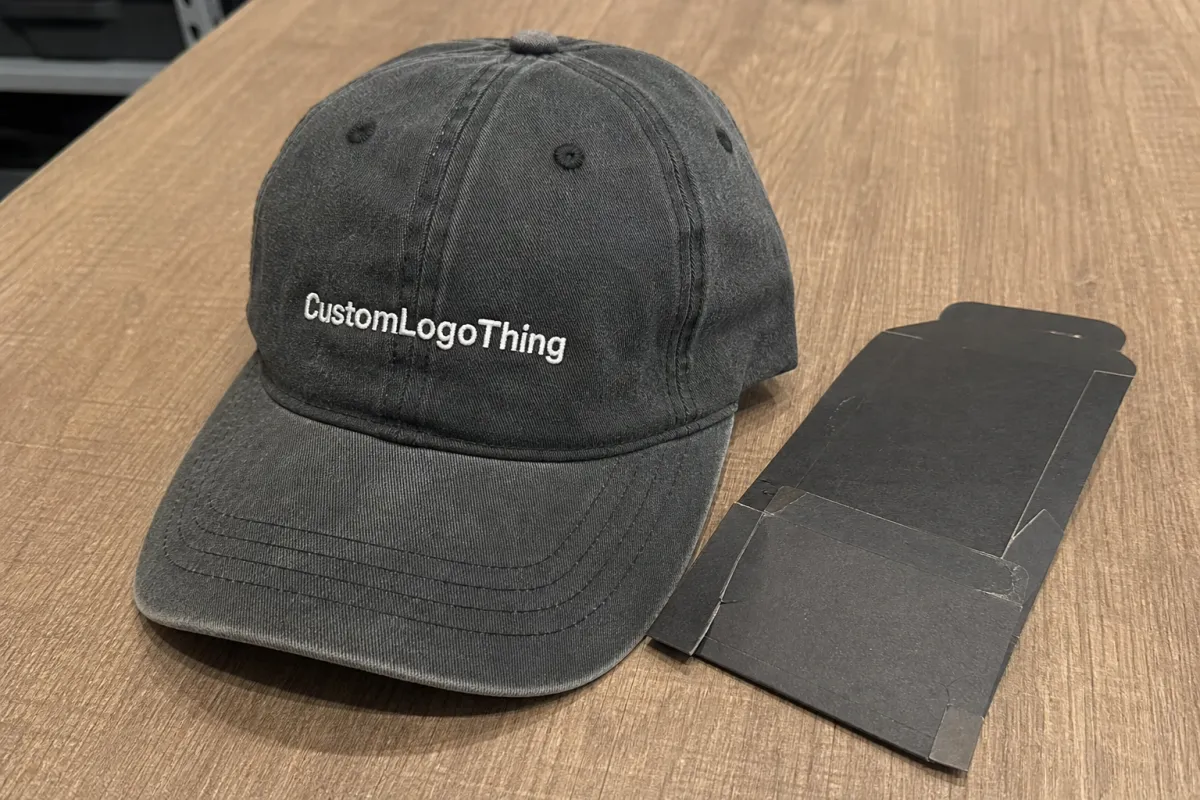
Blank hats cover only one line of the budget. A soft cotton dad cap may quote at $2.10 to $3.40 per unit, but the finished order can land much higher after decoration and finishing are added. Stitch count, patch construction, setup work, packaging, and revision cycles all affect the final number.
For jewelry brands, the cap usually needs a cleaner and more restrained look than general promo goods. That shifts the economics toward better fit, better logo placement, and more careful finishing. An unstructured cap often supports that look well because it sits lower and feels less forced.
The cheapest blank is not the cheapest finished hat. Decoration, packaging, and freight usually determine the real unit cost.
Landed cost matters too. Freight, customs duty, carton configuration, and inspection can move the final number more than the blank price itself. A quote that looks lower on paper can be more expensive once it arrives if packaging is weak or the shipping assumptions are incomplete.
Timing is another hidden cost. A cheap quote with unclear specs can lead to extra proofs, color questions, or rework. A lower number only helps if the cap is delivered in the right finish, on time, and without correction.
Fit, crown shape, and finish details that define the cap
Unstructured dad hats are built for softness. Most use a six-panel crown, though five-panel versions are also common. Because the front panel is not stiffened with hard buckram, the cap collapses slightly and sits lower on the head. That relaxed profile is the main reason buyers choose it.
Closure choice affects both cost and perceived quality. A fabric strapback is usually the most casual and least expensive. A metal buckle looks cleaner and tends to wear better. Velcro can lower cost, but it often reads more promotional than premium, which is usually a poor fit for jewelry programs.
Small finish details matter more than people expect:
- Sweatband style: cotton feels softer; blends can dry faster and sometimes cost less.
- Eyelets: stitched eyelets are standard, but contrast thread changes the look quickly.
- Brim stitching: multiple rows of topstitching help the brim hold its curve.
- Wash treatment: garment-washed and pigment-dyed caps feel more relaxed, but color consistency is looser.
- Interior finish: neat seam tape and clean stitching improve comfort and retail appeal.
Sample review matters more than digital mockups. Two caps can look similar online and feel very different in hand. One may sit too tall and make the logo look small. Another may be so soft that embroidery pulls the fabric and distorts the mark. Crown shape, brim curve, and logo scale should be checked together.
Fit also affects wearability. If the cap rides up or feels shallow, it is more likely to be stored than worn. That is a practical problem, not just a style issue.
Materials, decoration methods, and spec calls to lock before quoting
Fabric choice sets the tone and the price. Brushed cotton twill is the most common starting point because it holds shape well and gives embroidery a stable surface. Garment-washed cotton feels softer and more casual. Pigment-dyed cotton adds depth, but buyers should expect more shade variation. Blends can improve stability and sometimes reduce shrink risk, though they may feel less premium.
Decoration method can make or break the final look. Flat embroidery is usually the best balance of cost and finish for small logos. Stitch count matters more than many buyers expect: a simple logo may sit around 5,000 to 8,000 stitches, while a denser emblem can rise quickly. More stitches usually mean more labor and more risk of puckering on a soft crown.
3D puff embroidery is strong for streetwear, but it usually does not suit restrained jewelry branding. Woven patches handle small details better than satin stitching when the artwork is fine. Leather patches add a premium feel, but they also bring tooling fees and often a higher MOQ. A small woven label on the back strap or side seam works well when the main logo should stay understated.
| Decoration option | Typical added cost per piece | Common MOQ | Best use | Buyer note |
|---|---|---|---|---|
| Flat embroidery | $0.60-$1.75 | 48-100+ | Small logos, clean branding | Best for tighter budget control and repeatable placement |
| 3D puff embroidery | $0.90-$2.25 | 100+ | Bolder marks with depth | Not ideal for tiny serif logos or thin script |
| Woven patch | $1.10-$2.80 | 100-200+ | Fine-line artwork and small detail | Patch shape, border style, and edge finish all affect price |
| Leather patch | $1.40-$3.50 | 150-300+ | Premium lifestyle and boutique merch | Often includes tooling fees or mold charges |
| Back strap woven label | $0.15-$0.45 | 200+ | Subtle branding detail | Low-cost add-on, but still a separate setup line |
Before quoting, lock the spec in writing: thread colors, logo placement, patch size, seam alignment, inner labels, and whether each cap ships bagged or loose. If the order includes hangtags or inserts, ask for FSC-certified paper so the packaging story is cleaner. If the goods are shipping retail-direct, it is worth referencing ISTA carton standards so the brim and crown do not get crushed.
Thin script and tiny serif logos are common problem areas. A mark that looks crisp on screen can become unreadable on fabric if the line weight is too fine. In those cases, the better fix is usually to simplify the artwork or move to a patch method that can hold detail more cleanly.
Jewelry Unstructured Dad Hats Unit Cost Review: MOQ and quote drivers
A useful jewelry unstructured dad hats Unit Cost Review has to include MOQ, setup charges, tooling fees, and the exact decoration path. A buyer ordering 50 units with a leather patch is not buying the same job as a buyer ordering 500 units with flat embroidery, even if the blank cap is identical. The labor and risk profiles are different.
The main cost drivers are straightforward:
- Quantity tier: higher volume usually lowers unit cost as setup is spread across more pieces.
- Decoration method: embroidery is usually cheaper than patch work, and simpler stitch counts cost less.
- Setup charges: digitizing, patch art prep, and label setup can add $35-$120 before production starts.
- Tooling fees: molded leather, metal emblems, and custom closures can create a separate charge.
- Packaging: polybags, barcode stickers, and inserts can add $0.12-$0.75 per cap.
- Revision count: extra proof rounds slow the job and can add labor or rework risk.
Small retail test runs often land around $4.50-$7.50 per piece depending on decoration and packaging. Mid-volume wholesale runs can fall around $3.20-$5.40. Larger bulk pricing can drop below that if the spec stays simple and the artwork is efficient. Special washes, mixed logo placements, or multiple packaging versions will push the number up.
Quote differences often come from missing assumptions. One supplier may include freight and polybagging, while another leaves them out. Another may assume the buyer wants loose blank caps, which is not helpful if the end customer needs a retail-ready product. A low number with unclear inclusions is usually not the best number.
The cleanest comparison uses one spec sheet for every vendor: fabric, closure, decoration, packaging, carton count, delivery window, and freight assumption. If those inputs are not identical, the Unit Cost Review is not really a review. It is only a rough estimate.
Margin matters too. In jewelry, the hat is often a support item rather than the main revenue line, so error tolerance is low. A quote that is slightly higher but includes better QC and clearer documentation can be the safer choice.
Production steps and turnaround from approval to shipment
The production flow is usually request, artwork review, mockup or sample approval, production, quality control, packing, and shipment. In practice, each step can slow the next one if the spec is incomplete. A basic embroidery order may finish in 10 to 15 business days after approval. Patch-heavy orders, special washes, or multiple packaging components can stretch to 18 to 28 business days.
Preparation speeds things up. Vector art reduces back-and-forth. Pantone references help control color. Exact placement notes stop the factory from guessing where the logo should sit. Fast buyer responses matter too, because a day lost in proofing can become several days lost in scheduling.
Most delays come from revisions after sample approval, seasonal congestion, late packaging changes, and unclear artwork. The most avoidable problem is usually the artwork file. If the logo is not clean, everything else slows down.
Carton planning matters just as much as the cap itself. If the order is shipping to stores or warehouses, the outer cartons need to protect the brim, support labels, and keep counts clean. A soft good still needs structure in transit, which is why shipping profiles such as those outlined by ISTA are relevant.
Turnaround also shifts with seasonality. Spring events, holiday gifting, and trade show windows all create bottlenecks. Buyers should ask for total elapsed time, not only factory time. Approval, sampling, and freight all need to fit the launch date.
Quality control, packaging, and reorder support
Consistency is what makes a cap line repeatable. Crown height needs to stay the same, embroidery needs to stay in the same position, and color has to remain close from run to run. Those are basic expectations, but they are also where weak suppliers tend to drift.
For jewelry brands, packaging is part of the product. Individual polybags protect the cap in transit and make receiving easier. Barcode stickers speed warehouse handling. Hangtags and inserts create retail value without making the logo louder. Carton labels help inventory teams sort the goods without opening every box.
Quality control should cover more than the front logo. A useful inspection checks panel symmetry, brim curve, stitch tension, thread trimming, closure alignment, and any color shift between sample and production. If the order includes a leather or woven patch, the edge finish should be clean and the placement should be even. If the cap is garment-washed, some shade variation is normal; the question is whether it stays within tolerance.
Reorder support matters because the best hat programs are the ones that can be repeated. A saved spec file with approved art, color references, placement notes, and packing setup shortens the next quote cycle and reduces drift. The value is sameness from batch to batch, not just speed.
Buyers should also ask how replacements are handled. If units fail inspection, are they reworked, remade, or credited? How are shortages handled? Those answers show whether the supplier is quoting a real process or only a rough estimate.
What to confirm before you request a sample or place the order
Before sending an RFQ, gather one clean spec sheet. It should list quantity, colorway, logo file, decoration method, target delivery date, and packaging needs. If the order is for retail or wholesale, include barcodes, hangtags, polybags, or carton labels. That one step cuts down the usual round of clarification questions.
Do not ask for “the hat price.” Ask for the finished cost per piece with every assumption visible. The quote should separate the blank cap, decoration, packaging, and freight. If sample charges or setup charges apply, they should be shown separately.
When the sample arrives, check it under normal retail lighting, not only on a desk under warm bulbs. Confirm the fit first, then look at the front panel shape, stitch density, logo scale, and edge finish. If the cap looks good but the logo feels too small, that is a spec problem. If the crown wrinkles around the embroidery, that usually points to a decoration or stabilizer issue.
A few checks matter most: does the strap sit flat, do the seams meet evenly at the back, does the brim curve match the approved sample, and does the cap sit comfortably without riding up? Those details are easy to miss during email approval, but they are expensive to fix later.
If the sample is off, request a correction before full production. A slower approval is usually cheaper than correcting 300 units after the fact. That is the practical rule behind any jewelry unstructured dad hats unit cost review: compare identical specs, verify the sample, and then place the order.
What drives jewelry unstructured dad hats unit cost the most?
Decoration method usually matters more than the blank cap price, especially when embroidery, patch work, or label add-ons are involved. Quantity tier, setup fees, and packaging also change the landed cost, so the same hat can price very differently at 50 units versus 500 units.
What is a realistic MOQ for custom unstructured dad hats for jewelry brands?
MOQ depends on decoration method, but small runs are often possible if the buyer accepts a higher per-unit price. Patch-heavy or highly customized builds usually need a larger minimum than simple embroidery orders. The less complex the spec, the lower the entry point tends to be.
How long does production usually take after artwork approval?
Standard orders often move faster than patch or special-finish orders, which require extra production steps and inspection. Fast approvals, vector artwork, and confirmed placement reduce delays more than any other buyer action. Freight time should be counted separately from factory lead time.
Can I mix logo colors or packaging styles in one cap order?
Sometimes, but mixing options usually adds setup time and raises unit cost because the line has to switch thread, patch, or packing steps. The cleanest way to control cost is to limit variations unless the launch truly needs multiple SKUs.
What should I send to get the fastest quote on jewelry unstructured dad hats?
Send the quantity, target delivery date, logo file, preferred decoration method, and exact color direction in one message. If you want an accurate quote, include packaging requirements and whether you need samples, freight, or split shipping. A complete spec sheet usually gets a cleaner answer than a short request.

