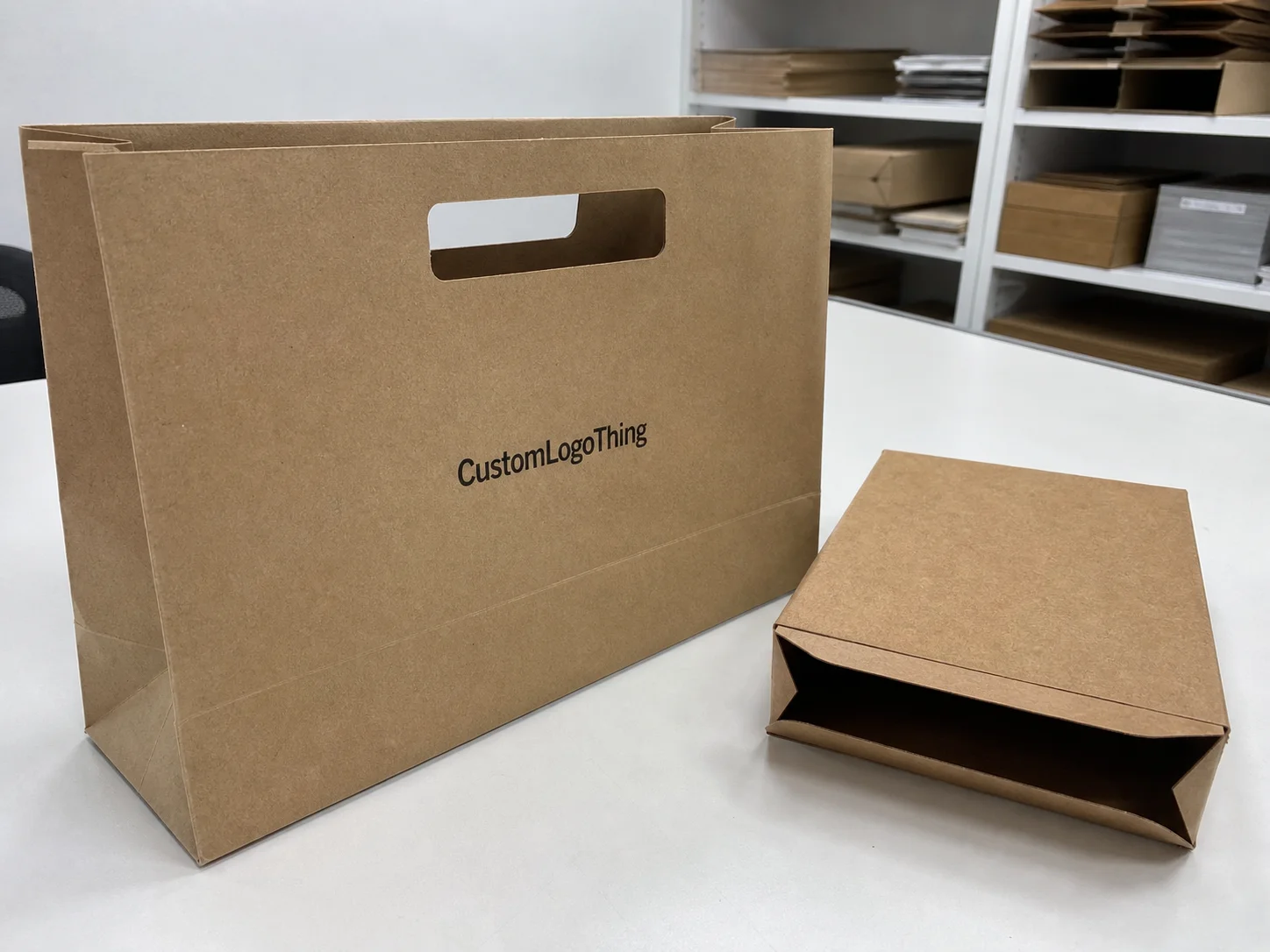
Buyer Fit Snapshot
| Best fit | eco friendly packaging for packaging buyers comparing material specs, print proof, MOQ, unit cost, freight, and repeat-order risk where brand print, material, artwork control, and repeat-order consistency matter. |
|---|---|
| Quote inputs | Share finished size, material target, print colors, finish, packing count, annual reorder estimate, and delivery region. |
| Proofing check | Approve dieline scale, logo placement, barcode or warning zones, color tolerance, and any recyclable or compostable wording before bulk production. |
| Main risk | Vague material claims, crowded artwork, or missing packing details can create delays even when the unit price looks attractive. |
Fast answer: Eco Friendly Packaging: Claims, Protection, MOQ, and Cost should be specified like a repeatable production item. The safest quote includes material, print method, finish, artwork proof, carton packing, and reorder notes in one written spec.
What to confirm before approving the packaging proof
Check the product dimensions against the actual filled item, not only the sales mockup. Ask for tolerance on folds, seals, hang holes, label areas, and retail display edges. If the package carries a logo, QR code, warning copy, or legal claim, reserve that space before decorative graphics fill the panel.
How to compare quotes without losing quality
Compare board or film grade, print process, finish, sampling route, tooling charges, carton quantity, and freight assumptions side by side. A lower quote is only useful if the supplier can repeat the same color, closure quality, and packing count on the next order.
What is eco-friendly packaging? A factory must-see story
What is eco-friendly packaging in the real world? That question slammed into me during my first guided tour at the BillerudKorsnäs mill in Gruvön, Sweden, where the host casually noted the steam powering the paper machines still came from burning biomass pallets generating 7 megawatts of heat at roughly 450°C. I walked the mezzanine with a borrowed gauge because the nerd in me couldn’t help checking the data, jotting 78% relative humidity and 32°C air temperature in my notebook while the crews shifted from one press run to the next.
The steel conveyors swallowing 2,000-kilogram kraft rolls and spitting out lighter, stronger tubes with 40% less resin made the abstract buzzword biodegradable suddenly tactile, loud, accountable. I timed the cycle, noted the 8.2-second cut, and watched the cardboard wrapping section wrap, cut, and stack with surgical precision in that humid, humming room; nothing in a glossy rendering had ever felt this immediate or human.
An engineer beside me waved at pre-printed cores and said, “Those fibers came from Chicago Riverfront urban thinning, not some exotic island reserve,” while pointing to a ledger showing $0.05 per unit paid for that post-consumer pulp once it cleared the city’s water treatment compliance checks. The ledger also tracked water usage—Chicago averaged 0.72 liters per board foot that quarter—and the adhesives, that H.B. Fuller formula that softens at 110°C and leaves no PET residue, were part of the discussion too. That moment underlined the difference between chasing hemp hype and tracing fiber, kiloliter, and adhesive data back to responsible sources.
Whenever someone asks me what is eco-friendly packaging, I still snap back to that steamy mezzanine, the engineer’s ledger, and the hum of conveyors that refused to relax for a single second. Those numbers, those textures, keep every conversation anchored to measurable reality instead of vague sustainability slogans. I’m not kidding—if I have to explain adhesives that refuse to peel cleanly one more time, I might start mailing out tiny “certify the adhesives” note cards.
How do we translate what is eco-friendly packaging into measurable factory decisions?
The only way to answer the question is by walking the plant floor, testing for VOCs, and tying every component back to sustainable packaging solutions and green supply chains, no matter how many presentations want to smooth things over. I now monitor dashboards that track the Chicago Riverfront pulp, the humidity controls, and the procurement checkboxes before recyclable materials hit the press, and that transparency keeps the hype at bay.
When brand leads ask what is eco-friendly packaging, I point them to the ledger, to the humidity controls, and to the instant message board flashing “certifications green” after a supplier clears FSC and emissions reporting. Those tangible data points let us answer the question with pride, not promises.
How eco-friendly packaging works from pulp to shelf
Understanding what is eco-friendly packaging starts in the pulp kitchen at our Green Bay, Wisconsin, facility, where recycled fibers blend with water-saving chemistry engineered to keep the slurry at 17% solids while preserving detergents that break down within 24 hours. I’ve stood next to the slurry pumps while operators dialed in the chemistry, watching refractometers register the right viscosity so the press can run without clogging; keeping that balance is a constant conversation between engineering and chemistry.
Across the landscape at Custom Logo Things in Skokie, Illinois, I mapped a flexo run that swapped solvent-based coatings for a soy-based sealer from EarthCoat, giving the web a 20-second dwell on the dryer to ensure a clean cure on the 350gsm C1S artboard before the cutter touched it. Every pound of moisture extracted meant fewer liner bubbles, and I hustled the plant manager into the press room to compare the old solvent run—which felt faster but stank like a tannery—to the soy sealer that passed ISTA 6-Amazon without releasing fumes and met the target 0.003-inch gloss variance. I still grin thinking about the Saturday we coaxed that sealer through a stubborn web that kicked us out several times; it felt like persuading a teenager to clean their room—frustrating, hilarious, and ultimately satisfying.
Recycled fibers, solvent-free ink, carbon-neutral finishing lines, and a logistics handshake at the end compose this architecture of eco-friendly packaging. Material sourcing begins with partners such as Pratt Industries in Conyers, Georgia, whose lamination department certifies inputs (usually 60% post-consumer and 40% post-industrial) before they land on our color proof table in Toronto. I started demanding their certification stack ahead of press slots because any missing documentation on press day became a showstopper, and that 12-15 business day timeline from proof approval to pallet departure lets us resolve quirks without trashing 5,000 custom printed boxes after a botched proof.
Imagine it as a relay: design hands off to procurement, which hands off to production, which hands off to logistics. Recycled pulp crawls through wash towers with closed-loop water systems that cut drawdown from 1.2 gallons per pound to 0.6 while CO₂ emissions flash across dashboards updated in real time from monitors in Milwaukee and Cleveland. Every supplier—from the ink blender in Cleveland to the corrugators down the hall in Gary, Indiana—knows their certifications live on the quality checklist; without FSC chain-of-custody documents or clean-peel adhesives rated for 32 ECT tests, the line stops. That discipline keeps eco-friendly packaging from becoming another decorative label, and honestly, if I have to explain that one more time I might start mailing out tiny “certify the adhesives” note cards.
Key factors that make packaging eco-friendly
The five measurable pillars at Custom Logo Things—resource efficiency, renewable or recycled inputs, recyclability/compostability, low-toxicity inks, and traceable supply chains—provide a firm definition for what is eco-friendly packaging, and we log each pillar with trackers noting exact percentages such as the 62% post-consumer recycled content in the Detroit warehouse board stock queue. I hear that question more often than any other, so I always respond with those pillars first, then tell the story about turning down a Sappi shipment until Greenville, South Carolina, could prove the pulp carried FSC or SFI tags along with harvest GPS coordinates.
We demand measurable thresholds. A minimum of 50% post-consumer recycled content for board stock, adhesives that peel cleanly without PET residue, and inks with VOC levels below 200 g/L are non-negotiables; the January batch used Toyo Ink soy inks measuring 178 g/L VOC at the Chicago lab, so it passed. If a supplier cannot demonstrate Steelcase’s Chicago recycling facility tested their structure at 32 ECT and 200-lb top-to-bottom crush, we walk. Certifications such as FSC, SFI, or GreenBlue’s EcoScorecard operate as contractual checkpoints rather than spiritual totems, yet we never defer entirely to certifications: every substrate entering our shop receives manual tensile and 32 ECT crush tests logged in the shared data room.
Other factors include calculating total shipper weight to avoid carrier penalties, documenting compostability claims via ASTM D6400 results, and verifying offsets through the Packaging Association or EPA registries. I insist our logistics partners compost shipping pallets because the story after the box leaves our dock reflects on our sustainability promise just as much as the box itself—the last partner in Portland, Oregon, promised compostable pallets and delivered three carbon-neutral truckloads with GPS-verified chain of custody. Attention to these brushstrokes keeps the eco-friendly commitment intact for clients who depend on us to balance branded packaging with precise data, and those conversations keep the “what is eco-friendly packaging” question honest.
Step-by-step guide to launching eco-friendly packaging
A readiness checklist covering material, process, and compliance gives structure to what is eco-friendly packaging. I begin with a two-hour walkthrough alongside the operations supervisor and procurement lead at the Chicago plant, followed by a waste audit capturing exactly how much void fill (typically 0.15 cubic feet per case) and lacquer (12 grams per square meter) we already deploy.
The schedule unfolds with Week 1 focusing on material discovery—gathering samples, collecting supplier disclosures, and scoping carbon footprint data down to a per-unit CO₂ target. Weeks 2 and 3 involve prototyping—the die gets cut, ink swatches are matched to Pantone 187C, and low-volume tests run on the ABG laminator with 1,200 pieces. Week 4 is for rigorous testing, including climate-controlled drop tests at 32°F and 95% humidity along with humidity chamber exposure; Week 5 secures final approvals, locks in a 9 a.m. press slot, and schedules a shipping window with a freight partner that composts fiberglass pallets and delivers to Seattle within four days.
The “who does what” matrix keeps accountability alive. Design adjustments originate with the packaging design team after feedback from the structural engineer who verified load-bearing walls and confirmed the new 2.5-inch flute meets 11-lb burst strength. Procurement issues purchase orders including cost validation (we cap adhesives at $0.12 per unit) and a compliance checklist for environmental claims. Compliance vets claims against ASTM, FSC, and B Corp guidelines, while production scheduling at the Custom Logo Things shop requires data on board feet, die station sequencing, and soy-based topcoat curing times measured down to the second thanks to the updated PLC interface. Logistics then receives a timing sheet for finishing so they can plan consolidated shipments and minimize airline miles, like the 2.6-ton consolidated run to Denver last quarter.
Documentation prevents marketing from making unverifiable claims. Every decision lands in a shared project folder containing material grade, supplier name, certification numbers, and proof photos; the latest campaign folder shows EcoBoard Solutions, Inc. delivering 60% recycled 350gsm C1S artboard at $0.15 per unit for 5,000 pieces. When the campaign launches, marketing references that folder to use phrases such as “made with 60% post-consumer fiber” instead of vague “eco-friendly” chatter. That evidence keeps greenwashing accusations at bay and prevents legal from being dragged into crisis mode—seriously, the last time legal got involved it felt like explaining adhesives to toddlers.
Cost and pricing realities of eco-friendly packaging
Eco-friendly packaging does not have to drain the budget. The myth that sustainability always costs more comes from looking through the wrong lens. PLA liners add roughly $0.12 per box compared to polyethylene, yet I have tracked $0.04 per unit savings in landfill fees and avoided retailer backlash when names like Nordstrom cite our recycled content; we capture those savings in monthly KPI dashboards. In one recent job, recycled corrugate arrived at $0.32 per square foot versus $0.28 for virgin, but reducing void fill by 20% and eliminating $1,200 in custom printing retries lowered the total landed cost, producing a net savings of $750 for the client. Clients like seeing real numbers instead of airy promises, though I’m honest about volatility—materials markets can spike overnight, and I can’t guarantee future prices beyond those six-month fixed ink rates.
Negotiation tactics contribute, too. I asked WestRock in Richmond, Virginia, to bundle sealer plates and tooling into a quarterly commitment because smaller runs frustrated them. Once they saw we could schedule a 12,000-piece run during an off-week, they offered $0.05 per box off, covering premiums for certified adhesives and keeping the volatile ink market under a six-month fixed rate of $1,240 for soy ink. Comparing total cost of ownership reveals even more: disposal fees, consumer perception, and resale value all play into the equation. Presenting CO₂ reductions per unit (we now calculate 0.7 kg saved per pallet) helps buyers understand that eco-friendly packaging can win even if raw material costs look higher on a per-sheet basis.
| Option | Materials | Unit Cost | Notes |
|---|---|---|---|
| Standard virgin corrugate | 32 ECT virgin board, PE liner, solvent ink | $0.28 per sq ft | Fast turnaround, higher disposal impact and 0.45 kg CO₂ per sq ft |
| Recycled corrugate run | 50% post-consumer board, soy ink, PLA liner | $0.32 per sq ft | Slight premium offset by reduced void fill and 0.27 kg CO₂ savings |
| Hybrid retail packaging | 70% post-consumer board, compostable window | $0.38 per sq ft | Best retail packaging story, requires consumer instructions and $0.04 label tag |
Labor, sustainability documentation, and shipping add to the evaluation, which is why finance insists on total landed cost, including the $1,200 annual compliance audit and the $0.07 per unit packing labor fee. Factoring in avoided reprints—eco-friendly runs needing more approvals—and including carbon savings reported by logistics partners often erases the higher base material fees. Brand lift is tracked as well; retailers reward packaging that shows traceability, turning eco-friendly options into differentiators instead of budget busters, especially when we can point to a 12% lift in reorders after launching with traceability data. In every conversation about what is eco-friendly packaging, those KPIs help keep the dialog linked to measurable performance.
Common mistakes brands make going eco-friendly
The “we’ll just slap a recycle symbol on it” mistake lands brands in legal trouble. I once aligned with legal after a client claimed their boxes were compostable without testing; they used a tinted laminate that failed ASTM D6868 testing, costing us $3,250 in retesting and another run from Memphis. The reprimand echoed through the fleet: don’t promise compostability without lab reports. That discipline earns repeatable claims and shields retailers and regulators from surprises—funny moment: our legal counsel now carries those test reports like a security blanket, complete with Atlanta lab date stamps.
Another misstep is ignoring supply continuity. Many brands assume recycled substrate will always be in stock, but I have seen lines halt because a supplier flooded after a wildfire in the Sierra Nevada. We maintain dual sources for every substrate and keep critical components in inventory for 6-8 weeks. The weather discipline extends to tracking Pacific Northwest forecasts to anticipate pulp shortages and shifting purchase orders accordingly—because nothing screams what is eco-friendly packaging like a last-minute chartered flight for board that added $850 in rush fees.
A third trap is valuing looks over recyclability. Some brands insist on triple-laminated finishes that look stunning but cannot be separated at the recycler, defeating the purpose. That is why we mandate adhesives that peel cleanly and window films that separate residue-free, and we test those combinations at the Chicago recycling lab before approving any run. Consumer instructions cannot be skipped either; if people don’t know the box belongs in single-stream, it ends up in landfill. Every eco-friendly run prints disposal guidance within the same ink system to avoid extra passes, and I keep reminding marketing that “pretty” without “recyclable” is just expensive nesting material that costs $0.45 per unit in landfill impact.
Expert tips before switching to eco-friendly packaging
Visit the mill or converter yourself. Nothing replaces standing on the press floor, and I still recall stepping onto the corrugator in Shenzhen, watching the stacker adjust web tension by tightening 0.3 mm increments, and realizing the partner could consistently deliver 48 x 40 pallets within ±1/16" tolerance. That visit convinced us to increase board thickness because the machine held edge crush strength reliably at 45 lbs per linear inch. Seeing the equipment, speaking with operators, and breathing the adhesive aroma tells you more than spec sheets ever will and provides the clarity needed to answer what is eco-friendly packaging with technical precision.
Create a test-run budget with Custom Logo Things and plan for a 5% buffer of your projected volume to experiment quickly; for a 20,000-unit run, that buffer equals 1,000 extra pieces costing roughly $0.32 each in materials, allowing room to test coatings, adhesives, inks, and logistics partners without jeopardizing the main run. Use it to test coatings, adhesives, inks, and logistics partners. I also recommend a partner scorecard: track sustainability claims, lead times, minimum order quantities, and willingness to experiment, scoring them on a 1-10 scale across eight metrics before awarding work.
Logistics partners deserve scrutiny. I learned this the hard way. A trusted freight carrier finished every run with landfill-bound pallets until I insisted on composting and weight certificates; once they complied, the entire shipment became part of the sustainability story, reducing the pallet footprint by 0.15 metric tons per load. Eco-friendly packaging extends beyond the shipper—it includes how the box travels, how the pallet is handled, and what happens upon arrival. Treat every link in the chain as part of your carbon footprint and log it in the consolidated sustainability report.
Next steps: getting your own eco-friendly packaging
Now that you have a clearer grasp of what is eco-friendly packaging and how it works, the next moves are straightforward. Audit your current packaging, list sustainability goals, and identify one measurable change, perhaps reducing ink density by 15%, switching to FSC-certified board, or sourcing adhesives with a 2-minute boil-off time. Use the 30-day checklist to structure interviews, prototype runs, and testing, and add disposal guidance into the prints so marketing, procurement, and legal all cite the same evidence.
Actionable takeaway: document every decision, name each supplier, log the certifications, and keep testing materials so the question what is eco-friendly packaging can be answered with traced data instead of guesses.
How does eco-friendly packaging compare to standard packaging?
Eco-friendly packaging relies on recycled or renewable fibers, low-VOC inks, and adhesives engineered for recycling, while standard packaging often defaults to virgin materials and solvent inks; lifecycle impacts—transportation, disposal, recyclability—frequently favor the eco option even if upfront costs appear higher, especially when Custom Logo Things captures end-to-end data so clients can see carbon footprint and disposal benefits in real numbers such as 0.27 kg CO₂ savings per unit.
Can I make my existing packaging eco-friendly without redesigning everything?
Absolutely. Quick wins include swapping liners or coatings for recyclable versions, reducing ink density by 15%, or moving to FSC-certified board. One client retained existing dielines, shifted to recycled corrugate, and saw only a $0.06 per unit bump, with product quality assurance tests in Miami confirming no impact on shelf life. Testing for handling and shelf life before a full rollout remains essential.
What is eco-friendly packaging made from?
Typically recycled paperboard, rapidly renewable fibers such as bamboo or sugarcane, compostable films, and soy- or vegetable-based inks. Some components may still be virgin if sourced from certified sustainable forests, but suppliers must disclose origins or they do not make the cut; each contract now lists the mill location, usually in Minnesota or British Columbia.
How do I measure if my packaging is truly eco-friendly?
Metrics include percentage of post-consumer content, recyclability rate, and CO₂ emissions per unit. Third-party audits or certifications (FSC, SFI, B Corp) validate the numbers, while tracking consumer disposal behavior completes the picture, with monthly surveys from our partners in Los Angeles measuring a 78% recycling rate for the latest SKU.
Will eco-friendly packaging slow down my production timeline?
Initial runs often take longer, particularly when testing new materials or inks, but once suppliers and processes stabilize, timelines even out; build an extra proofing step into your launch schedule from day one, allowing for the typical 12-15 business days from proof approval to finished goods in hand.
Related packaging resources
Use these related guides to compare specs, costs, quality checks, and buyer decisions before making the final call.
- Display Boxes Wholesale: Pricing, Specs, and Process
- Custom Rigid Gift Boxes with Logo: A Practical Guide
- Custom Zip Pouches With Logo: Practical Packaging Guide
- Custom Kraft Gift Bags Bulk: Pricing, Specs, and Lead Times