Buyer Fit Snapshot
| Best fit | Wholesale Carton Inserts Bulk Order projects where brand print, material claims, artwork control, MOQ, and repeat-order consistency need to be specified before quoting. |
|---|---|
| Quote inputs | Share finished size, material target, print colors, finish, packing count, annual reorder estimate, ship-to region, and any compliance wording. |
| Proofing check | Approve dieline scale, logo placement, barcode or warning zones, color tolerance, closure strength, and carton packing before bulk production. |
| Main risk | Vague material claims, crowded artwork, missing packing details, or unclear freight terms can make a low unit price expensive after revisions. |
Fast answer: Wholesale Carton Inserts Bulk Order: Pricing & Timeline should be specified like a repeatable production item. The safest quote records material, print method, finish, artwork proof, packing count, and reorder notes in one written spec.
Production checks before approval
Compare the actual filled-product size with the drawing, then confirm tolerance on folds, seals, hang holes, label areas, and retail display edges. Reserve space for logos, QR codes, warning copy, and material claims before decorative graphics fill the panel.
Quote comparison points
Review material grade, print process, finish, sampling route, tooling charges, carton quantity, and freight assumptions side by side. A quote is only useful when the supplier can repeat the same color, closure quality, and packing count on the next order.
Wholesale Carton Inserts Bulk Order: Pricing & Timeline
A wholesale carton Inserts Bulk Order is not a packaging flourish. It is a control decision. The right insert keeps products from wandering around inside the carton, trims damage claims, and prevents the pack line from turning into a daily improvisation exercise. That sounds simple because it is. The consequences are not simple at all.
Buyers usually start with the same question: what does it cost, and what does it prevent? That is the right instinct. If a product line is seeing even a 1% to 2% damage rate, the insert can pay back fast through fewer replacements, fewer service calls, and less time spent repacking units that should have stayed put in the first place. Fragile goods, bottled sets, subscription kits, and retail-ready assemblies feel the difference quickly. So do the people who stop dealing with angry emails.
Why wholesale carton inserts pay off before the first shipment
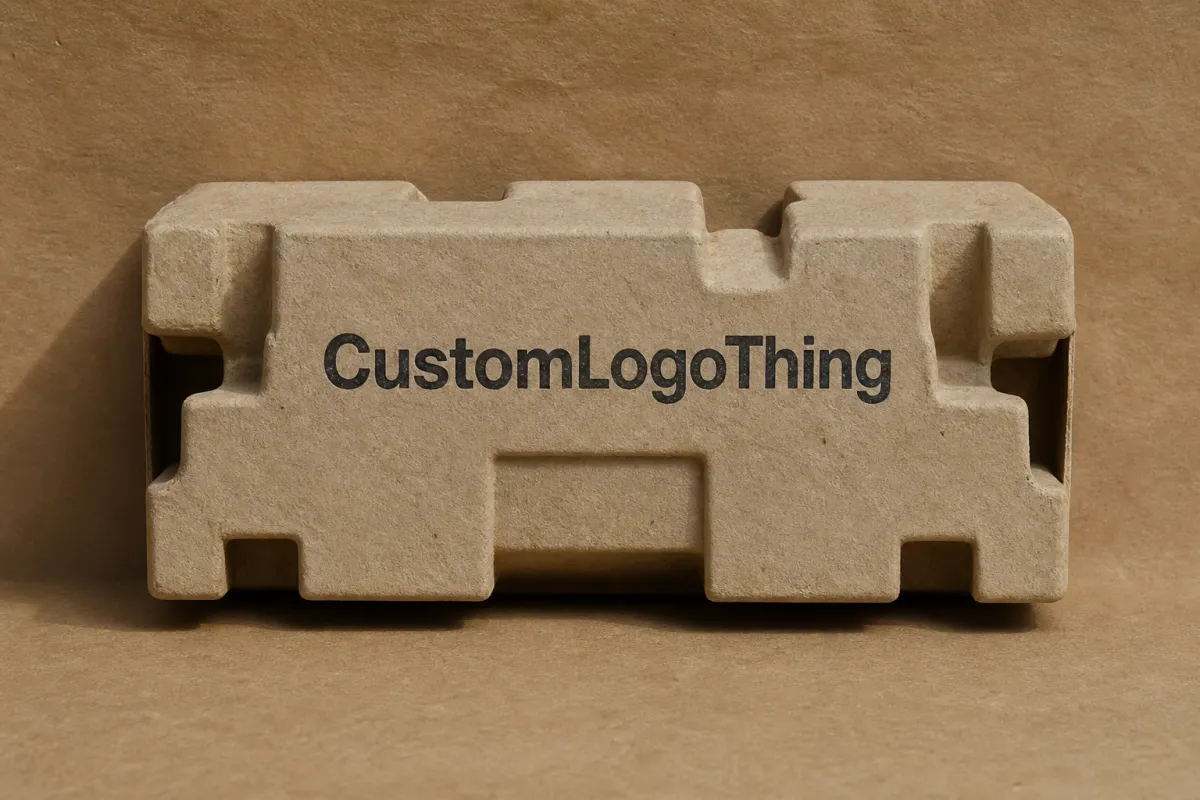
Poor fit shows up in three familiar ways: a broken item, a slow pack line, or a customer opening a carton and seeing a sloppy mess. All three cost money. A good insert keeps the product in place, preserves the intended orientation, and makes the pack-out sequence repeatable. That repeatability matters more than people expect. A carton that behaves the same way on every shift is easier to train, easier to audit, and easier to scale.
The math is usually uglier than the first estimate. Say a brand ships 20,000 units in a quarter and 1.5% arrive damaged. That is 300 replacements. If each one costs $8 once you add shipping, service time, and reshipment, the hidden loss is already $2,400. That number still leaves out the second-order pain: bad reviews, chargebacks, and the orders that never come back. A few extra cents per unit for a properly engineered insert can be a very good trade.
Labor is part of the story too. Inserts that hold the product steady shorten pack-out time because workers are not fighting loose void fill or reorienting the same item five times. On a high-volume line, that matters. Small inefficiencies multiply fast when the team repeats them all day. Boring is good here. Boring means fewer mistakes.
A carton insert is not just a spacer. It is a repeatability tool. Once the fit is right, the same result shows up on every shift, every day, and every reorder.
Sustainability fits into the same equation, but only if it is done honestly. Right-sized inserts can replace excess void fill, reduce carton size, and cut mixed materials from the shipping stream. That makes recycling easier for the end user and can lower total corrugated use across the pack system. For teams comparing recyclable materials and transit performance, resources from ISTA and How2Recycle are useful starting points. They do not pick the structure for you. They do, however, help you avoid wishful thinking.
The right buying decision starts with a plain comparison: insert cost versus the cost of replacement, rework, and complaint handling. If the numbers are close, the insert still often wins because it protects the brand and improves the unboxing experience. If the product is light, durable, and not especially sensitive to movement, the business case may be weaker. That is not a failure. It is just a sign that the carton and the product do not need much help.
Carton insert options: materials, structures, and use cases
Material choice changes almost everything. It affects compression resistance, print quality, shipping weight, environmental profile, and how the carton feels in hand. Buyers often start by asking for the cheapest option. Wrong question. The better question is whether the insert needs to cradle, separate, suspend, or lock the product in place.
| Material | Typical Use | Relative Cost | Recyclability | Buyer Notes |
|---|---|---|---|---|
| Corrugated board | Heavier items, fragile goods, shipping protection | Low to moderate | High, especially in mono-material systems | Good compression strength and easy die-cutting |
| Paperboard | Cosmetics, lightweight kits, retail presentation | Low to moderate | High | Cleaner look, lighter weight, less stack strength than corrugated |
| Molded fiber | Protective nests, eco-forward packs, irregular shapes | Moderate | High, depending on local collection systems | Useful for sustainability goals; tooling and lead time can be higher |
| Recycled specialty board | Premium retail kits, display-ready cartons | Moderate to high | Usually high | Works when branding and presentation matter as much as protection |
Corrugated board stays the workhorse for many shipping applications because it balances strength and cost. It performs well when the product has weight, sharp corners, or a carton that must survive stacking pressure. Paperboard fits lighter goods, multipacks, and presentation-driven packaging where the insert needs a clean finish and a tidy look. No surprise there. It is the packaging equivalent of using the right wrench instead of a butter knife.
Molded fiber gets more attention because it can replace plastic trays and reduce waste. Still, it is not magic. If the cavity is too loose, the product shifts. If the wall is too thin, the part collapses under load. The shape, density, and tooling all have to match the item. Brands under sustainability pressure usually get the best result from the option that removes unnecessary material and simplifies recycling, not the one that sounds impressive in a pitch deck.
Common structures tell the same story. Die-cut slots are simple and cost-effective. Partitions separate bottles and jars without overbuilding the system. Sleeves and wrap-style supports keep a product centered. Layered pads add cushioning when the carton needs extra crush resistance. A multi-pack retail kit may use several structures together: one tray to locate the items, one divider to keep them apart, and one top pad to stabilize the full pack.
Examples make the choice easier. A glass bottle set usually needs separation and vertical restraint. Electronics accessories often need a clean paperboard insert that keeps cables, chargers, and manuals aligned. Cosmetic kits usually need visual order and a premium surface. Bottles, jars, and retail sets all benefit when the insert is designed as part of the packaging system instead of being forced in after the fact.
For buyers comparing material systems against transit risk, the ISTA standards resources are helpful because they connect the structure to the actual shipping environment. Compression, vibration, drop exposure, and temperature swings matter. A sample that looks great on a table can still fail once it meets a real parcel network. The shipper decides whether the design is acceptable, not the render.
Key specifications to lock down before ordering
Good quotes start with good measurements. If a product team sends only the outer carton size and says “make it fit,” the result is usually a revision cycle. The supplier needs product dimensions, carton interior dimensions, insert thickness or caliper target, and the tolerance range the buyer can live with. Those details are not paperwork. They decide whether the pack line gets a snug fit or a sloppy one.
The most useful spec sheet usually includes:
- Product length, width, height, and weight
- Carton interior dimensions, not just the outer carton size
- Insert thickness or board caliper target
- Whether the insert ships flat or pre-assembled
- Single-SKU or mixed-SKU configuration
- Branding requirements, if any
- Performance expectations such as drop resistance, stacking needs, or vibration exposure
Fit requirements should be written in plain language. Does the insert need to keep the item from shifting during normal parcel movement? Should it allow quick insertion on a high-speed line? Is the product fragile enough that it must be suspended, or is separation enough? A buyer who answers those questions early can save days of back-and-forth. Sometimes weeks.
Functional details matter just as much as structure. Some projects need unprinted kraft for a clean recycled look. Others need a single-color logo or product code. Food and beverage applications may require food-contact considerations. Moisture resistance can matter in warehousing, refrigerated distribution, or humid climates. A surface treatment may be worth it if scuffing or humidity is a real risk. The mistake is assuming every insert lives in a dry, quiet room. It does not.
Performance testing should be part of the conversation from the start. For shipping programs, teams often reference ISTA 3A or ASTM D4169 as a starting point for transit-oriented evaluation. Those standards do not replace real-world validation, but they give procurement and packaging teams a shared technical language. For sustainable sourcing, FSC-certified board can also matter if the brand needs chain-of-custody documentation. Just remember the honest part: certification does not guarantee the insert is the right size or the right strength.
One practical rule saves more time than people expect: build the spec sheet before asking for a quote. A complete brief lets the supplier price accurately, Choose the Right cutting method, and avoid costly revisions. It also shortens the back-and-forth between procurement, operations, and design. Packaging projects tend to go sideways when three teams are all guessing from a blurry PDF.
Wholesale carton inserts bulk order: pricing, MOQ, and quote basics
Pricing for a wholesale carton inserts bulk order comes down to a few variables, and the order matters. Material type comes first. Corrugated board usually costs less than molded fiber tooling, while specialty board can push costs higher if the finish or caliper is unusual. Complexity comes next. A simple die-cut divider is cheaper than a nested insert with multiple folds, tabs, and locking features. That is not mystery pricing. It is just manufacturing.
Volume changes the economics quickly. At small quantities, setup time and cutting charges are spread over fewer pieces, so unit pricing is higher. At larger runs, the same setup cost gets diluted. That is why a minimum order quantity is often about production efficiency, not a sales trick. The supplier needs enough units to justify tooling, make-ready time, machine setup, and waste allowance.
For practical budgeting, these broad ranges are common in custom packaging programs, though every project depends on exact dimensions, material grade, and freight:
- Simple corrugated inserts: roughly $0.12-$0.28 per unit at mid-volume
- More complex die-cut or partitioned inserts: roughly $0.18-$0.40 per unit
- Molded fiber or premium specialty board: roughly $0.24-$0.60 per unit
Those numbers can move either direction. Bigger orders usually improve the unit cost. Heavy ink coverage, complex cuts, special coatings, and tight tolerances can push the price up. Freight matters too. A palletized shipment can be far more economical than multiple small shipments, especially if the buyer is ordering from a facility that can load full pallets efficiently. Landed cost is the number that matters. The invoice total alone does not tell the whole story.
Procurement teams should come to the quote request with a short, clean package of information:
- Final product dimensions and weight
- Carton size and insert target fit
- Order quantity and expected reorder pattern
- Material preference, if already decided
- Delivery location and shipping method
- Any print, branding, or compliance requirements
- Deadline tied to launch, seasonal demand, or customer commitments
Prototype pricing is different from production pricing. A sample run can cost more per unit because the setup is spread over very few pieces, and because the goal is validation rather than scale. That extra spend is not wasted if the insert is highly customized or the product is expensive to damage. It is wasted only when the buyer expects a prototype to behave like a full production run. It will not. That is why it is called a prototype.
Ask about hidden charges early. Tooling, freight, palletizing, storage, rush handling, and revision fees can change the true landed cost. The most expensive quote is not always the one with the highest unit price. Sometimes it is the one that hides a costly rework cycle or surprise logistics fees. A cheap quote with vague assumptions is not cheap. It is a future invoice wearing a fake mustache.
If you are comparing options across volume tiers, ask for numbers at multiple points, such as 1,000, 5,000, and 10,000 units. That usually shows the break-even point more clearly than a single quote. Our Wholesale Programs page is a useful starting point for brands planning recurring programs or volume-based reorders.
Process, timeline, and lead time for bulk production
The production process is usually straightforward. The timeline gets messy when the buyer treats every step as optional. A typical path runs from brief to dieline, from sample to approval, then to production, quality control, packing, and dispatch. Each step has its own bottleneck. Miss one, and the schedule starts drifting.
A realistic timeline for standard Custom Carton Inserts often looks like this:
- Brief review and specification alignment: 1-3 business days
- Dieline or structure proposal: 2-5 business days
- Sample production and review: 5-10 business days
- Production after approval: 10-20 business days for many custom runs
- Packing and freight preparation: 1-3 business days
That is a planning baseline, not a promise. Complex inserts, multiple SKUs, special materials, or peak-season factory schedules can extend lead time. If a project depends on a packaging launch, a synchronized carton shipment, or a retail rollout with fixed ship dates, the buyer should build in buffer time. First orders especially deserve slack because the design is still being validated. The first run usually teaches everyone something.
Two things stretch lead time more than anything else: material availability and approval speed. If the board grade is unusual or the insert requires a specific recycled content source, sourcing can take longer. If proof review is delayed by internal approvals, the production slot may move. Fast sign-off saves time because it keeps the order inside the scheduled window.
There is a real difference between standard inserts and fully custom builds. A standard structure with minor size changes can move quickly. A highly engineered insert with multiple locking features, print callouts, and strict tolerance requirements needs more review. That does not make the project risky. It just means the buyer should price both time and iteration into the plan.
Quality control should be visible in the process. Buyers should ask how the supplier checks dimensions, fold integrity, print position, and lot consistency. For larger programs, it is reasonable to ask whether the supplier performs random sampling against an approved master, whether cartons are palletized by SKU, and whether the final packing layout protects the inserts during transit. A supplier who cannot explain that process clearly is probably hoping no one asks.
Shared approvals save money. When procurement, packaging, and operations review the same proof at the same time, the number of revision rounds usually drops. That helps the order move from sample to production without friction. If the launch calendar is tight, one clean approval packet can save several days. If the launch calendar is loose, it still saves annoyance. That counts too.
For common questions about proofs, samples, and shipping terms, our FAQ is a good reference point. It is often faster to confirm process basics there before requesting a revision to the quote.
Why choose us for sustainable bulk carton inserts
Custom Logo Things is built for buyers who want decisions backed by numbers, not slogans. That matters in packaging because a supplier should be able to talk about tolerances, material selection, reorder consistency, and tradeoffs without hiding behind vague promises. For brands placing recurring programs, repeatability is usually worth more than novelty. Pretty is nice. Predictable pays.
Sustainability starts with structure, not just a recycled content claim. A carton insert that fits well can reduce the overall size of the shipper, cut void fill, and lower waste across the pack line. When the design uses recyclable board or molded fiber, the end-of-life story is easier for the customer and the brand team. That matters when your customer actually has to dispose of the thing instead of admiring the brochure.
We also support teams that need clear communication across procurement, operations, and branding. A good supplier should help a buyer forecast order volume, coordinate sampling, and keep track of changes in carton size or product dimensions. That is one reason integrated sourcing can beat a patchwork of separate vendors handling design, samples, production, and freight in different silos. Fewer handoffs usually mean fewer mistakes.
Here is the practical comparison:
- Separate vendors can create handoff delays, duplicate proofs, and inconsistent instructions.
- A coordinated workflow reduces the risk of spec drift and missed deadlines.
- Single-source coordination usually makes reorders easier because the prior job history is already in one place.
For buyers scaling from test runs to recurring programs, that coordination matters. A 500-unit pilot and a 20,000-unit reorder do not need the same handling, but they do need the same discipline. The quality target, board spec, and fit requirements should stay consistent from one order to the next. If they do not, the second order becomes a new project with the old project’s problems.
In practical terms, the best packaging partner is the one that asks the right questions before production starts: What is the product weight? How fragile is it? Is the carton shipping e-commerce, wholesale, or retail? Does the customer need a premium finish or a cost-first solution? Those answers shape the final structure more than any template ever could.
Next steps to place your bulk order with confidence
A strong buying process is not complicated, but it is disciplined. Start by measuring the product accurately. Then confirm the carton interior size, not just the outside dimensions of the box. Estimate annual volume, not only the first order, because the best pricing often depends on the reorder path. If the package needs branding or compliance language, gather that before requesting a sample.
The next step should almost always be a sample, dieline, or pre-production proof. That is the cheapest point to find out whether the insert holds the product securely, assembles quickly, and fits the final carton without forcing the pack line to improvise. It is much easier to adjust a sample than to explain a shipment of loose units to customer service.
Compare at least two or three quotes against the same specification sheet. If the inputs differ, the prices are not comparable. One supplier may be quoting a thicker board, another may be omitting freight, and a third may be pricing an insert that ships flat instead of pre-assembled. Apples-to-apples comparisons prevent fake savings.
Before signing off, confirm the items that tend to cause problems later:
- Lead time from approval to dispatch
- Freight method and pallet count
- Reorder terms and minimum repeat quantity
- Who signs final approval
- Whether the approved sample is the production reference
That discipline turns packaging from a one-time purchase into a repeatable cost-control tool. The buyer who plans well usually gets better economics, fewer surprises, and a cleaner customer experience. In that sense, a wholesale carton inserts bulk order is less about buying paperboard or corrugated pieces and more about controlling damage, labor, and consistency across every shipment.
If you are comparing suppliers or building a first spec sheet, lock down the product measurements, choose the material based on risk, request samples early, and use the same data set for every quote. Then compare landed cost, not just unit price. That is how a wholesale carton inserts bulk order becomes a predictable operating decision instead of a rushed purchase that creates new problems later.
Frequently Asked Questions
What materials are best for wholesale carton inserts bulk order projects?
Corrugated board works well for heavier or fragile products that need stronger compression resistance. Paperboard and molded fiber are often better when the buyer wants a lighter structure and a cleaner sustainability story. The right choice depends on product weight, carton size, branding needs, and whether the insert must ship flat or pre-assembled.
How do I figure out MOQ for carton inserts in bulk?
MOQ is usually tied to material sourcing, die-cut setup, and production efficiency rather than an arbitrary sales target. Larger quantities usually reduce the unit price, but the real break-even point depends on complexity and freight. Ask for pricing at several volume tiers so you can see the cost impact of ordering slightly above the minimum.
Can I request samples before a wholesale carton inserts bulk order?
Yes, and it is usually the smartest way to verify fit before committing to production. A sample can show whether the insert holds the product securely, assembles quickly, and fits the final carton as expected. Use the sample stage to check tolerances, handling, and any sustainability or print requirements.
What affects lead time the most on custom carton inserts?
Material availability and approval speed are the two most common variables. Complex die-cuts, multiple SKUs, and special finishes can extend production more than the base quantity does. Fast, complete specs and prompt sign-off usually shorten the timeline more than any other single step.
Are sustainable carton inserts more expensive than standard options?
Not always, because some recycled or right-sized formats reduce waste and packing labor even if the material cost is similar. The price depends on board type, design complexity, and order volume, so a direct quote is more useful than a general assumption. For many brands, savings from fewer damages and returns offsets the slightly higher material spend.


