Custom Logo Things
Wholesale Snapback Cap Pricing: A Unit Cost Breakdown for Buyers
Use the snapback caps Unit Cost Breakdown to compare quotes on the same footing: blank stock, decoration, MOQ, lead time, shipping, and the small add-ons that make one offer look lean and another one more honest.
Two quotes can describe “the same cap” and still be miles apart in reality. One may be based on a basic blank with simple embroidery. Another may include heavier fabric, tighter stitch density, a custom patch, polybagging, carton marks, and freight prep that never made it into the headline price. That gap is exactly why a snapback Caps Unit Cost Breakdown matters.
Buyers usually notice the price difference before they notice the specification difference. That is backwards. In cap sourcing, the spec is the price. Crown shape, panel count, brim style, closure type, decoration method, and packaging all move the number. Some moves are small. Others are not. A seemingly minor change from direct embroidery to a woven patch can shift the unit cost more than a buyer expects, especially on short runs.
The practical goal is not to chase the absolute cheapest cap. It is to compare quotes that actually match. Once the build is fixed, the conversation becomes much cleaner: where is the cost sitting, what is driving it, and which upgrades are worth paying for?
Why Snapback Quotes Change When One Spec Changes
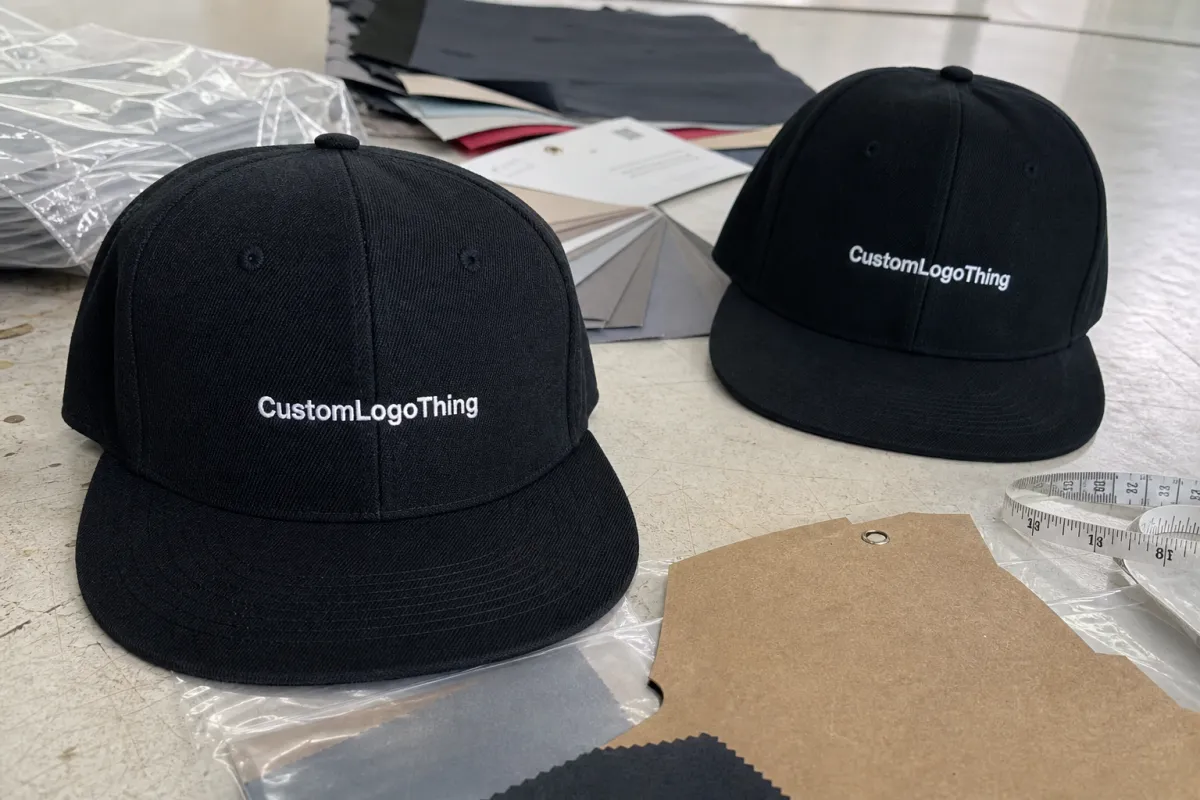
A snapback quote is never just “cap price plus logo.” It is a stack of decisions that each add material, labor, or setup time. Crown height, panel construction, brim shape, fabric weight, sweatband quality, closure style, and decoration method all change the cost per piece. On a 500-piece order, a few cents can matter. On a 300-piece order, the same change can feel surprisingly expensive.
The common mistake is treating all snapbacks as interchangeable blanks. They are not. A structured six-panel cap with a flat visor and plastic snap closure is a different product from a low-profile cap with a curved brim, matching fabric strap, and soft front panel. Even when the silhouette looks close, the sewing path and material usage are different enough to affect pricing.
Decoration is where the quote often starts to drift. Direct embroidery is usually the simplest branded option, but stitch count changes cost more than most buyers realize. A small logo with clean outlines is one thing; a dense full-front design with multiple thread colors is another. Add 3D puff, a woven patch, or a rubber badge, and the factory has more setup and more handling. That is before anyone asks for a custom underbrim print.
Quote drift gets worse when the buyer keeps describing the order in broad terms. “Same cap, but nicer” can mean a dozen different things to a factory. It might mean a better sweatband, a thicker fabric, a sharper logo finish, or a retail-ready bag. Unless the detail is written down, the quote is only an estimate pretending to be fixed.
Cap Build Choices That Change the Finished Product
Construction affects both appearance and cost, and it does so in ways buyers can miss if they only look at the front logo. Six-panel snapbacks are common because the pattern is familiar to factories and efficient to sew. But even within that standard structure, a stiffer front panel, better internal taping, or a cleaner seam finish will change labor time. Those choices do not sound dramatic. They still show up in the unit price.
Material selection changes the cap’s position in the market. Cotton twill is a frequent middle-ground choice because it balances feel, cost, and print or embroidery compatibility. Acrylic blends are often used for a sharper retail look, while mesh backs push the cap into a more casual, breathable category. A washed fabric or brushed finish can make the product feel more premium, but those finishes are not decorative extras; they are separate cost layers.
The brim deserves more attention than it usually gets. A flat visor is standard for many snapbacks, while a curved visor changes the shape and can change the customer’s perception of quality. Underbrim color, visor inserts, and topstitch density all add small costs that multiply across a bulk order. Buyers sometimes think they are tweaking style only. They are also changing the sewing work.
Closure type is another easy place to underestimate cost. A standard plastic snap is efficient and usually the most economical closure. Fabric straps, metal closures, or custom-molded parts can elevate the look, but they often mean new sourcing steps or extra tooling. If the order is not large enough, those upgrades can be hard to justify on a pure unit-cost basis.
- Structured front: improves shape retention and adds some labor.
- High crown: uses more fabric and a taller pattern.
- Flat brim: common and usually standard for retail-style snapbacks.
- Plastic snap closure: the most efficient closure for volume orders.
- Patch decoration: often cleaner visually, but usually higher setup cost.
If a supplier is not listing these build elements separately, the quote is incomplete. Two factories can land on different numbers because one is pricing a basic shell and the other is quoting a fuller spec. That is not a negotiation issue. It is a comparison issue.
Snapback Caps Unit Cost Breakdown: Pricing, MOQ, and Quote Logic
The core unit cost stack usually includes the blank cap, decoration, packaging, labeling, carton prep, and factory margin. Some orders also carry setup fees for embroidery files, patch molds, or custom tags. Others include testing or special packing requirements. If one of those pieces is missing from the quote, the final invoice can end up higher than the initial number suggested.
MOQ has a direct effect because setup costs get spread over fewer units. That is not a trick; it is arithmetic. If a factory is calibrating embroidery, cutting patch material, checking thread colors, and approving samples for a 300-piece order, those costs weigh more heavily than they do on a 5,000-piece run. Larger quantities usually unlock better efficiency and lower cost per cap, though the exact savings depend on the build.
Here is a practical way to read the market. These are not promises, just realistic bands buyers often see when the spec is defined clearly.
| Order Size | Typical Unit Range | What Usually Changes | Buyer Takeaway |
|---|---|---|---|
| 300-500 pcs | $3.20-$5.50 | Higher setup charges, slower labor efficiency, packaging cost feels heavier per piece | Useful for testing demand, not ideal for aggressive cost control |
| 1,000-2,000 pcs | $2.10-$3.60 | Better spread of setup, stronger bulk pricing, less waste in production planning | Often the most practical range for branded caps |
| 5,000+ pcs | $1.45-$2.80 | Lower material waste, higher line efficiency, more room to optimize packing | Best when the design has already proved it can sell |
The table only works if the spec is consistent. A quote at the low end with a simple embroidered logo on stock fabric is not comparable to a higher quote that includes a patch, custom underbrim print, or upgraded packaging. The more complete the comparison, the less time you waste chasing phantom savings.
Tooling fees can also appear, especially with rubber patches, embossed leather details, or any custom component that needs a mold or die. Some are one-time charges. Some show up again if the artwork changes. Ask whether the charge is tied to the design, the order, or the repeat production run. That one question often explains a confusing quote difference.
Freight is another place where numbers can lie by omission. One supplier may quote ex-works or FOB pricing; another may include packing into export cartons. A low headline price means very little if the order still needs labeling, consolidation, and shipment preparation. The cleanest comparison is always on the same basis, with the same incoterm and the same packing assumptions.
Production Steps, Lead Time, and Turnaround From Approval to Shipment
Lead time starts after the spec is locked and the artwork is approved. In most cap programs, the sequence is predictable: confirm the build, review artwork, make a sample, approve the sample, move into bulk production, complete QC, pack, and book shipment. If a supplier cannot explain that sequence, they are probably not ready to manage the order cleanly.
Delays usually come from the front end, not the sewing line. Low-resolution artwork, vague color references, or late design changes create rework. A small revision can add days because the factory may need to reprogram embroidery, recut decoration pieces, or recheck placement. Patch-based builds and multi-color logos are especially sensitive to late changes because they have more moving parts.
For straightforward orders, sample approval often takes about 5-10 business days, and bulk production commonly lands around 12-20 business days after approval. Custom materials, special finishes, or detailed packaging can extend that window. If someone promises a custom order in a few days without caveats, ask for the schedule in writing and check what has been excluded.
Packaging needs to be decided early, not after production starts. A cap that ships in bulk is easy to quote. A cap that needs retail bagging, barcode labels, carton marks, and transit-safe packing takes more coordination. For packaging standards and performance testing, ISTA is a useful reference. If the order includes paper inserts or hang tags and sustainability claims matter, FSC is the standard buyers usually ask about.
Good scheduling is less about speed and more about stability. A factory can move faster when the order stops changing. If the buyer sends a complete spec pack from the start, there are fewer surprises, fewer sample rounds, and fewer arguments over what the finished cap was supposed to be. That matters more than people admit.
Specs Buyers Should Lock Before They Approve the Order
The most expensive orders are not always the most complex. They are the ones where the build keeps shifting after the quote is issued. Lock the details that create cost drift before approval: crown height, panel count, brim shape, fabric type, closure style, logo size, logo placement, thread colors, and patch material. If any of those remain open, the sample and bulk order can end up looking like cousins rather than duplicates.
Spec drift costs money in small, irritating ways. A new placement may require the embroidery frame to be reset. A color adjustment can trigger thread matching. A different patch size can mean a new cut file or revised stitching method. Buyers often describe those changes as minor because they feel minor. The workshop sees additional labor and a fresh approval cycle.
The simplest way to prevent that is to use one written spec sheet and one approved visual mockup, then ask the supplier to quote against both. That creates a fixed target. It also makes disputes easier to resolve, because the order can be checked against a document rather than a memory. Memory is a weak sourcing tool.
- Fabric weight: define the actual material, not just the color.
- Decoration method: embroidery, patch, puff, or woven label.
- Placement: front, side, back, or underbrim.
- Packaging: individual bag, bulk pack, or custom insert.
- Carton count: set the units per carton and the marking format.
Once those details are fixed, the quote becomes a usable tool. Before that, it is a rough number with too much room to shift.
What a Reliable Supplier Should Prove Before You Place the Order
Buyers should ask for proof, not just assurance. A reliable supplier should be able to show recent cap work, close-up stitching photos, decoration samples, and packaging shots that match the proposed build. If the images are blurry, recycled, or oddly generic, treat that as a warning. Good production usually looks specific because it is specific.
It also helps to know where control sits. Does the supplier handle stitching, embroidery, packing, and QC in-house, or are those steps spread across multiple subcontractors? Either structure can work, but the buyer should know where the responsibility lives. Ask who signs off the first sample, who checks bulk consistency, and what happens when a logo lands a few millimeters off placement. The answers are often more informative than the quote.
Send the exact build, not a vague version of it. The more precise the specification, the less the order has to be interpreted.
Recent production proof matters more than polished marketing material. A serious supplier can usually provide close examples that resemble your target cap, even if the exact logo is different. If the order includes retail packing, ask how carton counts are verified and how labels are checked. A clean cap that arrives in the wrong carton count is still a problem.
For buyers balancing cost and compliance, ask whether lower-impact packaging is available and how it is priced. Recycled cartons, FSC-certified paper components, and simpler inserts are often possible, but they should be quoted as real components rather than treated like a vague sustainability upgrade. The details matter because packaging can change both landed cost and shipping weight.
Cost Traps That Inflate Per-Cap Pricing Fast
The fastest way to inflate per-cap cost is to add complexity before the first order proves demand. Extra logo colors, repeated artwork revisions, split shipments, premium packaging, and rushed timelines all push the number up. Sometimes those changes are justified. Often they are not. A buyer can create a luxury cost structure for a product that has not sold a single unit yet.
Hidden costs are especially common in labeling and packing. One quote may include sewn labels, individual polybags, carton marks, and export packing. Another may stop at the cap body. If those differences are not made visible, the lower quote is misleading. It looks cheaper because work has been removed, not because the cap is inherently cheaper.
Rush fees deserve their own warning. When the buyer compresses artwork approval, sample sign-off, and shipment into a tight window, overtime and accelerated freight prep can follow. Sometimes that cost is unavoidable. Sometimes it is self-inflicted by a deadline that was never realistic in the first place. Factories charge for urgency because urgency disrupts planning.
Another common trap is over-specifying the first run. Buyers sometimes request premium details because they imagine the product should look more “complete” out of the gate. That instinct can backfire. If the design has not been tested, it is wiser to keep the first order simpler, protect margin, and see how the market responds before adding expensive finishes.
How to Compare Samples, Approve Artwork, and Place the Order
Start by standardizing the quote request. Every supplier should receive the same spec sheet, the same artwork files, and the same target quantity. If one response comes back in a different format, ask for a reissued quote using the same line items. Only then can you compare cap body, decoration method, setup charges, packaging, MOQ, lead time, and delivery terms without confusion.
Sample the exact product you intend to buy. Near matches create expensive misunderstandings. If the sample uses direct embroidery and the bulk order switches to a patch, the approval no longer protects you. The sample should match the planned build in the same fabric, closure, decoration method, and packaging approach.
Before production starts, confirm the essentials in writing:
- Color standards for fabric and thread.
- Logo placement and size.
- Packaging format and carton count.
- Delivery window and shipment terms.
- Any tooling fees or setup charges.
Once the sample, artwork, and spec sheet line up, the buyer should move decisively. Good sourcing is not about endless revision; it is about locking a workable total-value quote and keeping the build stable long enough to produce it well. That is the real use of a snapback Caps Unit Cost Breakdown: it shows what drives cost, what can be simplified, and where the false savings hide.
One final rule helps more than most buyers expect: the cheapest quote is only cheap if it covers the same build, the same decoration, the same packaging, and the same shipment assumptions as the others. If those pieces differ, the quote is not cheaper. It is incomplete.
FAQ
What affects a snapback caps unit cost breakdown the most?
Decoration method usually moves cost faster than the base cap. MOQ, fabric choice, packaging, and stitch count also shift the final price. Custom patches, puff embroidery, and repeated artwork changes often create the biggest surprises.
How does MOQ change snapback cap pricing?
Lower MOQ spreads setup costs across fewer pieces, so the unit price rises. Higher runs usually lower the per-cap cost because production becomes more efficient and material waste drops. Ask for tiered pricing so the breakpoints are visible.
Which decoration method is usually cheapest for snapback caps?
Simple embroidery on a standard fabric cap is often the lowest-cost branded option. Patches, 3D puff, and multi-color logos usually cost more. The lowest method still depends on logo size, stitch density, and finish.
How long does production usually take after approval?
For straightforward builds, sample approval often takes about 5-10 business days and bulk production around 12-20 business days after approval. Custom materials or complex decoration can extend that. Always confirm the schedule in writing.
What should I send for an accurate snapback quote?
Send logo artwork, cap style, fabric preference, closure type, target quantity, packaging needs, and the delivery destination. The more complete the brief, the less the quote has to guess. That usually saves time as well as money.


