custom wine Paper Bags Unit Cost Breakdown sounds like a narrow sourcing question, yet it usually shapes the entire packaging program. A wine bag may cost less than the bottle inside it, but it still carries the first impression, the gift value, and a good share of the brand’s perceived quality. If the structure feels flimsy or the print looks soft, the bag undercuts the product before the customer even opens it.
The right goal is not the cheapest quote on paper. It is the lowest unit cost that still holds up in transit, prints cleanly, and fits the way the bag will be used. That balance changes with paper weight, handle style, finish, quantity, and shipping method, which is why buyers who understand the cost drivers usually make better decisions.
Why wine bags can look premium before the bottle is opened
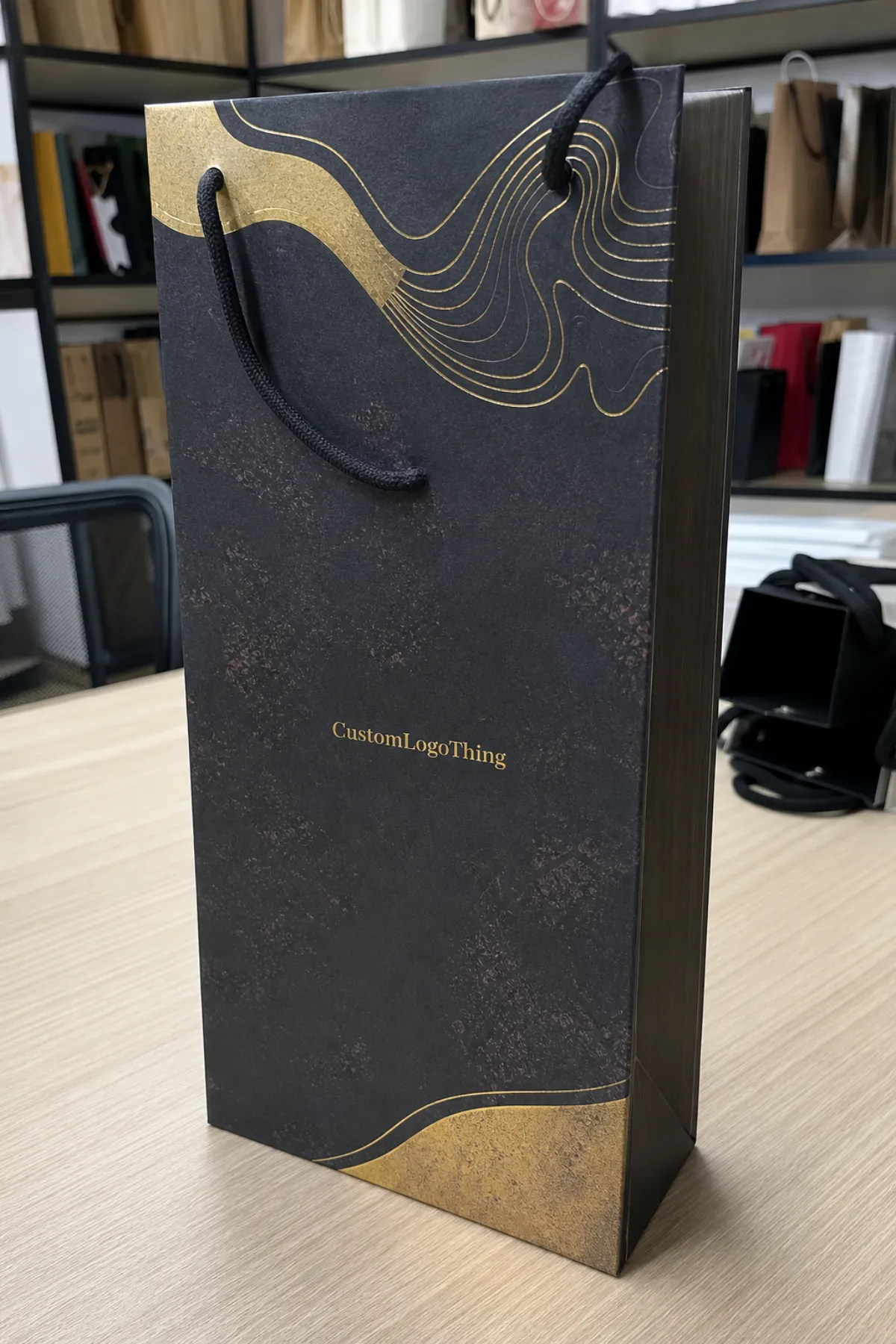
Wine packaging does more work than many paper bags. A bottle is tall, heavy, and formal by default, so the bag has to look deliberate as soon as it lands in someone’s hand. In retail counters, tasting rooms, corporate gifting, and holiday promotions, the bag is often the first branded object the buyer notices.
That first read depends on small details that are easy to miss in a quote sheet. A well-sized gusset keeps the bottle upright instead of squeezing the shoulder. A handle that feels secure changes the whole experience because the customer does not have to cradle the bag carefully. A clean print area gives the brand room to breathe instead of crowding the front panel.
For that reason, the best wine bag is rarely the one with the lowest raw material cost. A slightly heavier paper can prevent crease cracking. A better handle attachment can prevent returns or complaints. A more stable bottom insert can keep a bottle from leaning. Those are practical choices, not luxury extras.
A premium-looking wine bag is usually the result of fit, structure, and print discipline, not expensive decoration alone. If one of those parts is underbuilt, the bag starts looking thin even if the artwork is polished.
In a good packaging program, the bag does not need to overwhelm the bottle. It just needs to support the buying moment. That is where cost control and presentation meet.
Product details that change both appearance and cost
The material is the first major decision. Wine bags are commonly made from kraft paper, coated paper, or textured specialty stock. Kraft gives a natural retail look and usually keeps costs in check. Coated paper carries sharper color and better brand presentation, though it adds finish cost and may need more careful handling to avoid scuffs. Specialty papers can lift the perceived value, but they also narrow the supplier pool and push pricing higher.
Paper weight matters more than most teams expect. A 150gsm bag may work for a simple single-bottle program with a strong handle and a modest print layout. Many retail and gifting programs move into the 180gsm to 200gsm range because the bag feels steadier in hand and survives folding, stacking, and carry use better. Once the bag starts carrying heavier bottles or more complex finishes, buyers often step up again to protect the crease lines and the mouth of the bag.
Dimensions are just as important as material. A standard 750ml bottle is not a simple cylinder. The shoulder, neck, and base each affect the way the bag stands and how much clearance the gusset needs. A narrow bag can look elegant on a spec sheet and still pinch the bottle neck. A wider base solves fit but consumes more paper and can require different die-cut tooling. That is why size should be settled before artwork is finalized.
Handle selection changes both appearance and labor. Twisted paper handles usually keep costs lower and fit everyday retail use. Flat paper handles feel neat and familiar. Rope handles cost more, but they signal a higher gift value and usually hold up well under repeated carrying. The handle attachment method also matters; if the reinforcement is weak, the bag may pass visual review and still fail under load.
Finishing is where budgets can move quickly. Matte lamination softens the surface and improves scuff resistance, but it adds a separate process. Foil, embossing, and spot varnish increase shelf impact, yet each one brings setup time and inspection requirements. Reinforced tops, cardboard bottom inserts, and doubled mouth folds improve durability, though they also add labor and material. On a premium program, those details can be worth it. On a high-volume everyday run, they can erase the margin if they are not tied to a real use case.
Here is a practical way to think about the tradeoff between appearance and cost:
| Build type | Typical material and finish | Perceived value | Typical cost behavior | Best use case |
|---|---|---|---|---|
| Basic retail bag | 150gsm kraft, one-color print, twisted paper handle | Clean, simple, functional | Lowest setup burden; best spread at higher quantity | Tasting rooms, everyday retail |
| Mid-tier gift bag | 180gsm paper, two-color print, flat or rope handle | More polished, more gift-ready | Moderate lift from handle and print complexity | Seasonal gifting, boutique retail |
| Premium presentation bag | Coated stock, foil or embossing, reinforced top, rope handle | High-end, collectible feel | Highest unit cost; strongest brand impression | Corporate gifting, luxury wine sets |
The most expensive detail is not always the one the buyer notices first. A tighter handle insert, a more demanding fold sequence, or a less forgiving paper grade can drive labor and scrap higher even if the front-panel artwork looks straightforward. That is why packaging structure and cost planning should happen together instead of in separate rounds.
Specifications buyers should lock in before they request quotes
Quotes get vague when the specification is vague. Buyers should define bottle count, bag size, paper weight, handle type, print colors, finish level, and packing format before asking for pricing. Those few details control most of the unit cost and also determine whether the bag will function well in use.
Size should be locked early because it affects more than appearance. A slight change in width can alter paper usage, die-cut layout, carton count, and freight efficiency. That matters because wine bags do not move alone; they are stacked in cartons, palletized, and often shipped across borders. A small dimension shift can quietly change the landed cost.
Use case also shapes the spec. A tasting room takeaway bag does not need the same build as a premium gift bag handed out with a collector bottle. A resale bag for a boutique shelf has different expectations than a corporate holiday pack sent in volume. If the bag will be used repeatedly, stronger handles and a more durable finish make sense. If it will move through the channel quickly, a simpler structure may be the smarter purchase.
Single-bottle and two-bottle formats should be treated as separate items, not as one design with a minor resize. A two-bottle bag needs a wider base, a more stable bottom, and careful handle placement because the weight distribution changes. The same paper grade can behave very differently once the load increases, especially if the bottles are heavier or the bag will be carried for any distance.
Sample approval is the least expensive risk check in the process. A flat mockup can hide a mouth that collapses, a handle that feels loose, or a bottle that sits too deep in the bag. Physical testing catches those problems before production starts. For buyers comparing retail packaging options, that one step often saves more than a few cents on the unit price ever could.
Custom wine paper bags unit cost breakdown and MOQ
The most useful custom wine Paper Bags Unit Cost Breakdown starts with five buckets: raw paper, print setup, labor, finishing, and packing or freight. Buyers often focus on the substrate first, but paper is only one part of the number. On a small order, setup can carry a surprising share of the quote. On a larger run, material and assembly become easier to see.
On many standard programs, the rough cost mix looks something like this: paper and board can account for 30% to 45% of the unit price, print setup and inks may take 10% to 20%, assembly labor can land around 15% to 25%, finishing and reinforcement may add another 10% to 25%, and packing or inland freight can take the rest. Those percentages move with the build, but they explain why a bag that looks simple can still price higher than expected.
MOQ exists because packaging production is built around setup efficiency. The press needs calibration. The die-cut line needs alignment. The handle machine needs adjustment. If the order is too small, those fixed costs do not spread out enough, and the unit cost rises sharply. That is why a tiny custom run often looks expensive even before shipping is added.
For directional planning, the ranges below are more useful than broad promises. They are not universal, but they reflect the way pricing usually moves as volume and finish complexity change.
| Spec profile | Typical MOQ | Directional unit cost at 5,000 pcs | Directional unit cost at 20,000 pcs | What drives the number |
|---|---|---|---|---|
| Simple one-color kraft bag | 3,000-5,000 | $0.22-$0.34 | $0.16-$0.24 | Low print coverage, standard handle, fewer finishing steps |
| Mid-range branded bag | 5,000 | $0.34-$0.52 | $0.25-$0.39 | Two-color print, upgraded handle, stronger paper |
| Premium gift bag | 5,000-10,000 | $0.58-$0.95 | $0.42-$0.74 | Foil, embossing, lamination, reinforcement, higher labor |
Several things push the price up faster than buyers expect. Overprinting raises ink coverage and registration risk. Unnecessary lamination adds cost without always making the bag perform better. A late change in dimensions can force new tooling or a rework of the folding sequence. Once that happens, the quote usually moves more than the buyer planned for.
Landedd cost matters more than factory price. Carton count, internal packing, inland delivery, ocean or air freight, and import duties can change the final number enough to alter the buying decision. A quote that looks cheaper at the plant gate can end up more expensive after shipping, especially on smaller runs where freight is spread across fewer pieces.
Paper sourcing and transit requirements also deserve a look. Buyers who need chain-of-custody documentation often ask for FSC-backed paper, and teams worried about shipping damage may ask for packaging that holds up to standard transit testing. Those details do not set the quote by themselves, but they shape what counts as an acceptable build for the project.
Production process, approval steps, and lead time
Wine bag production is simple only after the input data is settled. The normal flow is inquiry, spec review, artwork check, proof approval, sample or pre-production confirmation, manufacturing, packing, and shipment. Each stage can move quickly or stall depending on how complete the buyer’s information is at the start.
Delays usually come from artwork and approvals rather than from the machine itself. Missing vector files, unconfirmed colors, or a late dimension change can add days to the schedule. If the bag also uses foil, embossing, or a specialty handle, each additional process needs its own inspection point. A basic bag may move fast. A premium bag can still be efficient, but it requires tighter coordination.
Sample lead time and mass production lead time are not the same thing. A sample exists to check fit, print feel, color behavior, and handle strength. Mass production is about repeatability, carton output, and consistent packing. A buyer planning a retail launch should treat those as separate milestones instead of one blended promise.
For many orders, sample work takes about 7 to 10 days once artwork and sizing are confirmed. Production often runs around 20 to 35 days after approval, though complex finishes, larger volumes, or seasonal bottlenecks can extend that window. If the order has to cross a long shipping lane, freight can become the slowest part of the schedule. Good planning keeps the surprise out of that calendar.
The smartest schedule protection is early locking of the details that tend to move: size, paper grade, print method, and finishing. Once those are fixed, it becomes much easier to hold both price and delivery date. That matters most for holiday promotions and event programs, where one revision can push the order into the wrong production slot.
How to compare suppliers without getting distracted by hype
A serious buyer treats the Custom Wine Paper Bags Unit Cost Breakdown as a comparison exercise, not a sales pitch. Quotes only make sense if they use the same basis: dimensions, paper weight, print method, finish, MOQ, sample policy, and packing standard. If any of those change, the numbers are not directly comparable.
Lower price is not automatically better value. A cheaper quote can hide a thinner stock, a weaker handle attachment, fewer print passes, or looser inspection standards. That may be acceptable for a giveaway bag. It is a problem if the bag will sit on a retail shelf or move through a premium gift handoff, where appearance and durability both matter.
Reliable suppliers usually make their process easy to read. They provide clear spec sheets, revised proofs with actual changes marked, and production checkpoints that do not rely on guesswork. When a supplier catches an error before printing, the buyer usually saves more than the difference between two competing quotes.
Cost discipline also has a service side. A good supplier points out a handle choice that adds expense without much benefit. They flag cartonization issues before freight is booked. They warn if a finish looks impressive on paper but does little for the customer’s actual use case. That kind of feedback matters because packaging decisions should protect both the brand and the budget.
One practical comparison method is to ask every supplier to quote the same reference build, then ask for a cheaper version and a premium version alongside it. That gives the buyer a cleaner view of what each upgrade actually costs. It also reveals which supplier understands the tradeoffs well enough to explain them without filler.
What repeat orders reveal about a supplier
Repeat orders show whether a packaging program is stable. One-off work can hide a lot. The second and third order reveal whether the sizing stays consistent, the print remains sharp, and the lead time holds under pressure. Buyers usually care about those things more than any polished sales language.
The strongest repeat programs tend to balance three goals: a presentation that fits the brand, a unit cost that does not creep, and a manufacturing spec that does not drift. That balance matters for wineries, gift retailers, and seasonal promotions that reuse the same bag across several channels or product lines.
Quality control is where many of those repeat orders are won or lost. The useful checks are practical: paper thickness tolerance, glue-line strength, handle pull resistance, color consistency, bottom adhesion, and carton count. If the bag will carry heavier bottles, the first sign of trouble is often a weak mouth fold or a handle that loosens after repeated handling. Catching that early avoids rework and protects the inventory already on the way.
Another advantage of repeat work is that the quote becomes more accurate over time. Once the buyer and supplier settle on a build that performs well, the next order usually needs fewer revisions. That reduces hidden costs like artwork rework, proof corrections, and packaging adjustments. A stable spec is often more valuable than a marginally cheaper first order.
For teams managing seasonal buying, the best supplier is the one that keeps the program steady. They do not need to overstate what the bag can do. They need to keep the paper clean, the handle secure, and the pricing honest across the run. That is what keeps a bag program from becoming a moving target.
Next steps to get an accurate quote fast
If you want an accurate quote quickly, send the full spec in one message. Include the bag dimensions, bottle count, artwork file, print colors, finish preference, target quantity, and delivery window. If you already have a sample bag or a reference image, include that too. It helps the supplier match structure and handle style instead of guessing from a description.
Budget range matters as well. A buyer looking for the lowest possible cost and a buyer who wants a more polished gift look are not asking for the same solution. Once the budget is clear, the quoting path becomes narrower and the result becomes more useful.
Before comparing suppliers, make sure every quote uses the same baseline. If one includes foil and another does not, the numbers are not truly comparable. If one quotes 5,000 pieces and another quotes 10,000, the unit price gap may mostly reflect the spread of setup cost rather than better manufacturing efficiency. That is why a clean Custom Wine Paper Bags unit cost breakdown saves time for both sides.
Use this checklist before sending the request:
- Final bag dimensions and bottle count
- Paper weight or stock preference
- Handle style and reinforcement needs
- Print colors, finish, and coverage area
- Target quantity and acceptable MOQ
- Delivery date and destination
The fastest path to a good quote is usually the simplest: lock the spec, compare landed cost instead of factory price alone, and ask what each upgrade actually changes in the build. That keeps the conversation tied to performance and value instead of noise.
FAQ
How do I estimate custom wine paper bags unit cost before I order?
Start with size, paper weight, print coverage, and handle style, because those four items drive most of the per-unit cost. Then add MOQ and shipping to get the landed number, not just the factory quote. A sample or reference spec helps you avoid comparing unrelated bag builds.
What has the biggest impact on custom wine paper bag pricing?
Paper thickness, finish level, and print complexity usually affect price the most. Labor-heavy options like foil, embossing, and specialty handles raise unit cost faster than simple one-color printing. Order quantity matters too, because setup cost is spread across more bags at higher volumes.
What MOQ should I expect for wine paper bags with custom printing?
MOQ depends on size, print method, and finishing, but custom runs usually need enough volume to cover setup efficiently. Simple builds can support lower MOQs than premium, multi-step designs. If you need a small run, ask for the simplest spec that still meets your branding goal.
How long does production usually take after approval?
Sample lead time is often about 7 to 10 days once the artwork and sizing are confirmed. Mass production commonly takes 20 to 35 days after approval, though complex finishes and busy seasons can extend that. Shipping time should be added separately if the order is leaving the country.
What should I send to get the most accurate quote?
Send dimensions, bottle count, artwork, print colors, quantity, finish preference, and delivery target. Include a photo or sample reference if you want the bag to match an existing style. The more complete the spec sheet, the less likely the final quote will change later.

