wine club Void Fill Paper cost tends to look minor on a spreadsheet until the packing room starts moving real volume. A wine club shipment can appear tidy on the bench, yet the empty space inside the carton still affects box size, freight class, labor speed, and breakage risk. I have watched that happen more than once: a material that looked inexpensive on paper ended up being the expensive choice once the crew had to pack hundreds of orders a day. That is why the least expensive filler on the quote sheet often becomes the most expensive choice once the month gets busy.
Packaging buyers usually care less about marketing language than about results on the floor. The real question is whether the dunnage protects the bottle, keeps the line moving, and gives the club a repeatable unit cost every time orders ship. For that reason, wine club Void Fill Paper cost deserves to be reviewed as a total pack cost, not as a single price per roll or bundle. A material that slows packers, burns through too much product, or creates damage claims can erase its own savings very quickly, and that part is not really up for debate.
Paper void fill has earned a place in wine club packaging because it can do more than simply occupy empty space. It stabilizes glass, supports inserts, and cuts rattle without adding much weight. Even so, not every paper format behaves the same, and not every carton calls for the same amount of fill. Bottle geometry, pack style, and the way the parcel travels after it leaves the dock all shape the result. That is the practical way to think about wine club Void Fill Paper cost.
The better question is straightforward: what does it cost to ship each wine club order safely, consistently, and without overbuying material? Framed that way, wine club void fill paper cost becomes a manageable part of the fulfillment budget instead of a moving target. It is a production problem, a freight problem, and a packaging design problem all at once.
Wine Club Void Fill Paper Cost: The Hidden Shipping Problem
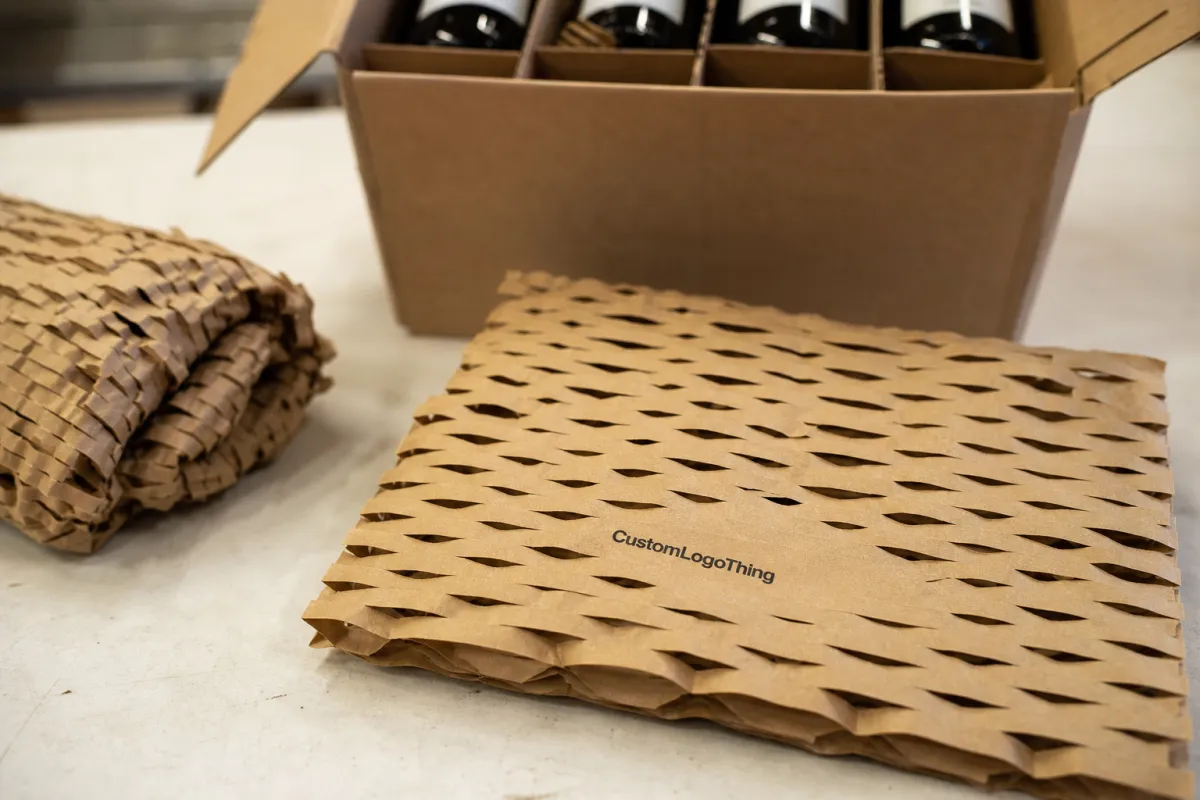
Most wine club programs are built around the bottle and the subscription cadence, but the hidden expense usually sits in the air around the bottle. Empty space drives larger cartons, and larger cartons often mean more corrugate, more dunnage, and more freight. That is the point where wine club void fill paper cost starts to matter in a real way. If the paper is doing its job, the package stays compact, the bottles stay separated, and the carton resists movement during parcel handling or regional delivery.
The cheapest filler can still become the priciest system. A packer who has to tear off too much material, reload the dispenser too often, or rework cartons because bottles shift during closure adds labor cost that rarely shows up in the quote. If the paper does not recover after compression, bottles can settle and rub. If it overfills, the carton can bow, which may lead to label damage or weak tape adhesion. All of that feeds back into wine club void fill paper cost.
Wine club buyers should compare paper against the full pack environment. A subscription shipper may move through parcel networks one month and regional delivery the next. The paper that looks fine in a small trial can behave differently once temperature swings, vibration, and stacking pressure enter the picture. That is why the right way to judge wine club void fill paper cost is to ask how the material performs under real handling, not just how it looks in a sample photo. A clean-looking bench sample is nice, but it does not tell the whole story, kind of like judging a bottle by the label alone.
The freight angle gets overlooked more often than it should. More air in the carton usually pushes the shipper toward a larger cube, and cube influences transportation cost more than many teams expect. A denser pack means fewer cubic inches per order, which can improve shipping efficiency and lower the landed number. Material selection is tied to transportation economics as much as cushioning. Serious buyers treat wine club void fill paper cost as part of the shipping design, not as an isolated line item.
Practical rule: if the paper saves two seconds per carton, lowers the damage rate, and keeps the bottles in place with less overfill, the higher unit price can still reduce the true wine club void fill paper cost.
Product Details: What Wine Club Void Fill Paper Actually Is
Void fill paper is a paper-based dunnage material used to lock bottles and inserts in place so they do not shift during packing, transit, and delivery. The material can be supplied in rolls, sheets, or converted formats depending on the application. In a wine club shipment, its main job is structural rather than decorative. It supports the bottle pack, fills empty space, and helps the carton behave like a tighter, more stable unit. That function sits at the center of wine club void fill paper cost because the least expensive material on paper may not be the least expensive material in use.
Roll form often suits steady packing stations because the paper feeds at the bench for manual or semi-automated use. Sheet formats can work well in smaller clubs or lower-volume operations where packers prefer a simple grab-and-place method. Converted and perforated formats can improve speed by letting the user tear the right length without measuring every pull. Each format changes unit cost, labor time, and storage footprint, so wine club void fill paper cost should always be measured beside the pack line itself.
Material choice matters too. Kraft paper usually offers a firmer feel and good tear resistance, while recycled-content papers can support sustainability goals and still provide useful fill, depending on basis weight and conversion. Heavier papers often feel more substantial and may resist collapse better, yet they also consume more fiber per carton and can raise purchase price and shipping weight. That tradeoff is exactly why buyers should ask how the paper behaves under compression, whether it dusts, and how much it expands inside the shipper. Those details shape wine club void fill paper cost just as much as the invoice does.
Fit matters just as much as material. In wine club packouts, void fill may be used around bottle shoulders, between bottle necks, above molded inserts, or as a top-fill layer to stop vertical movement. If the paper is too soft, it may settle and leave space. If it is too stiff, it may not conform around curved glass. The right spec depends on the shipper structure, the bottle profile, and whether the pack uses internal dividers, Molded Pulp Inserts, corrugated partitions, or a simple friction-fit design. A serious review of wine club void fill paper cost starts with the carton, not the roll.
Sustainability claims deserve careful handling. Paper can be a strong option, but recyclability still depends on local recycling rules, inks, coatings, adhesives, and what else is inside the shipper. A clean paper solution usually performs best when it matches the pack design instead of trying to compensate for a weak structure with excess material. Overstuffing is expensive, and it also weakens the environmental message. A smarter program keeps wine club void fill paper cost aligned with actual protection needs.
- Rolls are often preferred for steady pack stations and recurring club volume.
- Sheets can fit lower-volume or hand-packed operations better.
- Perforated formats can reduce waste and speed repeated pack lengths.
- Recycled-content paper may help meet sourcing goals if the performance spec still fits the shipper.
For buyers who want wider packaging context, the Packaging School / packaging.org resource library and the FSC certification framework are useful starting points for material and sourcing language. Neither one replaces a pack test, and both help teams separate credible claims from vague labels.
Specifications That Affect Performance and Wine Club Void Fill Paper Cost
If you want an accurate quote, the spec sheet has to say more than “paper fill.” The key details are basis weight or GSM, caliper, roll width, sheet size, core size, perforation pattern, and any print or branding requirements. Each of those choices affects how the material feeds and how much of it gets consumed per filled carton. That is the direct link between specifications and wine club void fill paper cost.
Basis weight and caliper matter a great deal. A heavier paper can provide better body and compression resistance, but it may also increase consumption if packers tear off longer lengths to achieve the same fill effect. A lighter paper may cost less by the pound, yet if it requires extra layers or more frequent refill, the real wine club void fill paper cost can rise. Buyers should ask for performance data in the context of the actual shipper, not just a catalog description.
Roll width also matters more than many teams expect. A wider roll can cover more space quickly, but if the width does not match the carton cavity, the packer may waste material. A narrower width may pack efficiently in one shipper style and poorly in another. The same goes for core size and unwind behavior. If the dispenser fights the roll, the line slows down, and labor becomes part of the wine club void fill paper cost equation whether anyone planned for it or not.
Application details are just as important. A six-bottle recurring shipper behaves differently than a mixed-SKU club box. Tall Bordeaux-style bottles are not the same as shorter, heavier Burgundy-style bottles. A molded pulp insert does not need the same fill pattern as a corrugated partition. Parcel shipping subjects the package to different vibration and drop conditions than LTL or regional delivery. A buyer who knows the shipper dimensions, bottle count, and delivery mode can Get a Quote That reflects reality instead of guesswork, and that makes wine club void fill paper cost more predictable.
Some operational details only show up during production. Dusting can be a nuisance around labels and glass. Compression recovery determines whether the paper keeps the bottle from shifting after the carton is closed. Consistency of cut length matters if the line is running fast and the packers are relying on muscle memory. The material also needs to feed cleanly from the carton, rack, or dispenser without snagging. These are not cosmetic concerns; they are production concerns, and they shape wine club void fill paper cost in the real world.
For teams that prefer standards, it helps to keep testing language grounded. ISTA transit testing and common package performance checks such as vibration, drop, and compression give a better picture of how a wine shipper will behave than a visual inspection alone. You can review the general testing framework at ISTA, then compare the results to your own carton and bottle profile. That kind of validation often separates a pretty sample from a dependable shipping system. It also keeps wine club void fill paper cost from getting driven by rework later.
| Format | Best Use | Typical MOQ | Relative Unit Cost | Notes |
|---|---|---|---|---|
| Stock roll | Recurring manual packing with standard carton sizes | Lower | Lowest to moderate | Fast to source; good starting point for testing wine club void fill paper cost |
| Custom width roll | Exact fit for a specific shipper or dispenser | Moderate to higher | Moderate | Can reduce waste and labor if the width matches the cavity well |
| Perforated converted paper | High-repeat pack lengths and speed-sensitive stations | Moderate | Moderate to higher | Often improves consistency and can lower total wine club void fill paper cost through labor savings |
| Branded or printed paper | Premium subscription presentation and unboxing | Higher | Higher | Useful for presentation, but print coverage can raise setup charges and running costs |
That table makes the point plainly: the quoted price is only one part of the story. A lower cost per piece can still produce a higher total pack cost if it wastes labor or breaks down in the carton. A better-run operation looks at material, speed, and damage exposure together. That is the right way to judge wine club void fill paper cost.
Wine Club Void Fill Paper Cost: Pricing, MOQ, and Quote Factors
Pricing starts with the paper grade, but it does not stop there. Converting complexity, custom width, perforation, branded printing, and freight all influence the final number. If you need a special core, a narrow slit width, or a printed format that matches the club’s presentation, the quote will usually reflect those details. That is why wine club void fill paper cost should be requested with a proper spec package, not a vague description.
MOQ depends on the format. Stock sizes usually allow smaller orders because the material already exists in a standard run structure. Custom widths, unique perforation patterns, or special branding often require a larger minimum because the converter has to change setup, manage a separate run, and absorb more preparation time. Buyers sometimes ask about tooling fees for paper products as if they were asking about a molded part. In paper converting, cost pressure usually comes from converting setup, material waste, and run efficiency, though print plates or specialty tooling can apply in some branded programs. All of that affects wine club void fill paper cost.
Bulk pricing becomes meaningful once the club has a reliable forecast. A recurring monthly shipment can often support a better unit cost than a one-time order because the supplier can plan production and allocate freight more efficiently. Scheduled releases or annual blanket orders can improve the numbers even more, provided the usage forecast is realistic. For many buyers, the sweet spot is not the biggest order possible; it is the order that gives enough volume to reduce wine club void fill paper cost without filling the warehouse with inventory that sits too long.
To compare quotes fairly, ask for more than a price per roll. Ask for price per pallet, price per filled carton, and, if possible, a view of cost per piece in the actual packout. That means the supplier should know how many bottles are in each shipper, how much paper is used per order, and whether the packer is hand-filling or using a dispenser. Once labor and waste are included, the quote is usually easier to compare. A low line-item price can be misleading if it consumes more material per carton or slows the line enough to erase the saving. That is the point where wine club void fill paper cost either improves or quietly gets worse.
Typical volume pricing for paper dunnage varies by region and specification, but buyers often see a meaningful spread between low-volume custom orders and recurring bulk programs. A standard converted roll might land in one range for a 1,000-unit buy and a noticeably lower range once the order moves into 5,000-unit territory. The exact numbers depend on width, basis weight, freight lane, and whether the material is stock or custom, so a quote without those details rarely tells the full story. That is why wine club void fill paper cost should be reviewed against forecasted volume, not just the first purchase order.
Freight deserves attention. Paper is lighter than many alternative dunnage systems, but it still takes pallet space, and pallet count can change the landed number quickly. A nearby converter may quote a slightly higher material price and still win on total cost because freight is lower. A farther supplier may look cheap on paper yet cost more once the cartons, skids, and delivery charges are included. The right comparison is always landed and used cost, not just list price. That mindset keeps wine club void fill paper cost honest.
Common quote factors at a glance:
- Paper grade and basis weight.
- Format: roll, sheet, perforated, or converted custom size.
- Volume: forecasted monthly use and annual commitment.
- Freight: distance, pallet count, and delivery mode.
- Branding: print coverage, color count, or specialty finishes.
- Operational fit: dispenser compatibility and pack speed.
If the buyer wants the most honest answer, the quote request should include actual bottle dimensions, internal carton dimensions, the current packaging method, and a guess at monthly consumption. Without that, the supplier has to guess at usage, and guesses make wine club void fill paper cost look more attractive than it may be in production.
Process and Timeline: From Spec Sheet to First Shipment
A clean purchase process usually starts with the shipper dimensions, bottle sizes, and volume forecast. From there, the paper format is matched to the pack method, samples are prepared, and the buyer tests the material in the actual carton. That sequence matters because a good-looking sample on its own tells you very little about real performance. The goal is to confirm fit, packing speed, and protection before production starts, which is the smartest way to protect wine club void fill paper cost from late-stage corrections.
Lead time depends on whether the item is stock, whether a custom conversion is needed, and how quickly sample approval moves. A stock format can be fast if the dimensions are already close to what the club uses. Custom work takes longer because the converter may need to schedule a separate run, source specific paper, or set up perforations and slitting. If the buyer is slow to confirm dimensions or usage targets, the launch date slips. That is why the fastest path to a fair wine club void fill paper cost is a complete request the first time around.
Samples should always be tested in the real pack. Put actual bottles in the actual shipper, close the carton the way the packers will close it, and inspect the result after movement and compression. If the paper only works when it is packed perfectly by a cautious tester, it is not the right production choice. A real trial should show whether the carton resists movement, whether the paper feeds cleanly, and whether the packing team can use it without slowing down. Those observations tell you more about wine club void fill paper cost than a clean sheet of product literature ever will.
Freight planning belongs in the timeline discussion too. A supplier can produce the rolls quickly, but if the cartons are shipping on a different schedule or the pallet handling needs special coordination, the launch still gets delayed. That is why a buyer should ask about production timing and outbound freight together. It is also why recurring club programs benefit from a replenishment schedule that fits the shipping calendar, not a last-minute scramble. Predictable replenishment usually improves both continuity and wine club void fill paper cost.
In many programs, the realistic timeline from approved spec to first shipment can be measured in business days rather than weeks if the material is stock. Custom converted formats may take longer, especially if the plant is managing other scheduled production. The cleanest shortcut is not asking for an impossible rush; it is sending complete information up front, approving samples quickly, and placing the order with a realistic forecast. That tends to produce the best combination of service and wine club void fill paper cost.
For buyers who need a reference point, a dependable process often looks like this:
- Gather bottle, carton, and shipper dimensions.
- Confirm pack method and dispenser needs.
- Request one or two format options.
- Test samples in the real carton.
- Review landed pricing, MOQ, and lead time.
- Release production after packout approval.
That process keeps the conversation grounded in performance. It also helps prevent expensive surprises after the first shipment lands. A club that chooses the wrong paper format can spend months paying for extra labor, damaged bottles, or excess material use. A club that tests carefully can lock in a more accurate wine club void fill paper cost and move forward with confidence.
Why Choose Us for Wine Club Void Fill Paper
Custom Logo Things works with the understanding that a paper filler is only successful if it fits the actual shipping system. A material that looks acceptable in a photo but jams the dispenser, packs inconsistently, or leaves movement in the carton is not a good value. The right product should support the bottle, match the box, and keep the packing team moving. That practical focus matters because wine club void fill paper cost is only attractive when the solution performs consistently from the first carton to the last.
We approach these projects as packaging problems, not just purchasing transactions. That means asking about bottle weight, carton style, insert structure, delivery lane, and how the packout is actually done on the floor. Manual pack lines, semi-automated stations, and high-volume club fulfillment all behave differently. A good recommendation reflects those differences, which helps the buyer avoid over-specifying the paper or under-specifying the protection. The result is a better balance of protection, speed, and wine club void fill paper cost.
Recurring club programs also demand reliability. The order does not happen once; it repeats. If the supplier misses a cycle, the club has to substitute material or delay shipment, and that can cost more than the paper itself. That is why supply continuity matters as much as price. A solid buying relationship should make replenishment easier, not harder, and should support the seasonal swings that many wine clubs experience. Stability in supply is part of the value behind wine club void fill paper cost.
We also think buyers deserve honest tradeoff language. Sustainable packaging should be judged on facts: material consistency, conversion quality, fit, freight efficiency, and what the local recycling stream can realistically handle. A cleaner material choice is only useful if it still protects the bottle and keeps the workflow efficient. That is the middle ground many teams need, and it is where the best wine club void fill paper cost outcomes usually come from.
Finally, strong packaging support means helping the buyer compare options without pressure. Sometimes a stock roll is the right answer. Sometimes a custom width saves enough labor to justify the higher line item. Sometimes a perforated format gives the best balance of pack speed and control. The point is not to force one product type. The point is to choose the option that makes the overall wine club program safer and more economical. That is how wine club void fill paper cost should be managed.
In practical terms: the best solution is the one that fits the carton, protects the bottles, and keeps the crew moving without overbuying material. If those three pieces line up, the wine club void fill paper cost usually makes sense in the real budget, not just on the quote sheet.
Next Steps to Get an Accurate Quote and Launch
If you want a quote that reflects reality, send the shipper dimensions, bottle dimensions, target monthly volume, annual forecast, current pack method, and delivery location. That information lets the supplier estimate usage, suggest the right format, and compare bulk pricing fairly. It also helps separate a low unit price from a low total cost. The more complete the brief, the more trustworthy the wine club void fill paper cost estimate will be.
Ask for a sample pack or a test roll before committing to volume. A short in-line test can reveal whether the paper fills quickly enough, whether the crew likes the handling, and whether the carton closes cleanly. That is a much better decision point than a glossy spec sheet. If the sample feels awkward, wasteful, or inconsistent, the production order will probably feel the same way. Testing protects both performance and wine club void fill paper cost.
Compare total pack cost, not just material price. Include labor, freight, breakage exposure, and how much paper is consumed per order. If two options are close, compare the one that packs faster and uses less material per carton. In many wine club programs, the best answer is not the absolute cheapest item on the quote page; it is the format that saves time while keeping the product secure. That is the proper lens for wine club void fill paper cost.
If you are torn between two formats, request both and test them side by side. A stock roll may be fine for one shipper, while a custom converted option may work better for another. The winner is the one that reduces rework, keeps the line moving, and gives you repeatable results through the whole subscription cycle. That method is practical, measurable, and fair to the budget. It also keeps wine club void fill paper cost tied to actual use rather than guesswork.
Send the specs, ask for the sample, and make the decision on the carton floor. That is the best way to control wine club void fill paper cost, protect the bottles, and launch a package that holds up through repeated shipments. If you already know your bottle sizes and monthly volume, the next step is straightforward: request a bulk quote and compare the real landed numbers.
wine club void fill paper cost should never be treated as a vague overhead item. It is a measurable part of the packout, and with the right shipper data, the right sample test, and the right volume forecast, it becomes much easier to control.
What drives wine club void fill paper cost the most?
Paper grade, converting complexity, custom dimensions, and freight usually have the biggest impact on price. Higher order volumes often lower the unit cost, especially when the same format is used on recurring club shipments. The cheapest quote is not always the best if it increases labor time or carton damage.
Can void fill paper replace plastic dunnage for wine shipments?
In many wine club packouts, yes, but the paper must be matched to the carton, bottle shape, and handling method. Testing matters because crush resistance and fill behavior can change with heavier bottles or long transit lanes. The final decision should consider performance, sustainability goals, and pack speed together.
What MOQ should I expect for custom void fill paper?
MOQ depends on the format, width, core, and whether the product is stock or custom converted. Stock sizes are usually easier for smaller runs, while custom dimensions often require a larger minimum. Ask for tiered pricing so you can see the breakpoints where volume starts to improve the unit cost.
How long does a custom void fill paper order usually take?
Lead time depends on whether the product is stock, needs a sample approval, or requires a custom conversion. Production scheduling and freight distance can change the total timeline even when the order is approved quickly. The fastest path is a complete spec sheet with dimensions, volume, and shipping details upfront.
How do I compare quotes for wine club void fill paper fairly?
Compare price per filled carton, not just the price per roll or per pallet. Include labor, packing speed, freight, and damage exposure when reviewing total cost. Make sure each quote uses the same carton size, bottle count, and material specification.