Wine Shops Soft Touch Poly Mailers Sample Order Guide: Why Sampling Matters
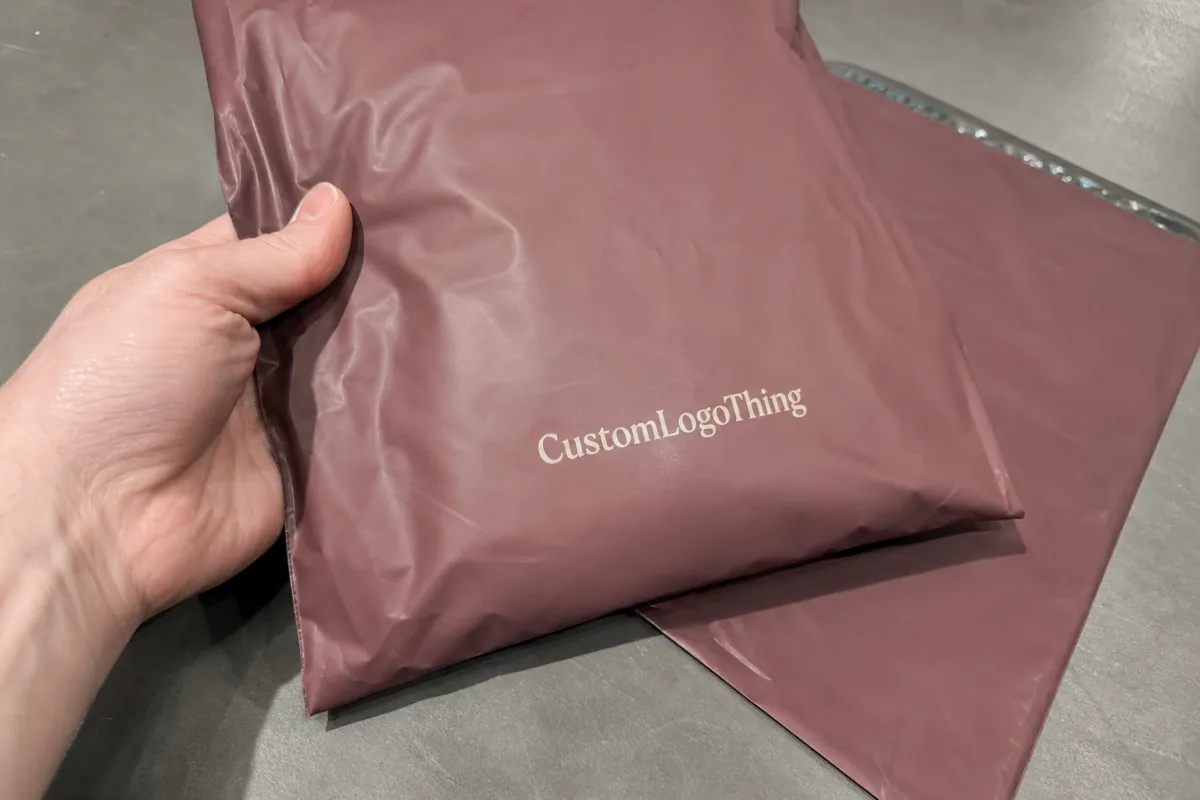
A wine club customer opens a package expecting care, and the first branded surface they touch is often the mailer. That is why a wine shops Soft Touch Poly Mailers sample order guide matters before anyone places a larger order. Sampling is not a courtesy step. It is the part of the process that tells you whether the bag feels premium, fits the contents, survives handling, and still looks like your brand after a few miles in transit.
Tactile packaging is judged fast. A bag can feel thoughtful, cheap, generic, or giftable in a matter of seconds. That impression affects perceived order value, the quality signal around a wine club subscription, and whether a gift recipient keeps the packaging visible long enough to notice the brand details.
Soft Touch Poly Mailers are flexible shipping bags, not bottle shippers. Wine shops use them for tasting kits without glass, membership packets, apparel, catalogs, event invites, gift cards, corkscrew kits, folded inserts, and other light retail items. If the shipment includes glass, liquid, temperature control, or meaningful crush risk, the mailer still needs a second layer of protection. A soft touch bag can present the package well, but it cannot replace a rigid shipper or insulated system.
Sampling is risk control. A small order can prevent a costly run of mailers that are the wrong size, too translucent, weak at the seal, or off in color once printed on the actual film.
The sample should be treated as a real production test. Pack the item, seal it, label it, store it, and handle it the way your team normally will. The difference between a pretty proof and a workable mailer often shows up in the details: a bag that looks slim on screen may be too tight once tissue, a sleeve, and a folded insert are inside.
If you are comparing Custom Poly Mailers, the goal is not merely to find the lowest price. The goal is to approve a format that holds up operationally, supports the brand presentation, and can be reordered without guesswork. The sections below cover the details that usually decide whether a sample becomes a production order.
Soft Touch Poly Mailer Product Details for Wine Retail Packaging
Soft Touch Poly Mailers use a matte, velvety finish that feels more refined than standard gloss poly. The finish cuts glare and often makes darker brand colors read cleaner. For wine retailers, that matters because restrained packaging usually works better than busy decoration. Black, burgundy, charcoal, cream, and forest green can all look stronger on a soft touch surface than on a shiny one.
Common constructions include LDPE, co-extruded polyethylene, recycled-content blends, and specialty films selected for opacity, print quality, and surface feel. A typical Custom Soft Touch mailer for retail merchandise may fall around 2.5 to 3.5 mil, though lighter or heavier gauges can make sense depending on what is being shipped. Recycled-content options are often available, but the exact percentage and any recyclability claim depend on the full structure, the inks, and the local recovery system.
These bags fit a broad range of wine retail uses. Think tasting-room merchandise, club welcome packs, loyalty cards, holiday bundles, event invitations, printed catalogs, and lightweight apparel. The bag works best when the contents are soft goods or flat items that benefit from presentation more than crush protection.
What should not go in by itself? Unprotected glass bottles, liquids that need containment, temperature-sensitive goods without insulation, and anything that depends on rigid packaging to survive transit. Buyers looking for package performance standards can review guidance from the International Safe Transit Association.
Branding options usually include one-color logos, spot colors, full-color art, seasonal graphics, and QR codes that point to tasting notes or club pages. QR codes deserve careful handling. Keep the contrast high, leave quiet space around the code, and test scanning after print, not only in layout software.
Soft touch film can change the look of color. Matte black may show scuffs from carrier handling. Cream can feel elegant but needs stronger opacity checks. Burgundy and dark green can shift under warm lighting. Metallic effects may need a different ink system or another substrate entirely. That is one of the main reasons a sample is worth the time.
Wine shops with multiple channels usually discover that one mailer does not fit everything. Ecommerce shipments, tasting-room pickup packets, influencer kits, and seasonal club mailings often need different sizes or closures. A sample lets the team see where one format fits and where it starts to work too hard.
Size, Thickness, Closure, and Print Specifications to Confirm
Start with the packed item rather than the empty product. That sounds obvious, but it is where many mailer orders go wrong. A folded shirt, a tasting card, tissue wrap, a protective sleeve, and a small gift box can add more width than expected. Measure the bundle at its widest, tallest, and thickest points, then allow enough room for staff to pack without stretching the seams.
A bag that is too tight can split near a seam or slow packing because the team has to fight every order into place. A bag that is too large looks sloppy and wastes material. For wine retail accessories, common test sizes include 10 x 13 inches, 12 x 15.5 inches, and 14.5 x 19 inches, but the right choice depends on the actual contents.
| Specification | Typical Choices | Buyer Check |
|---|---|---|
| Film thickness | About 2.0-4.0 mil depending on use | Balance puncture resistance, opacity, hand feel, and cost |
| Closure | Peel-and-seal, tamper-evident, double strip, tear strip | Test seal strength in the storage conditions you actually use |
| One-color logo, spot color, full-color artwork, QR code | Check contrast and barcode or QR readability after printing | |
| Opacity | White, black, tinted, co-ex film, heavier gauge | Place gift cards and printed inserts inside and hold under bright light |
| Sustainability | Right-sized format, recycled-content film, recyclable structure | Avoid compostability claims unless certified and documented |
Thickness affects more than durability. Thinner film reduces material use and usually lowers unit cost. Thicker film improves puncture resistance, opacity, and perceived quality. A 3.0 mil soft touch mailer can feel noticeably different from a 2.0 mil economy bag even if both technically get the package to the door.
Opacity deserves its own check. Wine shops often mail gift cards, club paperwork, branded certificates, and premium inserts. If the contents can be seen through the bag, the package feels careless. In some cases it also creates a theft risk. Hold the sample up to bright light with the real contents inside. If the outline is obvious, the film needs another look.
Closure choice affects both customer experience and packing speed. Permanent peel-and-seal strips are common for outbound orders. Tamper-evident seals work well for higher-value contents. Double adhesive strips support returns or exchanges. Tear strips make the opening experience cleaner and reduce the chance that a customer cuts through the bag and damages what is inside.
Print on soft touch film does not always match the proof exactly. Deep burgundy can go muddy. Charcoal can swallow fine black lines. Gold may lose its premium look if the print method cannot carry the right tone. Ask for Pantone or brand references where possible, but expect the sample to tell the truth about how the film, ink, and finish interact.
Shipping labels need a clear zone. A 4 x 6 inch blank area is often the safest starting point for label placement, though your carrier format may vary. Keep the key artwork, legal text, and QR codes out of that space. Also test label adhesion on the selected surface. Some matte finishes need the right label stock to keep edges from lifting.
Sustainability claims should stay specific. Right-sizing reduces plastic immediately. Recycled-content film may reduce virgin resin demand. Mono-material polyethylene structures can be better than mixed-material laminates in some collection systems. Avoid broad claims unless the supplier can document them. The EPA sustainable materials management guidance is a useful reference for keeping the language grounded.
Cost, Pricing, MOQ, and Unit Cost Drivers for Sample Orders
Pricing depends on the kind of sample you want. Blank stock samples are cheaper and faster. Printed pre-production samples require artwork review, proofing, setup, and actual production time. A small pilot run sits between those two: more realistic than a swatch, less commitment than a full order.
The main cost drivers are size, thickness, finish, print coverage, number of ink colors, setup method, quantity, and shipping destination. Freight can surprise buyers because volume still matters even when the product is light. A large carton of mailers may not weigh much, but it still takes space to move and store.
MOQ is not a fixed number across the board. Some sample requests can be filled from existing blank inventory or material swatches. Fully custom printed samples often carry minimums because proofing, plates or screens, setup time, and labor all have fixed costs. Bulk orders lower the unit cost by spreading that setup across more pieces.
| Order Type | Best For | Typical Cost Logic | Common Timeline Pattern |
|---|---|---|---|
| Blank sample kit | Testing size, feel, thickness, opacity | Lowest sample cost; limited branding validation | Usually fastest if stock is available |
| Printed sample | Checking logo scale, color, finish, label space | Higher due to proofing and setup | Longer because print approval is required |
| Small pilot run | Testing operations for a club drop or campaign | Moderate unit cost; more realistic than one sample | Depends on material, print method, and quantity |
| Full production order | Recurring ecommerce, club, or retail packaging | Lowest unit cost at higher quantities | Requires final approved specs and artwork |
As a directional guide, a plain stock poly mailer may be a low-cost sample item, while a custom printed soft touch mailer in a small pilot quantity can cost much more per unit because setup is not yet spread across volume. At larger quantities, buyers often see better pricing at breaks such as 1,000, 2,500, 5,000, or 10,000 pieces, depending on structure and print method. A 5,000-piece order might land in a range such as $0.18-$0.45 per unit for many common specifications, but specialty film, heavy coverage, rush production, or more complex print can push it higher. Treat any range as directional until the specs are reviewed.
Lowest unit cost is not always the best purchase. A weak seal can cause reships. Poor opacity can expose gift cards or inserts. Off-brand color can make premium merchandise look like closeout stock. Those mistakes cost more than the few cents saved on a thinner bag.
Ask for three quote views if possible: a sample kit, a small pilot run, and the expected recurring reorder volume. Include target quantity, dimensions, thickness, artwork files, print colors, finish, delivery ZIP code, desired in-hand date, and return-seal requirements. That makes the quote useful instead of vague.
Total landed cost is the real number. Setup, proof revisions, freight, rush fees, special materials, and reorder risk all affect the economics. A careful approval process often saves money without weakening the package.
Process, Timeline, and Lead Time from Sample Request to Delivery
A disciplined process keeps approvals from getting blurry. The usual path is inquiry, specification review, artwork check, sample recommendation, quote approval, proof creation, sample production or stock shipment, quality review, and a bulk order decision. Skip a step and the uncertainty just moves downstream.
Blank or existing-stock samples are usually faster because they do not require custom print setup. Printed samples take longer because the artwork has to be checked, proofs approved, and production scheduled. Lead time depends on material availability, print complexity, revision count, factory load, and transit method.
Digital proofs are useful, but they only tell part of the story. A proof confirms layout, logo position, color references, dimensions, and seal orientation. It does not tell you how the film feels, how much it scuffs, whether the bag hides the contents well, or how the label behaves on the surface. That is why a physical sample is the real approval point in a wine shops soft touch Poly Mailers Sample order guide workflow.
- Submit specifications: size targets, contents, packed weight, preferred finish, and print expectations.
- Review artwork: vector files are preferred; include brand color references and safe-area requirements.
- Approve quote: confirm sample type, quantity, pricing, freight, and delivery target.
- Check proof: verify logo position, seal orientation, label space, and artwork scale.
- Test sample: pack, seal, label, handle, photograph, open, and inspect.
- Document revisions: use measurements, photos, and defined color references.
Internal approval is often the slowest part. A wine shop owner, retail manager, ecommerce lead, and designer may all want input. If feedback comes in fragments, one proof revision becomes three. It works better to appoint one reviewer or collect all comments in a single document.
A practical pilot sequence is simple: approve material and size first, approve artwork second, then run a controlled order for one club shipment, seasonal promotion, or merchandise launch. That pilot reveals packing speed, label behavior, scuffing, storage fit, and customer response before larger volume is committed.
When the sample arrives, inspect it under real conditions. Put the actual contents inside. Seal it. Leave it for a few hours, then test the closure. Apply a shipping label. Rub the surface lightly against corrugated board. Hold it under bright light to check opacity. Photograph it on a counter, in a shipping bin, and beside the product it will carry. If it only looks good in ideal lighting, it is not ready yet.
Quality Checks That Separate Premium Mailers from Generic Plastic Bags
The gap between a premium soft touch mailer and a generic plastic bag usually shows up in small things: side-seam consistency, adhesive performance, print registration, film opacity, surface uniformity, and trim accuracy. These are not decorative details. They are the parts that determine whether the bag works day after day.
Wine buyers already understand the value of finish control. A label can hold the same liquid and still feel completely different depending on paper, print, and structure. Packaging works the same way. A centered logo, controlled ink density, firm seal, and smooth matte surface communicate intention. A scuffed, translucent, weakly sealed bag communicates something else.
That is also why specialist support matters. The right order is not just a bag size pulled from inventory. It is a material, finish, print method, and size matched to the actual use case. A winery gift-card campaign does not need the same structure as a tasting-room apparel shipment. A high-contrast logo on cream film does not behave the same as a full-bleed burgundy print on black matte material.
Buyers should ask what quality checks happen before shipment. At minimum, look for artwork review, proof approval, print inspection, size tolerance checks, seal testing, and transit packaging review. For higher-value campaigns, keep one approved physical sample as the reference standard. That single bag can settle questions faster than a long thread of emails.
Measurable outcomes matter more than claims. Better sampling can reduce reorder mistakes caused by sizing errors. It can reduce complaints about damaged or poor-looking packaging. It can make presentation more consistent across ecommerce and tasting-room channels. It also gives procurement a clear record of what was approved: size, film, color, and closure.
For wine shops using a wine shops Soft Touch Poly Mailers sample order guide process, the sample becomes a shared standard between the buyer and the production team. That reduces ambiguity before full production and makes future reorders easier because the specification does not have to be rebuilt from memory.
Next Steps Before You Approve a Soft Touch Mailer Sample
Gather the facts before requesting a quote. Measure the packed dimensions, packed weight, expected monthly volume, preferred mailer sizes, artwork files, brand colors, shipping label size, delivery deadline, and any return-seal requirements. Guessing at any of those usually creates a second round of revisions.
- Measure the packed bundle: include tissue, inserts, sleeves, folded apparel, and gift packaging.
- Choose two or three candidate sizes: guessing one size usually leads to an avoidable revision.
- Prepare artwork properly: vector files are best; include Pantone or brand color references if available.
- Select the sample type: blank sample for feel and fit, printed sample for branding validation, pilot run for operational testing.
- Define the use case: ecommerce shipment, club packet, tasting-room pickup, gift campaign, or merchandise order.
- Set a decision date: internal review can be slower than production if nobody owns approval.
Test the sample the way the customer will receive it. Pack it. Seal it. Label it. Handle it. Open it. Then ask the blunt question: does the package still read as premium after normal handling? If the answer is only yes from one angle, revise it.
Make revision notes measurable. Increase width by 1 inch. Move the logo 2 inches lower. Reserve a 4 x 6 inch blank label zone. Switch from 2.5 mil to 3.0 mil. Darken the background using a defined color reference. Replace vague feedback with instructions the production team can actually use.
If volume is likely to grow, ask about Wholesale Programs so reorder pricing and recurring supply are considered early. For basic ordering questions, the FAQ can help before a quote request goes out.
The buyer-focused move is simple: request a sample order using this wine shops soft touch poly mailers sample order guide as the checklist, then compare the physical sample against cost, timeline, protection needs, and brand fit before approving bulk production.
FAQ
What should a wine shop include in a soft touch poly mailers sample order request?
Include the mailer size, actual item dimensions, packed weight, target quantity, artwork file, print colors, desired finish, closure preference, delivery ZIP code, and required in-hand date. If sizing is uncertain, request more than one sample size so the team can test the actual packed product instead of estimating from the product alone.
Can wine shops use soft touch poly mailers to ship wine bottles?
No, not by themselves. Soft touch poly mailers are not designed to ship unprotected glass bottles. They are better suited for wine accessories, club paperwork, apparel, gift cards, tasting materials, catalogs, and branded merchandise unless they are paired with proper rigid or protective packaging.
What is the typical MOQ for custom soft touch poly mailers?
MOQ depends on size, material, print method, finish, and whether the order is a blank sample, printed sample, pilot run, or full production run. Ask for separate pricing on a sample kit, a small test run, and the expected reorder volume so unit cost can be compared accurately.
How long does a custom poly mailer sample order usually take?
Existing blank samples are generally faster because they do not require custom print setup. Printed samples take longer because of artwork review, proof approval, production scheduling, quality checks, and transit time. Approval speed and proof revisions can change the schedule significantly.
How can I lower the unit cost of wine shop soft touch mailers without reducing quality?
Right-size the mailer, limit unnecessary print coverage, choose standard dimensions where possible, order at a realistic higher volume, and approve proofs quickly to avoid revision delays. Compare total landed cost, including setup, freight, rush fees, and possible reorders, rather than judging the purchase by unit price alone. A disciplined wine shops soft touch poly mailers sample order guide process usually saves more money than a rushed low-bid order.


