The Woven Label Beanies embroidery cost guide sounds straightforward until you start pricing one for real. Then the quote turns into a small puzzle: logo size, stitch count, label build, packaging, and quantity all pull in different directions. The beanie itself matters, sure, but it is rarely the biggest driver. I have seen a basic cuffed knit come in cheaper than a supposedly simpler style once the buyer added a woven label, hang tag, and retail fold. That extra finishing is where the number starts to move.
The mistake is usually comparison, not math. Buyers line up embroidery prices and assume they are comparing the same product. They are not. One supplier may be quoting decoration only, while another is bundling labeling, QC, and pack-out. Those differences can change the landed unit cost enough to blow up a margin model. So if the quote feels oddly low, double-check what is hiding inside it.
This guide breaks the pricing apart in plain language. Not every upgrade is worth paying for. Some absolutely are. The trick is knowing which details improve the product and which ones just make the spreadsheet prettier.
Woven Label Beanies Embroidery Cost: Why the Numbers Surprise Buyers
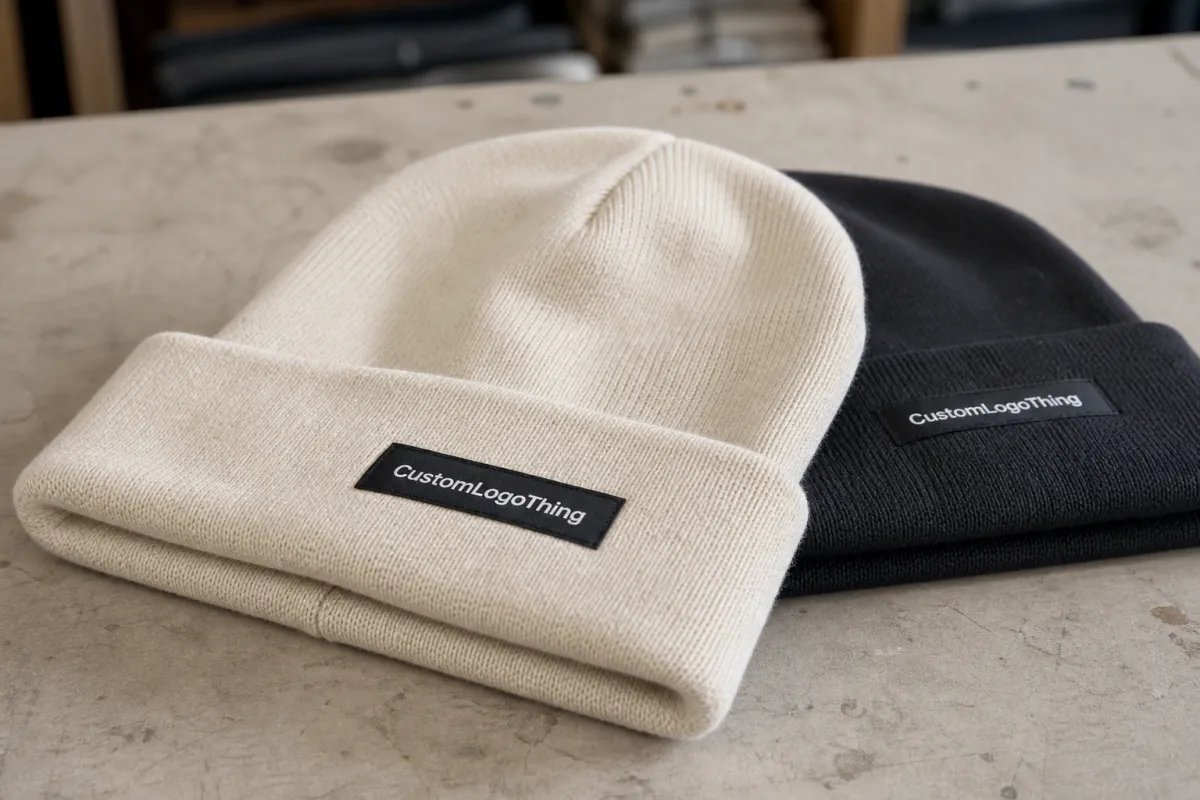
Decorated beanies almost never have one clean price. One vendor may treat the order like a standard embroidery job; another may price it like a private-label project because the same beanie also needs a woven label, extra placement, and retail packing. That is why the Woven Label Beanies embroidery cost guide matters. The differences are not cosmetic. They are built into the production steps.
Setup costs create the first surprise. Digitizing the artwork, setting the embroidery file, weaving the label, approving the sample, trimming threads, folding the goods, and packing them all take time. On a 50-piece order, those fixed costs bite hard. On a 500-piece order, they get spread out and the per-unit price relaxes a lot. The garment can be ordinary and still feel expensive if the order is tiny.
There is also a perception trap. A premium-looking beanie is not always the expensive one. A simple acrylic cuffed hat with a small logo can cost less than a thicker knit if the thicker style needs more stitches, more handling, or more careful placement. People often compare the blank product first and the decoration second. That order is backward.
Clear quotes win. If the supplier does not separate the beanie, embroidery, woven label, and freight, the number is only good for rough guessing.
In sourcing rounds, I have found that the fastest way to clean up pricing is to send one exact spec sheet and ask every vendor to quote the same structure. Once they are all pricing the same build, the real differences show up fast. Otherwise, you are comparing apples to oranges, and maybe one apple is wearing a hat.
Product Details: Woven Label Beanies with Embroidery Options
A woven label beanie has three parts that buyers sometimes blur together: the knit body, the woven label, and the embroidered mark. The woven label usually carries brand identity, sizing, or care info. Embroidery handles the visible logo. Together, they create a more finished product without forcing a full custom knit program.
Which beanie styles handle decoration best
Cuffed beanies are the easiest to work with. The cuff gives embroidery a flat surface and leaves a natural spot for a label. Ribbed styles also work well, though the texture can make stitches sit a little differently. Slouchy beanies look good with restrained side placement, but oversized artwork can crowd the crown and flatten the look.
Pom beanies and heavyweight winter knits need a different conversation. They are useful for seasonal drops and teamwear, but they can raise cost if the knit is tighter or the embroidery area is awkward. The smoother the decoration zone, the easier it is to keep the finish clean. That is not fancy theory; it is just how thread behaves on knit.
Where woven labels and embroidery usually go
Center-front cuff placement is the default because it reads quickly and photographs well. Side seam labels suit quieter branding. Back cuff placement works when the front already carries a large mark. Hem-edge labels are good for minimalist brand systems or size identification. Each placement changes labor time and rejection risk, which is why the same beanie can price differently depending on the layout.
If the order needs interior branding, a hang tag, or size identification, pairing the cap with Custom Labels & Tags can keep the quote from getting messy later. That matters more in private-label programs than in a simple promo run. The label is not decoration after the fact. It is part of the product itself.
Embroidery works best for bold marks, short text, and emblems that need to read from a distance. Woven labels are better for fine detail, understated branding, and multi-line information. For most buyers, the smartest setup is not one or the other. It is embroidery on the outside and a woven label inside. That gives you visibility and identity without overloading the front panel.
Specifications That Affect Woven Label Beanies Embroidery Cost
The spec sheet does the real work in a woven label Beanies Embroidery Cost quote. Vague instructions produce vague pricing. Tight instructions produce useful pricing. When the supplier knows the style, size, placement, and finish, the back-and-forth drops and the quote gets sharper.
- Beanie material: acrylic, acrylic-wool blend, recycled polyester, or heavier thermal knit.
- Knit gauge: finer knits and looser ribs behave differently under thread.
- Cuff depth: a deeper cuff gives more room for decoration.
- Thread colors: one color is quicker; several colors increase handling.
- Logo dimensions: a 2.5- to 3-inch mark usually fits a cuff cleanly.
- Label size: woven labels price by width, weave detail, and finish.
- Build style: flat embroidery is simpler than raised or layered stitching.
Stitch count is one of the biggest cost drivers. More stitches mean more machine time, and machine time is what suppliers are selling. A compact mark with clean outlines stays efficient. A dense logo with tiny lettering, filled shapes, or tight curves usually pushes the count higher. That difference often matters more than the blank beanie itself.
Artwork complexity acts the same way. Gradients do not translate well to thread. Thin lines can blur. Small copy can disappear once it is stitched into a soft knit. A good supplier should say that early instead of pretending every logo is embroidery-friendly. A simpler mark is cheaper, yes, but it also tends to look better on a beanie. Kind of a nice coincidence.
QC belongs in the first quote request. Ask for thread matching, placement tolerance, and a photo sample or sewn sample before bulk production starts. If the order is retail-bound, sample approval is not extra paperwork. It is the checkpoint that keeps a cheap error from becoming an expensive one.
Custom Woven Labels can also add tooling or loom setup charges. That is normal. What catches buyers off guard is how much those charges matter on a small MOQ. A 1,000-piece run absorbs them quietly. A 50-piece run does not. Ask whether the setup is one-time, whether color changes create new charges, and whether the label width changes the price.
Woven Label Beanies Embroidery Cost, MOQ, and Quote Drivers
Volume changes the math quickly. The woven label beanies embroidery cost model rewards scale, but only after setup costs are spread across enough units. The first noticeable drop often appears around 50 pieces, then again near 100, 250, and 500. Every tier softens the impact of digitizing, label setup, and approval work, which lowers the unit cost.
MOQ matters because the same setup steps appear whether the order is tiny or large. At 50 units, each of those steps is visible on the invoice. At 500 units, the same steps get buried inside the total. Buyers who only ask for the minimum quantity often end up paying a premium they could have avoided with a slightly larger run.
| Build | Typical Fit | Approx. Unit Cost at 100 | Approx. Unit Cost at 500 | Buyer Takeaway |
|---|---|---|---|---|
| Stock cuffed beanie + 1-color embroidery | Promo, events, giveaways | $3.90-$6.50 | $2.60-$4.10 | Lowest setup, fastest approval path |
| Stock ribbed beanie + woven label + small embroidery | Retail-style branding | $4.80-$7.20 | $3.10-$5.00 | Balanced look and cost per piece |
| Heavyweight beanie + larger logo + custom hang tag | Premium merch | $6.20-$9.50 | $4.10-$6.80 | Higher stitch time and more pack-out work |
| Slouchy or pom beanie + multiple placements | Fashion or seasonal drop | $7.00-$11.00 | $5.00-$8.50 | More labor, more QC, more risk of revisions |
Important: these are working ranges for decorated units, not delivered totals. Freight, tax, cartons, and inserts can still add cost. A retail box, belly band, or folded insert may add $0.20-$0.65 per piece. Split shipments can add more, especially if the order goes to multiple warehouses.
Some quote variables stay hidden until the final invoice if the buyer does not ask early. Rush fees can shorten the schedule and raise the price. Sample fees may be refunded later, or not. Special yarns can change the material rate. FSC paper for tags or inserts can alter the packaging line slightly. Shipping to more than one destination usually costs more than a single drop, even if the production price stays unchanged.
The better move is to ask for pricing at several breakpoints. One number tells you almost nothing about the curve. Ask for 50, 100, 250, and 500 units. That shows where the price bends and where inventory risk starts to outweigh savings. A buyer who sees the curve makes a better call than one staring at a lonely unit price and hoping for the best.
Production Process and Timeline for Woven Label Beanies
A believable schedule matters as much as the quote itself. A low price that misses a retail launch is not a low price. In the woven label beanies embroidery cost guide, timing is part of cost because delays create their own bill. Miss the delivery window and the margin can disappear in expediting, missed sales, or emergency sourcing.
- Brief intake: the supplier confirms style, quantity, placement, and packaging needs.
- Artwork check: logos are reviewed for stitch suitability, size, and thread color count.
- Digitizing and proofing: the embroidery file is converted and a visual proof is sent.
- Sample approval: a sewn sample or photo sample is reviewed before bulk runs.
- Bulk production: embroidery, label sewing, trimming, and final inspection take place.
- Packing and dispatch: units are folded, packed, labeled, and shipped.
For stock beanies with a single logo, bulk production often takes about 10-15 business days after final approval. Orders with custom woven labels, extra placements, or special packaging usually land closer to 15-25 business days. That range depends on queue depth, material availability, and how quickly the buyer approves artwork. A fast reply from the customer shortens the schedule more than most people expect.
The slowest part is rarely the machine stitching. It is the waiting between steps. Unclear artwork creates email loops. Delayed thread decisions stall sampling. A change after the sample stage can reset the clock. If the schedule matters, lock the spec early and avoid reopening the design once the proof is approved.
Shipping performance also deserves attention. If the beanies are going into retail cartons, ask how the pack-out aligns with a recognized transit test like ISTA. That kind of planning does not add glamour. It reduces the odds of crushed cartons, bent inserts, and damaged presentation on arrival.
The clock starts when the details are fixed, not when the first inquiry lands. Buyers who treat the quote stage like a specification review usually get cleaner pricing and fewer schedule surprises. That is the boring answer, but it is the true one.
Why Choose Us and What to Send for a Woven Label Beanies Quote
Good quoting starts with clean input. A supplier that can show sample photos, consistent stitching, and line-item pricing is easier to work with than one that hides every cost inside a single number. The woven label beanies embroidery cost becomes much easier to control when embroidery, labels, packing, and freight are all visible. Buyers do not need a pitch. They need a comparison they can trust.
If the order includes paper inserts, care cards, or hang tags, ask whether the stock can be sourced with FSC certification. That small request matters in retail programs where sustainability claims have to be precise and defensible.
Send these details with your request:
- Beanie style: cuffed, slouchy, ribbed, pom, or heavyweight knit.
- Quantity: the exact count plus any tier targets you want quoted.
- Logo file: vector format is best for clean digitizing.
- Thread colors: Pantone references help, but thread matching still depends on material.
- Placement and size: front, side, back, cuff, or multi-placement.
- Packaging: loose bulk, folded retail pack, tag, insert, or carton spec.
- Target date and ship-to location: both affect the production plan.
Ask for two versions of the quote. The base build shows the floor. The upgraded build shows the cost of a woven label, extra thread color, hang tag, or premium folding. That side-by-side view exposes the real gap between a basic promo cap and a retail-ready product.
For buyers still shaping the spec, the fastest route is simple: send the blank style, decoration size, packaging needs, and destination, then ask the supplier to separate beanie cost, embroidery cost, labeling, and shipping. If the order depends on private-label presentation, pair the cap quote with Custom Labels & Tags so the full branding package is priced together instead of pieced out later.
The practical takeaway is simple: the best-priced beanie is the one quoted on the same rules as every other option. If one supplier is pricing embroidery only and another is pricing embroidery plus woven labels plus packing, the comparison is already broken. Fix the spec sheet first, then compare the numbers.
Frequently Asked Questions
How much does woven label beanies embroidery cost per piece?
Per-piece cost depends on quantity, stitch count, logo size, and whether the order includes custom woven labels or upgraded packaging. Small runs cost more per unit because setup and digitizing are spread across fewer beanies.
What MOQ is normal for woven label beanies embroidery orders?
Many suppliers offer lower MOQs for stock beanies and higher MOQs for fully custom builds. If you want the best unit price, ask for pricing at multiple tiers, not just the minimum order quantity.
Does embroidery or woven label placement change the cost?
Yes. Front-center placements and larger logos usually cost more than side or small cuff placements. Multiple placements can add labor time and increase the quote.
How long does production usually take after artwork approval?
Timelines vary by queue, approval speed, and whether the beanies are in stock. Once artwork and samples are approved, bulk production is usually faster than the initial quote stage.
What should I send to get an accurate woven label beanies embroidery cost quote?
Send the beanie style, quantity, logo file, placement, thread colors, packaging needs, and delivery deadline. The more specific your brief, the fewer revision rounds you need before pricing is finalized. For most buyers, that is the cleanest way to keep the woven label beanies embroidery cost guide useful from the first quote to the final invoice.

