Woven Label Beanies Reorder Plan: Specs, Pricing, Timing. Repeat beanie orders get expensive when the second run relies on memory instead of measurements. A few millimeters off on label placement, a small knit change, or a color that only matched on screen can turn a “same order” into a new approval cycle. A solid woven label Beanies Reorder Plan keeps the spec, sample, and purchase order aligned.
Why Repeat Beanies Drift From the First Run
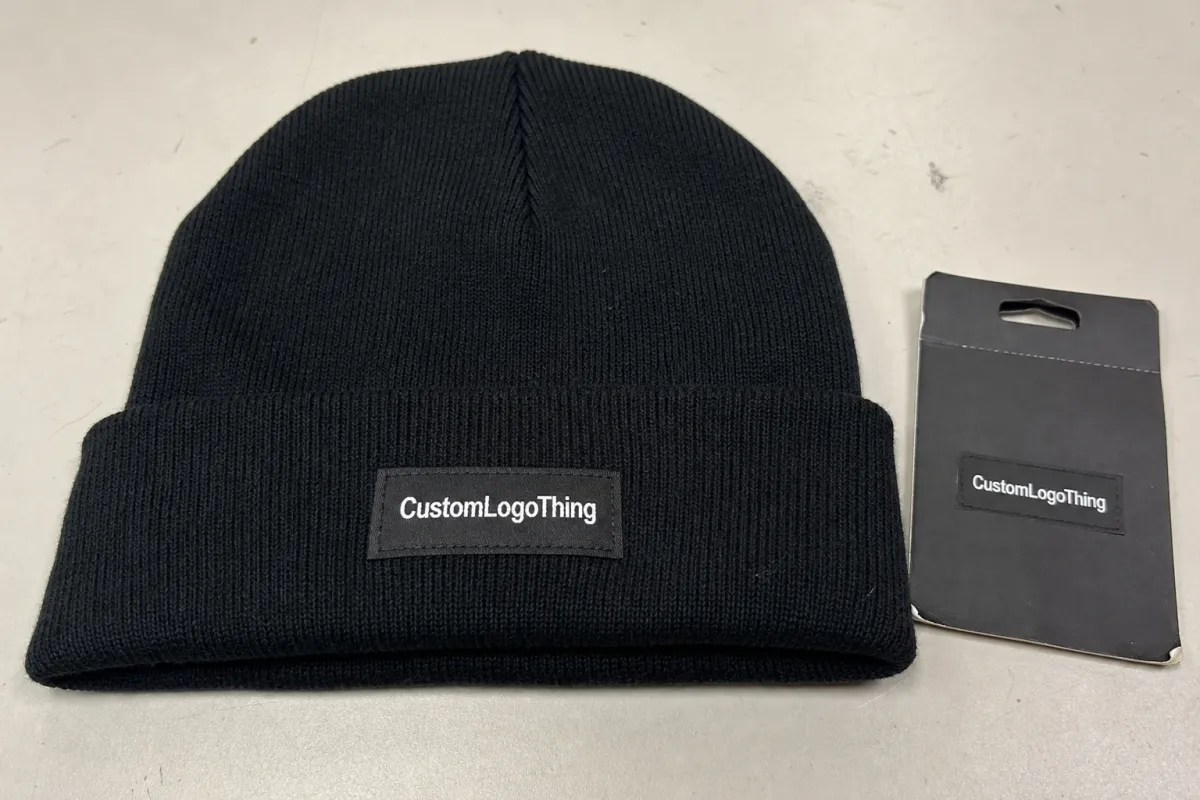
The first order is usually approved with a sample in hand and more attention than the reorder gets. By the second run, someone may be using an old photo, a buried PDF, or a vague memory of where the woven label sat on the cuff. That is enough to create a different product without anyone meaning to.
Most drift comes from ordinary production variables. Yarn lots change. Knit tension moves slightly across machines. A cuff can be folded a little differently. None of that sounds dramatic, but on a beanie, small shifts change how the hat sits and how the label reads from the shelf.
Label placement is where buyers notice problems first. If a woven label was centered on the sample and then creeps toward a seam on the reorder, the hat looks off even if the logo itself is unchanged. The same thing happens when weave density changes. A tighter weave keeps small lettering crisp; a looser weave can soften edges and thin strokes.
Same style does not mean same spec.
If the first order had a 7.5 cm cuff, a 22 cm body height, and the label stitched 10 mm from the folded edge, those numbers should carry forward. If nobody can point to a written measurement, the repeat order starts with a blind spot.
What To Lock Before You Reorder
Start with the beanie body. Cuffed, slouch, double-layer, youth sizing, and oversized fit all change the label area and the way the knit behaves under stretch. A cuffed beanie gives a neat placement zone. A slouch style has more visual looseness and less predictable symmetry. Double-layer construction changes how much the cuff flexes when worn.
Then lock the measurements. Body height, cuff height, opening stretch, crown depth, seam position, and stitch gauge should be written down. If the reorder is meant to match the first run, ask for the actual approved dimensions rather than approximations. A tolerance of roughly 0.25 in to 0.5 in may be acceptable depending on construction, but the agreed window should be written before production starts.
Artwork control matters just as much. Keep the logo file, thread colors, label dimensions, backing, and fold style tied to the archived approval. If the original woven label used fine details or small lettering, changing weave density can affect legibility more than most buyers expect.
Placement rules need to be explicit. Left cuff, center front, seam offset, folded edge, inside seam tag, or woven-in brand tag should never depend on someone remembering where it looked good last time.
- Beanie body: cuffed, slouch, double-layer, youth, or oversized
- Measurements: body height, cuff height, opening stretch, seam distance
- Label spec: size, fold, weave density, thread colors, backing
- Placement: left cuff, center front, seam offset, inside tag
- Source files: approved sample, spec sheet, PO history, final proof
If a buyer wants to change the label size or move the placement, flag it before quoting. Those edits can change the unit cost, MOQ, and timing. For coordinated labels, tags, or brand marks across garments, it is cleaner to keep that work linked to a product reference such as Custom Labels & Tags rather than spread it across scattered messages.
Specs That Change Fit, Finish, and Approval
Most buyers focus on the logo and ignore the knit. That is where repeat orders get tricky. Acrylic, wool blend, recycled polyester blends, and mixed yarn constructions all behave differently in hand and under stretch. A looser 100% acrylic beanie will not sit the same way as a denser wool blend, even when the outside shape looks similar on a hanger.
Knit gauge matters because it controls surface texture and label behavior. A tighter gauge gives a cleaner face and usually supports sharper label edges. A softer, looser knit can feel more relaxed, but it may also let the label ripple or sit unevenly when the cuff is folded.
Color is another area where repeat orders drift. Yarn dye lots, lighting, and screen approvals all introduce error. A navy that looks exact on a monitor can arrive a little cooler or darker in knit form. If the first order was approved only from a digital file, the reorder should be checked against a physical sample or swatch.
Finish choices affect how much real estate the label has. A folded cuff gives a stable display zone. A slouch style leaves more fabric movement, which can shift the label line visually even when the stitch location is correct. A double-layer construction can improve warmth and structure, but it also changes where the label appears once the cuff is turned.
For buyers who need to think beyond the hat itself, carton strength, carton count, and transit handling should be set with the order. Standards guidance from ISTA and broader packaging references from packaging.org are useful when the route is rough. If a sustainability claim is part of the spec, verify the material source before it gets printed on a hangtag or carton panel; the FSC reference is relevant where paper-based claims apply.
Pricing, MOQ, and Unit Cost Breakpoints
Pricing on a reorder is usually driven by quantity, setup reuse, label complexity, and whether anything changed. If the factory already has the approved artwork and the spec stays locked, the quote can stay lean. Once the buyer changes the label dimensions, asks for a different fold, or adds retail packaging, the price moves for a reason.
MOQ is where expectations often break down. Some suppliers can repeat a job at a lower threshold if the order is identical. Others reset the minimum as soon as the label, placement, or packing method changes. Ask for tiered pricing early so you can see the breakpoints before the quote comes back.
| Reorder Type | Typical Quantity | What Usually Changes | Unit Cost Pattern | Lead Time Pattern |
|---|---|---|---|---|
| Exact repeat | 300-1,000 pcs | No spec change, same label, same packaging | Higher per-piece cost, low setup overhead | Fastest repeat option |
| Standard reorder | 1,000-3,000 pcs | Archived spec used, minor refresh only | Better balance of price and flexibility | Typical production window |
| Volume run | 5,000+ pcs | Locked spec, stable demand, minimal revisions | Lowest per-piece pricing, more cash tied up | Longer production queue, freight planning matters more |
For simple repeat runs, a woven label beanie may land around $2.20-$3.80 per piece at lower quantities, then improve as volume rises and setup gets spread out. That range moves quickly once the order adds extra label colors, custom inserts, branded packaging, or revised placement.
Lead time affects cost as much as quantity does. A rushed production slot can erase savings from a higher MOQ, and a late color change can force fresh sampling. If the reorder is part of a reseller or retail program, map the price tiers before the order is released.
Lead Time and Production Flow for Reorders
A clean reorder follows a predictable sequence: intake, spec check, proof, production booking, knitting, sewing, inspection, packing, and dispatch. The process is plain on purpose. A repeat order should not need a fresh interpretation every time it is placed.
Simple reorders move quickly if the archived spec is complete and the factory has the prior setup on hand. Once the buyer changes yarn color, label shape, fold style, or packaging, the schedule stretches. Seasonal demand makes this worse because beanie production clusters before colder months, when factories and freight lanes are busier.
Most delays come from ordinary bottlenecks: missing measurements, waiting on revised artwork, slow proof approval, and quantity changes after booking. Each one adds friction before a single beanie is made.
- Intake: confirm the old PO, sample, quantity, and in-hands date.
- Review: compare the new request against the archived spec.
- Proof: approve artwork, placement, and packaging before cutting starts.
- Production: knit, sew, inspect, and pack by lot.
- Dispatch: book cartons with transit time built into the schedule.
For carton and transit planning, ask whether the shipment should align with a recognized test profile such as ISTA 3A or ASTM D4169 language if the route is rough or the order is expensive enough to justify extra protection. Beanies are not fragile like glassware, but a crushed carton or wet pallet can still wreck an otherwise clean order.
Quality Control That Keeps Batches Consistent
Consistency starts with how the supplier stores records. The better the archive of approved samples, spec sheets, and prior orders, the less room there is for interpretation. A repeat order should be compared to the last approved version, not to a marketing photo.
Quality control needs to be described in buyer language. Pre-production checks should catch label position, stitch density, yarn color, and fit measurements before bulk production begins. Mid-run checks should watch for batch drift, loose stitches, and label misalignment. Final inspection should verify carton counts, packing configuration, and obvious mislabels before dispatch.
Buyers usually care about three things: will it fit the same, will the label look the same, and will it arrive in one piece. QC should answer all three.
Transparency matters more than polished language. If a supplier proposes a substitution, the buyer should know whether it changes cost, timing, or appearance. If the label weave is being adjusted to sharpen small text, that should be stated plainly. If the order is staying exactly as approved, that should be stated too.
Repeat programs work best when decoration history stays tied to garment history. Labels, tags, and packaging all belong in the same record set. If a buyer keeps ordering variations of the same beanie, the reference file should show what changed, when it changed, and who approved it.
The Inputs That Speed Up Approval
The fastest reorder starts with the right inputs. A vague note saying “same beanie as last time” invites back-and-forth. A package with the sample, measurements, and target date lets production answer quickly and accurately.
There are only a few details that matter first: the exact spec, the quantity, and the in-hands deadline. Once those are clear, the rest falls into place. If any of them change, write it down before the proof is approved.
- Send the last approved sample or clear front, side, and inside photos.
- Confirm whether the reorder is an exact match or a revised spec.
- Share the quantity by color or size if there are multiple runs.
- State the in-hands date, not just the order date.
- Ask for written confirmation of any change before production starts.
That is the practical version of a Woven Label Beanies reorder plan: lock the sample, lock the measurements, lock the placement, then approve the proof without drifting into last-minute edits. If the buyer supplies the old sample, the quantity, the deadline, and the change list up front, the reorder stays manageable and the pricing stays easier to defend.
What do I need to start a woven label beanies reorder?
Send the last approved sample or clear photos, the original PO or spec sheet, and a quantity breakdown with the date you need the order in hand. If you have notes on label placement, packaging, or yarn color, include those too.
Can I change the woven label or beanie color on a reorder?
Yes, but even small changes can trigger a new proof, a new sample, or a longer lead time. Color changes often need a fresh match against yarn or thread references, not just a screen image.
What MOQ should I expect for woven label beanie reorders?
MOQ depends on whether the order is an exact repeat or a revised spec. Smaller repeat runs are sometimes possible, but the per-piece price usually rises. Ask for tiered pricing at two or three quantity levels.
How long does a woven label beanie reorder usually take?
Simple repeats move faster because the artwork and spec history already exist. New proofs, revised labels, or color matching add time before production starts, and shipping time still matters.
How do I avoid mistakes on a repeat beanie order?
Compare the reorder against the last approved sample, not just a product photo or old email. Confirm measurements, label placement, and thread colors in writing before production starts.


