Woven Label Beanies Unit Cost: Buy Smarter, Order Better
Woven Label Beanies unit cost is rarely just a decoration number. A buyer may think they are comparing labels, but the real spread usually comes from blank quality, MOQ, setup charges, packaging, and freight. That is why a $0.18 label can still land in a quote that looks expensive, while a cleaner spec sheet quietly protects margin and helps the program scale.
For promo runs, retail assortments, and team uniforms, the label often becomes the fastest way to standardize branding across colorways without redesigning the whole beanie. A clean woven label can raise perceived value without materially changing the bill of materials, which makes it one of the few upgrades that can improve retail positioning and still keep production efficient. That balance matters more than most buyers admit.
From a packaging buyer's point of view, the problem is not the beanie itself. It is the chain of small decisions around it: yarn choice, cuff structure, label placement, carton pack-out, and whether the quote includes one-time tooling fees or hides them in the piece price. Get those details wrong, and the order looks cheap until the invoice lands.
Why Small Label Decisions Move Beanie Margins Fast
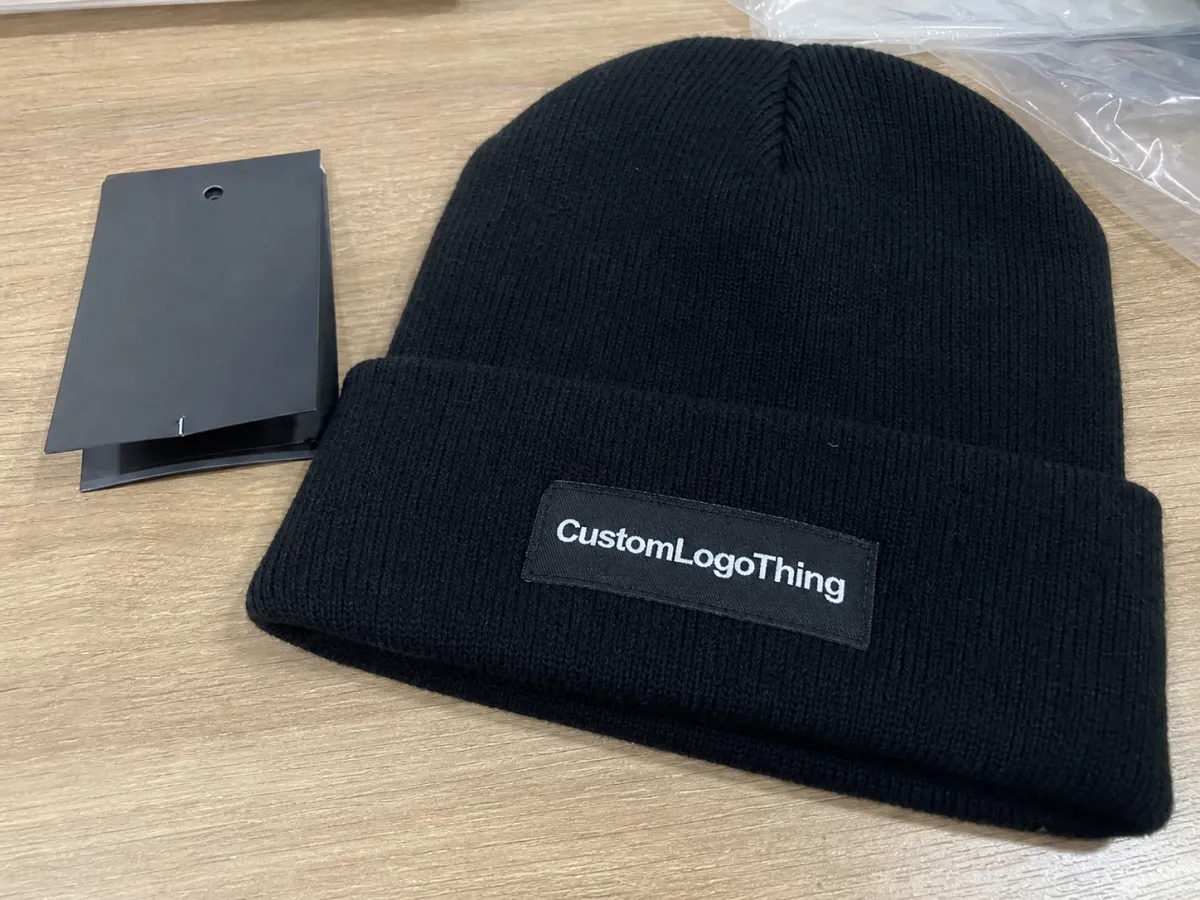
A beanie order feels simple because the product is small. In practice, small products magnify hidden costs. A label change that adds only a few cents can still move total margin more than expected because it affects artwork prep, application labor, proofing, and sometimes the way the factory packs the goods. A 2,000-piece run may absorb those costs differently than a 10,000-piece reorder, and that is where many buyers misread the quote.
The biggest mistake is treating the woven label as the only variable. It is one lever, not the whole machine. Yarn weight, knit density, cuff depth, and whether the style is rib-knit or fleece-lined often move unit cost more than the label itself. A standard acrylic cuff beanie may start near one price point, while a recycled blend or heavyweight style can sit materially higher even before decoration is added.
There is also a brand argument. A woven label gives the product a more finished retail look than a basic heat transfer or blank front. That extra perceived value is useful because it can support a higher shelf price or make a promotional item feel less disposable. I see that often with multi-color programs: the label creates consistency across shades without forcing the buyer to reopen the entire design package.
Packaging buyers should think in three buckets:
- Unit cost - what each beanie truly costs after label application, handling, and pack-out.
- MOQ - the quantity where the factory starts pricing efficiently instead of charging for small-run complexity.
- Landed cost - the factory price plus freight, duty, and any last-mile handling.
That separation matters because a quote can look good on paper and still miss the margin target once shipping and packaging are added. If the order is for retail, the same logic applies to presentation. A beanie that ships neatly, scans correctly, and arrives with a clean label position is easier to sell through than one that looks inconsistent on arrival. For broader branding assets, it helps to align the apparel spec with your Custom Labels & Tags program so reorders stay visually consistent.
For sustainability-minded programs, a paper swing tag or carton insert should be specified with the same discipline. FSC-certified paper is a straightforward option for that layer of the pack. The point is not to add cost for its own sake; it is to make sure every detail earns its place in the margin model. More on certification standards is available through the FSC site.
Woven Label Beanies Unit Cost: What Drives the Quote
The quote usually starts with the blank beanie. Acrylic is still the lowest-cost entry point in many programs because it is widely available and easy to knit. Recycled blends tend to cost more, not only because of fiber input but also because sourcing can be tighter and color matching is less forgiving. Add fleece lining, thicker gauge knitting, or a more structured cuff, and the cost per piece moves again.
The label itself changes the math in smaller but still meaningful ways. Size, stitch count, color count, edge finish, and fold style all matter. A crisp 2-color woven label with a clean folded edge is not the same as a dense micro-text patch with four thread colors and a special cut. If the label is sewn into a seam instead of applied to the cuff, labor changes too. That is why buyers should ask whether the quote includes one label style or multiple attachment options.
MOQ thresholds are the hidden lever that most often catches people out. Once a run drops below the factory's preferred quantity, setup gets spread across fewer units and the unit price rises quickly. A 250-piece order may cost materially more per piece than a 1,000-piece order, even if the materials are identical. The same rule applies to repeat orders: once artwork and label programming are already in place, the price can improve without changing the physical spec.
Tooling fees and setup charges deserve line-item treatment. For woven labels, first-run setup can be modest or surprisingly visible depending on how the factory handles loom programming, cutting, and application prep. A realistic first-pass range is often $40-$125 for artwork and label setup, though highly detailed labels can land above that if revisions are needed. If a quote buries that cost inside the unit price, ask for a split before comparing vendors.
| Order Profile | Typical MOQ | Approx. Cost per Piece | What Usually Drives the Price |
|---|---|---|---|
| Standard acrylic cuff beanie + one woven label | 250-500 pcs | $1.25-$2.05 | Common yarn, simple stitch pattern, basic pack-out |
| Recycled blend cuff beanie + one woven label | 500 pcs+ | $1.55-$2.45 | Higher material input, tighter color control, steadier inspection |
| Heavyweight or fleece-lined beanie + woven label | 500 pcs+ | $2.20-$3.60 | Extra fabric, slower production, more careful label placement |
| Short-run branded beanie with custom pack-out | 100-250 pcs | $2.10-$4.20 | Small-run setup charges, handling, and freight spread across fewer units |
Note: these ranges are directional and exclude duties, taxes, and unusual packaging requirements. Freight can add another $0.10-$0.40 per piece, depending on carton density, transit mode, and destination.
A low quote is only useful if the scope is clean. If the spec is vague, the “cheap” option often becomes the most expensive one after revisions, resampling, and freight are counted.
One more detail matters here: label count. A single woven label on the cuff is usually cleaner and cheaper than multiple placements, but some retail programs want a side seam label plus a branded hang tag. That can make sense for presentation, though it should be tested against margin. If the product will live on a shelf, a small increase in cost per piece may be justified. If it is a large-scale promo giveaway, it probably is not.
For broader packaging handling, the right comparison is not visual inspection alone. If the beanies are shipping direct to consumers in mailers, testing against ISTA methods or similar transit expectations gives a more honest read on damage risk than a quick box check. ASTM D4169 can also be a useful reference point when a buyer wants to think beyond appearance and into distribution stress.
Beanie Specs That Control Fit, Handfeel, and Sell-Through
Fit comes before decoration. Buyers often focus on label artwork because it is visible, yet the beanie silhouette controls how the product is worn and photographed. Crown height, cuff depth, knit density, and stretch recovery determine whether the item sits close to the head or reads as a looser slouch style. That distinction affects sell-through, especially in ecommerce and retail photo sets where fit is part of the product story.
Handfeel matters more than many teams expect. Softer yarn can feel premium in-store, but a tighter knit may hold shape better in shipping and daily use. If the beanie is meant for field staff, trades, or outdoor promotions, durability and shape retention may outperform softness. If it is positioned as a fashion item or retail accessory, the tactile experience may justify a higher cost per piece. There is no universal best choice; the right spec depends on the channel.
Color consistency is another buyer-visible issue. A slight shade shift across a reorder can damage program continuity even when the goods technically meet spec. That is especially true for multi-SKU retail sets, where one color mismatch can make the whole program look less disciplined. In practice, the cleaner the shade control, the easier it is to reorder without a fresh round of samples.
Decoration placement should match the structure of the beanie. A label that sits perfectly on a wide folded cuff may look cramped on a low-profile style or one with a heavy seam line. The logo should also breathe around the edges. Too close to a fold, and the label can distort. Too high, and the branding feels disconnected from the product. That is a small design decision with real consequences for shelf appeal.
For B2B buyers, these specs are not cosmetic. They affect how the item photographs, how the product merchandises, and how often customers reorder the same style. If a style produces fewer complaints and fewer returns, the true unit cost is lower even if the factory quote looks slightly higher.
Artwork, Label Construction, and Approval Details to Lock In
Artwork should arrive as a vector file whenever possible. AI, EPS, or a clean PDF gives the factory enough clarity to judge line thickness, color count, and text readability before production begins. If the logo includes tiny letters, thin strokes, or multi-line taglines, ask early whether the design needs simplification. Woven labels can reproduce detail well, but not every design survives translation at small size.
The best approvals are specific. Confirm label width and height, decide whether the edge is woven, folded, or heat-cut, and establish where the label sits on the cuff or seam. Color references matter too. A Pantone callout is helpful, but thread matching is never identical to ink. The aim is controlled variation, not false precision.
Approval is a cost-control step, not bureaucracy. One corrected proof can save a full re-run. A buyer who approves a placement mockup, a final measurement, and a label sample before production starts usually gets a cleaner job than the buyer who tries to save two days and ends up correcting 2,000 pieces later. That is a real trade-off, and the savings usually lean toward the careful approach.
Construction choices also influence durability. Sew-on attachment is simple and common, but a fold-in label can give a more integrated look if the beanie structure allows it. If the item will be washed often, handled in retail, or packed tightly for distribution, the attachment method should be tested for abrasion resistance. Tiny text should also be treated with suspicion; if it cannot be read at a glance, it probably needs a simpler version.
If the woven label has to coordinate with a broader apparel system, keep the spec aligned with your Custom Labels & Tags file so the same logo widths, thread counts, and placement rules are used across SKUs. That keeps the brand from drifting when reorders move between product types.
The approval stage is where margin is protected. A buyer who locks artwork, placement, and packaging before production starts usually avoids the most expensive kind of “small” mistake.
Process and Timeline: From Artwork Approval to Delivery
A reliable schedule follows a predictable sequence: quote confirmation, artwork review, digital proof or sample, production scheduling, manufacturing, inspection, and shipment. Skip one of those steps and the timeline gets fuzzy fast. The shortest projects are rarely the ones with the flashiest promises. They are the ones where the buyer answers questions quickly and the factory does not have to guess.
Time is usually lost in the same places: incomplete files, late color approvals, label placement changes, and unclear packaging instructions. A buyer may send the logo on Monday and then spend four days deciding between two thread colors. That delay is invisible in the spreadsheet, but it hits launch timing hard. If the product has a seasonal drop or event date, the proofing stage should be treated as part of the critical path.
For most standard beanie orders, production after proof approval often runs about 12-18 business days, assuming materials are in stock and the spec is not unusual. Rush work can sometimes pull that closer to 5-7 business days, but only if the artwork is final, the quantity is realistic, and the factory can schedule it without disrupting other jobs. Rush pricing is not a problem by itself. The problem is paying rush pricing for avoidable indecision.
Inspection should be more than a visual glance. Shade review, stitch inspection, label alignment, and carton count verification all matter. If the goods are being sent to a retail warehouse or fulfillment center, pack-out instructions should be precise: polybag or no polybag, carton count, carton marking, and whether the shipment must be palletized. That is where landed cost and timeline meet. A clean pack-out saves downstream labor.
For orders tied to ecommerce, consider how the product survives transit. A beanie itself is forgiving, but the carton and inner packaging still need to protect presentation. If the shipment has to survive distribution shocks, standards such as ISTA and ASTM D4169 are a better benchmark than hope. Buyers who use those references usually ask sharper questions, and better questions lead to better quotes.
One practical rule helps here: if the delivery date matters more than the lowest factory price, choose the standard style and finalize the artwork early. That does more for schedule certainty than almost any other decision.
Why Our Bulk Production Workflow Fits Reorders and Retail Drops
Bulk apparel only gets easier when the workflow is repeatable. Saved artwork references, documented label placement, and clear material notes make reorders faster and less risky. If a buyer is managing multiple colorways or seasonal promotions, that repeatability is worth real money because it reduces the number of questions that have to be answered on every new PO.
Quality control is where a structured process pays off. Shade review catches color drift. Stitch inspection finds loose seams before cartons are closed. Label alignment protects presentation. Packaging count verification keeps fulfillment teams from discovering shortages after the truck has already moved. None of that sounds glamorous. It does, however, keep replacement costs down.
Retail drops and promo drops behave differently, and the workflow should reflect that. Retail buyers often care about presentation consistency, while event buyers care more about delivery speed and per-unit value. A good bulk workflow can support both, but only if the production team knows which outcome matters most. A beanie that looks right in a store photo but ships late has failed the program. A beanie that ships early but arrives with sloppy branding has failed too.
Bulk pricing should also be checked against service levels. If one vendor offers lower cost per piece but includes no proofing discipline, no packaging detail, and limited rework protection, the real comparison is weaker than it looks. A slightly higher number can be the better commercial decision if it reduces replacements and keeps reorders clean.
That is especially true for branded headwear built around Custom Labels & Tags. Once the label system is documented, reorders can stay on spec instead of becoming a fresh design discussion every time someone needs a replenishment run.
Next Steps: Build a Quote Packet That Gets Apples-to-Apples Pricing
The fastest way to improve pricing is to give every supplier the same packet. Start with quantity, beanie style, preferred label size, logo file, color count, pack-out needs, and delivery window. If one vendor receives a vague request and another receives a complete spec sheet, the quotes will not be comparable, even if the numbers look neat in a spreadsheet.
Ask for pricing broken out by blank beanie, label application, packaging, and freight. That split reveals where the margin lives and where the surprises are hiding. It also makes MOQ thresholds easier to spot. Sometimes the jump from 500 to 1,000 units improves the cost per piece enough to justify the extra inventory. Sometimes it does not. The only honest answer comes from seeing the tiers side by side.
Samples still matter, especially for a new logo or a new beanie silhouette. A digital proof can answer a placement question, but it cannot tell you how the cuff sits, how the yarn feels, or whether the label feels too large once the beanie is worn. One approved sample can save a far more expensive rework later.
Compare landed cost, not just factory price. That means freight, duties, bagging, and any warehouse handling charges are part of the decision. A quote that looks a few cents lower at origin may not win once the shipment is on the road. Buyers who keep the analysis honest usually make better reorder decisions and protect margin longer.
In the end, use Woven Label Beanies unit cost as the benchmark for every quote you review. Confirm the quantity, confirm the specs, and ask for the price split before you commit. That is the simplest way to buy smarter, order better, and keep the program predictable from the first run to the repeat order.
How does MOQ affect woven label beanies unit cost?
Lower quantities usually raise the unit cost because setup, labeling, and inspection are spread across fewer pieces. Higher MOQs often unlock better pricing on the blank beanie, the label application, and freight handling. If you are near a break point, ask for quotes at both quantities so you can see whether the larger run improves margin enough to justify the inventory.
What artwork files do you need for woven label beanie pricing?
A clean vector logo is the best starting point because it shows line thickness and text clarity before production begins. Color references help the supplier match thread choices and reduce proof revisions. If the logo is detailed, ask whether it needs simplification so the woven form stays legible at small size.
Can I get a sample before placing a bulk order?
Yes, and it is the safest move when you are testing a new logo, colorway, or label placement. A sample confirms scale, texture, and cuff fit before the full run is approved. Ask whether the sample is a physical pre-production piece or a digital proof, because each answers a different question.
Which beanie styles usually keep unit cost lower?
Standard acrylic rib-knit beanies usually start lower than specialty yarns, fleece-lined versions, or more complex silhouettes. Simple cuffed styles are often easier to label than heavy seam constructions or low-profile cuts with less branding space. The lowest quote is not always the lowest landed cost if the style raises return or replacement risk.
What is the fastest way to shorten production turnaround?
Send complete artwork, confirmed quantities, and final label placement at the same time. Approve proofs quickly and avoid late changes to yarn color, packaging, or logo layout. If the launch date matters more than custom construction details, choose a standard style and lock the spec early.


