If you are comparing Zip Lock Bags for boutiques cost breakdown quotes, the cheapest unit price is often the least useful number in the room. A bag that fits the product properly, closes cleanly, and looks right on shelf can save money in packing time, damage reduction, and fewer reorders caused by the wrong spec.
Boutique buyers usually discover that after the first replenishment cycle. A bag that seemed fine on a quote sheet can become a problem once it meets real inventory: jewelry cards that slide around, accessories that catch on a weak zipper, or frosted film that photographs duller than expected. Small failures add up quickly in retail.
Why Boutique Buyers Rethink the Bag After the First Reorder
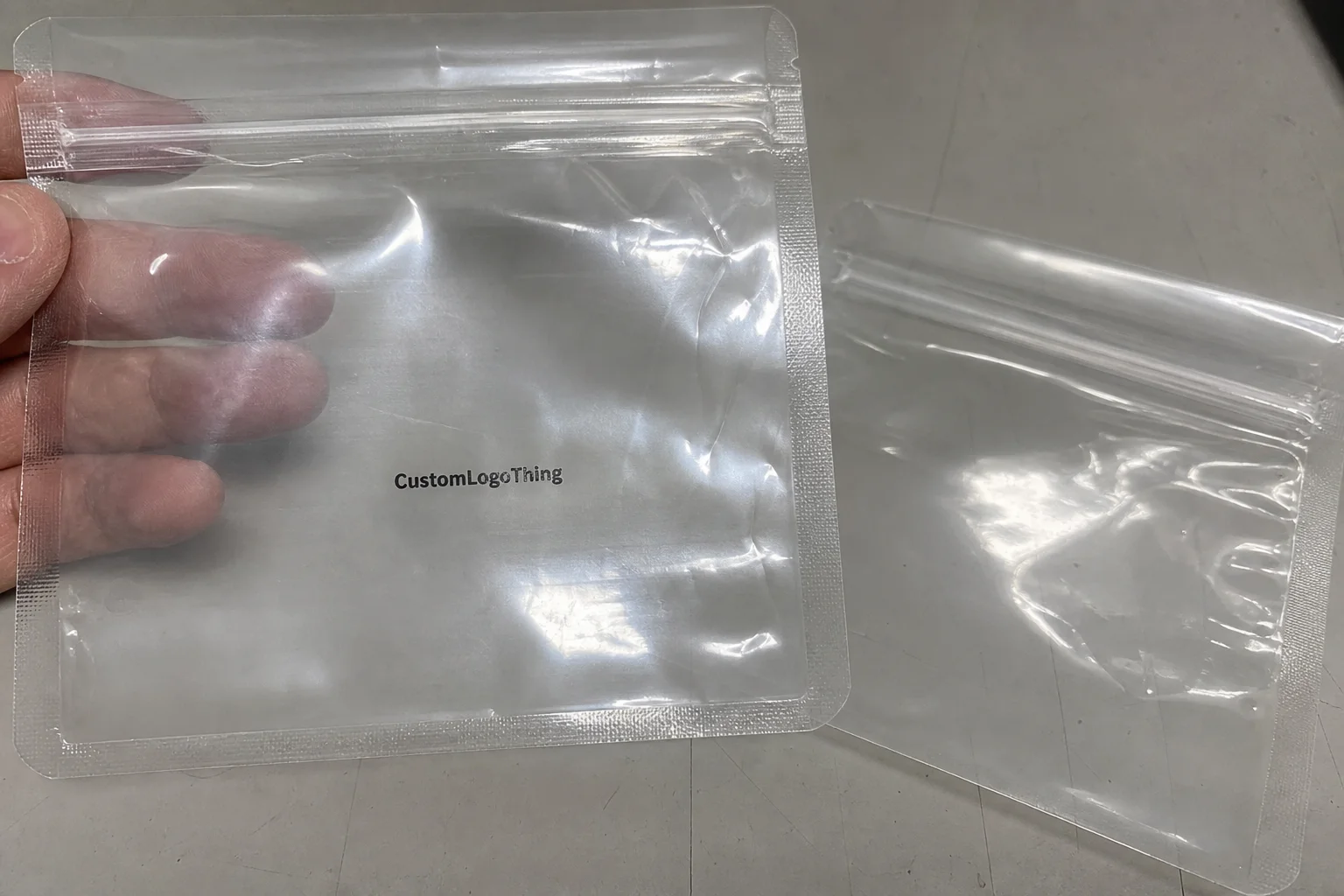
A zip lock bag is not just packaging. For a boutique, it is part of the product presentation, part of the protection plan, and sometimes part of the resale story. The same bag may need to protect polished metal, support a giftable unboxing moment, and survive being opened and closed several times by the customer. That is more demanding than it sounds.
Many buyers start with size alone, then realize fit is only one variable. A bag that is technically large enough can still feel wrong if the item floats inside it. Oversized packaging wastes film and shipping space. Undersized packaging slows packing, bends the product, and makes the display look cramped. Both outcomes create hidden cost that never appears in the first quote.
That is why the Zip Lock Bags for boutiques cost breakdown needs to start with use case, not resin price. A boutique bag is judged by how it frames the item, how easily it closes, and whether it stays presentable after handling. If those things fail, the bag stops doing its job even if the per-piece cost was low.
A buyer may accept a higher unit price if the bag improves display quality, shortens packing time, and reduces damage or customer complaints. That is a practical trade, not a luxury one.
There is also a transit angle that buyers ignore at their own expense. Bags with weak seals, inconsistent zipper engagement, or poor edge control are more likely to arrive with corners stressed or closures partially open. For packaging discipline and transport testing, many teams look at guidance from ISTA because the goal is simple: keep the product stable through the journey, not just on the warehouse table.
Product Details That Affect Shelf Appeal and Function
Boutique Zip Lock Bags are used across a wide set of products: jewelry cards, hair accessories, small apparel items, sample-size beauty goods, candles, stationery sets, and gift kits. The right construction depends on what is being packed and how it behaves. Flat pouches suit slim items. Gusseted bags help when the product has depth or when it should sit upright with a little room around it. Clear film puts the item front and center. Frosted film softens the look and hides minor imperfections inside the bag.
Closure quality matters more than many first-time buyers expect. The zipper should engage with even pressure and close with a clean tactile feel. If the closure feels gritty, weak, or misaligned, the whole package reads as lower quality, no matter how good the print is. That matters in boutiques, where packaging often carries a larger share of the perceived value than it would in commodity retail.
Surface finish shapes the shelf story as much as the dimensions do. Clear film gives maximum visibility. Frosted film can make a collection feel more restrained and premium, and it is better at hiding fingerprints or slight packing inconsistencies. Gloss, matte, and semi-opaque finishes each behave differently under light. A bag that looks crisp in a sample room may reflect harshly under store lighting or studio photography, so the finish should be judged in the setting where it will actually be seen.
Fit is more than a measurement exercise. A product that shifts during transit can look careless even if it is fully protected. A tighter, better-proportioned bag often uses less material and presents better on shelf. That is one reason many boutique buyers settle on a spec and hold it across seasons: consistency makes the line easier to pack, easier to photograph, and easier for customers to recognize.
- Flat pouches work well for jewelry cards, folded textiles, and stationery.
- Gusseted styles fit thicker items, layered kits, and products that need depth.
- Clear film supports product visibility and straightforward merchandising.
- Frosted film gives a softer look and hides small internal variations.
Specifications That Change Quote Accuracy
An accurate quote depends on specific details: dimensions, film type, thickness, zipper style, sealing method, print coverage, and whether the bag needs any compliance documentation. If those inputs are vague, the pricing will be vague too. A supplier cannot responsibly price a “small clear bag” without knowing how small, what it is holding, and how it will be finished.
Width and gusset depth deserve careful attention. A 4 x 6 inch flat bag and a 4 x 6 inch gusseted bag may share a printed footprint, but their usable capacity is not the same. That changes fill behavior, shelf shape, freight volume, and sometimes the buyer’s perception of quality. A bag with more room than the item needs may also look underfilled, which is a problem if the package is visible to the customer before purchase.
Gauge, or thickness, changes the feel immediately. Lightweight film can be enough for flat accessories or short-term use. Heavier gauges tend to hold shape better and resist puncture from sharper edges, hooks, clasps, or hard corners. Boutique buyers do not need the thickest film available, but they do need enough strength to match the item and the way it will be handled. The right gauge usually saves more than it costs because it reduces damage and returns.
Printing and finish are another source of quote drift. One-color logo printing is simpler than full-bleed artwork. A frosted surface hides fingerprints better than a fully transparent one. A matte look can support a restrained premium line, while a fully clear bag lets the product do more of the selling. If the bag includes a backing card, hang tag, insert, or sticker, that should be called out early. Those elements affect the overall pack structure and can change the freight calculation.
Stock packaging is the fastest route when speed and flexibility matter more than brand-specific details. Custom packaging makes sense when the bag size, closure profile, or print area needs to be matched to a defined line and reordered later without guesswork. The quote becomes more precise because the supplier is pricing a concrete specification rather than a rough idea.
Artwork readiness can change the timeline and the invoice. Clean vector files, clear dielines, correct dimensions, and a defined print placement reduce revisions. If the file needs cleanup, the buyer may not see that cost as a line item right away, but it usually appears in setup time, proof rounds, or delayed production.
For teams comparing packaging structures across retail channels, industry packaging resources are useful for understanding how material choice, product visibility, and shelf presence interact. The more exact the request, the less likely the final quote is to wander.
Zip Lock Bags for Boutiques Cost Breakdown and Ordering
The Zip Lock Bags for boutiques cost breakdown usually comes from five places: material, size, print, setup charges, and freight. On custom runs, tooling or plate costs may also appear, especially when the design requires a dedicated production setup. Buyers often focus on the bag price alone, but on smaller orders the fixed charges can matter just as much as the unit rate.
MOQ changes the math fast. A stock clear bag may be available in a few hundred pieces. A custom printed boutique bag may begin at 3,000, 5,000, or more depending on construction and print method. As quantity rises, unit cost typically falls because setup costs are spread across more bags. That is the basic reason bulk pricing improves the landed number even though the invoice total is higher.
| Option | Typical MOQ | Typical Cost Per Piece | Best Use |
|---|---|---|---|
| Stock clear zip bag | 200-1,000 | $0.06-$0.14 | Fast restocks, simple product protection |
| Frosted stock-style bag | 500-1,500 | $0.09-$0.18 | Cleaner presentation, softer premium look |
| Custom printed 1-color bag | 3,000-5,000 | $0.16-$0.32 | Branded boutique lines, repeat sales |
| Custom printed multi-color bag | 5,000+ | $0.24-$0.45 | Hero products, seasonal collections |
Those figures are ranges, not fixed promises. They move with dimensions, gauge, zipper profile, print area, color count, and freight. A small 3 x 4 inch bag will not price like a 6 x 9 inch bag because material usage climbs quickly as the footprint grows. Heavier film or a reinforced zipper can push the price up, but those upgrades may prevent damage, rework, and customer dissatisfaction later.
Shipping can distort the picture more than buyers expect. A low-cost bag with expensive freight is still an expensive landed unit. That is why the quote should be broken out into separate lines: bag cost, print cost, setup fees, tooling if applicable, and shipping. Once those numbers are visible, comparison becomes much more honest.
For short-run launches or testing new packaging, a stock option often makes the most sense. For a stable product line that will reorder several times, custom printing can return value through lower unit cost over time and a stronger brand look. The Zip Lock Bags for boutiques cost breakdown changes because the business model changes.
Small brands sometimes chase the lowest quote and later pay for it with excess inventory, wasted space, or packaging that does not suit the product line. A slightly higher cost per piece can be the cheaper choice if it keeps the spec stable, protects the product better, and avoids buying packaging that becomes obsolete after one season. That is a common pattern in boutique assortments, where trends move faster than general merchandise.
If the order includes paper inserts or outer cartons, FSC certification can matter. The Forest Stewardship Council explains how certified paper sourcing is documented. The plastic bag itself may not change, but many retail packs are judged as a whole, and paper components can influence the sourcing story.
Process, Timeline, and Production Steps
The ordering process is simple on paper and usually messy only when the input is incomplete. It starts with a spec review, then a quote, artwork submission, proof approval, production, inspection, and shipment. Each step is straightforward. The delays tend to come from missing dimensions, late artwork changes, or a buyer realizing too late that the closure style was not specified clearly.
Stock bags move faster because there is no print setup and no custom proof cycle. Custom printed bags need artwork review and a production slot, so lead time usually lands around 12 to 15 business days after proof approval, sometimes longer for large quantities, multiple colors, or specialty finishes. The shipping method changes the calendar again. Air is faster and costlier. Sea is slower, but better for larger volumes where timing is less urgent.
Proofing is where avoidable mistakes are caught. It is the place to verify size, print position, color behavior on the chosen film, and zipper orientation. A logo that sits too close to the edge, a design that disappears on frosted film, or a size that looks wrong once the item is placed inside can all be corrected before the run starts. That step is not overhead. It is savings.
Repeat orders move faster when the spec remains clean. If dimensions, film type, approved artwork, and proof history are stored properly, a reorder can happen with much less back-and-forth. That matters for boutiques because launch windows are short and packaging delays can push back a collection even when the product itself is ready.
Freight also changes the total answer. A rush shipment by air can look expensive compared with sea freight, but it may still be the smarter financial choice if it protects a seasonal launch or prevents a stockout. A cheaper shipping line is not always the better one if it causes missed sales. The correct decision depends on the selling calendar, not just the carton rate.
How We Keep Boutique Orders Consistent Across Reorders
Consistency is where packaging suppliers either earn trust or lose it. The practical fix is basic: keep the approved spec on file, version-control the artwork, and store the final proof. That way, the next order starts from a known baseline instead of a fresh interpretation.
Quality control needs to be concrete. Zipper engagement should feel even. Seal strength should hold under ordinary handling. Transparency or frost level should stay consistent from lot to lot. Print registration should stay inside the intended area. These checks sound routine because they are routine, and routine is exactly what keeps boutique packaging dependable.
Color consistency deserves attention too. A white logo on clear film does not always read the same as a white logo on frosted film. Metallic inks can shift in appearance under different light. Even small changes in film finish can alter how premium the bag feels in hand. Buyers who run multiple product categories often want the packaging to feel coordinated across lines, even when the contents change.
Good communication is part of quality control. The buyer should get direct answers on sizing, minimums, material choices, and likely tradeoffs. If a bag size will look awkward with the product, that should be said early. If a lighter gauge is acceptable but a heavier one would present better, that should be stated plainly. Packaging advice should reduce waste and confusion, not decorate them.
Reliability also lowers cost in ways that are easy to miss. Fewer mistakes mean less scrap, fewer replacements, less time spent fixing inventory, and fewer delays at packing stations. That is why repeat buyers often care more about dependable spec control than about a small difference in quoted price. They are buying continuity, not just film.
What to Prepare Before You Request a Quote
Before you request pricing, gather the basics: bag dimensions, product measurements or a sample, target quantity, print details, finish preference, and delivery date. If the product is fragile, glossy, textured, or unusually shaped, say so. That kind of context helps prevent the wrong size from being treated as the cheapest size.
It also helps to decide whether the order is solving a short-term need or a long-term packaging system. Those are different jobs. Stock bags solve speed and flexibility. Custom bags solve brand consistency and repeat ordering. If you are between the two, ask for both quotes. Comparing them side by side makes the tradeoff visible instead of implied.
Ask for the numbers in separate lines. Bag cost, print cost, setup fees, tooling if needed, and freight should be itemized. Once those pieces are visible, the total landed cost is easier to judge and the supplier comparison becomes much cleaner.
If the bag will sit on shelf, be gifted, or be photographed, ask for a sample or proof before committing to the full run. That is especially useful for frosted film, metallic ink, and tighter dimensions, where a small visual change can have a larger impact on perception than the quote suggests.
Clear input shortens the buying cycle and makes the zip lock bags for boutiques cost breakdown easier to evaluate across suppliers. Send the measurements, the use case, and the expected reorder plan. That usually produces a quote that is closer to reality on the first pass, which matters more than shaving a few cents off a bag that does the wrong job.
FAQ
What affects the zip lock bags for boutiques cost breakdown the most?
Bag size, film thickness, print complexity, MOQ, and shipping usually have the biggest impact. On smaller orders, setup fees and freight can matter nearly as much as the unit price, so it is better to compare total landed cost than to compare bag price alone.
Can I order boutique zip lock bags in a low MOQ?
Yes. Low-MOQ orders are common, but they usually cost more per unit because setup and production overhead are spread across fewer bags. Stock options are often the most practical choice for a smaller test order or a fast restock.
Are clear or frosted zip lock bags better for boutiques?
Clear bags are best when product visibility is the main selling point. Frosted bags tend to feel more premium and can hide small packing inconsistencies, which helps when the product has multiple parts or the brand wants a softer presentation.
How long does custom production usually take?
Lead time depends on artwork approval, print method, quantity, and shipping method. Stock bags ship faster. Custom printed runs usually need proofing and production time, and the schedule can stretch if the artwork changes after approval or the order is large.
What should I send to get an accurate quote?
Send exact dimensions, quantity, material preference, print details, and your target delivery date. A product sample or accurate measurements help avoid sizing mistakes, which is usually where quote accuracy starts to break down.
If you want the cleanest buying decision, start with the product size, the presentation you want on shelf, and the reorder volume you expect. That is the most reliable way to judge the zip lock bags for boutiques cost breakdown without overbuying, missing margin, or choosing packaging that looks right only on the quote sheet.


