Custom Zipper Pouches for Apparel Bulk Order: Get a Quote
For buyers shipping tees, hoodies, sets, and folded basics, custom Zipper Pouches for Apparel bulk order do more than wrap a garment in plastic. They keep pieces counted together, reduce rubbing and dust during handling, and give the product a clean, intentional look before it ever reaches a shelf or receiving table. The value is not only protection. It is repeatability. Once a clothing line moves from a handful of cartons to steady replenishment, packaging has to fit the garment, survive the route, and stay consistent from one order to the next.
Why custom zipper pouches for apparel bulk order reduce damage claims
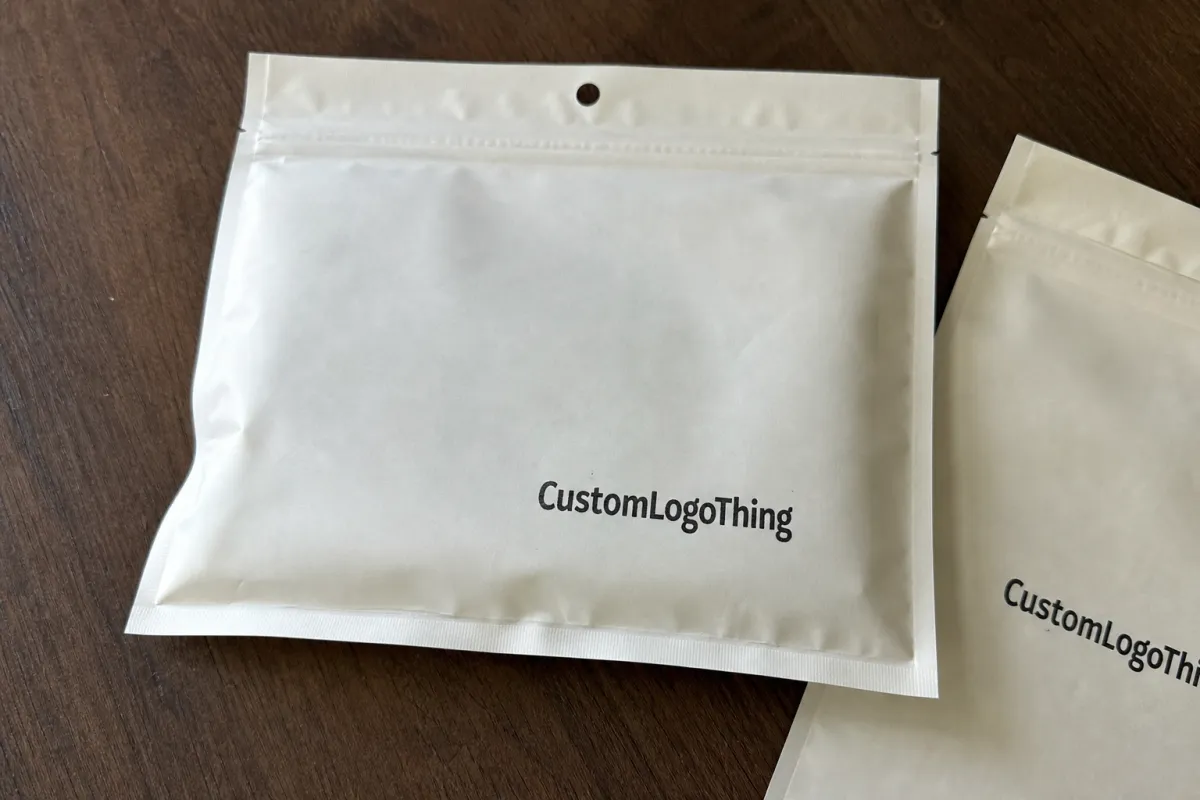
Loose garments get handled more than most buyers expect. A folded tee in a corrugate shipper can pick up dust, corner scuffs, and shifts that leave the fold uneven by the time it reaches receiving. Hoodies and multi-piece sets are even more sensitive because they carry more bulk, settle differently in cartons, and tend to open up when the outer packaging gets compressed. A zipper pouch gives the apparel a second layer of control.
That layer matters because it keeps the garment together through kitting, put-away, store transfers, and reboxing. A cleaner fold means faster counts, less repacking, and fewer arguments over whether a unit left the warehouse in sellable condition. For retail programs, the pouch also protects presentation. For e-commerce or wholesale replenishment, it protects labor time. A packaging format that saves only a few cents but creates avoidable claims is not really saving money.
In practice, the breakage or return cost on apparel is often bigger than the packaging budget itself. If one damaged item triggers a replacement shipment, customer service handling, or extra receiving labor, the hidden cost can run several dollars before the product is even reshipped. That is why buyers managing bulk apparel packaging usually focus on total landed cost rather than unit price alone. The cheapest pouch is rarely the one that performs best across a full season.
Clear zipper pouches also help during count verification. Buyers can confirm SKU contents without opening every carton, and warehouse teams can identify styles faster during intake. That is a simple advantage, but it shows up every day in receiving and replenishment. The pouch is not just a shipping accessory; it is part of the control system for the order.
“A pouch that holds the fold through transit does more than look neat. It cuts rework, and rework is where packaging budgets quietly disappear.”
For many apparel programs, the pouch sits between the shipper and the garment. The box carries the shipment. The pouch keeps the garment presentable. Once that division is clear, the rest of the spec becomes easier to judge.
Material, closure, and finish options that protect folded apparel
The film choice shapes both the look and the performance. LDPE is flexible and forgiving, which is why it shows up so often in apparel packaging. It folds well around tees, knit tops, and light loungewear. PP is usually clearer and slightly stiffer, so it gives the pouch a crisper appearance. Neither one is automatically better; the right pick depends on the garment weight, the display environment, and how much stiffness the buyer wants the finished pack to have.
Thickness should match the product. For light folded apparel, buyers often land in a range around 2.5 to 3.5 mil, while bulkier fleece, joggers, or multi-piece sets may need 4 mil or more to keep the pouch from feeling flimsy. A heavier film can improve puncture resistance and make the zipper easier to handle, but it also adds cost and bulk. Too much material on a light tee can make the package feel overbuilt and awkward for carton packing.
Closure style deserves the same attention. A standard press-to-close zipper is enough for many basic apparel runs. Double-track closures help when the pouch will be opened more than once, such as in warehouse sampling or retail transfers. Tamper-evident features can be appropriate for programs that need a clear first-open signal, though they may slow packout and are not always necessary for clothing. If the pouch has to be opened frequently, the zipper profile should close cleanly without requiring extra pressure.
Finish changes how the item reads in hand. Gloss looks bright under retail lights. Matte or frosted film hides scuffs better and tends to feel less utilitarian. Clear film supports fast inspection, while frosted film creates a more controlled presentation. Hang holes and gussets are worth considering if the pouch will move from carton to rack or if the garment needs extra depth to keep the fold from crushing the closure area.
Buyers should also ask for data on practical performance, not just a promise. How does the zipper behave after repeated openings? Does the seal stay even across the width? Does the print hold up when cartons rub during transit? If the program will travel through parcel networks, it helps to ask whether the sample was checked with common transit expectations such as ISTA-style handling profiles. The International Safe Transit Association and the Packaging Machinery Manufacturers Institute both publish useful material for buyers who want sharper packaging questions before approving production.
The short version: choose the material for the garment, not for the catalog photo. A pouch for folded socks does not need the same wall thickness as one holding heavyweight fleece, and a warehouse-only program does not need the same finish as a retail-facing pack.
Size, gauge, and print specifications buyers should lock in first
Size the pouch around the folded garment, not the flat cut-and-sew piece. That sounds basic, but it is one of the easiest ways to misquote a bulk apparel package. A tee that measures 12 inches wide on a table may need a pouch closer to 13.5 x 16 inches once it is folded, compressed lightly, and given enough room for the zipper to close without strain. Hoodies, sets, and thicker knits need even more clearance.
Before quoting starts, buyers should lock in a small spec set: usable opening width, seal margin, zipper type, film thickness, and whether the bottom needs a gusset. Those details influence more than appearance. They determine whether the fold goes in smoothly, whether the zipper closes without fighting the film, and whether the finished pack sits flat in a carton. A pouch that is too tight can wrinkle the garment and stress the closure. One that is too large can shift around and make the product look underpacked.
Printing needs the same discipline. Logo placement, barcode zones, handling text, and any legal or material notes should be approved against the actual dieline. If a logo sits too close to the zipper track, it can disappear into the fold line. If a barcode lands over a crease, warehouse scanners can misread it. Small placement errors become large problems when multiplied across thousands of units.
- Artwork format: vector files protect logo sharpness and keep line art clean.
- Tolerance: define acceptable size variance before production begins.
- Carton counts: confirm pieces per carton and cartons per pallet early.
- Compliance: note retail labeling, barcode, and sorting rules upfront.
For repeat orders, a spec sheet becomes the control document. It keeps the conversation focused on what actually matters and prevents every reorder from turning into a fresh round of basic decisions. That is especially useful for custom Zipper Pouches for Apparel bulk order programs, where the goal is consistency rather than novelty.
Pricing, MOQ, and quote drivers that change unit cost
Price usually follows five inputs: pouch size, film thickness, print colors, special features, and total quantity. A small clear pouch with no print lives in a lower price band. Add a frosted finish, a gusset, a stronger zipper, or white ink, and the quote moves. That is normal. Buyers should expect the price to reflect the spec instead of assuming every pouch belongs in the same bucket.
MOQ is where many apparel teams get surprised. Small runs carry more setup cost per piece because the prep work is spread over fewer units. Bulk orders improve that quickly. If a supplier quotes 5,000, 10,000, and 25,000 pieces, the drop between bands often reflects setup dilution more than material savings alone. A line that reorders regularly can often absorb a higher MOQ because the unit economics get better once the packaging is standardized.
| Option | Typical use | Estimated unit cost at 5,000 pcs | Notes |
|---|---|---|---|
| Clear LDPE zipper pouch | Tees, socks, light knits | $0.08-$0.16 | Flexible, easy to fold, good for simple branding |
| Frosted PP zipper pouch | Retail presentation, premium basics | $0.12-$0.22 | Sharper look, better scuff hiding, slightly stiffer hand |
| Gusseted heavy-gauge pouch | Hoodies, multi-piece sets | $0.16-$0.30 | More room for bulkier folds, better shape retention |
| Double-track or tamper-evident pouch | Higher-control or repeat-open programs | $0.18-$0.34 | More feature cost, stronger user experience, more handling control |
Tooling, sampling, freight, and rush production may show up as separate lines. That is helpful, not inconvenient, because it keeps one-time charges out of the recurring unit price. Buyers comparing suppliers should ask for both unit cost and landed cost. A pouch that looks cheap on paper can become expensive once inspection, freight, and carton handling are added.
One change in spec can move the economics faster than expected. Moving from a light film to a heavier one may add only a few cents per piece, but on a 20,000-piece apparel run that difference becomes real money. The same thing happens when a buyer adds extra print coverage or a more complex zipper system. A good supplier will explain those tradeoffs in plain terms instead of hiding them inside vague pricing language.
For programs with multiple styles, it can help if the supplier also handles Custom Packaging Products. Bundling related packaging needs often makes quoting easier and reduces the chance that each style gets treated as a disconnected purchase.
Process, timeline, and lead time from artwork to delivery
The production path should be straightforward: inquiry, quote, spec confirmation, artwork proof, sample approval, production, inspection, packing, and shipping. If a supplier cannot describe that sequence clearly, the buyer usually pays for it later in revisions or missed dates. With custom Zipper Pouches for Apparel bulk order, clarity at the front end is worth more than a bold promise at the end.
Most delays come from three places: missing dimensions, late proof approvals, and vague packing instructions. Apparel teams often know the garment but not the finished folded size. That matters because the pouch has to fit the fold, not the product concept. Another frequent slowdown is artwork revision after proofing. Even a small text change can reset approval and move the order back in the queue.
Standard lead time for a simple bulk pouch run is often measured in business days after proof approval, with transit added on top. A common planning window is about 12 to 15 business days for straightforward production, though more complex print or special closure work can take longer. Rush shipping can shorten arrival time, but it also raises landed cost. Manufacturing time and transit time are separate variables, and buyers get into trouble when they treat them as one number.
A useful internal workflow is simple: one owner for dimensions, one for artwork, one for final sign-off. That keeps the review chain short and reduces the chance of conflicting instructions. It also helps the supplier move without waiting for six people to agree on barcode placement.
For seasonal drops, replenishment, or retailer-specific deliveries, a packaging calendar helps keep the order from drifting. The faster the brand confirms size, print, and destination, the less likely the schedule is to slip into avoidable back-and-forth.
What a reliable supplier should prove before you order
Sales language does not protect a shipment. Repeatability does. A dependable supplier should be able to show consistent zipper engagement, clean seals, stable print, and size control across the run. If the first sample closes well but the production pieces feel stiff, uneven, or off-color, the buyer is the one left absorbing the risk.
Ask how samples are made, how production is inspected, and what happens if a batch misses spec. In bulk apparel programs, even a 1% to 2% defect rate can create a visible receiving problem. Buyers do not need perfection. They need process control, clear communication, and a supplier who tells the truth about limits before the order is released.
Inspection details matter. Good checks usually include seal integrity, zipper alignment, print registration, film clarity or frost consistency, and size tolerances. If the pouch is intended to hold a folded hoodie, the sample should be tested with that actual garment, not a lighter stand-in. A fit that works on a tee may fail once the pack includes bulk, seams, or a thicker hood.
Communication speed also tells a buyer a lot. Slow replies usually mean slow decisions, and slow decisions turn into delayed packaging release. Look for quoting clarity, practical answers to dimensional questions, and artwork support that feels specific instead of scripted. On repeat orders, the supplier should be able to match prior color, size, and closure behavior without forcing the buyer to explain the spec from scratch.
That is the real test for custom zipper pouches for apparel bulk order. A good supplier can repeat the same result without drama. If the team can also speak fluently about retail packaging and branded packaging, the buyer spends less time translating packaging intent into production language.
Internal support matters too. A supplier with a clear FAQ page often has a better process behind the scenes, even if the page itself looks simple. It is not proof, but it is a useful signal.
Common ordering mistakes that create hidden costs
The first mistake is undersizing the pouch. If the garment has to be forced inside, the fold looks messy, the zipper takes more pressure, and the film gets stressed at the closure. That can weaken the seal area and create a poor first impression. The pouch should fit the apparel comfortably, not compress it into a shape it was never meant to hold.
The second mistake is approving artwork before the printable area is confirmed. Logos drift into the zipper zone, text falls over a crease, and warning copy disappears into the gusset. On a bulk run, that error repeats on every unit. A proof is only useful if it reflects the actual pouch construction and closure area.
The third mistake is ignoring carton pack counts and pallet layout. Warehouses care about receiving speed, stackability, and count accuracy. If cartons are awkward to handle, the receiving team spends time recounting and repacking. That labor cost can matter more than a penny saved on the pouch itself.
The fourth mistake is over-specifying the pouch. Some buyers ask for heavy gauge, advanced closures, and extra finish layers because those features sound safer. Sometimes they are. Often they are not needed. A thicker pouch does not improve apparel branding if the garment is already protected inside a shipper. Better specs are the ones that support the program rather than just sounding premium in a quote.
The fifth mistake is treating all apparel the same. A lightweight tee, a padded fleece, and a multi-piece set do not live in the same packaging lane. If the pouch spec does not change with the garment, the buyer usually pays for it later in fit problems, repack labor, or avoidable complaints.
“Good packaging tends to be invisible. It works because the buyer never has to think about it twice.”
Seen through that lens, custom zipper pouches for apparel bulk order are a sourcing decision, not a decoration. If the fit is right, the print is legible, and the packout runs cleanly, the program feels simple. If any one of those slips, the cost shows up somewhere else.
Next steps to request samples, approve proofs, and release production
Before requesting a quote, lock in the essentials: final pouch size, garment type, quantity, print artwork, target ship date, and destination ZIP or port. That information helps the supplier price accurately and cuts down on revision rounds. If the apparel line includes several styles, separate them by folded size instead of grouping them under one broad product label.
Then request a sample or proof. Check closure feel, fit, print alignment, and carton labeling. If the pouch is meant for a heavier fleece item, test it with the actual fold, not a lighter substitute. A sample that fits a tee may fail on a hoodie, and that is a packaging mismatch rather than a surprise defect.
For recurring programs, split the order plan into core styles and seasonal or promotional styles. Core items need predictable replenishment. Seasonal items need room for faster decisions and occasional spec changes. That separation keeps packaging design cleaner and inventory planning more accurate.
In practical terms, the buying order is simple: fit first, cost second, lead time third, extras after that. If the pouch protects the garment, supports the dock or shelf experience, and stays inside the margin, it is doing its job. If it does not, it is just another SKU sitting in the warehouse.
For teams ready to move forward, custom zipper pouches for apparel bulk order should be evaluated with the same discipline used for any packaging purchase: confirm the fit, compare the quote, inspect the proof, then release production with a clear approval trail.
FAQ
What size custom zipper pouches work best for apparel bulk order runs?
Size the pouch to the folded garment plus a little clearance so the zipper closes cleanly without stretching the film. Use separate sizing for tees, hoodies, socks, and multi-piece sets instead of forcing one pouch size across every style. If the line includes bulky fleece or unusual folds, request a sample fit check before production.
What MOQ should I expect for custom zipper pouches for apparel bulk order?
MOQ usually depends on pouch size, print complexity, and material choice rather than the garment category itself. Higher quantities usually lower unit cost because setup and tooling are spread across more pieces. If you need a smaller run, ask whether a stock film or limited-print version can reduce the minimum order.
How do I get an accurate quote for apparel zipper pouches?
Send finished pouch dimensions, film thickness preference, print colors, quantity, and target delivery date. Include garment type and folded size so the supplier can confirm fit instead of guessing. Share artwork files early, because proof changes can alter both pricing and production timing.
How long is the lead time for bulk custom zipper pouches?
Lead time depends on artwork approval, sampling needs, and the number of print colors or special features. Standard runs are usually faster than more complex builds, while rush orders may require extra freight or scheduling fees. Separate manufacturing time from transit time when planning a clothing launch or restock.
Can I print my logo on clear zipper pouches for apparel?
Yes. Most buyers use clear or frosted film with logo printing, barcode space, or handling instructions. White ink or dark print colors often improve visibility on transparent film. Confirm the printable area and keep critical text away from the zipper track and seal line.
What should I check on a sample before approving production?
Check fit, zipper feel, seal alignment, print placement, carton count, and whether the pouch still looks clean after the garment is inserted and removed a few times. If the item is bulky, test the actual garment, not a lighter substitute. A good sample should close without force and hold the fold without wrinkling the product.

