Acrylic Beanies Unit Cost Breakdown for Bulk Orders
Bulk beanies look simple until the quote lands. The acrylic beanies Unit Cost Breakdown usually shifts less because of the yarn itself than because of the choices wrapped around it: knit density, decoration method, labels, packing, and the number of approvals required before production can start. A cap that looks identical from five feet away can price very differently once a buyer adds a cuff, a woven patch, a custom label, or a second decoration location.
That is why the lowest headline number is rarely the cleanest comparison. A better quote separates what is fixed from what changes with quantity, then makes the buyer choose between features with open eyes. A 300-piece order and a 3,000-piece order are not just different sizes; they absorb setup costs in completely different ways. The same beanie can feel expensive at a small run and surprisingly efficient once the order is large enough to spread the non-recurring work across more units.
This matters most in bulk programs where margin is tight and timing is real. Retail buyers need consistent spec control, promo buyers need predictable pricing, and both need to know which line items are part of the base product and which ones are add-ons. The beanie is not expensive because it is complicated to wear. It is expensive because it is a small product that still carries pattern programming, knitting time, finishing labor, and packaging decisions.
Why acrylic beanie quotes can change more than expected
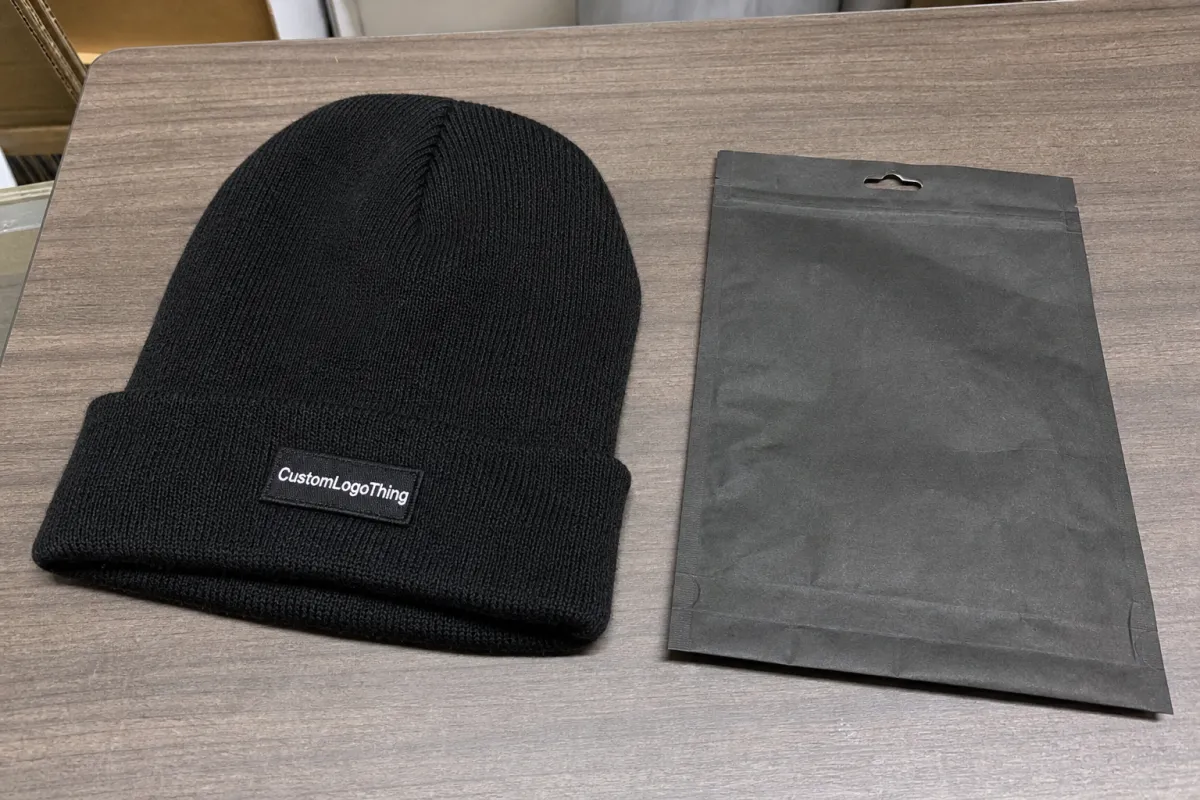
An acrylic beanie is priced like a made product, not like a blank item pulled from a shelf. The quote reflects yarn usage, stitch count, machine time, trim labor, and the effort needed to prepare artwork and approvals. Change the cuff height, and the machine run may take longer. Add a folded brim, and material usage rises. Ask for a deeper crown or a slouchier profile, and the pattern changes with it.
Decoration is the other big swing factor. A single logo can be simple enough to knit in or embroider cleanly. Add a second placement, more thread colors, or a patch that needs separate attachment, and labor begins to matter more than the base yarn. On small runs, a label or patch can cost more per piece than the core fabric content. That is not a trick. It is how small-batch production works when the same setup work gets spread over fewer units.
There is also a difference between a quote that is technically low and one that is actually usable. Some suppliers present only the base unit price. Others include labels, packing, proofing, and export carton preparation. Both may be accurate, but they are not comparable unless the buyer confirms the same assumptions on both sides. The real issue is not just price; it is price plus missing context.
Clear spec control reduces surprises. If the buyer already knows the fit profile, the decoration route, the packing method, and the target delivery date, the supplier can price with fewer guesses. That usually lowers friction during sampling and protects the schedule later. When the spec is loose, the quote may look attractive but hide revisions that show up after approval.
Core product details buyers must lock before pricing
The fastest way to get a useful quote is to lock the base build first. For most bulk programs, that means deciding whether the beanie is 100% acrylic or a blend, whether it is single-layer or double-layer, and whether it is meant for warmth, retail display, or a promotional handout. Those are not small distinctions. A promo beanie can tolerate a simpler finish, while a retail style usually needs better structure, better recovery, and more consistent sizing from piece to piece.
Gauge and stitch density affect both look and cost. A tighter knit usually feels more substantial and can hold shape better, but it may slow the knitting process. A looser knit may move faster through production, yet it can feel lighter and less premium. Buyers often focus on yarn content and overlook these mechanical details, even though they have a direct effect on the final hand feel and the production rate.
Fit profile matters as much as fiber content. A cuffed watch cap, a classic snug beanie, and a slouch silhouette are built differently. Crown shaping changes the way the beanie drapes. Cuff height changes both visual proportion and yarn consumption. If the product must sit a certain way on the head, that should be specified before price is discussed. Otherwise, the supplier is forced to infer too much.
Color count should be defined early. A solid beanie with one contrast stripe is easier to program than a jacquard knit with multiple color zones. More colors usually mean more complex knitting instructions, more chances for revision, and more time spent on the production floor. Even when the final result looks minimal, the build itself may be intricate. The quote tends to reflect that complexity long before the buyer notices it visually.
Labeling belongs in the base spec, not in a later email thread. A woven label, printed label, heat transfer, or sewn-in care label each carries different sourcing and assembly implications. If the buyer wants branded packaging, that should be listed too. A clean spec sheet gives the supplier fewer chances to assume the wrong thing, which in turn makes the acrylic beanies Unit Cost Breakdown much easier to trust.
One simple test helps here: if the product cannot be described clearly in a few sentences, the quote is probably too vague. Ambiguity does not stay free. It usually comes back as extra proof rounds, late revisions, or adjustments to the packing and labeling line.
Stitch, decoration, and trim choices that move the quote
Decoration is where many bulk orders move from affordable to surprisingly expensive. The main options are knit-in graphics, embroidery, woven patches, appliques, and sewn-on labels. Knit-in art is usually the most integrated look and works well for stripes, blocks of text, and bold logos that translate cleanly into stitch form. Embroidery suits small logos and badge-style marks. Woven patches preserve detail well when the logo has fine lines or small type. Applique adds dimension, but it introduces cutting and sewing steps that raise labor.
Artwork complexity has a direct cost impact. Thin lines, tiny text, gradients, and too many color changes can slow production or force a different decoration method. A logo that looks crisp on a screen may not read well at beanie scale. Sometimes the cheapest decision is to simplify the artwork before production starts. Fewer stitch changes often mean better legibility and fewer surprises in sampling.
Trim choices matter more than many buyers expect. Pom-poms, custom hem tags, size stickers, care labels, hangtags, and branded belly bands all add handling time. Some of these details are inexpensive individually, but they stack up when the order is small or when every piece requires separate application. Individually polybagged beanies also cost more to prepare than carton-packed bulk units. If the product is headed for retail, that may be worth it. If the product is a giveaway, it may not be.
There is a useful rule in headwear pricing: if a decorative element does not improve readability, wearability, or shelf impact, question it. A second logo placement may look appealing in a mockup and still add more to the quote than the design benefit justifies. A woven label can be cleaner than a dense patch. A single, well-placed brand mark often does more work than several smaller ones fighting for attention.
A clean spec sheet saves more money than a bargain quote. The fewer assumptions a factory has to make, the fewer surprise charges show up later.
- Knit-in graphics usually work best for bold shapes, stripes, and text that can hold up in stitch form.
- Embroidery is efficient for simple logos, but dense fills and tiny lettering raise labor time.
- Woven patches help with detail and color separation, though they add a separate attachment step.
- Applique gives texture and depth, but it often adds cutting, placement, and sewing labor.
| Decoration option | Typical effect on unit cost | Setup impact | Best use case |
|---|---|---|---|
| Knit-in logo | Lower to moderate | Pattern programming and color setup | Simple branding, stripes, and retail beanies |
| Embroidery | Moderate | Digitizing and stitch file prep | Clean logos and badge marks |
| Woven patch | Moderate to higher | Patch production plus attachment labor | Detailed art and fine text |
| Applique | Higher | Cutting, layering, and sewing steps | Texture-driven designs and premium looks |
For many bulk programs, the smartest choice is not the most decorated one. It is the route that gives the right visual read with the least amount of labor. That approach keeps the beanie profitable without weakening the brand. It also tends to produce fewer sampling rounds, because simpler decoration is easier to approve and easier to repeat.
Acrylic beanies unit cost breakdown: pricing, MOQ, and quote math
This is where the numbers become useful. A proper acrylic Beanies Unit Cost Breakdown separates fixed charges from variable charges, which makes it easier to see what changes with quantity and what stays the same. The main cost buckets are yarn, knitting time, decoration, finishing, packing, setup, and freight. None of these is mysterious on its own. The challenge is how they behave when the order size changes.
Yarn and knitting make up the core product cost. Decoration and finishing often determine whether the quote stays near the target or moves beyond it. Packing can be almost invisible on a basic bulk carton order and quite noticeable when each piece needs a branded bag, hangtag, or insert card. Freight matters too, especially if the cartons are dense and the shipment moves by air instead of ocean.
MOQ affects unit cost because the supplier has to recover setup work somewhere. Art preparation, machine programming, color matching, and label tooling do not disappear on a small order. They simply get divided by fewer pieces. That is why a 300-piece run usually carries more pressure on the per-unit price than a 3,000-piece run, even if the beanie itself is the same.
Buyers should also check the commercial terms behind the quote. Is the number factory ex-works, packed for export, or landed after freight and duties? The difference matters. A low ex-works price can still produce a higher total if packing upgrades, shipping, or customs handling get added later. The comparison only works if both quotes include the same commercial basis.
A practical planning range helps, as long as it is treated as a guide rather than a promise. A simple custom acrylic beanie with one decoration location and basic export packing may land in the low single digits at mid-scale volumes, while a more complex version with a patch, extra labeling, or more elaborate finishing can move several dollars higher. Exact pricing depends on yarn thickness, stitch density, labor rate, freight mode, and the number of setup touches required before the first carton ships.
| Order size | Setup share per unit | Typical impact on cost per piece | Buyer takeaway |
|---|---|---|---|
| 300-500 pcs | High | Highest pricing pressure | Good for testing, but setup charges are felt strongly |
| 1,000-2,000 pcs | Moderate | Better balance of price and flexibility | Often the sweet spot for first retail runs |
| 5,000+ pcs | Low | Best bulk pricing efficiency | Works well when colors, labels, and artwork are locked |
If the order includes multiple colorways, ask whether the MOQ applies per color or across the combined run. That detail can change the whole budget. Sampling also needs scrutiny. Some suppliers include one development sample in the setup; others charge for each revision. If the buyer changes the decoration after sampling, the extra cost can add up quickly, especially on smaller programs where every dollar per unit matters.
For buyers under margin pressure, the most useful quote is the one that shows the whole stack clearly. Yarn, knitting, decoration, finishing, packing, and freight should each be visible. Once those lines are laid out, the acrylic Beanies Unit Cost Breakdown stops being a rough estimate and becomes a workable buying tool.
Process, timeline, and production steps from sample to ship
The production flow should be easy to trace: artwork review, digital proof, sample approval, bulk knitting, finishing, inspection, and final packing. Good suppliers keep the sequence visible because each stage affects lead time differently. Proofing can be quick if the artwork is final. Sampling takes longer when the yarn shade, stitch pattern, or patch alignment needs revision.
Delays usually come from approvals, not from knitting itself. If the buyer changes the logo after the proof stage, asks for a second sample round, or reopens the color discussion, the schedule shifts. That is normal, but it should be planned into the calendar rather than discovered after the order is already in motion. A delayed signoff can cost more than a production hiccup because it compresses everything downstream.
For standard bulk orders, a practical timeline is often 12-18 business days after proof approval, depending on quantity and decoration complexity. Simple knit builds move faster. Orders with patches, custom labels, or more elaborate packing need more handling. Rush schedules are possible in some cases, but they usually narrow decoration options and raise the cost per piece. Fast production is still production; it just has less room for revision.
Packaging and transit should be planned together. Dense knit goods pack efficiently, which helps freight cost, but cartons still need to hold shape in the shipping chain. It helps to think in terms of transport stress and stacking load before the first shipment leaves the factory. Standards discussed by the ISTA are useful as a reference point even when a full lab program is unnecessary. A carton that looks fine on a pallet can still fail after repeated handling if the pack-out is too loose.
One practical habit keeps orders on track: finalize the shipping details before bulk production begins. Late changes to delivery address, carton count, or labeling can introduce avoidable cost and delay. The same is true for proof responses. A slow reply at the approval stage can matter more than a small production inefficiency because it pushes the entire lead time outward.
How to compare suppliers without paying for extras you do not need
Comparing quotes line by line is the only reliable way to keep control over extras. Two suppliers can quote the same beanie and still be pricing different things. One may include custom labels, carton packing, and a pre-production sample. Another may quote only the base product and leave finishing and freight open. If the comparison does not normalize those differences, the lower price is not really lower.
A strong supplier should confirm the material source, decoration method, proofing process, sample policy, and whether reorders can match the original run. That last point matters more than many buyers expect. If the first order sells through, the reorder needs to feel like the first order. Shade matching, stitch density, logo placement, seam finish, and trim consistency all affect whether the second run looks like part of the same program or like a near miss.
Quality checks should be practical. Check cuff stretch, yarn hand feel, logo crispness, label straightness, and packing consistency across cartons. If the beanie has a pom-pom, confirm it is centered and secure. If it uses a woven patch, make sure the edge is neat and the attachment lies flat. None of these checks is dramatic by itself, but together they determine whether the product feels controlled or careless.
Packaging questions deserve the same attention. If the program includes hangtags or paper inserts, ask whether the paper is responsibly sourced and whether the supplier can support FSC options. That is not only a branding point. It also tells you how much packaging flexibility the supplier really has and whether the carton program is built around standard stock or custom inserts that may affect lead time.
The cleanest buying decision is usually the least ornate one. Pick the simplest spec that still meets the brand standard, ask for an itemized quote, and compare suppliers on the same assumptions. That approach protects margin, shortens approvals, and makes the order easier to repeat when demand comes back.
FAQ
What affects the acrylic beanie cost per unit the most?
Decoration method usually moves the price more than anything else, especially when comparing knit-in graphics, embroidery, and sewn patches. MOQ also changes the per-piece share of setup work, so smaller runs normally cost more per unit. Extra features like pom-poms, custom labels, and special packaging can matter more than the base acrylic yarn, especially when the order is small or the artwork needs several production steps.
What MOQ is realistic for a custom acrylic beanie order?
A practical MOQ depends on the decoration method, the number of colors, and the amount of setup required. Simpler builds can work at lower quantities, while more detailed designs usually need a larger run to stay cost-effective. If you need multiple colorways, confirm whether the MOQ applies per color or to the combined order, because that detail changes the total budget very quickly.
Does embroidery or a woven patch change the unit cost more?
Embroidery can be efficient for simple logos, but dense stitching and small text raise labor time. Woven patches often handle detailed art better, though they add a separate production step and attachment labor. The lower-cost option is not always the better one if it reduces readability or creates a flatter look than the brand needs.
How long does a bulk acrylic beanie order usually take?
Most schedules depend on proof approval, sampling, and whether the factory is making a standard build or a more customized spec. Simple orders move faster when artwork is final and samples are approved quickly. Rush timelines may be possible, but they usually narrow decoration choices and can raise the unit price, so lead time should be planned early.
What should I send to get the fastest unit cost quote?
Send the logo file, target quantity, preferred colors, desired delivery date, and decoration method. Include any packaging or labeling needs up front so the quote reflects the real cost structure. If you already know the target selling price, share it as well. That gives the supplier a clearer boundary for the build and reduces the chance of receiving a quote that misses the margin target.
A useful quote is specific enough to be checked, repeated, and compared without guesswork. That is the real value of the acrylic beanies unit cost breakdown: it turns a small product with many moving parts into a clear set of decisions on quantity, decoration, packing, and timing.

