For swimwear brands, packaging is part of the product, not an afterthought. A Frosted Zipper Bag has to protect delicate fabric, keep sets together, and still look intentional when it reaches a customer’s hands. That is why the frosted zipper bags Unit Cost Breakdown for swimwear brands matters more than a simple “cheap or expensive” comparison. The real question is whether the bag earns its place in the line item.
Plain poly sleeves often cost less on paper. They also wrinkle fast, scuff easily, and flatten the product visually. A frosted bag does the opposite: it softens glare, hides handling marks, and gives a suit enough structure to feel planned. For labels selling to boutiques or shipping direct to consumer, that difference shows up quickly in returns, shelf presentation, and the way the packaging survives being opened and closed more than once.
The smartest buyers do not chase the lowest unit number. They compare the full spec, the production method, and the waste it creates later. A quote that looks low but excludes print setup, sampling, or freight is not really low. It is incomplete.
Why frosted zipper bags beat plain poly sleeves
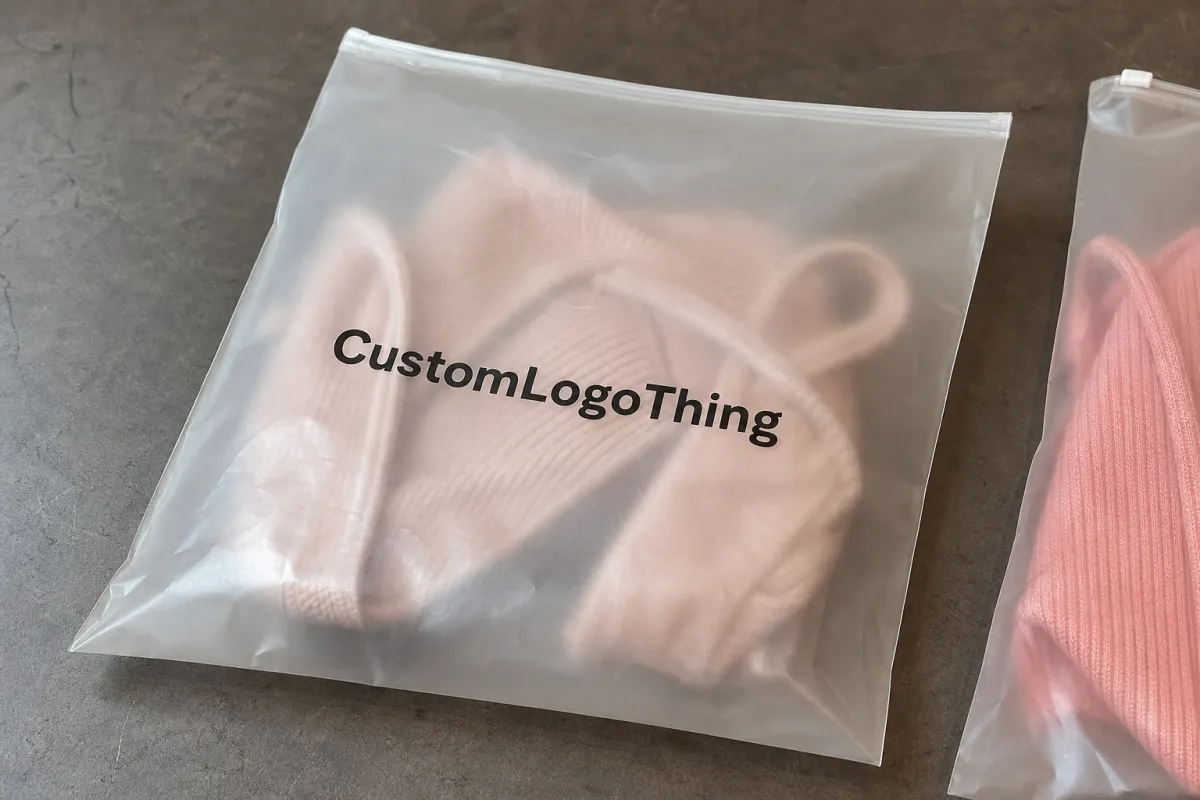
Swimwear packaging has three jobs: hold the garment, present the brand, and survive handling from factory to warehouse to customer. Frosted Zipper Bags perform better than plain sleeves on all three counts. The frosted finish reduces the shiny, brittle look that makes thin film feel disposable. It also hides tiny scuffs, fingerprints, and compression lines that appear during packing.
There is a practical advantage too. Bikini tops, bottoms, one-piece suits, and cover-ups are easier to keep together in a zipper bag. Retail staff can fold and stack them faster. E-commerce teams can repack returns without sorting loose pieces. Customers often reuse the bag for travel or storage, which quietly extends the brand impression beyond the first opening.
Perceived value matters here. A clean frosted surface with a sharp logo can read as premium even when decoration stays minimal. That is one reason these bags often outperform busier sleeves with more graphics but less restraint. Too much print can make the package feel crowded and cheaper, especially on translucent film where every color sits close to the product.
A simple build usually outperforms a complex one. The best swimwear packaging tends to be the package that disappears into the brand story instead of arguing with it.
In a crowded category, a bag that still looks acceptable after several touches is doing real work. The cheapest option rarely passes that test for long.
Bag construction, finish, and closure options
A typical frosted zipper bag uses frosted PE film, a zipper track, heat seals, and sometimes a hang hole or gusset. Each element changes how the bag feels and how it behaves in production. Film thickness affects stiffness. The zipper changes usability. The hole style affects whether the bag can be hung, stacked, or displayed in retail.
Film thickness is the first decision buyers usually feel in their hands. Too thin, and the bag collapses, wrinkles, and looks tired before it leaves the carton. Too thick, and the package gets bulky, especially in smaller sizes. That extra body can help premium positioning, but it also increases cost and may slow packing if the bags do not lay flat.
The zipper is more important than most price sheets suggest. A weak track creates a cheap impression even when the print is clean. A zipper that catches, misaligns, or splits under normal use undermines the entire package. For swimwear, where customers often reopen the bag to separate pieces or store wet items after a beach day, that failure is not cosmetic. It becomes a product complaint.
Finish matters as well. Frosted film creates a controlled level of visibility. It reveals the garment enough to show color or shape, but not so much that fold lines and seams dominate the presentation. For bright prints and narrow straps, that balance is helpful. A fully opaque pouch can feel heavy. A crystal-clear bag can expose every wrinkle. Frosted film sits in the middle, which is usually the more forgiving position for retail.
If a bag will hang on a peg, the hole shape should be decided before artwork approval. Euro holes, round holes, and hang slots all create different stress points during production. Changing that late can alter the cutting die or the seal position. It is a small detail with a disproportionate effect on scheduling.
Sizes, thickness, and print specs that affect fit
Swimwear is not one packaging spec. A bikini set, a one-piece, and a bundled resort look all take up different space once folded. The bag should fit the product without squeezing it. If the fit is too tight, the zipper takes stress and packing slows down. If the fit is too loose, the garment slides around and the package looks underfilled.
For lighter retail use, many buyers land in the 60-90 micron range. For a firmer hand feel or more durable reusability, 90-120 micron is common. Those ranges are not arbitrary. They reflect a tradeoff between cost, rigidity, and the way the package holds its shape on shelf. A thin film saves money but can make a good suit look less premium. A heavy film can look sturdy, but the material cost rises quickly and the package can start feeling overbuilt for lower-priced collections.
Print specs should be chosen with the same restraint. One-color logo work is usually the cleanest solution on frosted film. Two-color branding can still work if the artwork is bold and well spaced. Once the print area grows into full coverage, the bag stops looking light and the cost usually climbs faster than the visual improvement. On translucent material, small typography often beats detailed illustration because fine lines can lose clarity during printing.
There is a common mistake here: buyers approve a bag that fits the flat garment sample, then discover it is awkward once folded with tissue, an insert card, or a hygiene liner. That is where a few extra millimeters matter. A bag that is technically the right size can still be a bad production choice if the packer has to force the zipper shut.
For swimwear brands, the most useful rule is to spec the bag around the actual packing method, not around the garment alone. The difference shows up in labor time, appearance, and damage rates. Those are the costs that tend to be ignored until the first bulk run arrives.
Frosted zipper bags unit cost breakdown for swimwear brands
The frosted zipper bags Unit Cost Breakdown for swimwear brands is made up of several parts, and each one can move the final price. Film material is the largest piece in many quotes. Zipper hardware comes next. Printing, sealing, packing, and freight follow. If a supplier gives one flat number without showing the spec behind it, the quote is harder to compare and easier to misread.
Most buyers can estimate the price movement by asking a simple question: what changed between the lowest and highest quote? Usually the answer is one of these five things: size, thickness, print count, zipper style, or order quantity. Everything else is variation around those core drivers.
| Cost component | Typical share of unit price | What pushes it up | What keeps it controlled |
|---|---|---|---|
| Film material | 35% to 55% | Thicker micron, larger dimensions, frosted resin premium | Standard size, moderate thickness, efficient nesting |
| Zipper track | 10% to 18% | Heavier gauge, smooth-close upgrades, custom zipper color | Standard track, common color, stable supplier source |
| Printing | 8% to 20% | Extra colors, large coverage, complex artwork, repeated setup | One-color logo, limited ink coverage, clean vector files |
| Labor and conversion | 12% to 22% | Small runs, special cutting, hand packing, rework | Higher MOQ, standard die, repeat production |
| Cartons, packing, freight allocation | 5% to 15% | Short cartons, mixed SKUs, rush shipping, remote destination | Regular carton count, full cartons, planned shipping window |
Those percentages shift by region, resin market conditions, and whether the order is domestic or imported. They are still useful because they show where the quote usually hides its weight. If a supplier says the unit price is high, check whether the real issue is film thickness or a tiny quantity spread across too much setup time.
| Order tier | Typical spec | Estimated unit cost | What drives the price |
|---|---|---|---|
| 1,000 pieces | Standard size, 1-color logo, 70-90 micron | $0.35-$0.62 | Setup charges, lower material efficiency, more labor per piece |
| 3,000 pieces | Standard size, 1-2 colors, optional hang hole | $0.24-$0.42 | Better material spread, lower labor share, steadier print run |
| 5,000 pieces | Standard or near-standard size, simple branding | $0.18-$0.31 | Efficient production, better bulk pricing, less waste |
| 10,000 pieces | Standard size, controlled artwork, no extra add-ons | $0.14-$0.24 | Strong scale benefit, lower handling cost per piece |
Those are working ranges, not promises. A freight spike, a rush order, or a late revision can move the final number. The quote also changes if the supplier is asked to split by color, SKU, or size inside the same run. Mixed packing adds handling, and handling costs money.
A few habits keep pricing from drifting. Use a standard bag size if it fits the product. Keep the print to one or two colors. Avoid custom zipper colors unless they matter to the brand story. Send artwork in a clean vector file so prepress does not become a hidden charge. Those choices sound basic because they are. Basic is often cheaper for a reason.
MOQ, sampling, and production steps that change the quote
MOQ is usually tied to setup efficiency, not stubbornness. A factory has to prepare film, configure print, test seals, and absorb waste before the first saleable piece comes off the line. If the order is small, that fixed labor gets spread across fewer bags. The unit price rises. That is the math, whether the quote explains it or not.
Sampling should sit outside the bulk price. A sample or proof often costs somewhere around $40-$120, depending on whether the size is standard, whether a new print plate is needed, and whether the supplier is making a single pre-production piece or a more complete mockup. That fee is not a penalty. It is the cost of verifying the bag before the run starts.
The production sequence is usually straightforward: artwork review, spec confirmation, sample or proof, print setup, film cutting, heat sealing, zipper attachment, inspection, and final packing. Any step skipped early tends to reappear later as a defect. A slight misalignment in the zipper track, a bad seal corner, or the wrong micron can all be caught before bulk if the proof stage is treated seriously.
Revisions are expensive because they affect different parts of the process. A size change may require new cutting. A thickness change can alter material sourcing. A zipper change may require a new order from a separate supplier. A print change after approval can restart artwork review and delay production. Buyers often ask for “just one small tweak,” but in packaging that tweak can be a material change.
If your line needs two sizes, ask for both in the first pricing round. That shows whether the vendor can hold a stable spec family or whether each size behaves like a separate project. It also exposes the cost curve faster than guessing from a single quote.
Lead time and turnaround for a bulk swimwear run
Lead time gets distorted when it is treated as one number. It is better to split it into sample approval, bulk production, and freight. That makes bottlenecks visible. More often than not, the delay is not the factory line. It is late artwork, delayed approval, or a shipping plan that never matched the launch calendar.
A common planning range looks like this: sample approval can take 5-10 business days, bulk production 12-18 business days, and freight anywhere from a few days to a few weeks depending on the route and shipping mode. Those are not guarantees. They are useful guardrails. If a supplier promises far less without explaining capacity, material stock, or shipping method, the schedule deserves a second look.
Seasonality matters. A factory at peak load will move custom work more slowly than one with open machine time. Material sourcing matters too. Some zipper styles and film thicknesses are easy to source; others have longer procurement windows. And if the artwork changes after approval, the clock usually resets on at least part of the process. That is normal in packaging, even if nobody enjoys it.
For a fixed launch date, the safest approach is to lock the spec early and leave room for one proof cycle. A buffer sounds conservative, but in packaging it is often the cheapest insurance available. Shipping standards such as those from ISTA are useful if the bags need to be tested under real transit conditions with inserts or folded garments inside.
Supplier checks that protect premium swimwear packaging
The right supplier should be able to control the basics without drama. Zipper function, seal quality, print alignment, carton count, and label accuracy should all be routine checks. If those details are loose, the package will feel inconsistent even if the artwork looks polished in a render. Swimwear packaging is close to the customer experience, so minor defects are visible fast.
Ask for a pre-production sample, a material spec sheet, and a written artwork confirmation before releasing the deposit. If the zipper matters to the user experience, request a sample that can be opened and closed several times. That is not nitpicking. A zipper that sticks, splits, or separates after a few uses can turn a premium package into a complaint.
Commercial terms deserve the same attention. Clarify overrun and underrun tolerances, carton counts, rework policy, and whether the supplier can separate SKUs by size or color. Small errors in mixed runs can create warehouse problems that cost more than the packaging itself. A vague carton label can easily turn into a hand-sorting job.
Quality control should also match the reality of distribution. If the bags ship with inserts, tags, or tissue, check how well the pack resists compression. A bag can look flawless on the bench and still arrive crushed if the carton spec is too light. Some buyers compare supplier samples with independent packaging references and transit standards rather than trusting a photo alone. That is a more reliable habit than reading a polished mockup as proof of performance.
Good suppliers answer process questions directly. Bad ones only answer price questions. That distinction becomes obvious after the first defect report.
What to send for a fast, accurate quote
A clean quote starts with a clean spec. Send the exact bag size, thickness, zipper style, print colors, quantity tiers, destination, and whether the order needs a hang hole, gusset, insert card, or special packing. Missing details usually create one more round of back-and-forth, and that costs time more than it costs money.
Ask for pricing at several quantities. A quote at 1,000, 3,000, 5,000, and 10,000 pieces shows the real break point and helps you see where the unit price drops sharply. That matters because the lowest unit cost is not always the best order size. If demand is uncertain, a smaller run protects cash flow. If the collection is locked and repeatable, a larger run can make the cost curve work in your favor.
Request separate lines for sample cost, bulk unit cost, freight, and setup charges. That makes comparison honest. A lower quote that hides a tooling fee is not lower; it is just harder to read. The goal is to compare apples to apples, not different bags with different assumptions.
If the packaging must do more than hold the garment, say so. Retail display, e-commerce fulfillment, and boutique shelf presentation all push the spec in different directions. A strong quote will reflect those differences instead of treating every swimwear pack like a generic pouch.
Final buying takeaway
Frosted zipper bags work because they are practical first and polished second. They protect the garment, keep sets together, and deliver a cleaner visual read than plain sleeves without requiring a huge print budget. For swimwear brands, that balance is valuable. It lets the packaging support the product rather than compete with it.
The best buying decisions usually come from restraint: a realistic size, a controlled print spec, and a supplier that can explain the quote without hiding the important pieces. If the bag feels sturdy enough for handling, looks refined on shelf, and can be reordered without a new round of surprises, it is doing its job.
The frosted zipper Bags Unit Cost breakdown for swimwear brands becomes predictable once the spec is fixed and the production assumptions are visible. That is the standard worth aiming for. Not the cheapest bag in the market. The one that fits the product, the schedule, and the customer experience without creating unnecessary cost later.
How does the unit cost change for frosted zipper bags on bikinis versus one-piece swimwear?
Bigger bags use more film, so one-piece packaging usually costs more per unit than bikini packaging. If the set includes a top, bottom, and insert card, the bag may also need a little more width or height to avoid zipper strain. Ask for both sizes in one quote so the cost jump is visible before you commit.
What MOQ is realistic for custom frosted zipper bags for swimwear brands?
MOQ depends on size, print complexity, and whether the bag is a stock dimension or a custom spec. Simple one-color orders can usually start lower than multi-color custom runs because the setup burden is smaller. The most useful comparison is the MOQ price versus the next tier up, since that shows the actual break point in production efficiency.
Which specs have the biggest impact on frosted zipper bag pricing?
Size and thickness usually move price first because they change material use immediately. Print color count, zipper style, and add-ons like hang holes or gussets come next. A simpler layout with fewer production variables is usually the fastest way to keep the unit price under control.
How long does production usually take after artwork approval?
Timeline depends on whether you need a proof first, whether materials are in stock, and whether the artwork is final. A useful planning range is 5-10 business days for sample approval and 12-18 business days for bulk production, before freight. Late revisions can add days because even a small change may trigger new setup work.
What should I send to get an accurate quote for frosted zipper bags?
Send the exact bag size, desired thickness, zipper style, and whether you need a hang hole or gusset. Include quantity tiers, artwork, and destination so the supplier can calculate unit cost and shipping correctly. If the bags are for swimwear retail, mention whether the main goal is shelf presentation, storage, or e-commerce fulfillment.

