For custom winter headwear, Apparel Pom Pom Beanies unit cost is usually less about the pom itself and more about how cleanly the order is specified, decorated, packed, and shipped. A buyer can save a few cents on paper and lose dollars later in sampling, freight, or rework. That is the part most people learn the expensive way.
Custom logo beanies work because they feel useful, not disposable. They sit in the sweet spot between retail product, team gear, and seasonal giveaway. If the knit feels decent, the logo reads clearly, and the order lands on time, people actually wear them. Strange concept, I know.
A good beanie quote should answer three things fast: what it costs per piece, what the MOQ is, and what details could move the number before production starts.
Custom Logo Things focuses on the buying side of the process: practical specs, realistic pricing, and fewer surprises. That means looking at material choice, decoration method, packaging, and delivery terms before anyone starts talking about “cheap” anything.
Why Pom Pom Beanies Sell Better Than They Cost
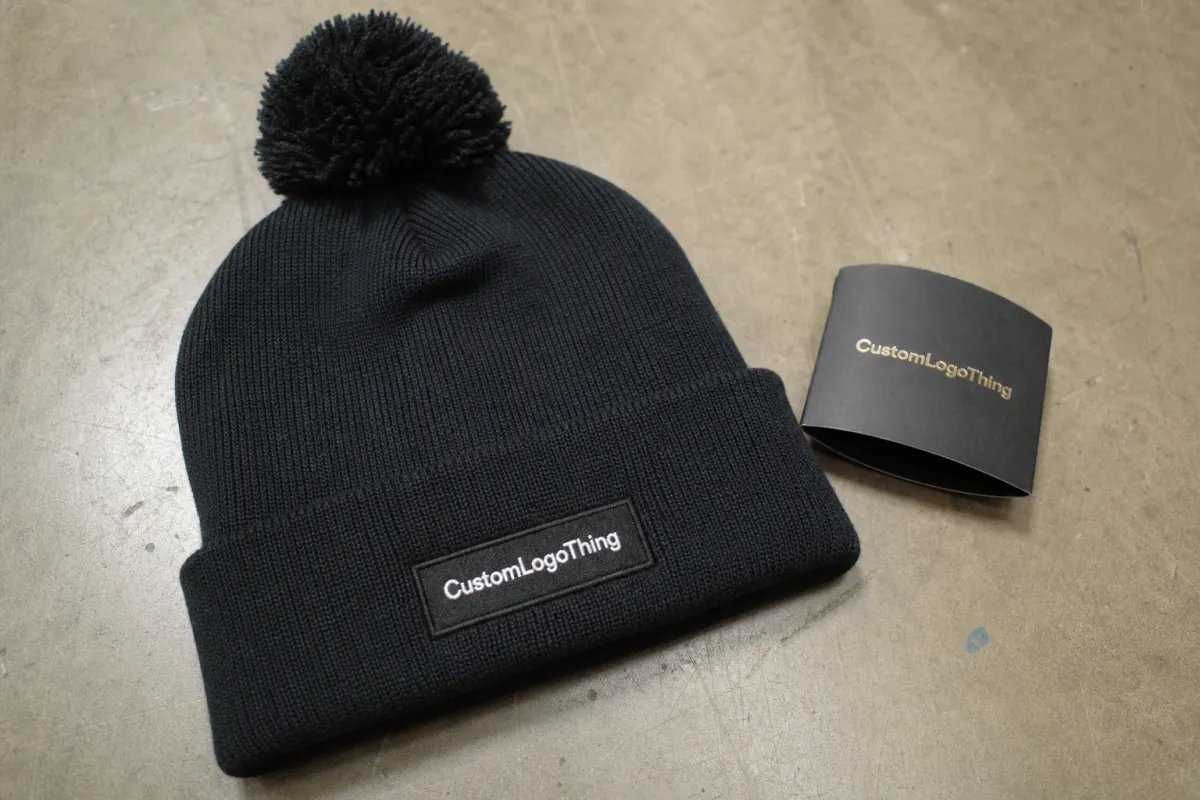
A pom pom adds personality without adding much weight or shipping pain. That matters. From a packaging buyer’s point of view, a winter beanie is one of the easier branded items to move through inventory because it folds small, stacks well, and travels in bulk without demanding custom cartons for every unit. The perceived value, though, can climb quickly if the hat looks premium.
That is why these products work for so many use cases. They show up as winter giveaways, retail add-ons, fan merch, staff uniform pieces, and event gifts. A decent beanie with a sharp patch or embroidery looks far more expensive than the factory bill usually suggests. A cheap-looking one does the opposite. Nobody is fooled by flimsy yarn and a lopsided pom.
Buyers tend to care about five things first: hand feel, logo clarity, color match, fit, and whether the supplier can actually deliver what was approved. Flashy claims do not help here. A clean fit, a balanced cuff, and a logo that sits flat matter more than a dramatic sales pitch.
In practice, the best orders are the ones where the decoration choice matches the use case. For retail, buyers often lean toward tighter knit, better yarn, and a more refined badge or woven patch. For promotions, a simpler knit and embroidery combo may be enough. The trick is to spend where it changes the perceived quality, not where it just burns budget.
If you want better apparel pom pom beanies unit cost, start by improving the specification, not by begging for the lowest factory quote. Lower sticker price can be a trap if the sample fails, the yarn shade drifts, or the final shipment is short. That is not “value.” That is paperwork with a headache attached.
Build the Right Beanie: Yarn, Knit, and Pom Choices
Material choice sets the baseline for comfort, warmth, and cost. Acrylic is still the common workhorse because it is soft enough for most buyers, easy to source, and usually the most stable for bulk pricing. Recycled acrylic can help with sustainability claims and may fit a brand story better, though availability and color matching can be a little less predictable. Wool blends bring a more premium hand feel, but they can push the cost per piece up and may need more care in washing and wear.
Knit structure changes the look and the labor. Rib knit gives stretch and a classic fit. Cable knit looks richer and often reads more retail-friendly, but it usually requires more knitting complexity. Cuff height matters too. A deeper cuff offers a larger decoration zone and a heavier visual presence, while a shorter cuff can reduce yarn use and keep the profile lighter. Small choice, real cost movement.
Poms are not all the same. A solid yarn pom is the simplest and usually the most economical. Two-tone poms create more visual movement and can support brand colors, but they add handling. Faux fur poms sit higher on the premium end and often justify a better retail price. Then there is attachment. Sewn-in poms are common and durable. Removable pom hardware is useful for washability or style flexibility, but it adds parts, labor, and usually setup charges.
Fit also matters. Most custom beanies are one-size stretch, but “one size” still leaves room for trouble if the knit is too loose or the cuff depth is wrong. A beanie that sits too high looks awkward. One that drags low can feel sloppy. Buyers should confirm how the logo sits with the cuff folded and whether embroidery or a patch will distort the front panel.
For buyers comparing options, the tradeoff usually looks like this:
| Option | Typical Cost Impact | Best For | Tradeoff |
|---|---|---|---|
| Acrylic body + yarn pom | Lowest | Promotions, staff gifts, large runs | Less premium hand feel |
| Recycled acrylic + embroidery | Moderate | Brand programs, eco-minded campaigns | Color matching can take more care |
| Wool blend + faux fur pom | Higher | Retail, boutique merch, premium resale | Higher unit cost and stricter spec control |
| Deep cuff + woven patch | Moderate to higher | Teams, fashion-forward branding | More decoration area, more spec detail needed |
For packaging and sustainability-minded buyers, it helps to know what your supplier can support before the order starts. If recycled content or fiber claims matter, check documentation and chain-of-custody expectations with the same seriousness you would bring to print compliance. The FSC model is a decent benchmark for how clean sourcing documentation should look, even when the exact product is different.
Apparel Pom Pom Beanies Unit Cost: What Actually Changes the Number
The fastest way to understand apparel Pom Pom Beanies Unit cost is to stop treating it like a single number. It is a stack of numbers. Quantity, decoration, yarn choice, pom style, packaging, sampling, and freight all hit the final landed cost in different ways.
Quantity is usually the biggest lever. A 100-piece run carries a lot of setup burden per unit, while a 500-piece or 1,000-piece order spreads that burden out. That is why a quote might drop sharply between tiers. The factory is not being mysterious. It is math. The same knitting setup, embroidery preparation, and quality control work costs less per piece when more units are produced.
Decoration changes the number faster than many buyers expect. Small embroidery is usually manageable. Large logo coverage, multiple thread colors, or a woven patch with custom shape adds labor and prep. If the design needs a high stitch count, the unit cost moves. If it needs two decoration positions, it moves again. Add a badge, a label, and a hang tag, and the total starts behaving like a retail item instead of a promo hat.
Tooling fees and setup charges are easy to ignore until they show up. A woven patch may need a new run file. A custom badge or special label can involve initial setup. Some suppliers fold those into the quote. Others separate them. Neither is wrong, but buyers should know what is included so they can compare apples to apples instead of pretending a partial quote is a full quote.
Packaging also matters. A simple bulk polybag is usually the cheapest route. Individual insert cards, barcode stickers, or retail folding can add labor. If the beanies are meant for shelf display or e-commerce fulfillment, that extra packaging work may be worth it. If they are going into a conference giveaway bag, it is probably just extra cost dressed up as “presentation.”
Here is a practical way to think about bulk pricing and cost per piece for a standard custom run:
| Quantity | Typical Unit Cost Range | What Usually Happens |
|---|---|---|
| 100-199 pcs | $4.80-$7.20 | Higher setup share, more expensive decoration per piece |
| 200-499 pcs | $3.40-$5.90 | Better spread on setup charges, more room for logo options |
| 500-999 pcs | $2.90-$4.80 | Stronger bulk pricing and more stable decoration economics |
| 1,000+ pcs | $2.30-$4.10 | Best cost per piece, but spec discipline matters more |
Those ranges are not a promise. They move with yarn, decoration, packout, and ship mode. But they are realistic enough to help a buyer stop pretending every quote should look identical. If one supplier is far below market, check whether the quote includes sampling, freight, and the decoration you actually requested.
Sampling is another hidden cost. A simple sample might be modest, but a fully customized pre-production sample can carry setup charges or delivery fees. That is normal. A good supplier should be clear about it. The same goes for landed cost. Factory price is useful only if you also know freight, customs handling, and delivery timing. Otherwise you are budgeting on fiction.
For shipment testing and packaging durability, standards matter. If an order is going through distribution or direct fulfillment, it is smart to ask how the goods will be packed and whether they can survive normal transit abuse. The testing principles used by ISTA are a practical reference point for anyone trying to keep goods intact after more than one handoff.
Specs Buyers Need Before a Quote Lands
A clean quote starts with clean inputs. The minimum brief should include quantity, artwork file, preferred colors, decoration method, and target delivery date. If you do not send those five things, expect delays. The supplier may still respond, but the quote will be a guess dressed as an estimate.
Logo size and placement should be stated clearly. Front cuff embroidery is common. Center-front patch application is common. Side placement is less common but sometimes works better for a cleaner retail look. If the brand requires Pantone matching, say so. If a close visual match is acceptable, say that too. Vagueness here creates expensive back-and-forth later.
Packaging format should also be confirmed early. Bulk packed, polybagged, stickered, folded with insert card, or retail-ready all change labor. A simple order may not need more than a bulk pack. A customer-facing program may need barcode labels and size stickers. If the supplier has to guess, the quote becomes less useful.
Style questions matter as well. Does the buyer want a snug fit or a roomier crown? A standard cuff or oversized cuff? A straightforward logo piece or something with a stronger retail presentation? These details affect both production and cost. They also influence whether the beanie feels like branded merchandise or a cheap afterthought.
Here are the details that cut quote time dramatically:
- Quantity breakpoints: 100, 300, 500, and 1,000 units if you want tiered bulk pricing.
- Artwork format: vector file preferred, plus any stitch or patch reference.
- Color references: Pantone codes or approved sample references.
- Decoration method: embroidery, woven patch, leather patch, label, or badge.
- Packaging request: bulk, retail-ready, or fulfillment-friendly.
- Ship-to location: so freight and timing can be estimated honestly.
A common delay comes from incomplete artwork approval. Another comes from buyers sending three versions of the same design and asking the factory to “choose the best one.” No. Pick one. Production wants a final spec sheet, not a creative writing exercise.
If the order is for retail resale, the quote should also reflect the reality of your channel. A beanie for a store shelf needs more attention to presentation than a beanie for an internal winter event. That changes how you compare unit cost, because presentation cost is part of the product cost, whether you like it or not.
Production Steps and Lead Time From Approved Art to Delivery
The production path is straightforward, even if some suppliers make it sound like a moon landing. It usually goes quote, mockup, sample approval, knitting, decoration, finishing, quality check, packing, and shipment. Miss one approval step and the timeline slips. That is how it works.
Sampling often takes about 7 to 10 business days, depending on how many details need to be confirmed. A simple yarn beanie with standard embroidery is faster than a custom knit with special patches and matching pom colors. If the sample needs revisions, add time. That is not a failure; it is the normal cost of getting the spec right before a larger run starts.
Bulk production commonly lands around 15 to 30 days after sample approval. Smaller orders with basic decoration may sit on the shorter end. Bigger or more complex programs move toward the longer end. If a factory promises everything in a blink without discussing material availability, that is not efficiency. That is optimism with a sales script.
Delay usually comes from a few predictable places:
- Artwork approval taking too long.
- Color revisions after the sample is already made.
- Yarn or trim availability shifting during peak season.
- Packaging changes after production has started.
- Late freight decisions that force a shipment change.
Good buyers reduce friction by approving one final spec sheet before production starts. Not a draft. Not a “pretty close” version. One final version. That keeps the knitting and decoration teams aligned and stops the classic chain reaction where one department follows old instructions while another is already on version six.
Lead time and unit cost are linked. Rush orders can force premium shipping, compressed labor scheduling, and tighter material choices. If the date is fixed, say it early. If the order can breathe a little, that flexibility can save real money. A supplier cannot plan inventory, production slots, or freight wisely if the delivery date is an afterthought.
For buyers who want a cleaner process, ask the supplier to provide a simple production calendar showing approval, sample, bulk run, inspection, and ship dates. It is boring. It is also useful. Boring paperwork often saves the order.
Why Buyers Stick With a Reliable Pom Pom Beanie Factory
Repeat buyers do not stay loyal because of slogans. They stay because the supplier gives consistent pricing tiers, answers quickly, catches artwork issues early, and shows proof before shipment. That is the whole game. Fancy brochures do not help when a winter deadline is staring at you.
Matching reorders matter more than first-time buyers expect. If a spring replenishment has a slightly different dye lot, the brand will notice. If the embroidery shifts by even a little, the product looks off in a lineup. For seasonal programs, consistency is not a luxury. It is the thing that keeps the account alive.
Low-MOQ flexibility is useful, but it is not free. A supplier willing to make smaller runs may charge more per piece, because the setup burden is heavier. That tradeoff makes sense if you are testing demand or launching a limited campaign. If you already know the volume, pushing toward a better quantity tier usually improves apparel pom pom Beanies Unit Cost enough to matter.
Reliable suppliers also make landed-cost planning easier. They should be able to separate product cost, setup charges, sample cost, and freight. They should also be able to tell you whether they can maintain the same spec across multiple runs. That sounds basic because it is basic. Yet plenty of buyers still get trapped by vague quote sheets and vague promises. Funny how that keeps happening.
Practical compliance support is another sign of a good partner. That does not mean overcomplicating the order with paperwork nobody needs. It means being able to speak clearly about fiber content, packing details, and transit considerations. If the item is going into retail or redistribution, the supplier should know how to package and label in a way that reduces downstream problems.
One more thing: the best factory is not always the cheapest. It is the one that keeps your quote honest and your production stable. Buyers who need dependable bulk pricing usually care less about theoretical savings and more about whether the order actually arrives looking like the approved sample.
If you are comparing factories, ask for the same spec from each one. Same quantity, same yarn, same pom style, same decoration, same packout, same destination. Otherwise you are comparing random numbers and calling it procurement.
Send These Details to Get a Faster Bulk Quote
To get a useful quote, send the quantity breakpoints, logo file, color list, decoration method, packaging preference, and ship-to location. That gives the supplier enough to calculate unit cost, sample cost, setup charges, and freight without guessing. Guessing is great for guessing. It is terrible for procurement.
Ask for pricing at multiple quantities. A proper quote should show where the cost per piece drops and where it flattens out. That helps you decide whether it is worth moving from 250 units to 500 units or whether the extra inventory just sits in a box collecting dust.
Also request one visual mockup and one plain-text spec sheet before approving production. The mockup helps catch design issues. The spec sheet helps catch the boring, expensive mistakes: wrong yarn tone, wrong cuff height, wrong packaging, or a decoration placement that was never actually confirmed.
If you are buying for a promotional campaign, internal team use, or retail resale, say so. The intended use changes the right answer. Promo buyers often want cost control and simple decoration. Retail buyers usually need better finish, more careful color work, and packaging that does not look like it was assembled in the back of a truck.
Quick quote checklist:
- Quantity target and alternate tiers
- Artwork file and logo placement
- Color references and material preference
- Decoration method and packaging format
- Delivery address and deadline
Review the quote against your deadline, then confirm the final spec before production starts so apparel Pom Pom Beanies unit cost stays predictable through sampling, manufacturing, and delivery. That is the point: fewer surprises, cleaner buying, better margin.
What affects apparel pom pom beanies unit cost the most?
Quantity tier is usually the biggest factor because setup and labor spread differently at 100 pieces versus 500 or more. Decoration complexity comes next: embroidery size, patch work, label adds, and extra color changes all raise cost. Material thickness, pom style, and packaging choices also move the number in a noticeable way. Freight and sampling should be included if you want a true landed-cost comparison.
What is a normal MOQ for custom pom pom beanies?
Many factories start around 100 to 300 pieces, but the exact MOQ depends on decoration and yarn availability. Lower MOQs usually mean a higher unit cost because the setup gets spread across fewer pieces. Ask for tiered pricing at several quantities so you can see where the breakpoints are. If the supplier will not quote clearly by quantity, expect pricing to be messy later too.
How long does pom pom beanie production usually take?
Sampling often takes about 7 to 10 business days, depending on artwork and material complexity. Bulk production commonly runs around 15 to 30 days after sample approval. Shipping adds extra time, especially for ocean freight or if the destination needs customs clearance. Rush orders are possible in some cases, but they usually increase cost and narrow material options.
Can I lower pom pom beanie unit cost without hurting quality?
Yes, by simplifying the logo, reducing color changes, and keeping the knit structure standard. Using one main body color and a standard pom style usually trims cost without making the product feel cheap. Simpler packaging can also save money if the beanies are for promotions or internal use. The goal is to remove unnecessary complexity, not strip out the features that make the beanie worth buying.
What details should I send for an accurate beanie quote?
Send quantity, artwork, colors, decoration method, packaging request, and the required delivery date. Include destination information so freight and landed cost can be estimated correctly. If you want comparisons, ask for pricing at multiple quantities and for sample cost separately. The cleaner the brief, the faster the quote comes back and the fewer revisions you need.


