The biggest risk in an event merch Pom Pom Beanies reorder plan is usually not production capacity. It is drift. A cuff that grows by half an inch, a pom that comes back a little smaller, or a yarn shade that lands one batch off can turn a clean repeat into a new approval cycle. The first order may have been easy. The second one is where the details either hold or start to wander.
That matters because event merch is judged quickly. A beanie is seen in a photo, at a stadium gate, on a campus path, or at a winter market table. If the reorder looks materially different from the first run, the item loses some of the trust it already earned. The buyer ends up explaining a change nobody asked for. The event team ends up sorting through boxes that no longer feel identical.
A good event merch Pom Pom Beanies reorder plan does not try to reinvent the product. It preserves the look, price logic, and delivery window of the original order, while tightening the path from old PO to new shipment. That usually means fewer decisions, not more. It means treating the first run as a technical reference, not just a past purchase.
There is also a practical rhythm to these reorders. Buyers are often working against a winter calendar, a holiday campaign, a campus launch, or a sports season that does not leave much slack. A slow answer can cost more than a slightly higher unit price. A fuzzy spec can cost more than a better material choice. The point is to keep the order reproducible, visible, and easy to approve.
Event Merch Pom Pom Beanies Reorder Plan: Where Reorders Slip
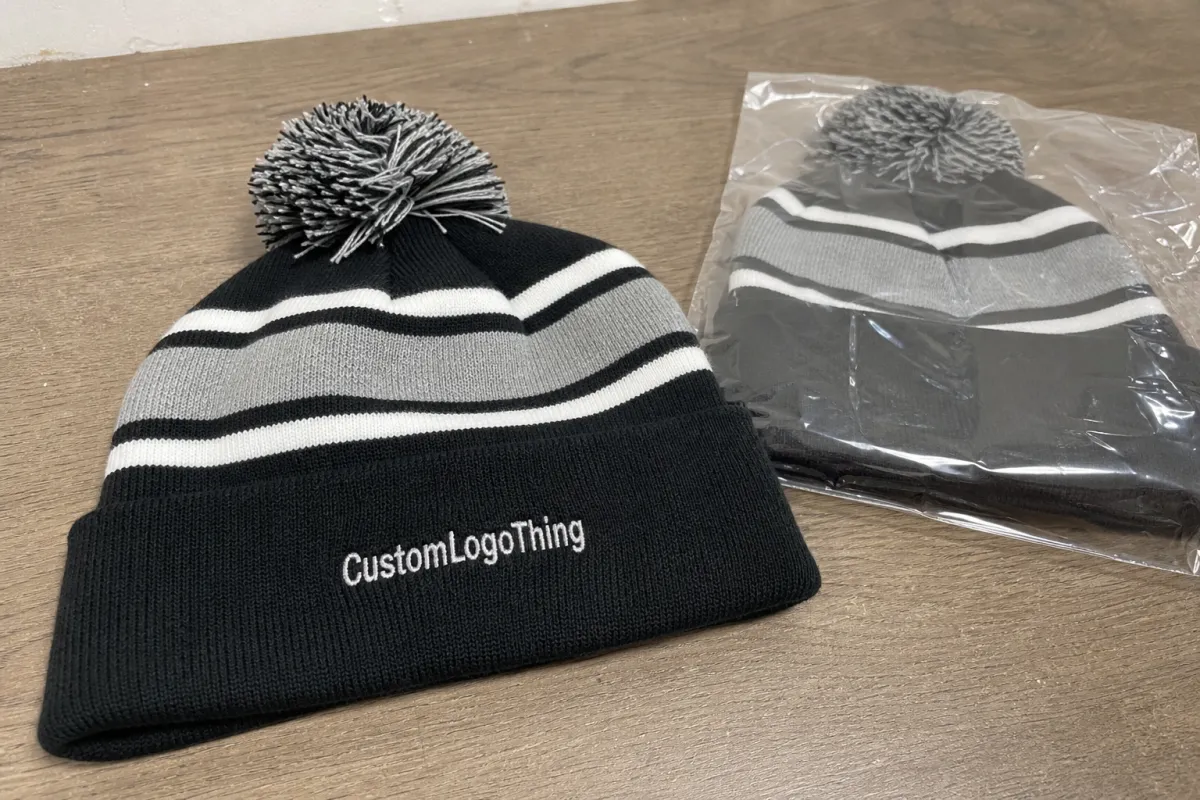
The easiest reorders are the easiest to underestimate. Someone sees the previous run, assumes the factory can duplicate it from memory, and leaves out the documents that actually matter. Then one small change starts the snowball: the label shifts, the cuff height changes, the carton count is different, or the pom is attached with a slightly different method. What looked like a repeat order becomes a fresh job with fresh proofing.
A disciplined Event Merch Pom Pom Beanies reorder plan starts with the prior order as a specification set, not a memory. The old sample matters. So does the packing list, the artwork file, the decoration method, and the exact yarn reference if one was recorded. The fastest reorder is the one that needs the fewest clarifying questions. That only happens when the buyer decides, before asking for price, which details must remain fixed.
Three areas cause most of the trouble. First, fit: if the crown height or cuff depth changes, the beanie can sit differently on the head and read shorter or slouchier than the first run. Second, color: yarn shades are not always interchangeable, especially when the earlier order came from a specific dye lot. Third, packout: if the original order shipped in individual polybags with size stickers and a 24-count master carton, a looser carton count on the reorder can slow distribution at the venue.
"The second order should not feel like a new project. If it does, the spec sheet was never carrying enough weight."
That is the unglamorous part of the work. Reorders succeed because the references are precise. They fail because someone assumes the old order will speak for itself. Buyers who manage school spirit programs, seasonal promotions, or venue merch usually learn this after one frustrating cycle: the more exact the handoff, the less time gets wasted translating the first purchase into the second.
What Makes Pom Pom Beanies Strong Event Merch
Pom Pom Beanies stay relevant for a simple reason: people actually wear them. That sounds obvious, but it makes a real difference in merch planning. A beanie can keep showing up after the giveaway table closes. It appears at school drop-off, on transit platforms, in grocery-store parking lots, and in the photos that linger after an event is over. Very few promotional items earn that kind of second life.
They also work across several audience types without much friction. Concert crowds like the style factor. Schools like the visible logo area. Winter sports programs like the warmth and stretch. Charity drives like the easy sizing. For a buyer planning an event merch pom pom Beanies Reorder Plan, that range reduces the odds of dead stock. A product that looks good and is genuinely useful is much easier to reorder than one that only looked good in a mockup.
Decoration method changes how the piece behaves in use, and buyers should be intentional about that choice:
- Embroidery is durable and still reads well after repeated wear, but dense stitch counts can add cost and slightly stiffen the cuff.
- Woven labels keep branding clean and light, which suits small logos or programs that want a quieter finish.
- Patches move the beanie toward a premium feel, useful for alumni programs, ski events, and holiday drops.
- Cuff branding tends to be the fastest read in a crowd, especially when photos are taken from a distance.
Packaging matters more than many merch buyers expect. A beanie packed in an individual polybag, marked with a clear size sticker, and grouped in well-labeled master cartons is easier to count, store, and hand out under time pressure. The difference sounds minor on paper. It is not minor when volunteers are breaking down pallets and handing inventory to multiple distribution points.
Compared with scarves or gloves, pom pom beanies usually bring less size risk and fewer fulfillment complications. One SKU is easier to control than two or three. That simplicity is part of why they keep returning to the top of seasonal merch lists, especially for programs that need a reliable repeat order and a clear distribution story.
Materials, Fit, and Decoration Specs to Lock Before Reordering
Material choice is where a repeat order either protects margin or quietly erodes it. Acrylic remains the most common option because it is warm, widely available, and usually stable in price. A polyester-acrylic blend can improve hand feel and resilience. Recycled polyester may fit sustainability goals, but it should be checked carefully for consistency, since the fabric behavior can differ from the first run if the earlier order used a different fiber mix.
The key question is not just what the beanie is made of. It is how the material behaves once production starts and the units move through packing and shipping. Does it pill early? Does the cuff recover after being stretched? Does the pom flatten in cartons? A strong event merch pom pom beanies reorder plan should answer those questions before the buyer approves pricing, because material changes can affect appearance, fit, and lead time at the same time.
Fit dimensions are easy to ignore and hard to fix later. Confirm these before the reorder is released:
- Crown height so the beanie sits the same way on the head.
- Cuff depth so the folded section matches the prior run.
- Stretch range so the product works for the same user group.
- Pom diameter so the silhouette stays consistent in photos and on display.
- Label placement so the brand mark lands in the same visual position.
Decoration controls matter just as much. Ask for Pantone references where possible. Confirm stitch limits if the logo is embroidered. Measure logo placement in inches or millimeters instead of relying on a loose visual estimate. If the old proof is still valid, reuse it. If the brand team updated the mark, say so early. A reorder is a bad place to discover that the file on record was low resolution or that the old logo no longer matches current branding.
Quality checks should be specific, not generic. Review seam consistency. Check trim attachment. Confirm label orientation. Compare a preproduction sample to the retained sample if one exists. For larger runs, ask for an in-line sample review before the full quantity is packed out. That extra checkpoint is cheaper than finding a color mismatch after the cartons are already staged for shipment.
There is also a standards angle. For shipments that travel through long distribution chains, buyers should think about transport stress, not just the finished look. Resources from ISTA testing standards are useful for understanding how packs hold up in transit. If the order uses paper hangtags or inserts, aligning those materials with FSC-certified materials can support sustainability claims without adding unnecessary complexity.
A practical caveat: some pom styles compress more than others in cartons. A dense, plush pom can rebound well, but it may also show flattening if the master pack is overfilled. A lighter pom keeps shipping tidy yet can look less full in photos. There is no universal winner. Buyers should choose based on how the item will be distributed, stored, and photographed.
Pricing, MOQ, and Unit Cost for Reorder Batches
Unit cost on a reorder is driven by more than quantity. Larger runs usually bring the number down because setup is spread across more units, but that is only part of the calculation. Decoration method, yarn choice, packaging, freight speed, and whether the order is a clean repeat or a revised spec all affect the landed price. A buyer who only compares the base quote can miss the real cost.
For planning purposes, these rough ranges are common for decorated beanie orders:
- 250-499 units: about $7.50-$12.00 per unit, depending on decoration and packaging.
- 500-1,999 units: about $5.75-$9.50 per unit for repeatable specs.
- 2,000+ units: often $4.75-$8.00 per unit when the design is stable and sourcing is straightforward.
Those ranges are not a promise. They are a useful planning frame. A dense embroidery logo usually costs more than a simple woven label. A fully custom knit body costs more than a stock body with added branding. Rush production can add 10% to 20%, sometimes more if the schedule is compressed. Air freight can move the calendar, but it can also push the landed number higher than expected.
| Reorder Type | Typical Unit Cost | MOQ Logic | Best Fit |
|---|---|---|---|
| Stock beanie with simple decoration | $4.75-$8.50 | Lower setup burden, easier replenishment | Fast event drops and broad giveaways |
| Lightly customized premium beanie | $6.50-$10.50 | Balanced pricing at mid-volume quantities | Campus merch, winter campaigns, club sales |
| Fully custom knit pom pom beanie | $8.00-$14.00 | Higher MOQ because yarn, knit pattern, and proofing are unique | Brand-led merchandise and recurring seasonal programs |
MOQ tends to be where reorder conversations slow down. A stock body may allow a lower threshold. A lightly decorated stock body usually sits above that because the factory still has to manage setup and decoration. A fully custom knit program generally needs a higher MOQ, especially if the design uses multiple yarn colors or a special pom construction. The cleanest quote is the one that explains why the MOQ exists instead of hiding it behind vague language.
For a realistic event merch pom pom beanies reorder plan, ask for three quote lines: exact repeat, repeat with one change, and revised quantity. That makes the cost impact of a color change, a packaging update, or a logo revision visible before approval. In many cases, the cheapest-looking option is not the cheapest once freight and handling are added back in.
One more caveat: low MOQ and fast turnaround rarely travel together without a premium. Buyers sometimes assume a vendor can simply "reuse everything" and skip the economics of staging, setup, and scheduling. That usually leads to disappointment. A repeat order is still a production order, and production has real changeover costs.
Reorder Process and Timeline From Proof to Shipment
The best reorder process is boring in the right way. It moves in a straight line: reorder request, spec confirmation, digital proof, sample or preproduction approval, production, QC, packing, and shipment. If any step becomes vague, the timeline stretches. That is usually not because the factory is slow. It is because the order was under-described from the start.
Lead time depends on the yarn plan, decoration complexity, quantity, and shipping method. A clean repeat with existing artwork can often move in 10-15 business days after proof approval. A fully custom knit beanie may need 20-30 business days, especially if the pattern or pom color changes. Domestic ground shipping may take only a few days. Air can shorten the transit window. Ocean freight can make sense for larger replenishment runs, but only if the event calendar leaves room for it.
If the buyer wants the fastest response, these items should be on the first message:
- The previous PO or order number.
- The quantity target and any split by color or size.
- Artwork files in editable format.
- Pantone references or a photo of the prior sample.
- The ship-to location and required delivery date.
- Packaging instructions, including polybag, label, and carton count preferences.
That level of detail cuts down on email traffic and gives the vendor a clear path to match the old run. It also helps expose the differences that matter. Sometimes the old spec can be reused with no change. Sometimes the logo file has been updated, the event date moved, or the shipping address changed. Those are simple facts, but they shape the full schedule.
For buyers working against a tight event date, the reorder plan should include a cutoff point for changes. Late edits are expensive once yarn has been reserved and production slots are booked. A switch to a different pom color can look small on screen and still add days in sourcing. A revised carton count can create a packing delay. The calendar usually punishes indecision faster than it punishes a slightly higher unit price.
There is a useful comparison here. A reorder with clean references behaves like a standard manufacturing job. A reorder with missing specs behaves like a rescue mission. The first one tends to be predictable. The second one tends to collect extra approvals, extra messages, and extra risk.
Why Buyers Keep Reordering With a Controlled Production Workflow
A controlled workflow sounds abstract until it is compared with the alternative. In a loose process, one person stores the art file, another remembers the color from the first run, and the carton count lives in an old email thread. That is how variation starts. In a controlled process, the spec sheet, proof, retained sample, and QC notes all point to the same target.
That consistency has business value. There are fewer returns. Less overbuying. Cleaner seasonal planning. Less time spent re-explaining the same order to a different stakeholder three months later. Buyers who manage recurring merch programs know that the second order is rarely about creativity. It is about trust. The item needs to look right, arrive on time, and match the last approval without argument.
Quality control should be visible in the process rather than assumed. Ask for preproduction signoff. Review in-line samples if the run is large enough to justify it. Verify carton counts before shipment. Keep a retained sample for the next order. These habits are simple, but they reduce the most common failure modes: shade drift, label placement errors, packaging mismatch, and logo changes that were never formally approved.
Here is the practical difference:
- Loose workflow: more email chasing, higher chance of spec drift, weaker repeatability.
- Controlled workflow: documented specs, repeatable sourcing, faster approvals, lower variation risk.
- Buyer impact: better on-time delivery, less rework, and a clearer path to future reorders.
That is why an event merch pom pom beanies reorder plan works best when it is treated as a production system instead of a simple repurchase. The supplier should be able to see the previous spec, the current proof, and the shipping plan without hunting through old messages. If that paper trail exists, repeat orders usually get easier, not harder.
What to Send for an Accurate Reorder Quote
If the goal is a usable quote, send the information that changes scope. The previous order number is the anchor. After that, include quantity, delivery location, delivery window, logo file, Pantone references, and packaging instructions. If the reorder must match the last run exactly, say that plainly. If the color is changing, say that too. Ambiguity is expensive.
Buyers also need to decide whether the reorder will use leftover stock materials or a fresh custom run. That one choice changes both cost and timing. Using remaining stock can be faster, but only if the spec is still current and the inventory is actually available. A fresh run gives more control, though it usually brings a longer schedule and a tighter approval trail.
For teams that manage recurring programs, it helps to keep one internal record that captures prior approvals, carton counts, and artwork versions. That record is often more useful than a dozen scattered emails because it shows the exact version that was shipped. Once a program has a few seasons behind it, that history becomes the cheapest insurance against avoidable variation.
A clean reorder request should read like a handoff note, not a brainstorm. The buyer is trying to reduce interpretation. The supplier is trying to reproduce a known result. That is the most efficient way to move from quote to proof to shipment without turning a repeat into a redesign.
For that reason, the strongest event merch pom pom beanies reorder plan is the one that preserves the details that matter, flags the changes that affect cost, and keeps the approval path short. The order should move because the references are clear, not because everyone is guessing the same way.
How do I reorder event merch pom pom beanies without changing the fit?
Use the prior order number or spec sheet so the factory can match crown height, cuff depth, and stretch range. If any measurement is unclear, approve a reference sample or retained sample before bulk production. Avoid mid-order design edits unless the fit change is intentional and budgeted.
What is the MOQ for a pom pom beanie reorder?
MOQ depends on whether the order is stock-based, lightly decorated, or fully custom knit. Lower-SKU orders usually price better because setup is spread across fewer production changes. Ask for tiered pricing so you can compare smaller reorders against larger replenishment runs.
How long does an event merch beanie reorder usually take?
Lead time depends on yarn availability, decoration method, quantity, and whether the previous spec can be reused exactly. The fastest path is a repeat order with ready artwork and no spec changes. Shipping method can change the schedule more than production time when deadlines are tight.
Can I change colors on a reorder of pom pom beanies?
Yes, but color changes may require new yarn sourcing, new proofing, and sometimes a revised MOQ. Pantone references or a physical sample help reduce shade drift when switching colors. Color updates can also change the final unit cost if materials are not already in stock.
What should I send to get the quickest reorder quote?
Send the previous PO, target quantity, delivery date, artwork files, and any packaging instructions. Include what must stay the same and what can change so the quote reflects the real scope. If possible, attach a photo of the last run or a retained sample for faster verification.


