Fitness Pom Pom Beanies Unit Cost: Request a Fast Quote
For buyers comparing club merch, gym giveaways, and winter retail add-ons, fitness Pom Pom Beanies unit cost is rarely a single flat number; it moves with yarn choice, decoration method, and quantity, which is exactly why a small accessory can still feel polished without turning into an expensive build. A smart spec gives you the look of a retail piece, the warmth people expect from a winter hat, and a cost structure that makes sense at the order size you actually need.
What most people see first is the pom pom, because it adds height and visual energy on a shelf or in a promo display. What usually determines the invoice, though, is the body construction under that pom: the knit gauge, the yarn weight, the lining, and the logo method. That is where fitness pom pom Beanies Unit Cost becomes a practical sourcing question instead of a guessing game.
In practice, the best orders are the ones that balance appearance with efficient production. A clean cuff, a stable rib knit, and a standard yarn pom can look surprisingly premium without piling on extra labor. If the buyer is clear about fit, branding, and packout, the factory can price the job with fewer assumptions and fewer hidden adjustments later.
Why pom pom beanies can feel premium without a high build cost
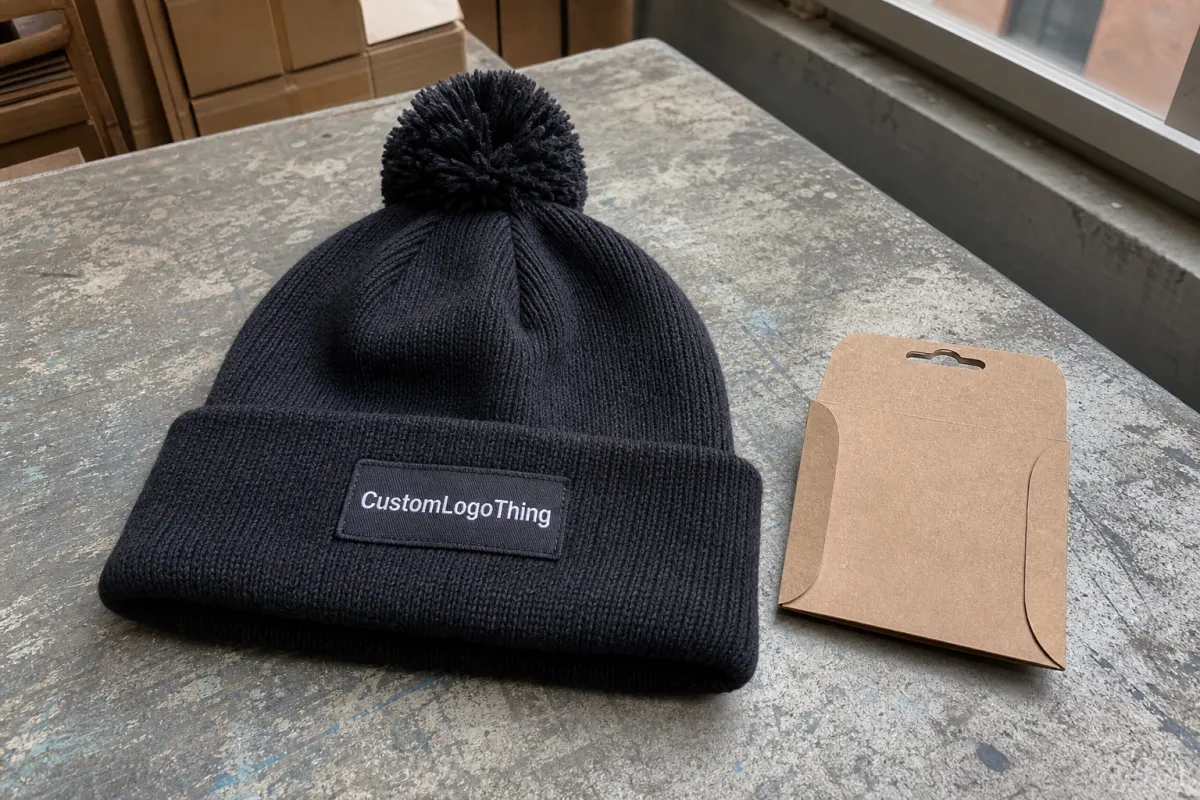
A pom pom does a lot of visual work for a small part. It gives the beanie more height, more motion, and a more sport-forward silhouette, which is why clubs, gyms, and event programs often choose it over a plain cuffed cap. The item reads as warmer and more retail-ready, even if the base knit is a very standard acrylic construction.
That retail feel does not have to mean a bloated bill. A well-made beanie usually relies on the yarn quality, stitch density, and cuff structure more than on expensive extras. A simple two-layer knit with a neatly attached yarn pom can still hold its shape, sit well on the head, and accept embroidery cleanly. From a buyer's point of view, the value comes from how the beanie presents on the rack and how well it survives real wear, not from overbuilding a product that only needs to be practical and attractive.
The pom also changes the product profile in a subtle but useful way. It creates a higher silhouette that works well for sport branding, especially if the logo is placed on the cuff or front fold. That extra presence helps a small accessory feel like a finished item rather than an afterthought. The cost increase is often modest if the build stays simple.
Honestly, I think the mistake is assuming every premium-looking beanie has to be expensive. A buyer can keep fitness Pom Pom Beanies unit cost under control by choosing the right yarn, keeping the color count tight, and avoiding decorative details that do not improve the end use. Presentation matters, but so does discipline in the spec.
Yarn, knit, and lining choices that shape the finished look
The body yarn sets the tone for the whole job. Acrylic is still the most common choice because it is light, soft enough for casual wear, and straightforward to knit at scale. It also holds color well, which helps if the buyer needs a clean team shade or a repeated brand color across multiple reorders. Acrylic-wool blends add more warmth and a slightly richer hand feel, but they can push the cost up and may need tighter shade control.
Recycled yarns are another practical option. They can support a sustainability message without changing the basic silhouette, although the buyer should still check hand feel, color tolerance, and supplier documentation. For paper packaging components, FSC-certified cartons and inserts can support the same message; if that matters to the program, it is worth keeping the paper trail clear with resources from FSC.
Single-layer and double-layer construction affect both warmth and cost. A single-layer knit uses less yarn and can be lighter, which is fine for indoor promotions or mild-weather programs. Double-layer builds add body, better insulation, and a more substantial feel, but they require more yarn and a little more labor. For cold-weather retail or outdoor team events, that extra structure can be worth it; for a lightweight giveaway, it may be unnecessary.
Lining is another place where a buyer can either improve comfort or add cost without much benefit. A fleece lining helps in colder climates and gives the beanie a softer interior finish, but it also adds assembly steps, weight, and sometimes a slightly longer lead time. If the order is a straightforward promo run, lining can be overkill. If the item is meant for genuine winter wear, the extra material is easier to justify.
The pom itself has choices too. Yarn pom poms are the standard and usually the most economical. Faux-fur poms look a little more fashion-driven and can elevate the presentation, but they require careful attachment because the shape and density vary more from lot to lot. The attachment method matters more than many buyers expect; a weak stitch line can turn a nice detail into a service issue later.
On the packaging side, simple folded polybags, size stickers, and master cartons keep the shipment tidy without inflating the job. If the order includes retail boxes or hang tags, I would keep the carton spec clean and practical so the cost does not drift into the packaging rather than the beanie itself.
Core spec options for fit, sizing, and decoration
Fit and sizing
Before anyone quotes the job, the buyer should define the fit target. Adult beanies often sit in the 56 to 60 cm head circumference range, while youth sizes usually need a smaller stretch profile and a shorter crown. Crown depth, cuff height, and stretch recovery all matter. A hat that looks fine flat on a table can sit badly on a head if the crown is too shallow or the cuff is too tall.
That is why a spec sheet should say more than just "one size fits most." It should include target wearer, intended season, and whether the beanie needs a slouchier profile or a more structured sport fit. Those details change the knit pattern and sometimes the yarn usage, which feeds directly into fitness Pom Pom Beanies unit cost.
Decoration and finish
Decoration is usually the biggest style decision after the knit itself. Woven labels give a neat, retail-minded finish and work well on the cuff or edge seam. Embroidery is durable and familiar for clubs and gyms, but stitch count, thread coverage, and logo size all influence cost and appearance. Sewn patches can create a more structured look, while custom care labels and size tags help the item feel complete.
Logo placement should be locked before production starts. A centered cuff logo, a small side mark, or a patch near the front fold all create different visual weights. If the brand is sensitive about color, Pantone matching or a yarn-dyed approval sample is worth the extra step so future replenishment orders stay consistent. A precise artwork file saves time, but a physical reference sample is often even better for comparing stitch density and placement.
A clear spec sheet is usually worth more than a long email thread. The more the buyer decides early, the faster the quote gets close to the real production number.
Fitness pom pom beanies unit cost: what raises or lowers the price
This is where the math becomes useful. Fitness pom pom beanies unit cost moves with six main variables: yarn type, knit complexity, lining, pom style, logo method, and packing requirements. The pom itself is not the whole story. A simple yarn pom on a standard acrylic body usually keeps the build efficient, but once the order adds fleece, multiple colors, or a dense patch, the cost per piece climbs.
MOQ matters just as much. At higher quantities, setup charges and sample preparation spread across more units, so bulk pricing looks better. At lower quantities, the same fixed work has to be recovered over fewer pieces, and that pushes the unit cost up fast. A buyer asking for 150 pieces should expect a very different cost structure than a buyer ordering 1,000.
Here is a practical way to think about the price bands.
| Option | Typical unit cost impact | Best fit | Notes |
|---|---|---|---|
| Standard acrylic, yarn pom, embroidered cuff | Lower range, often around $3.00-$5.50 at moderate MOQ | Team giveaways, gym merch, starter retail runs | Simple build keeps setup charges modest and decoration clean |
| Acrylic-wool blend, woven label, no lining | Mid-range, often around $4.50-$6.80 | Premium club merchandise | Better hand feel, a little more yarn cost, still efficient to produce |
| Double-layer recycled yarn, embroidery, hang tag | Higher range, often around $5.50-$8.50 | Retail-ready programs with a sustainability story | More material, more finishing, and tighter approval control |
| Fleece lining, faux-fur pom, patch | Upper range, often $7.00+ depending on quantity | Cold-weather retail and fashion-forward promotions | More assembly and more inspection, especially on attachment points |
Those numbers are broad working ranges, not a promise. Exact pricing changes with yarn availability, color count, and the factory's current load. A custom knit order can also carry separate sample pricing, especially if the buyer wants a physical approval sample before bulk. In many programs, the sample is quoted as a one-off charge, then credited back if the production order reaches the agreed MOQ.
Tooling fees are usually lighter here than they are in molded products, but you may still see pattern setup charges, embroidery digitizing, or patch setup listed separately. That is normal. The important thing is to split the sample, production, and freight numbers so the landed cost is visible before you approve the first run. A quote that hides freight until the end is not a quote you can actually use.
If you need to tighten cost without changing the look too much, the easiest wins are usually simple: reduce the color count, stay with a standard knit base, keep the pom in yarn rather than faux fur, and choose one logo treatment rather than combining several. Those moves often preserve the design while improving the cost per piece.
Production steps, proofing, and lead time from approval to shipment
A clean production flow starts with the inquiry. The buyer sends quantity, artwork, color request, and target delivery date, and the supplier comes back with a quote that reflects the real construction instead of a vague placeholder. From there, the job moves into artwork review and spec confirmation, where the factory checks whether the logo can be knitted, embroidered, or applied as a patch without losing clarity.
Sampling is the point where a lot of hidden issues show up. The proof should confirm color, placement, measurement, and the way the pom attaches to the crown. If a cuff is supposed to fold to a specific height, that needs to be checked on the sample. If the logo is too close to a seam, the correction should happen before bulk production starts, not after a partial shipment is already in motion.
For simple orders, approved-spec production often runs in roughly 15 to 25 business days. More complex builds, colder-season spikes, or yarn sourcing delays can push that closer to 25 to 35 business days. Winter programs tend to be less forgiving because the calendar is stacked with the same type of order. If the buyer wants a faster date, the cleanest path is to send complete artwork early, avoid midstream changes, and choose a build that the factory already runs regularly.
Shipping release is the last quality checkpoint. Master carton counts, pack ratios, and final carton strength all matter because a good beanie still needs to arrive in usable condition. For distribution programs that will be shipped onward or cross-docked, carton performance should be tested against a recognized method such as ISTA protocols when the packout and transit risk justify it. That is a practical way to reduce damage claims without overengineering the packaging.
Lead time is usually shorter when the buyer decides early. If the logo, size, packaging, and delivery window are fixed before sampling, the project spends less time in revision and more time in actual production. That is the difference between a smooth purchase order and a job that keeps slipping.
Repeat-order consistency for clubs, gyms, and promo programs
Repeat business is where a well-run knit program proves its value. Clubs, gym chains, sports retailers, and event buyers often reorder the same style across seasons, so the real advantage is not just the first quote; it is whether the second and third order look and fit the same way. A stable spec keeps the cuff height, pom size, stitch tension, and logo placement from drifting.
That matters more than many teams expect. A one-eighth-inch shift in embroidery placement might not sound significant on paper, but on a rack or in a retail photo it can read as a different product. Documented specs, approved samples, and stored artwork files make the next run easier to approve and easier to price. They also help the supplier separate what should stay fixed from what can change if yarn stock or packaging needs to be adjusted.
For franchise systems and multi-site gyms, the best repeat-order programs are the ones with simple records: the approved color reference, the exact decoration size, the label format, and the packout instructions. If cartons or inserts are part of the rollout, keeping those files together makes the order less dependent on memory and more dependent on a clear production history.
That history is also what supports better fitness pom pom beanies unit cost over time. Once the supplier knows the exact build, the buyer is less exposed to re-quoting delays, surprise revision fees, or unnecessary sample cycles. In other words, a repeat order should feel routine, not like a new product each time.
If the program includes retail shipping, ask whether the cartons should be held to a paper specification that matches the brand's sustainability goals. Using FSC-certified board where appropriate can keep the package story consistent without adding unnecessary complexity to the knit itself. A clean product and a clean shipper usually work better than a fancy package that creates handling issues downstream.
What to send for an accurate quote and a clean first run
Fast quotes happen when the brief is complete. If you want the first number to be useful, send the quantity, target delivery date, logo file, preferred knit style, color request, and any packaging requirements in the first message. A reference image helps a lot, especially if the style you want uses a specific cuff shape, pom size, or logo placement that is hard to describe in words alone.
- Quantity and any split by colorway or size
- Delivery date and whether the order is tied to an event, launch, or retail window
- Artwork in vector format if available, plus a reference image if the logo has strict placement rules
- Knit preference such as single-layer, double-layer, or lined construction
- Color callouts including Pantone references or a physical sample if consistency matters
- Packaging needs such as polybags, size stickers, hang tags, or master carton details
For tighter branding rules, I would always ask for a sample or pre-production proof. That is especially true if the beanie is going into retail, if the logo is small, or if the product needs to match an existing club item from a previous season. The small cost of proving the spec is usually easier to absorb than a full run that misses the mark.
Bring the decision back to the numbers. Compare the quoted unit cost with the MOQ, check what is included in sample pricing, and ask where freight sits in the total. Once those three pieces are clear, the order is much easier to approve with confidence. For the cleanest first run, send the specs early, keep the construction simple where you can, and confirm the best path before the first production slot is reserved; that is the surest way to control fitness pom pom beanies unit cost without giving up the look buyers want.
What affects fitness pom pom beanies unit cost the most?
Yarn type, knit density, lining, pom style, decoration method, and quantity are the biggest drivers. More complex artwork or a lower MOQ usually increases the unit cost.
What is the minimum order quantity for custom fitness pom pom beanies?
MOQ depends on the build and decoration method, but custom knit orders usually start at a production-friendly batch size. Smaller runs can be done in some cases, yet they often carry a higher cost per piece.
How long is the turnaround for custom pom pom beanie orders?
Turnaround depends on sampling, approval timing, order size, and seasonal factory load. A straightforward order often ships faster once the artwork and measurements are approved.
Can I lower the unit price without changing the look too much?
Yes. Standardizing the yarn, reducing color changes, and simplifying the decoration method can help. Keeping the base knit style consistent is usually the easiest way to manage cost.
What should I send to get a fast quote on fitness pom pom beanies?
Send quantity, colors, logo file, target delivery date, and any label or packaging requirements. A reference image or past sample helps narrow the quote and reduce revisions.


