A ceramic embroidered beanies Unit Cost Review should start with the buying problem, not the merch fantasy: what does a finished hat actually cost, what margin does it leave, and which details quietly push the quote higher than expected? In practice, beanies can outperform heavier apparel on perceived value because they feel useful, ship compactly, and show a logo from a distance without requiring a complicated size run.
Why a Premium Embroidered Beanie Can Beat T-Shirts on Margin
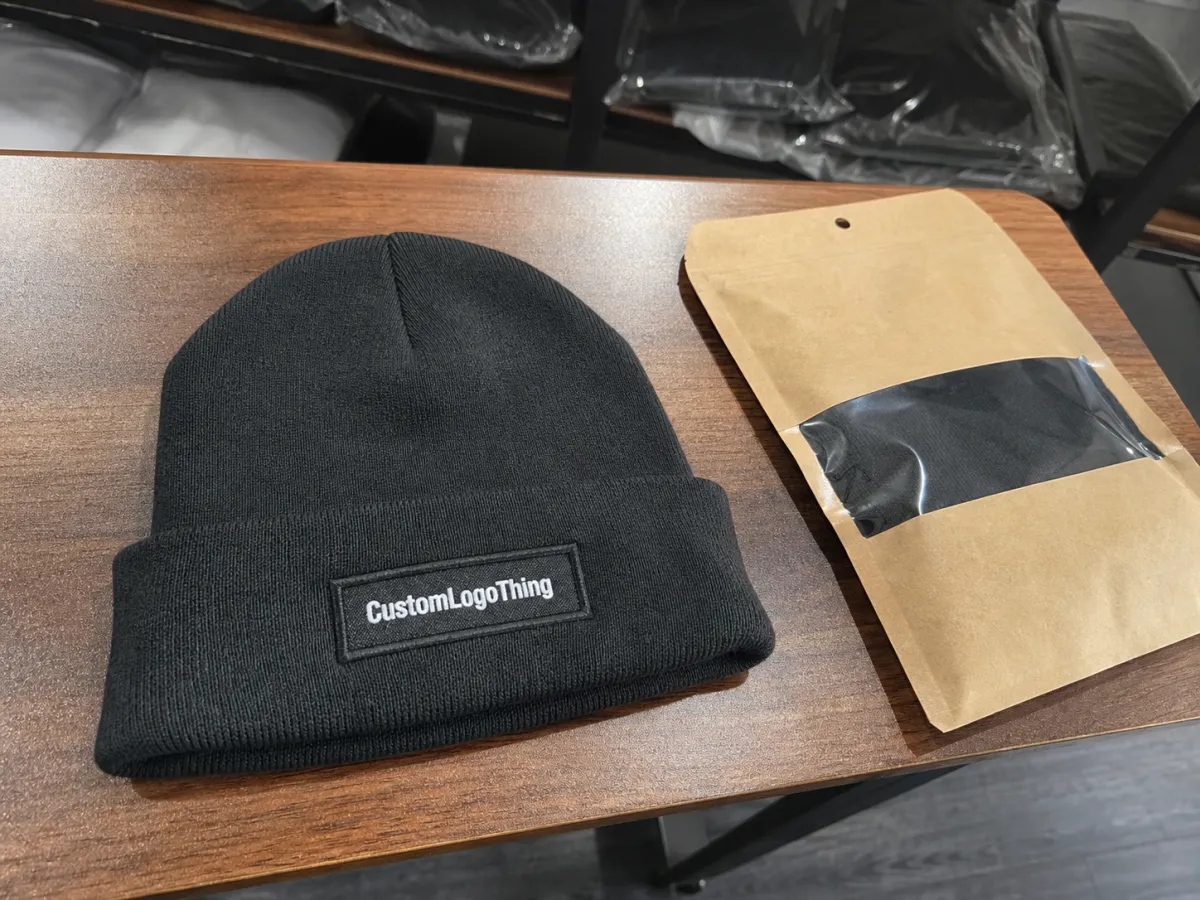
From a packaging buyer’s point of view, the economics are cleaner than many apparel programs. One main size, limited colorways, and a single visible decoration zone make this category easier to compare across suppliers. That matters. A T-shirt quote can swing on body weight, neck label, print count, and size mix. A beanie usually has fewer moving parts, so the ceramic embroidered beanies Unit Cost Review becomes a real sourcing exercise instead of a guessing game.
The commercial use cases are broad: retail drops, employee kits, winter event merch, onboarding bundles, and premium promo packs all benefit from an item that feels more substantial than its material cost suggests. A decent cuff beanie with clean embroidery can present like a higher-ticket gift, while its blank fabric and stitch cost stay relatively controlled. That gap is where margin lives.
There is a tradeoff, though. Lower blank quality can reduce cost per piece on paper, but it can also create pilling, weak stretch recovery, and sloppy embroidery registration. If the knit is too loose, the logo can distort. If the yarn is inconsistent, the finished piece can look cheap even when the price does not. Honestly, the cheapest blank is often the most expensive mistake once samples get rejected or customer returns start showing up.
Buyer rule: a low quote is not the same thing as a low landed cost. The quote only helps if the blank, decoration, packaging, and freight are all being compared on the same basis.
That is why the first question is not “How low can the price go?” It is “What specification still looks premium after decoration, packing, and transit?”
Product Build: Blank Fabric, Embroidery Area, and Finish Options
The blank material is the first cost gate. Acrylic is still common because it is stable, warm enough for promo use, and friendly to bulk pricing. Cotton blends tend to feel softer and breathe a little better, but they can cost more and may not hold structure as well. Recycled yarn options add a sustainability story, though supply can be more variable and the hand feel depends on the blend. Rib knit, when done well, gives better stretch and a more polished cuff line, but tighter knits can increase unit cost.
- Acrylic: usually the lowest starting point, good for high-volume winter giveaways.
- Cotton blend: better hand feel, often chosen for retail or staff wear.
- Recycled yarn: useful for sustainability claims, but confirm consistency before scaling.
- Rib knit: more structure and a cleaner cuff presentation.
Decoration placement changes both look and price. Cuff-front embroidery is the easiest to read and usually the most predictable to stitch. Side-panel logos can look subtle, but they need careful sizing because the available embroidery area is tighter. Center-front embroidery gives strong visibility, yet it may require more stitch planning if the design has fine text or small gaps. More stitches mean more machine time. More colors mean more thread changes. Both affect setup charges and, in some cases, tooling fees for digitizing.
Finish decisions matter just as much as the logo. A folded cuff presents the cleanest imprint area and usually sells better in a retail setting. A slouch style can feel more casual, but the logo can sit in a less visible zone if the crown drops too far. Woven labels can improve perceived value on a limited budget, while a woven patch can preserve detail better than direct embroidery on tiny artwork. If the mark has thin lines or small type, simplify it early. A simplified mark often looks more intentional than a crowded one.
Thread sheen is another detail buyers underestimate. A high-gloss thread can make a logo pop, but it can also reveal imperfections in stitch density. Matte thread feels quieter and sometimes more premium on darker blanks. Color matching should be reviewed alongside the knit shade, not after the fact. A logo that looked sharp on screen can drift once it is translated into yarn, thread, and tension.
Production Steps and Lead Time Expectations
A practical production flow starts with artwork review and ends with packed cartons. The sequence is usually straightforward, but every handoff adds time. First comes file check and digitizing. Then sample or proof approval. After that, bulk knitting or blank allocation, embroidery, quality inspection, and final packing. The fastest orders are the ones that move through those steps without redesigning the logo halfway through.
- Artwork review: confirm vector files, logo size, and placement.
- Digitizing: convert the logo into stitch instructions.
- Sample approval: check size, thread color, and embroidery density.
- Bulk production: run the approved spec across the full order.
- Inspection and packing: verify count, labels, and carton fit.
Timing varies, but a realistic planning window is often 2-5 business days for artwork cleanup and digitizing, another 3-7 business days for a pre-production sample, and roughly 10-20 business days for bulk production depending on quantity and queue pressure. If the program lands in peak winter buying season, add buffer. The factory schedule can look calm one week and compressed the next. If you need delivery on a fixed date, build the timeline backward from receipt, not from order placement.
Delays usually come from the same places: unclear vector files, too many thread color revisions, late sample feedback, and approval bottlenecks on the buyer side. The best way to protect the schedule is to lock decisions early. That includes packaging. If you want individual polybags, barcode stickers, or a specific carton count, say so before production starts. Those details can affect throughput and freight efficiency.
For shipping stress tests, many teams borrow the mindset behind ISTA packaging standards. The International Safe Transit Association is a useful reference point at ista.org if you need to think beyond the factory floor and into transit risk. And if your beanie program includes paper hangtags or inserts, FSC-certified stock can support the sustainability story without changing the product itself; see fsc.org.
Ceramic Embroidered Beanies Unit Cost Review: Pricing, MOQ, and Bulk Pricing
This is the section where the ceramic embroidered beanies Unit Cost Review becomes a buying tool. The quote should be broken into its real drivers: blank hat cost, stitch count, thread colors, digitizing, setup charges, packaging, and freight. If those pieces are hidden inside a single number, comparison gets messy fast. A quote that looks lower may simply be excluding artwork, sampling, or shipping.
MOQ matters because fixed costs are spread across fewer units on small runs. A one-color logo on 50 beanies has a very different cost structure than the same logo on 1,000. In practice, the price curve often drops fast between the first two volume tiers, then flattens more slowly after that. That is why tiered pricing is useful. It shows the real breakpoints instead of forcing a false either-or decision.
| Quantity | Typical unit cost before freight | What usually drives the price | Best fit |
|---|---|---|---|
| 50-99 units | $7.50-$11.00 | Higher setup impact, smaller run, limited bulk pricing | Internal samples, small event kits, pilot launches |
| 100-299 units | $5.80-$8.20 | More efficient digitizing spread, better MOQ economics | Staff programs, local promo drops, seasonal resale tests |
| 300-999 units | $4.30-$6.20 | Improved cost per piece, stronger bulk pricing | Retail runs, event merch, corporate gifting |
| 1,000+ units | $3.60-$5.10 | Lower setup burden per unit, better factory efficiency | Repeat programs, national campaigns, seasonal inventory |
Those numbers assume a standard acrylic or acrylic-blend cuff beanie with clean front embroidery. Cotton-heavy or recycled yarn blanks may sit above the low end of the range. More complex logos, metallic thread, or multiple placements can also move the price up. The point is not to promise a single magic number. The point is to know where the quote should land if the spec is consistent.
Ask each supplier whether the following are included:
- Artwork setup and digitizing fees
- Sample charges and sample shipping
- Labeling, polybags, and barcode application
- Freight or delivery terms
- Rush fees for compressed timelines
The cleanest cost levers are also the least dramatic. Simplify the logo. Reduce thread colors. Choose a standard blank that the supplier already runs well. Keep one decoration location. Those choices can trim setup charges and improve turnaround without making the beanie look cheap. Hidden savings traps work in the opposite direction. A bargain quote that needs rework, reruns, or customer-service time usually loses against a slightly higher quote with cleaner execution.
Quality Checks That Protect Your Margin Before Shipment
The best margin protection happens before cartons leave the building. Check embroidery alignment first. Then stitch density, thread tension, seam consistency, and label placement. A logo that sits 3-4 mm off center is small on paper and obvious in a retail photo. Loose tension can cause loops to snag. Overpacked stitches can make a design stiff or distort the knit.
Photos help, but they are not enough by themselves. For a launch tied to a date, ask for a sample sign-off or a live pre-shipment review. If the order is large, a brief inspection call can save weeks of back-and-forth later. Buyers who sell through retail channels should also ask for count checks and carton verification. A missing dozen units can wipe out the margin from a small run very quickly.
Packaging details affect received value more than many buyers expect. Individual polybags can help with cleanliness and resale presentation. Size stickers reduce handling time. Carton packing density affects freight cost, especially if you are shipping air instead of product. If the beanies are going directly into stores or kits, the packing spec should be written as carefully as the embroidery spec.
That is also where a disciplined QC process protects trust. Fewer returns. Fewer chargebacks. Less time spent resolving defects after the shipment lands. The supplier that catches problems early is usually cheaper than the one that promises a lower starting quote and then passes the issue downstream.
Why Buyers Reorder the Same Beanie Program
Repeat orders are where the economics get noticeably better. Once the digitized file is approved, the thread map is locked, and the blank spec is fixed, the next run is faster. In many programs, the vendor can skip the original digitizing work or charge less for it on reorders, which can save $25-$75 right away. More importantly, there is less risk of artwork drift. The logo already proved it works on the knit.
That stability matters more in retail and employee programs than in one-off promo orders. A one-time event can tolerate a bit of variability. A long-running program cannot. Consistent sizing, color stability, and reliable communication become more valuable than shaving a few cents from the first quote. Buyers who reorder usually care about predictability because it protects their calendar as much as their budget.
Service quality also shows up in the admin work. Clear proofing, fast answers, and documented production records reduce friction. If a supplier can prove exactly which blank, thread colors, and placement were used last time, the next order becomes a controlled repeat instead of a fresh gamble. That is why experienced buyers often stick with a vendor that understands the spec rather than chasing the lowest new bid every season.
In practical terms, the best supplier is the one that protects fit, decoration accuracy, and delivery timing at scale. If that means paying slightly more on the first run and less on the second, the math can still favor the partnership.
What to Send for an Accurate Quote and Faster Approval
Good quote inputs shorten the process and improve comparability. Send the target quantity, color count, logo file, embroidery placement, packaging needs, and required in-hands date. If you already know the blank type, include that too. The more complete the request, the easier it is to see whether the supplier is quoting the same product you actually want.
Ask for tiered pricing at two or three quantities. That shows where the true cost per piece starts to improve. A buyer who only asks for one number usually misses the real breakpoints. A buyer who asks for 100, 300, and 1,000 units can see whether a slightly larger order lowers the landed cost enough to justify the volume.
A simple decision checklist helps keep the process tight:
- Confirm the blank type and knit style.
- Verify what is included in the quote.
- Check sample timing before approving the schedule.
- Lock artwork only after the spec is settled.
- Compare the same packaging, freight, and labeling assumptions across suppliers.
If you are running a serious sourcing process, keep the comparison disciplined. A real ceramic Embroidered Beanies Unit Cost Review is not just a price hunt. It is a specification check, a production check, and a landed-cost check rolled into one. Send the same assumptions to every supplier, compare cost per piece on identical terms, and choose the quote that protects both margin and delivery.
What drives ceramic embroidered beanies unit cost the most?
Blank fabric choice, stitch count, and thread color count usually move the price more than small artwork edits. MOQ matters because setup and digitizing are spread across fewer units on small runs. Packaging, freight, and rush timing can also change the landed cost even if the factory quote looks similar.
What MOQ should I expect for ceramic embroidered beanies?
Many suppliers treat 50 to 100 units as a practical starting point for decorated beanies. Lower MOQ is possible, but the unit price usually rises because fixed costs have less volume to absorb them. Ask for tiered pricing so you can see whether moving up a quantity band improves your margin.
How long does production usually take after approval?
Artwork cleanup and sample approval often take the first several days, especially if digitizing is needed. Bulk production usually follows with a lead time that depends on quantity, decoration complexity, and factory queue. Shipping is separate, so build transit time into the schedule before a launch or event date.
Can I lower cost without making the beanies look cheap?
Yes. Simplify the logo, limit thread colors, and use a standard blank that already has proven quality. A clean single-placement embroidery often looks more premium than a crowded design with too many details. Spend on the part customers see first, and cut cost from hidden complexity instead.
What should I include in a quote request for ceramic embroidered beanies?
Send quantity, logo file, decoration placement, color preferences, packaging needs, and deadline. Ask whether setup, sampling, shipping, and labeling are included so you can compare offers fairly. If you want a true ceramic Embroidered Beanies Unit Cost review, request pricing at several quantity tiers.

